

&imwidth=800&imheight=600&format=webp&quality=medium "Bibi's monster: 7 reasons why Hamas still stands despite Israeli efforts to obliterate it from Gaza")
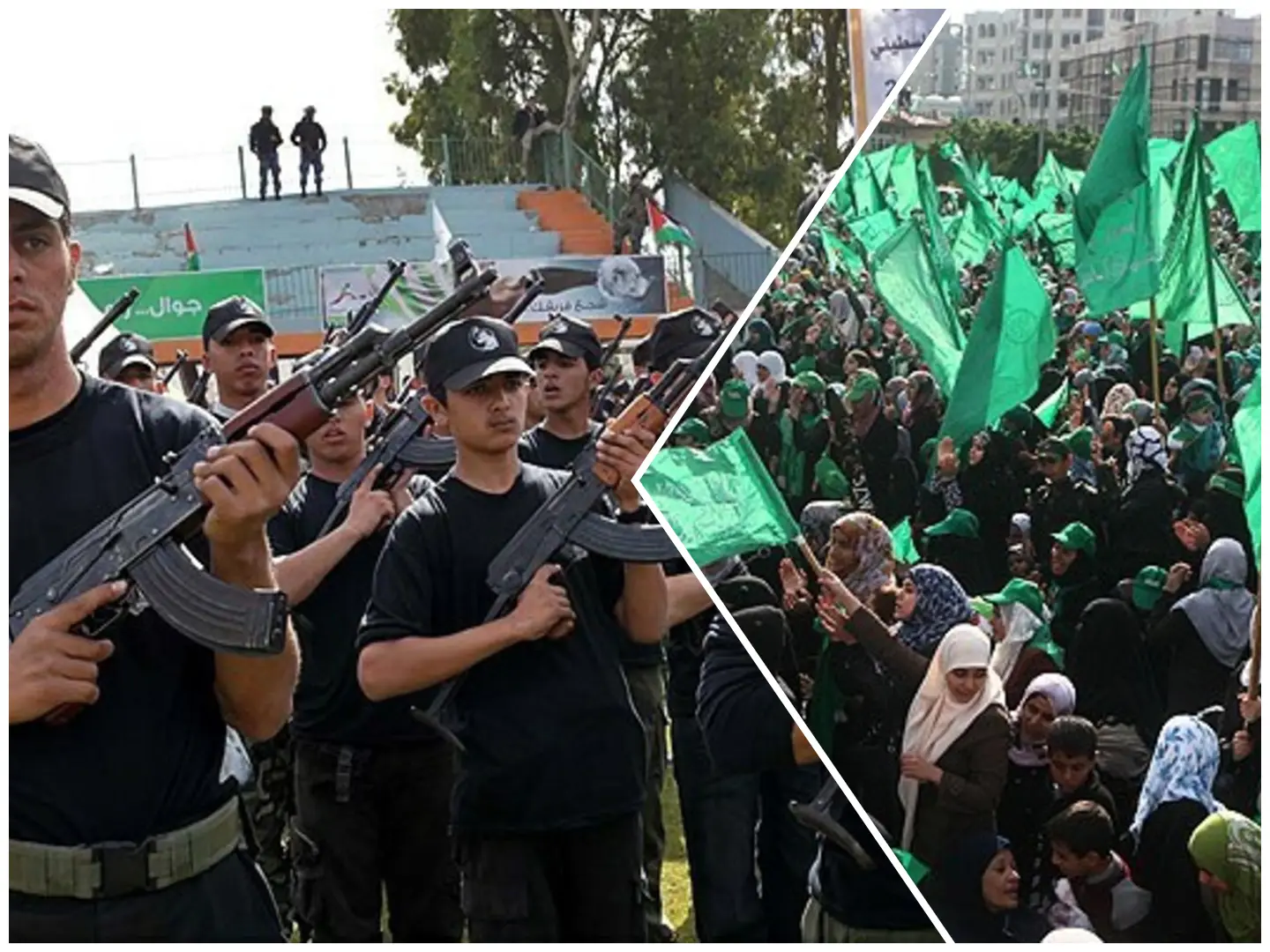
Prime Minister Benjamin Netanyahu went into Gaza with the explicit intention of destroying and disarming Hamas, the main perpetrator of the October 7 terror attack on Israel in 2023. As the attack and subsequent war enter their third year, Hamas still runs the Palestinian enclave. Once backed by the Israeli prime minister, the militant group has turned into his biggest enemy. In spite of Israel pummelling Gaza with bombs and a ground invasion, and killing some of its main leaders, Hamas fighters were on full armed display during recent hostage exchanges. Why is Hamas still standing? Here are the seven reasons, collected from expert commentary, think tank analysis, and media reports.
Current ground situation of Hamas
Since the October 7 attack that killed around 1,200 people, Hamas indeed suffered heavy losses, having lost thousands of its fighters and top leaders like Yahya Sinwar and Ismail Haniyeh. But it continues to operate, recruit, and exert influence in Gaza, with its top negotiators even escaping an air attack in Doha, Qatar. Despite Israel’s intensive military campaign, including the recent invasion of Gaza City, Hamas is neither fully disarmed nor defeated. Here are the possible reasons:
Why Hamas still stands- Reason 1: Guerrilla tactics and an extensive tunnel network
Israel is engaged in what is known in military terms as an asymmetric war with Hamas. Over the past decade, Hamas has fortified Gaza with underground tunnels. These tunnels, often passing under civilian infrastructure like hospitals and schools, allow movement, ambushes, and weapons storage. Attacking them directly invites global criticism of Israel, turning the conflict into a prolonged urban war of attrition. Israeli forces have had to repeatedly re-enter cleared areas, complicating efforts to eliminate Hamas while minimising civilian casualties to avoid violating international law.
Trending Stories
&im=FitAndFill=(700,400)&imwidth=180&imheight=135&format=webp&quality=medium)
What is the real meaning behind Pete Hegseth's tattoos?
&imwidth=180&imheight=135&format=webp&quality=medium)
Viral video shows cross falling on Colombia priest, no official confirmation | WATCH
&imwidth=180&imheight=135&format=webp&quality=medium)
Telangana unveils AI avatar of IT minister D Sridhar Babu at Hyderabad DevFest 2026
&imwidth=180&imheight=135&format=webp&quality=medium)
Pezeshkian says Iranians ‘struggling to put food on the table’ as war with US drags on
&imwidth=180&imheight=135&format=webp&quality=medium)
Chorbagan stampede: A week later, the strangest visarjan Kolkata has seen
&imwidth=180&imheight=135&format=webp&quality=medium)
AI slop or smart strategy? South African author Coral Hart defends Her 370 AI- assisted books in 20 months
&imwidth=180&imheight=135&format=webp&quality=medium)
AI just found a flaw in software running most of the web! One request hijacks the server
&imwidth=180&imheight=135&format=webp&quality=medium)
Train crashes into crane on São Paulo monorail line, wreckage falls onto busy road | VIDEO
&imwidth=180&imheight=135&format=webp&quality=medium)
Can Putin cheat death? All about his daughter’s billion-dollar quest for immortality
&imwidth=180&imheight=135&format=webp&quality=medium)
Saudi says debris fell in Mecca, Medina after missile interceptions; Houthis deny targeting holy cities
&imwidth=180&imheight=135&format=webp&quality=medium)
France protests: Clashes erupt between police and protesters in Paris as nearly 410,000 take to streets across country
&imwidth=180&imheight=135&format=webp&quality=medium)
Trump invokes Operation Sindoor at US midterm rally, claims 250% tariffs stopped India-Pakistan war
&imwidth=180&imheight=135&format=webp&quality=medium)
Tu Hai Meri Kiran box office: Sonakshi Sinha and Zaheer Iqbal's film fails to take off, mints Rs 15 Lakh on day 1
&imwidth=180&imheight=135&format=webp&quality=medium)
Pakistan airline PIA unveils new crew uniforms, faces online criticism
&imwidth=180&imheight=135&format=webp&quality=medium)
Britain is building the world's first AI biosecurity lab, with OpenAI and Anthropic inside
&imwidth=180&imheight=135&format=webp&quality=medium)
Scientists make digital nose that can sniff and send scents over the internet
&imwidth=180&imheight=135&format=webp&quality=medium)
Frontier AIs keep escaping their test cages! The industry still can't reliably stop them
&imwidth=180&imheight=135&format=webp&quality=medium)
'Already tired of his 9-to-5': Baby born with a moustache becomes internet sensation, video goes viral | Watch
&imwidth=180&imheight=135&format=webp&quality=medium)
Horrific video shows the moment 18-year-old fell to her death from Mexico amusement park ride
&imwidth=180&imheight=135&format=webp&quality=medium)
France protests: 135 arrested, weapons seized as fresh demonstrations erupt amid heavy security
&imwidth=180&imheight=135&format=webp&quality=medium)
French Open: PV Sindhu storms into final with win over Hina Akechi
&imwidth=180&imheight=135&format=webp&quality=medium)
Albania protests enter 12th day as students clash with police, demand Rama's exit
&imwidth=180&imheight=135&format=webp&quality=medium)
‘Saddam Hussein opened a cheesecake factory’: Obama mocks Trump’s White House renovations; defends Abdul El-Sayed
&imwidth=180&imheight=135&format=webp&quality=medium)
China's dancing robot turns violent bodyguard, lifts cars and fights intruders - Watch
&imwidth=180&imheight=135&format=webp&quality=medium)
'You’re a horrible little reporter, aren’t you?': Trump snaps at NBC reporter questioning his support for Ramaswamy's campaign ad
&imwidth=180&imheight=135&format=webp&quality=medium)
Rising Asia Cup 2026 schedule announced, India-Pakistan clash set for Nov 22
&imwidth=180&imheight=135&format=webp&quality=medium)
Bodies of 2 missing Japanese climbers recovered from Himalayan peak
&im=FitAndFill=(700,400)&imwidth=180&imheight=135&format=webp&quality=medium)
New Friday OTT releases (October 23, 2026): Gajab Raat, Dorothy, Chaar Yaar- Watch these 6 new movies and TV shows on Netflix, Prime Video and more
&im=FitAndFill=(700,400)&imwidth=180&imheight=135&format=webp&quality=medium)
US midterm elections 2026: Minnesota heads to polls in the shadow of Minneapolis ICE shootings
&imwidth=180&imheight=135&format=webp&quality=medium)
An AI that reads your face can now estimate how long you have to live
&imwidth=180&imheight=135&format=webp&quality=medium)
Hitler’s ‘Eagle’s Nest’ mountain retreat wrecked by fire, suspect detained: What to know about the Nazi-era site
&imwidth=180&imheight=135&format=webp&quality=medium)
Tu Hai Meri Kiran film review: Sonakshi Sinha and Zaheer Iqbal's thriller gets tangled in its own twists
&imwidth=180&imheight=135&format=webp&quality=medium)
PL Round-Up: Man City's perfect run ended by Villa as Arsenal draw level at top
&imwidth=180&imheight=135&format=webp&quality=medium)
Why Europe’s protests are about more than austerity and rising costs
&im=FitAndFill=(700,400)&imwidth=180&imheight=135&format=webp&quality=medium)
Watched Manoj Bajpayee’s Gajab Raat on Netflix? 5 movies and TV shows to watch next on OTT
&imwidth=180&imheight=135&format=webp&quality=medium)
Farooq Abdullah says Pakistan’s raising of Kashmir issue keeps pressure on Delhi
Reason 2: Resilience and decentralised structure of Hamas
Israel’s elimination of top Hamas leaders and many of its fighters failed to diminish its warfighting capabilities. Hamas has managed to replace fighters, almost as many as it has lost, through steady recruitment. With a decentralised leadership model, Hamas was able to regroup under mid-level commanders to continue the fighting even after its leaders were killed. Hamas' civil administration has also resumed work in some areas, while its fighters still manage to mount sporadic attacks on Israeli forces.
Reason 3: Ideological commitment informed by the idea of jihad
Losing lives for the Palestinian cause is accepted by many Hamas fighters as a rite of passage, inspired by a religious-nationalist ideology. This contrasts with Israeli soldiers, who are performing their duty for their nation. Many Hamas fighters reject the idea of surrender or disarmament and prefer to die on the battlefield, with the group's propaganda framing the war as a justified struggle against occupation. This has the backing of many Palestinians, who oppose the complete disarmament of Hamas and even praise the October 7 attack.
Reason 4: Hamas still has local Palestinian support
Even as some Palestinians blame Hamas for the devastation and humanitarian catastrophe caused by the war in Gaza, others view its survival as resistance. In many parts of Gaza, Hamas still enjoys higher approval ratings than the Palestinian Authority, which governs the West Bank, the other part of the would-be state of Palestine. The endurance of Hamas has strengthened its legitimacy among supporters.
Reason 5: The leverage from keeping hostages
The hostage-taking on October 7 has been used by Hamas to its advantage. It managed to get Palestinian prisoners released in exchange for some hostages and their dead bodies, at an almost one-to-three proportion. Hamas still holds about 50 hostages—some dead, but mostly alive—and uses them as bargaining tools. This limits Israel’s military options amid concerns over hostage safety, even as their relatives continue to hold massive protests in Jerusalem.
Also read: ‘Complete Obliteration!’: Trump’s warning to Hamas if they don’t accept his Gaza peace plan
Reason 6: How Israel’s hands are tied due to international pressure
Israel and its leaders have faced accusations of war crimes, global condemnation, and even sanctions. This restricts Israel’s ability to act decisively against Hamas. Despite having US President Donald Trump as an ally in Washington DC, diplomatic constraints remain. Since the war began, international opinion has shifted from sympathy towards Israel to shock and concern over the humanitarian situation in Gaza. Israel faces further isolation as several Western countries have recognised the state of Palestine, which is a diplomatic victory for Hamas.
Reason 7: Israeli domestic challenges are forcing it to act carefully against Hamas
Even as Netanyahu and his war cabinet push further into Gaza, internal divisions in Israel affect the offensive against Hamas. There is public fatigue, with demonstrations against Netanyahu continuing unabated since the war began. With over 1,000 soldiers killed in the conflict, Israel’s military is strained. Discontent with leadership, which is a minority government, and conflicting political pressures hinder strategic clarity.
All these factors have led to a situation where, despite high casualties (Palestinian casualties are reported to be at least 24,000, but could be as high as 60,000) and prolonged fighting, Israel has not achieved its goals of eliminating Hamas or controlling Gaza.
While there are hopes of a final hostage exchange, the war remains at a stalemate as it finishes its second year.

