
&imwidth=800&imheight=600&format=webp&quality=medium "'B-52 vs MiG-21': How a bomber shot down a fighter jet?")
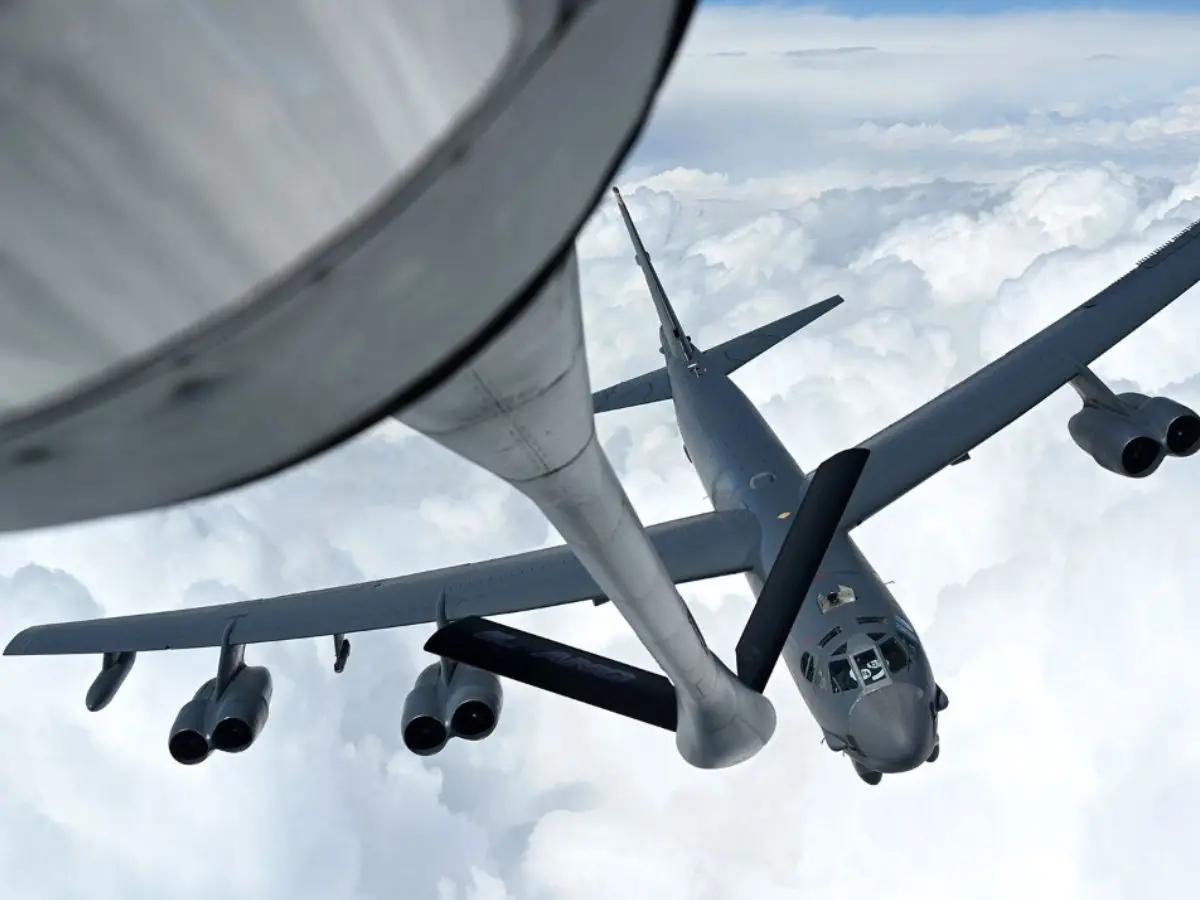
On the night of December 18, 1972, a formation of B-52D Stratofortress bombers was approaching Hanoi as part of Operation Linebacker II, the massive, 11-night bombing campaign that would become the most intense strategic air assault since World War II. North Vietnamese air defences were firing surface-to-air missiles in enormous volumes. And somewhere in the darkness, a supersonic MiG-21 interceptor was moving into attack position behind a B-52D with the call sign Brown 3.
The Kill That Made History
Staff Sergeant Samuel Olin Turner was the tail gunner aboard Brown 3, B-52D serial number 56-676. His station was at the very rear of the aircraft, behind the bomb bay, behind the crew compartment, isolated in a small turret with a set of .50-calibre machine guns and a radar scope. Turner detected the approaching MiG-21 on his fire-control radar as it closed in from below and behind. When the fighter entered firing range, Turner opened up. His rounds struck the rear of the MiG, which exploded in a fireball. Turner was awarded the Silver Star for the engagement and became the first B-52 gunner in history to be officially credited with shooting down an enemy aircraft and the first American aerial gunner to score a kill since the Korean War.

Six Days Later, It Happened Again
On December 24, 1972, Christmas Eve, Airman First Class Albert E. Moore, a tail gunner aboard another B-52D during the same Linebacker II campaign, scored a second confirmed kill against a MiG-21 under similar circumstances. Moore's kill made him the second and final B-52 gunner to shoot down an enemy fighter. Between them, Turner and Moore hold a distinction that no one will ever share: they scored the last two aerial gunner kills in American military history.
The End Of An Era
Trending Stories
)
IND vs JPN one-off T20I: India survive scare from Japan to win five-over a side match by 2 runs
)
Putin's United Russia party wins 355 seats in Duma election; 4 other parties cross threshold to enter parliament
)
AI models chose to harm humans to stop ‘pain,’ alarming study raises fresh safety questions
)
‘0% chance’: Nvidia CEO Jensen Huang dismisses AI extinction fears by 2030
)
Samay Raina-Mukesh Chhabra controversy explained: What happened over girlfriend joke on India's Got Latent?
)
Trump's helipad event overshadowed by audio failure as major TV networks suspend pool coverage
)
'Needs time away from the international scene': England white-ball captain Brook on pacer Brydon Carse's future
)
New Zealand farms shift to carbon forests: Carbon credits fuel a land rush reshaping rural life
)
Anti-AI activists storm summit, say 'incompetent' leaders are leading us into a disaster - 'We need a vote'
)
J&K Assembly Session begins amid chaos: BJP, ruling alliance clash as statehood demand dominates
)
Asian Games 2026: India women's cricket team beats Sri Lanka by 147 runs for first gold
)
Key accused in Bihar's Jamui molestation case, arrested after police shoot him in leg
)
Randeep Hooda arrives in Gujarat for his first National Film Award: ‘Very grateful’
)
US and China vie for AI dominance as calls grow for regulation | Gravitas
&im=FitAndFill=(700,400))
Anant Nag to recieve Dadasaheb Phalke Award: From Ankur to Nishant- Revisit his best films and iconic performances on OTT
)
UK banks are rethinking financial crime detection because of algorithm
)
FIFA chief Infantino wants to reform governing body with consultation from federations
)
India at UNGA81: Jaishankar warns global order under 'growing stress', pushes for ‘reformed multilateralism’
)
IND vs JPN, one-off T20I: Japan captain Kendel on pushing India to the brink - ‘It was special’
)
Raaka creates history! Allu Arjun’s film secures Guinness World Record ahead of release
)
Saudi Arabia exits China-led mBridge digital currency platform amid Saudi-Houthi conflict
)
Indonesian groups sue govt over wildfires as haze crosses borders, nearly 900,000 hectares burned
)
'Lot of things to learn from experienced players': Jayasuriya backs Rohit, Virat for 2027 ODI World Cup
)
$110 billion Warner Bros merger: Paramount reaches settlement with 12 US states
&im=FitAndFill=(700,400))
New OTT releases this week (September 21-27, 2026): Shaque: Trust No One, Hunkkaar, Don’t Be Shy- 5 new titles coming to Netflix, Prime Video and more
)
From ‘communist’ to ‘great mayor’: Trump praises Mamdani after New York meeting, discusses immigration and housing
)
Report: Zelensky meets CIA chief Ratcliffe at Shannon airport, weeks after his secret Moscow trip
)
How Zaheer Khan came to be CSK's head coach of IPL 2027
)
Who is Clavicular? The 20-year-old controversial 'Looksmaxxing' influencer charged with rape allegations
)
Pilot recreates Mona Lisa in sky over Oklahoma and Arkansas in four-hour flight: VIDEO
)
UK PM Burnham agrees to 'defensive' military support for Saudi Arabia against Houthis
)
Jailer 2: Vidya Balan joins Rajinikanth's upcoming film as Kantha | Watch
&im=FitAndFill=(700,400))
National Film Awards 2026: Kartik Aaryan, Mammootty, Yami Gautam, Randeep Hooda and other key winners
)
Microsoft executive called AI training the ‘largest theft of labour in human history’
)
40-foot waves crash into cruise ship in dangerous stretch near Antarctica. Watch
)
US-Iran war, peace deals and more: What to expect from Trump's UNGA 2026 speech
)
Explainer: Why rare-earth export licences and Board of Trade are US priorities ahead of Trump-Xi summit
)
Two infants die after fire breaks out at RIMS newborn care unit in Telangana's Adilabad
)
Oil slips to $98 as Saudi Arabia restarts East-West oil pipeline
For decades, bombers had carried defensive gun positions, turrets manned by gunners whose job was to fend off attacking fighters. It was a role that defined bomber combat from World War II through Korea and into Vietnam. But by the late 1970s and 1980s, the nature of air combat had changed. Fighters attacked with missiles from ranges far beyond what a machine gun could reach. Surface-to-air missiles, not enemy fighters, had become the primary threat to bombers. The US Air Force eventually removed the tail gun systems from its B-52H fleet entirely, replacing the gunner's station with electronic countermeasures equipment. The position of tail gunner, one of the most dangerous and iconic roles in military aviation, was eliminated for good.
What Turner And Moore Represent
Turner and Moore did not just score aerial victories. They closed a chapter of air warfare that had begun over the trenches of World War I, when gunners first fired at enemy aircraft from the back of biplanes. From open cockpit machine guns to powered turrets on B-17s and B-29s over Germany and Japan, to the final radar-guided bursts from the tail of a B-52 over Hanoi, the role of the bomber gunner spanned the entire history of aerial combat and ended on a Christmas Eve night over North Vietnam in 1972.
