Australia and India eye major new defence agreement, says Australian High Commissioner Philip Green

&imwidth=600&imheight=450&format=webp&quality=medium "Australia and India eye major new defence agreement, says Australian High Commissioner Philip Green")
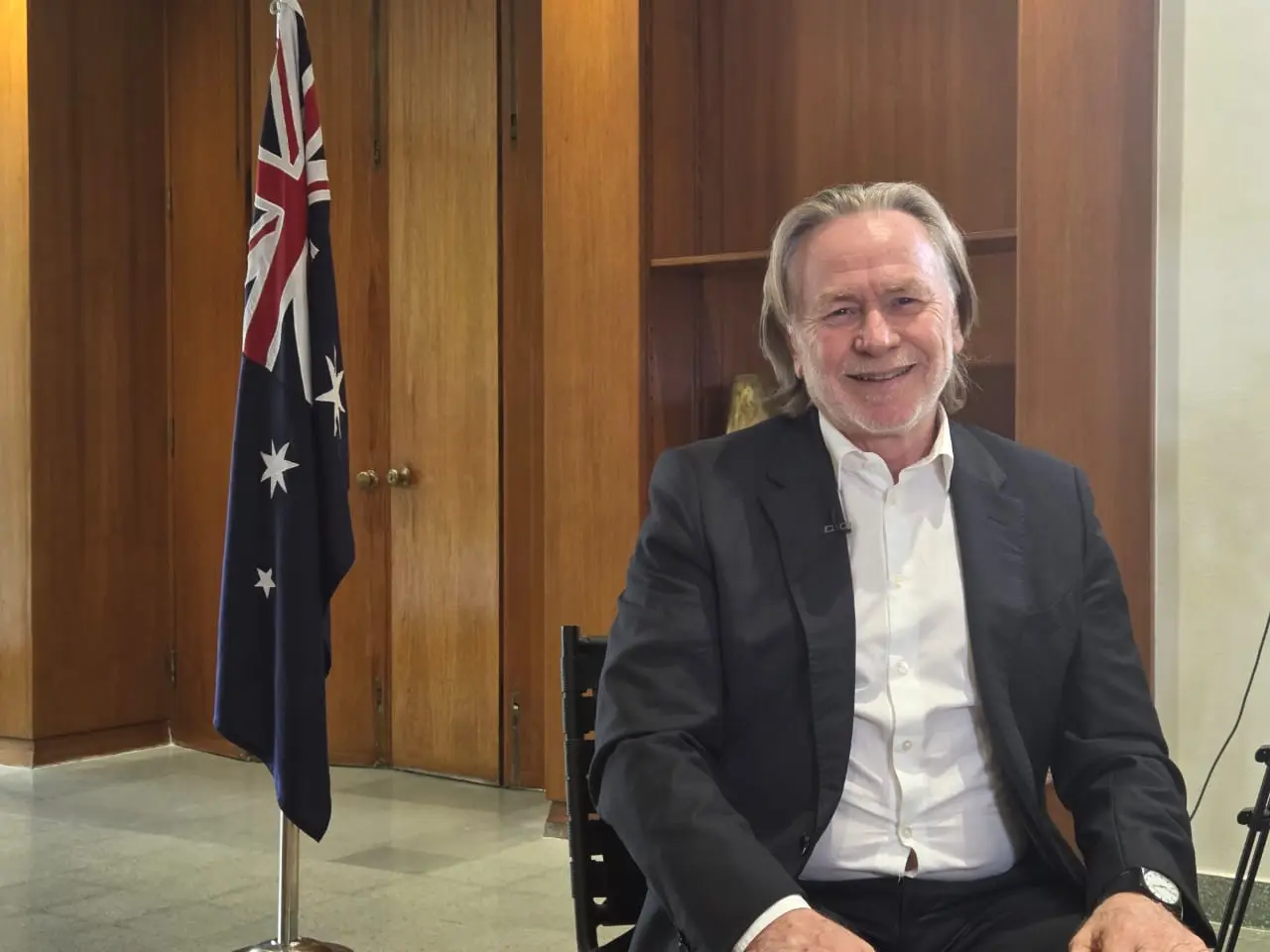
Australian high commissioner Philip Green
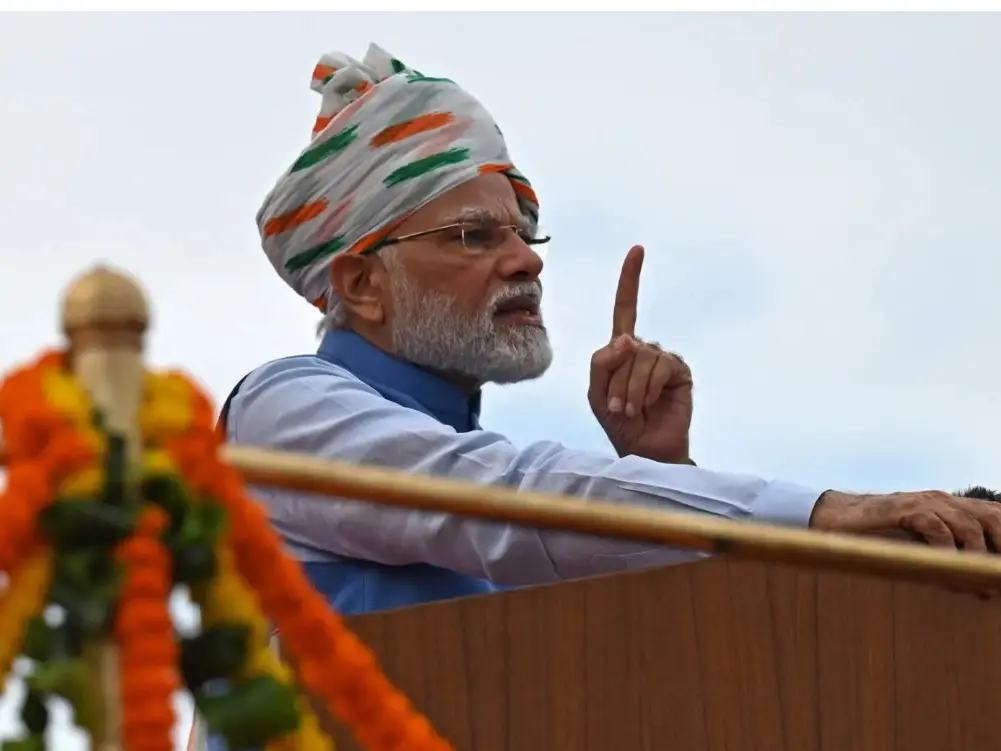
Indian Prime Minister Narendra Modi is expected to travel to Australia next month, as both sides firm ties in defence, trade and the education sector. The partnership already includes strong counter-terrorism work and growing intelligence sharing.
Australia and India are set to announce an upgraded defence and security agreement, signalling a significant boost in bilateral military cooperation, the Australian High Commissioner to India has said.
High Commissioner Philip Green, speaking to WION’s Sidhant Sibal said that the time had come for a fresh framework, replacing the last major statement on defence ties from 2009. “Yeah, you’re right. I mean, time has come for that,” Mr Green said. “Our last major statement on defence cooperation was way back in 2009. A huge amount has happened since then.”
He added that leaders from both countries had challenged officials to define a "new and higher level" of collaboration. "We are shooting towards a new and higher level, joint declaration that will be a signal to our peoples and to our systems that our defence and security collaboration is going forward," he said.
Indian PM Modi is expected to travel to Australia next month, as both sides firm ties in defence, trade and the education sector. The partnership already includes strong counter-terrorism work and growing intelligence sharing. Mr Green highlighted a recent visit by Australia's Chief of Defence Intelligence as evidence of deepening ties. "I've got a high level of confidence that what we're doing at the moment is good. But as we deepen our relationship... we might be able to do more in the future," he noted.
The comments come as the Quad grouping, Australia, India, Japan and the United States, delivered outcomes at its latest ministerial meeting. A key initiative will integrate India into a previously trilateral maritime surveillance arrangement with Australia, Japan and the US, initially focusing on the Indian Ocean to provide better regional awareness and share strategic information with partners.
Full interview:
Trending Stories
&im=FitAndFill=(700,400)&imwidth=280&imheight=210&format=webp&quality=medium)
&imwidth=280&imheight=210&format=webp&quality=medium)
&imwidth=280&imheight=210&format=webp&quality=medium)
&imwidth=280&imheight=210&format=webp&quality=medium)
&imwidth=280&imheight=210&format=webp&quality=medium)
&imwidth=280&imheight=210&format=webp&quality=medium)
&imwidth=280&imheight=210&format=webp&quality=medium)
&imwidth=280&imheight=210&format=webp&quality=medium)
&imwidth=280&imheight=210&format=webp&quality=medium)
&imwidth=280&imheight=210&format=webp&quality=medium)
&imwidth=280&imheight=210&format=webp&quality=medium)
&imwidth=280&imheight=210&format=webp&quality=medium)
&imwidth=280&imheight=210&format=webp&quality=medium)
&im=FitAndFill=(700,400)&imwidth=280&imheight=210&format=webp&quality=medium)
&imwidth=280&imheight=210&format=webp&quality=medium)
&imwidth=280&imheight=210&format=webp&quality=medium)
&imwidth=280&imheight=210&format=webp&quality=medium)
&imwidth=280&imheight=210&format=webp&quality=medium)
&imwidth=280&imheight=210&format=webp&quality=medium)
&imwidth=280&imheight=210&format=webp&quality=medium)
&imwidth=280&imheight=210&format=webp&quality=medium)
&im=FitAndFill=(700,400)&imwidth=280&imheight=210&format=webp&quality=medium)
&imwidth=280&imheight=210&format=webp&quality=medium)
&imwidth=280&imheight=210&format=webp&quality=medium)
&im=FitAndFill=(700,400)&imwidth=280&imheight=210&format=webp&quality=medium)
&imwidth=280&imheight=210&format=webp&quality=medium)
&imwidth=280&imheight=210&format=webp&quality=medium)
&imwidth=280&imheight=210&format=webp&quality=medium)
&imwidth=280&imheight=210&format=webp&quality=medium)
&imwidth=280&imheight=210&format=webp&quality=medium)
&imwidth=280&imheight=210&format=webp&quality=medium)
&imwidth=280&imheight=210&format=webp&quality=medium)
&imwidth=280&imheight=210&format=webp&quality=medium)
&imwidth=280&imheight=210&format=webp&quality=medium)
&imwidth=280&imheight=210&format=webp&quality=medium)
Sidhant Sibal: If you can perhaps tell us what exactly is happening in this very growing defence partnership between the 2 sides?
Philip Green: It's a very buoyant moment in our bilateral relationship, and I was delighted that our foreign minister and our Deputy Prime Minister were here in the last 10 days and their discussions with their counterparts wereconstructive. We have a bilateral relationship, going ahead very fast in it's a question of how much we can harvest at this important moment. Discussions were across the range of areas, but you're right to pick out maritime, and let me get to the fundamentals of this. Australia and India can collaborate in a lot of fields that relate to security and defence, but what really matters is where our geographies overlap. If you think of Australia's position on the map, India's position, it's in the Northeast Indian Ocean, which is between us, big spaces of water, neither of us can truly understand what's going on alone. It's important that we do this in partnership and our ambition to have a maritime domain collaboration roadmap is precisely in order that we become more partners and we work more together in that very important domain.
Sidhant Sibal: Are we looking at a perhaps overarching defence agreement in many ways, because we have seen substantive conversation, especially when it comes to cooperation in the Indian Ocean.
Philip Green: Yeah, you're right. I mean, time has come for that. Our last major statement on defence cooperation was way back in 2009. A huge amount has happened since then, and so it's right that leaders have challenged us to identify what our new level of defence collaboration looks like. So we are shooting towards a new and higher level, joint declaration that will be a signal to 2 our peoples and 2 our systems that our defence and security collaboration is going forward. We're already at a high rate. But you know, when I speak to my ministers and when I hear them interact with their Indian counterparts, they're clearly ambitious for more, and I think we'll be able to signal the need for that ambition very shortly.
Sidhant Sibal: What kind of failure offer in terms of defence industry to India?
Philip Green: So I think it's fair to say that it's fields other than the defence industry, where our partnership has been the strongest. We do an awful lot together in terms of joint strategy, as I said, the maritime domain is going to be very important. We've done quite a lot together in terms of exercising but also in terms of joint training. We haven't written enough yet on the page of the defensive industry, and that sort of understandable. Australia has looked for its defence Partners to the United States and to the major economies of the G7 in the past. India, I think is also looking in different directions, but you know, as we deepen our partnership and even though I'm not sure that we will always ever be in the top tier of India's defence industry partners, we want to do more. That's why we've done round tables on defence capability. That's why we brought an Australian delegation of defence companies here to India. So we are up for this conversation, and I think we are asked about some areas we've, we can do a lot, but you're right, That is not yet fully mature.
Sidhant Sibal: You said that Australia wants to do more with India. What are the tech capabilities of Australia that should interest India or something that you want to talk about?
Philip Green: So I think the fields where we have expertise tend to be niche high-end fields. We're not we're not a major producer, but we do have very unique capabilities in the fields of drones and sensors, including in the underwater space. When I look at what we have and what India has there's a sort of natural complementarity, you know, we have innovation and cutting-edge capability and India has scale and global reach and ability to manufacture at rates that aren't really possible for Australia. I think thereis a basis for partnership, but trying to work out exactly where we go on, that is something that we're figuring into an expert.
Sidhant Sibal: What do you expect from PM Modi's visit toAustralia?
Philip Green: I think the first thing we expect is that Prime Minister Modi will be very warmly greeted by the whole Australian population but not least by the now more than a million people of Indian-origin who make Australia home, they've grieved him very warmly in the past. And this will be another opportunity to show that that community has grown, matured and is deeply engaged in Australia and is making a big contribution to our society. But we will welcome him. I think at the leadership level, the relationship between our 2 Prime Ministers is really at a very high level. I'll be very surprised if the visit doesn't demonstrate the natural affinity and collegality, and then you know what, what we are trying to do in supporting them is deliver new landmarks in our bilateral relationship that demonstrate how far we've come and what the next phase looks like. I would like to see that in the field of defence, I'd like to see that in the field of culture, sport, I'd like to see that in the field of economics and business and investment. Because we've got a lot of runs already, but you know, we've really got 2 great batting sides, I think we can really, we can really make a lot of runs together.
Sidhant Sibal: What have been the key elements in terms of intelligence sharing on counter terrorism. Australia was quick to condemn the Pahalgam terror attack, there was the Bondi terror attack. What happened in the conversation between India and Australia?
Philip Green: Will your right point to the way in which our leaders engage with that. I think Prime Minister Albanese is one of the very first to reach out to PM Modi after the Pahalgam terror attack, and I received countless messages of support when we saw the shootings in Bondi. We have an already strong partnership in countering terrorism. We are strengthening our capacities to engage in the intelligence field. For instance, our chief of defence intelligence was here just one month ago, strengthening what we do in that field. I've got a high level of confidence that what we're doing at the moment is good. But as we deepen our relationship, they too I think we might be able to do more in the future.
Sidhant Sibal: Education is another element. You opening campuses here I've lost count of the number of universities opening.
Philip Green: My count is 2 + 5. 2 that are teaching. Another five that will open for teaching in the near future.
Sidhant Sibal: So how do you see this collaboration? Cooperation with more universities setting up their campuses in India.
Philip Green: So my view is that the Australian, India education partnership shouldn't be a one way street. So for the longest time, we've welcomed large numbers of Indian students to come to Australia. It's about 140,000 in Australia at the moment and that will continue when we're on track to increase that. That's good, but the Indian family order has choice and the opening of branch campuses from Australia in India. Provides choice. It means that the Indian family can think about sending a son or daughter to Australia to study or they can get the same quality of education from the same high quality Australian institutions in India at a fraction of the price. So for me, that's a big step forward. But you know what, we have other fields where we want to engage more deeply, you know, joint research programmes, articulated learning where students can do 2 years of study in an Indian institution, twos of study in an Australian institution and get a degree. We want to do more in the field of technical and vocational education, which is going to be vastly important to get that large number of young Indians into the workforce and support this economy in the way that they want to.
Sidhant Sibal: There are some irritants as well. India was put in a category, when it comes to student visas in January that basically creates problems for Indian students in terms of more documentations etc. Any plans to review them?
Philip Green: It's true that we are requiring a bit more documentation from Indian students. We want to make sure that we offer the highest quality of education to Indian students and we want to make sure that we support those who are genuine applicants to be students in Australia in the best possible way. We're seeing continued lively interest from Indian students studying in Australia. I think those with strong claims on integrity, capabilities have no particular problem. What is really important here, is that we have an education exchange where Indian students can be comfortable and confident that they will get high quality education and we can be confidentthe integrity settings that are important for our flows of Indians into Australia are both at the high order.
Sidhant Sibal:How has the diaspora been the living bridge between the 2 sides and also you have come out with various visa categories with Indian work in Australia? Perhaps if you would like to elaborate that and the role of the Diaspora.
Philip Green: So we've opened the door to working holiday makeup visas for Indians. So young Indians who want to go to Australia have a holiday at the same time, spend some hours working. That's now available. We've opened an opportunity for early career professionals in India, in particular, fields of real interest areas like critical minerals and renewables to be able to spend more time in Australia. In truth, the human bridge is being supported by the large number of Indian applicants who fit neatly into our global schemes, it's the fastest growing diaspora that we have in Australia.They make an outsized contribution to our society. So our census statistics show that people of Indian-origin in Australia are twice as likely as other people in our country to open a business, they are 1,6 times more likely to hold a master's degree or further degree. Interestingly, they're 1.5 times more likely to be involved in community activities, social and sporting groups in our society. The best example of that is, of the 4 names that are most frequently registered for play by Cricket Australia in Australia, 2 of them acquired the familiar Singh and Patel.
Sidhant Sibal: So many connections there, but again as all substantive relationships have good elements and fewer irritants as well.But how is Australia making sure that India's concerns on Khalistani extremism are being taken care of.
Philip Green: The first thing, Australia strongly supports India's territorial integrity and sovereignty, and there is no support for the Khalistani movement broadly in Australia. Secondly, it is part of our lively democracy that people in our society, including people who are visitors to our society and people who have come more recently are entitled to engage in peaceful protest, but their emphasis there is on, peaceful. What we are very careful to ensure is that Indian properties, especially high commissions, consulatesare safe and secure, and our security authorities have worked very closely within the Indian authorities, to make sure that has always been the case.
Sidhant Sibal: It's been over 3 years since the ECTA agreement came into force, how much progress has been made. The wider trade agreement, what has been the status?
Philip Green: There are negotiations going on, very lively negotiations and our teams are in close touch. We are not putting a deadline on this as we want a good deal, not a quick deal. The reality is that the first phase of our free trade agreement, what we call ECTA, harvested much of what our industries needed. In the second phase, understandably a bit more complicated. But let me talk about the first phase, because this is really special, as you say, that's been enforced now for nearly 4 years. Just think about this over the last 5 years, India's exports to the world have grown by 40%. That sounds pretty good, right? Whatever the past 5 years, India's exports to Australia have grown by 200%. So India's exports to Australia are growing 5 times faster than India's exports to the rest of the world. That reflects three things. It reflects the underlying complementarity between our economies. We produce different sorts of stuff to what India produces and much of what we produce goes into Indian supply chains. But the second thing is the huge amount of effort that my government has put into bringing the India opportunity to the attention of Australian businesses who spent something like AU$200 million over the past 4 years in upgrading our economic relationship and the third thing is ECTA which has reduced a very large number of the tariffs. That's why we're seeing this escalation of Indian exports to Australia. And indeed, I could give you different statistics about how much Australia is, but in this it truly is a win-win.
Sidhant Sibal: Quad had a lot of outcomes this time around, in terms of the maritime initiative. in terms of the energy initiative, see, details remain a little hazy. Any details as to what next?
Philip Green: Maritime surveillance initiative is a very important one. What we've done is bring India into what was a tripartite maritimes surveillance engagement between Australia, Japan and the United States and the ambition there is to deliver more information about what is going on in our region. Not only to each other, but to our regional partners. So we're about the business of supplying strategic valuable activity and information to our partners in our region and that is able to focus that new initial focus first on the Indian Ocean. I think the other one that I really want to draw your attention to is, we've had seminars and discussions before about infrastructure, and there was the ports of the future initiative, which was held right here in India last year. On this occasion, the Quad foreign ministers have identified a particular port in Fiji as an area where we would focus our attention and ensure that we actually deliver something important to a member of the Pacific family, which is vitally important to us, and I think that gives you a sense of highly practical character of the Qaud's work in this area.
Sidhant Sibal: Many who think that quad is heading towards a dead end.
Philip Green: I really think the Quad is alive and kicking, and I saw that personally, because I was part of the discussions and the level of collegality between the 4 foreign ministers is really, really strong. It's of course, the third foreign ministers meeting that we've had of the Quad in the last 18 months and Marco Rubio, the US Secretary of State, vitally important of all this. He will say all the time that the very first meeting he took as Secretary of State was to convene the Quad foreign ministers' level. That level of commitment is shared by my foreign minister. And I'm very confident shared by Dr. Jaishankar and Japan foreign minister, so I think the future looks very bright for the Quad.
Sidhant Sibal: Looks bright and he has had 3 meetings in 18 months but no summit yet.
Philip Green: Leaders will make a decision on this, but I do think the key point to see here is how much progress we've made in the Quad over the last 18 months, how much refinement and focus of the agenda and now getting to announcements, which will show things that will benefit directly the countries of the Indo-Pacific that this is all about.
Sidhant Sibal: How much has been West Asia conflict, part of the talks between Indian, Australianforeign minister
Philip Green:I think we're all experiencing much the same, increasing prices and the focus on making sure that there are enough deliveries to meet the needs of our people. When I listen to what our foreign ministers say about the West Asia crisis, I hear many of the same words, a desire for de-escalation and ambition that the ceasefire becomes permanent, that The strait of Homruz is open and free to maritime traffic at the earliest possible point. Equally I see ministers talking about how we are each securing enough fuel at a reasonable price for our people, that is a strong shared interest.
Sidhant Sibal: How is energy cooperation going forward?
Philip Green:We each benefit from flows of energy. Australia has been a long-term supplier of coal to this country. There have been deliveries of LNG from Australia to India. Australia has made purchases of a proportion of its refined fuel from India and of course we're all talking about diversification at the moment, and we all can see that between Australia and India, there are no strategic choke points. So I think that means that we're each thinking about how we can engage with each other more on the energy story. In terms of renewable. So what we have done following the last annual meeting of our leaders, to establish a training institute in Gujarat, on technologies involved in rooftop solar. Solar training institutes are now ready to take their first students, and we are very proud of that. But one of the things I want to mention to you is what we call the tech commercialisation challenge. For the longest time, Australia and India have been exchanging technical capability in issues around renewables. But we've flipped this, and we've said, let us use that to the specific benefit of industry. So what we are doing under our tech commercialisation challenge is asking Indian industry industries that are trying to do greener steel or try to develop cheaper EVs or trying to develop better solar panels and ask them what are their problem statements that Australian science might be able to help with. We are giving those problems statements to Australian scientific and business organisations and seeing what the matches and we're finding great matches between which will, which will allow Australian technologies to be deployed in India for a greener future.
Sidhant Sibal: How do you see India's role in the Pacific? India, Pacificforum sees cooperation.
Philip Green:Well we welcome India's increasing engagement in the Pacific. We are strategically aligned between Australia and India, and we see that many of the technologies and capabilities that India has developed can be appropriate technologies to be engaged in the Pacific. Ithink then we see India's quite substantial engagement in the Pacific and quick engagement, so this is very important. When there was a natural disaster in Vanuatu, India was very quick there. When there was a massive mudslide, a million dollars came from India very quickly in Papua New Guinea to support and we're working together. We're supporting India in its engagement, in countries, like Fiji and areas like medical science. So we welcome India's engagement. And we are looking to provide pathways to ease India's engagement, and make sure that that's effective and successful.