

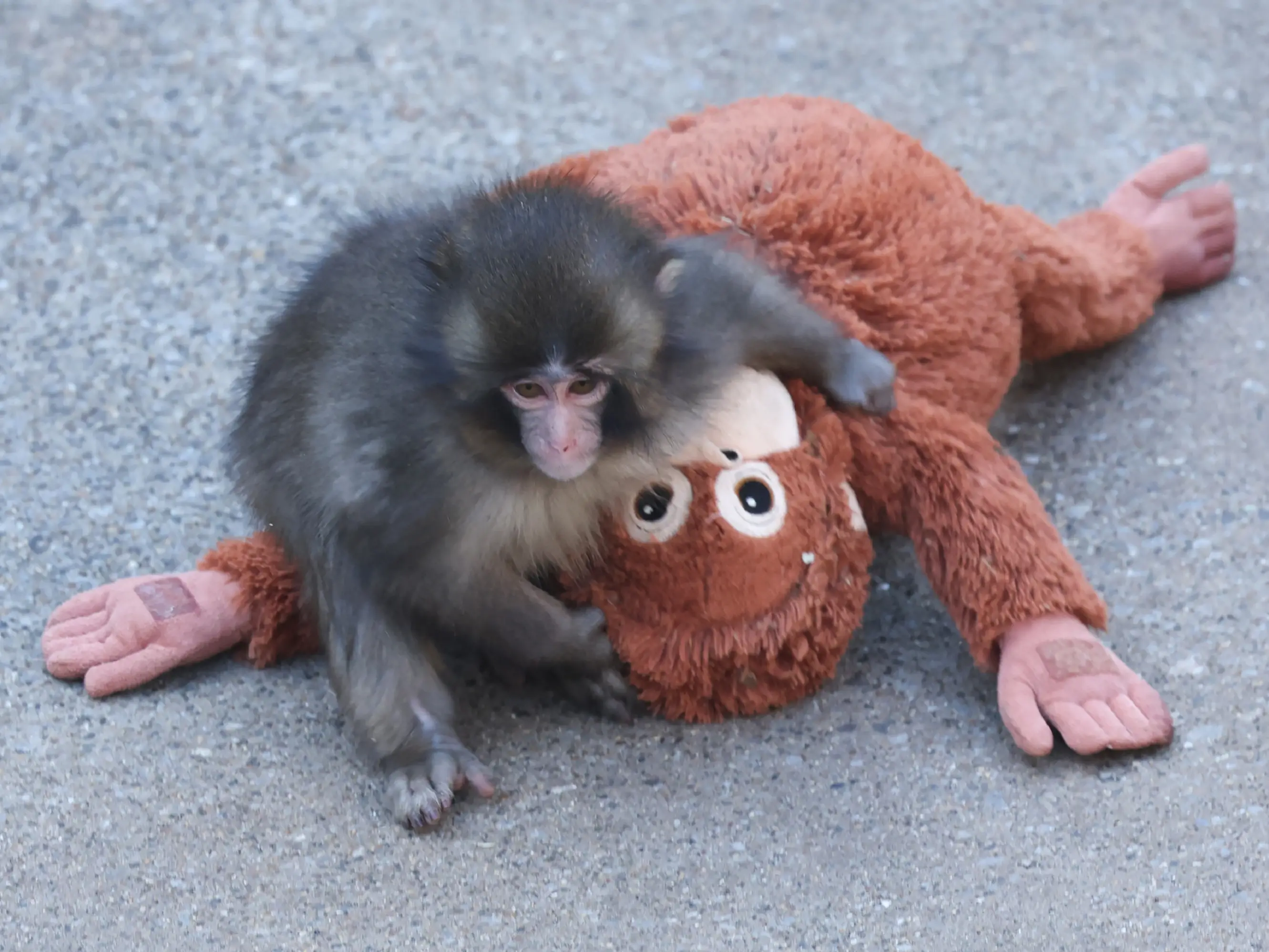
&imwidth=800&imheight=600&format=webp&quality=medium "As Punch stroked our emotional side, we ignored dark lives of macaque monkeys")
The pace, the speed, the rush – and amid all this, a warm, heart-wrenching story surfaces; we all can do nothing but stop. To stop and pause a little may seem like a luxury, as we are constantly racing and sometimes neglecting our emotional side. On many occasions, we are guilty of even having one. But Punch, the seven-month-old macaque monkey native to Japan, was that pause we all needed. To the technical ones, it may just be a mere trend.
Emotional trigger point
Again, it was only a trend that made many appreciate the little one and salute his struggle as he expressed his need for his mother, who abandoned him at the time of birth. We acknowledged the fight and resilience he had to show early on in life. The soft toy he has been dragging around also garnered some limelight. It is an Ikea ‘Djungelskog soft toy, orangutan’, priced at $19.99. The soft toy plays the second lead but a pivotal role in Punch’s story, and its now reportedly out of stock in Japan and other countries.
While many have rushed to buy the toy, which is now labelled a bestseller, others in Japan have queued up to catch a glimpse of Punch. The tiny primate is unaware he is making ripples on the internet, and that many think he's ‘cute’.
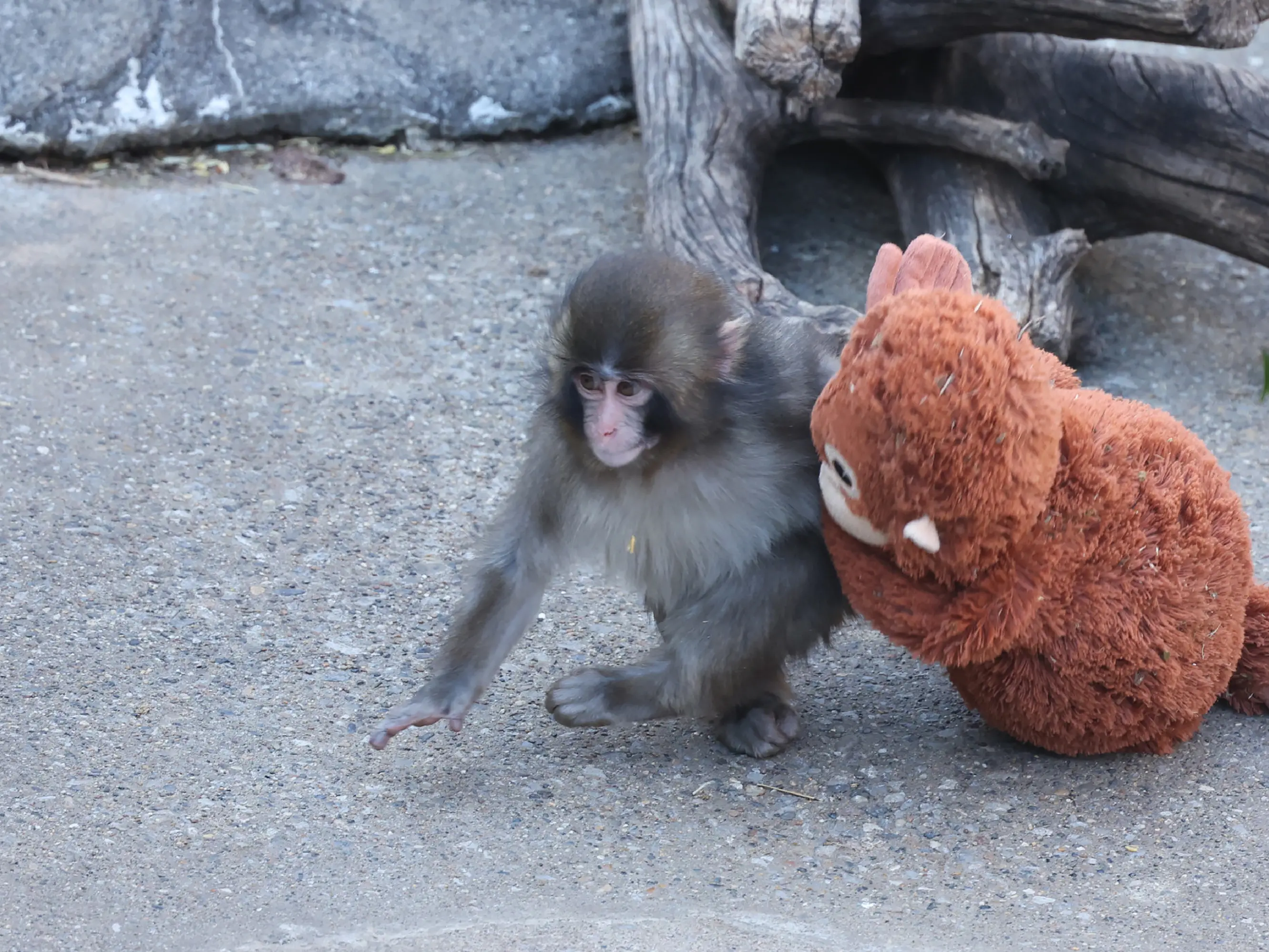)
7 month-old male macaque monkey named Punch Photograph: (Credits: AFP)
PETA says…
"Zoos are not sanctuaries -- they are places where animals are confined, deprived of autonomy, and denied the complex environments and social lives they would have in the wild," People for the Ethical Treatment of Animals (PETA) was quoted by news agency AFP.
"What some are calling 'cute' is actually a glimpse into the trauma of a young, highly social primate coping with isolation and loss," the group's Asia director, Jason Baker, said in a statement.
"Until facilities stop treating sentient beings as attractions, animals like Punch will continue to suffer in captivity," Baker said, calling for Punch to be moved to a "reputable sanctuary, where he could live in a more natural environment".
Victim of illegal trade
But the bigger matter here is that the internet’s favourite also happens to belong to the species of primates, which are victims of laundering due to their forced involvement in biomedical research globally. Macaque monkeys are used in lab experiments and are typically part of the penultimate and crucial round before human trials.
Trending Stories
&imwidth=180&imheight=135&format=webp&quality=medium)
'Hell of a beautiful a**': Trump compliments Nicki Minaj as rapper joins him in Michigan rally
&imwidth=180&imheight=135&format=webp&quality=medium)
'Hire the robot, fire the human': Bill Gates's words hint at a bleak future
&imwidth=180&imheight=135&format=webp&quality=medium)
Telangana unveils AI avatar of IT minister D Sridhar Babu at Hyderabad DevFest 2026
&imwidth=180&imheight=135&format=webp&quality=medium)
Who is Eyal Zamir, Israeli army chief, who reportedly clashed with Netanyahu over Iran?
&imwidth=180&imheight=135&format=webp&quality=medium)
Fire breaks out at Delhi’s North Block, thick black smoke seen | VIDEO
&im=FitAndFill=(700,400)&imwidth=180&imheight=135&format=webp&quality=medium)
Armoured vehicles vs main battle tanks: What is the real difference?
&imwidth=180&imheight=135&format=webp&quality=medium)
Pahalgam, Gulmarg record season’s first sub-zero temperatures as winter chill intensifies in Kashmir
&imwidth=180&imheight=135&format=webp&quality=medium)
IND vs NZ: Tilak Varma sets world record with most T20I catches in a year
&imwidth=180&imheight=135&format=webp&quality=medium)
FIR filed against opposition MPs for ‘trespassing’ amid Jamia Millia students’ protest
&imwidth=180&imheight=135&format=webp&quality=medium)
WATCH | Virat Kohli returns to training ahead of New Zealand ODI series
&imwidth=180&imheight=135&format=webp&quality=medium)
Can Putin cheat death? All about his daughter’s billion-dollar quest for immortality
&imwidth=180&imheight=135&format=webp&quality=medium)
Daler Mehndi controversy: Mika Singh’s team confirms Subodh Uniyal’s apology
&im=FitAndFill=(700,400)&imwidth=180&imheight=135&format=webp&quality=medium)
How do army night-vision systems see in almost complete darkness?
&imwidth=180&imheight=135&format=webp&quality=medium)
Netanyahu warns Israelis of ‘existential threat’ from Iran, posts AI image of nuclear strike
&imwidth=180&imheight=135&format=webp&quality=medium)
Brazil re-elects factory worker Lula for fourth term; Indian PM Modi congratulates 'dear friend'
&imwidth=180&imheight=135&format=webp&quality=medium)
Pakistan airline PIA unveils new crew uniforms, faces online criticism
&imwidth=180&imheight=135&format=webp&quality=medium)
‘That is a miss’: Ravi Ashwin questions Sooryavanshi’s demotion to No. 3 in 2nd T20I vs NZ
&im=FitAndFill=(700,400)&imwidth=180&imheight=135&format=webp&quality=medium)
Why does this fighter jet have a golden window that looks like alien technology?
&im=FitAndFill=(700,400)&imwidth=180&imheight=135&format=webp&quality=medium)
New OTT releases this week (October 26-November 1, 2026): Baththa, Akka, The One About Matthew Perry- 7 titles coming on Netflix, Prime Video and more
&imwidth=180&imheight=135&format=webp&quality=medium)
Elon Musk’s Grok releases first AI-generated Odyssey episode, months after promising ‘historically accurate’ full-length film
&imwidth=180&imheight=135&format=webp&quality=medium)
'Already tired of his 9-to-5': Baby born with a moustache becomes internet sensation, video goes viral | Watch
&imwidth=180&imheight=135&format=webp&quality=medium)
Rahul Gandhi’s convoy collides with ambulance on UP expressway | VIDEO
&imwidth=180&imheight=135&format=webp&quality=medium)
Serbia’s student-led movement defeats Vucic’s party after 14 years in power: Why it matters
&imwidth=180&imheight=135&format=webp&quality=medium)
'I promised Gautam & Kotak Sir that...': Tilak Varma opens up on match-winning mindset against NZ
&imwidth=180&imheight=135&format=webp&quality=medium)
‘Saddam Hussein opened a cheesecake factory’: Obama mocks Trump’s White House renovations; defends Abdul El-Sayed
&imwidth=180&imheight=135&format=webp&quality=medium)
Maldives opposition leader demands transparency on Muizzu Govt's Pakistan defence, security deals
&im=FitAndFill=(700,400)&imwidth=180&imheight=135&format=webp&quality=medium)
Why do some fighter jets have two engines while others use one?
&imwidth=180&imheight=135&format=webp&quality=medium)
Formula 1: Mercedes' Kimi Antonelli one race and ninth spot finish away from title after US Grand Prix win
&imwidth=180&imheight=135&format=webp&quality=medium)
Delhi's new entry rules for vehicles begin November 1. Here's all you need to know about the ban
&imwidth=180&imheight=135&format=webp&quality=medium)
'Clear overkill': Putin rejects claims Russia is behind mass protests in Europe
&imwidth=180&imheight=135&format=webp&quality=medium)
Clayface tops North American box office, Elizabeth Holmes documentary follows close behind
&imwidth=180&imheight=135&format=webp&quality=medium)
Nagpur man fails to pay rent, allegedly prints fake Rs 500 notes worth Rs 37 lakh
&imwidth=180&imheight=135&format=webp&quality=medium)
Donald Trump targets Bill Maher in lengthy post after White House dinner, says ‘Don’t call anymore’
Illegal trade and laundering, which subjects them to harsh treatment, is the usual life for many monkeys like him. Is his presence in the Ichikawa City zoo in Tokyo a boon or a bane? Even in the wild, these monkeys have been captured and used in experiments. Sometimes treated like pests and culled.
According to the European Animal Research Association, “All leading Covid-19 vaccine candidates (Moderna, Oxford/AstraZeneca, Pfizer/BioNTech, J&J) used rhesus macaques during preclinical testing.”
The International Union for Conservation of Nature has reported that in the last three decades, the population of wild monkeys has declined by 50-70%. This is due to the lab demands, which lead to illegal trade and monkey laundering. These wild macaques are “funneled through breeding farms in Cambodia, Laos and Vietnam and exported as captive-bred animals.”
Medical breakthrough
- Monkeys have played an important role in the introduction of antiretroviral therapy in treating AID/HIV. They were involved in the study, which reduced the morbidity and mortality of those infected with HIV.
- In Parkinson’s disease, monkeys were used in the research, which led to dopaminergic therapies.
- Breast cancer drug Herceptin, which was earlier recommended to nursing mothers, has been reduced as a study showed that the drug was secreted in breast milk.
- Antidepressants were developed after research on monkeys led to the initial theory of the cause of depression.

