Antarctic temperatures rise 10C above average, experts are calling it a near-record heatwave

Climate change in Antarctica
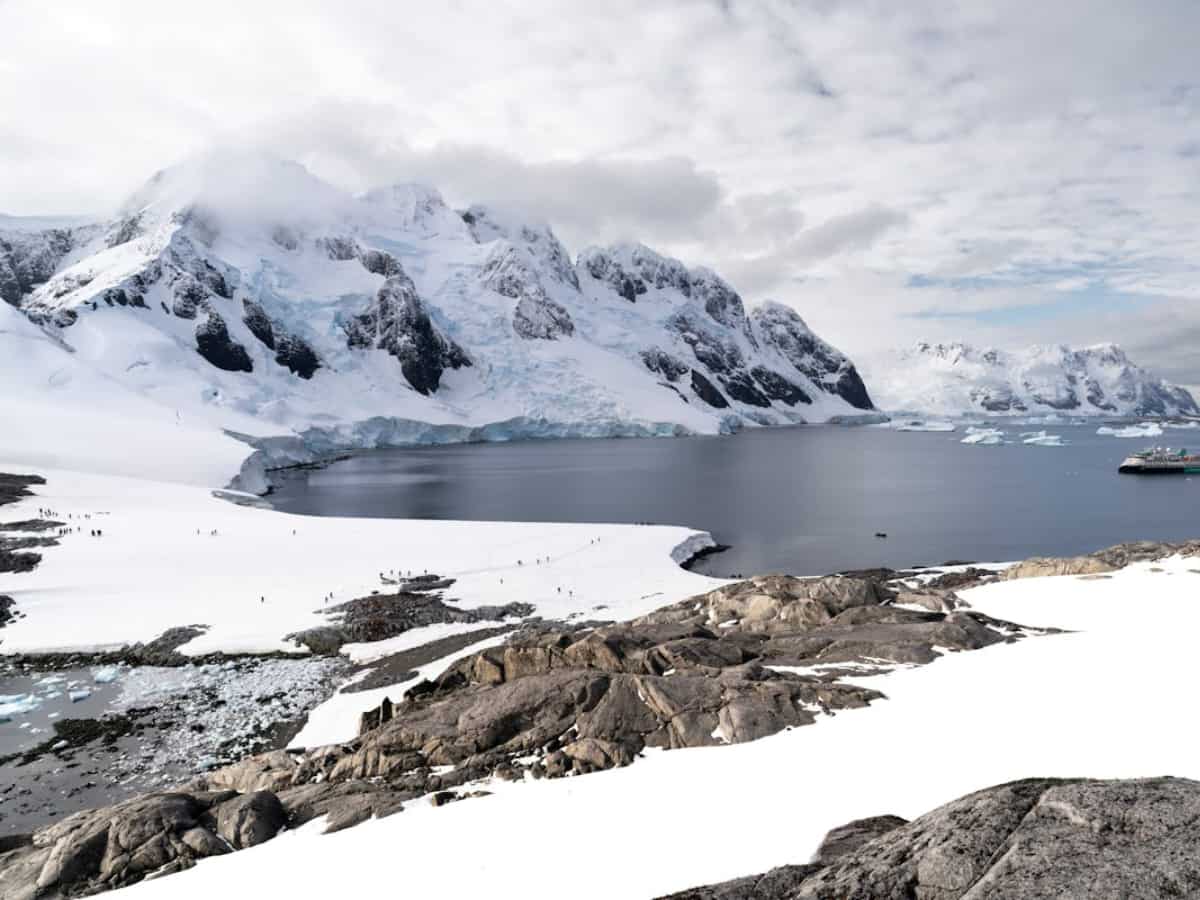
The ground temperature across ice sheet-Antarctica soared at an average of 10 degree Celsius above normal over the past month. The concerning and rare phenomenon is being described as a near record heatwave at one of world’s coldest places.
The world experienced 12 months of record warmth, with temperatures consistently exceeding the 1.5 degree Celsius rise above preindustrial levels that has been touted as the limit to avoiding the worst of climate overhaul.
While on the polar land mass, temperatures have remained below zero, the depths of southern hemisphere winter have reportedly reached 28 degrees Celsius above expectations on some days.

Also Read |Antarctica likely warming much faster than climate change models predicted: Study
Michael Dukes, the director of forecasting at MetDesk, said that while individual daily high temperatures were surprising, far more significant was the average rise over the month.
The models created by climate scientists have long predicted that the most significant effects of anthropogenic climate change would be on polar regions, “and this is a great example of that”, Dukes said.
)
Russia will achieve Ukraine war aims; Europe doing everything to block peace talks: Lavrov at UN
)
LPU students go on rampage, vandalise campus amid widespread protest: What's happening
)
Two men die of suspected chemical exposure inside public toilet in Mumbai
)
US vs China over South China Sea: Washington backs Philippines, Beijing hits back
)
Ramayana: Yash’s Ravana gets first official poster from Nitesh Tiwari’s epic
&im=FitAndFill=(700,400))
New Friday OTT releases (September 25, 2026): Don’t Be Shy, Hunkkaar: The Roar, Mango Pachcha- 6 movies and TV shows on Netflix, Prime Video and more
)
WATCH | Delhi minister Parvesh Verma slaps man during road inspection – Here’s what happened
)
OpenAI AI Agents hacked 4 websites before Hugging Face, researchers reveal
)
'Countries far from conflict are penalised': Jaishankar calls for Gulf peace, seafarer safety at UN
)
Bollywood x K-pop crossover! LE SSERAFIM’s Kazuha charms fans with Shah Rukh Khan’s ‘Chammak Challo’ steps
)
UNSC reform momentum grows: Russia, Portugal, Mauritius push for India's permanent seat bid
)
UK police arrest several under explosives act near air base used by US forces
)
IND vs WI 1st ODI: Naman Dhir debuts as India bowl first in Trivandrum; check playing XIs
)
Election Commission on 'damage control' : What do nine new decisions mean?
)
‘Olympic inclusion is our major target’: WPA President Ishaun Singh on pool’s global ambitions
)
Sri Lankan Tamil migrant worker gets death sentence in Saudi Arabia, help sought from India
)
SIR row: RTI response raises questions over EC’s claim of unanimous approval
)
Gunmen kill 27 in two separate mass shootings in South Africa
)
Nations League: Spain sink England at Wembley; Modric shines for Croatia
)
Trump-Xi summit wrap: Big pageantry, Iran talks, few major developments and more meetings planned
)
‘Could kill billions...’: Bill Gates backs calls to slow AI development amid fears of catastrophe
)
'A terrorist country is asking me that question?': Jaishankar hits back at Pakistani journalist at UN; flags attacks on commercial shipping
)
Afghanistan says 28 fighters killed in clash near Pakistan border, Islamabad denies
)
US Treasury Secretary Scott Bessent hails global crackdown on Iranian banks and airlines
&im=FitAndFill=(700,400))
Humanoid robots to virtual worlds! Korean sci-fi dramas to watch: Are You Human Too?, Memories of the Alhambra and more
)
WATCH | As Shehbaz Sharif claims Pakistan’s ‘victory’ during 2025 conflict, Indian diplomat R Srinivas laughs at UN
)
'FIRST LOOK from inside Noah’s Ark': Researchers share video from inside mysterious mound in Turkey
)
‘Attack on Mecca a red line for Pakistan’: Shehbaz Sharif warns Houthis at UN
)
Bigg Boss 20: Salman Khan schools Rhiti Tiwari over Qazi Touqeer clash, compares her to Dolly Bindra
)
Man arrested after his 22-year-old girlfriend dies at homestay in Guwahati; police suspect murder over suicide claim
)
Asian Games 2026: India face Afghanistan in quarterfinal on Sep 28; Pakistan clash with Hong Kong
)
Beyond metros: How Tier-2 and Tier-3 cities could drive India’s next AI wave
)
US-Iran war: Trump rejects Iran's Hormuz proposal, reports suggest talks expected next week
“Usually you can’t just look at one month for a climate trend but it is right in line with what models predict,” he added.
“In Antarctica generally that kind of warming in the winter and continuing in to summer months can lead to collapsing of the ice sheets," Dukes further said.
Watch |Global warming worsened loss of sea ice | WION Climate Tracker
This year in July, it was the first time in 14 months that temperature records were not broken.
Zeke Hausfather, a research scientist at Berkeley Earth, said Antarctica’s heatwave had “definitely been one of the bigger drivers in the spike of global temperatures in recent weeks”.
“Antarctica as a whole has warmed along with the world over the past 50 years, and for that matter 150 years, so any heatwave is starting off from that elevated baseline,” he said and added, “But it’s safe to say that the majority of the spike in the last month was driven by the heatwave.”
What is making the Antarctic region so warm?
In the past two years,heatwave has hit twice in the region, with the last being in March 2022, when temperature spiked to 39 degrees Celsius, causing a portion of the ice sheet the size of Rome to collapse!
Here also, we have El Nino to blame as Antarctica’s increased July temperatures follow a particularly strong El Nino.
This climate phenomenon has led to warming around the world in combination with the general increase in temperatures caused by climate breakdown, Dukes said.
Also Read |Climate change we instigated is here to stay for at least 50,000 years: Study
However, some experts attribute the heatwave in Antarctica to a weeks-long “southern stratospheric warming event” over the region.
“Those are really rare over Antarctica, so it wasn’t really quite clear how that would affect surface conditions on the continent,” said Jonathan Wille, a researcher studying climate science at ETH Zürich, a public research university in Zürich, Switzerland.
Thoughthere “seem to be more and more frequent heatwaves over the continent”, it was not yet clear how much of a factor the climate crisis had been in creating this particular event, said Dukes.
(With inputs from agencies)