

&imwidth=800&imheight=600&format=webp&quality=medium "AI ‘tsunami’ will hit job market, young and middle class will suffer most: IMF chief")
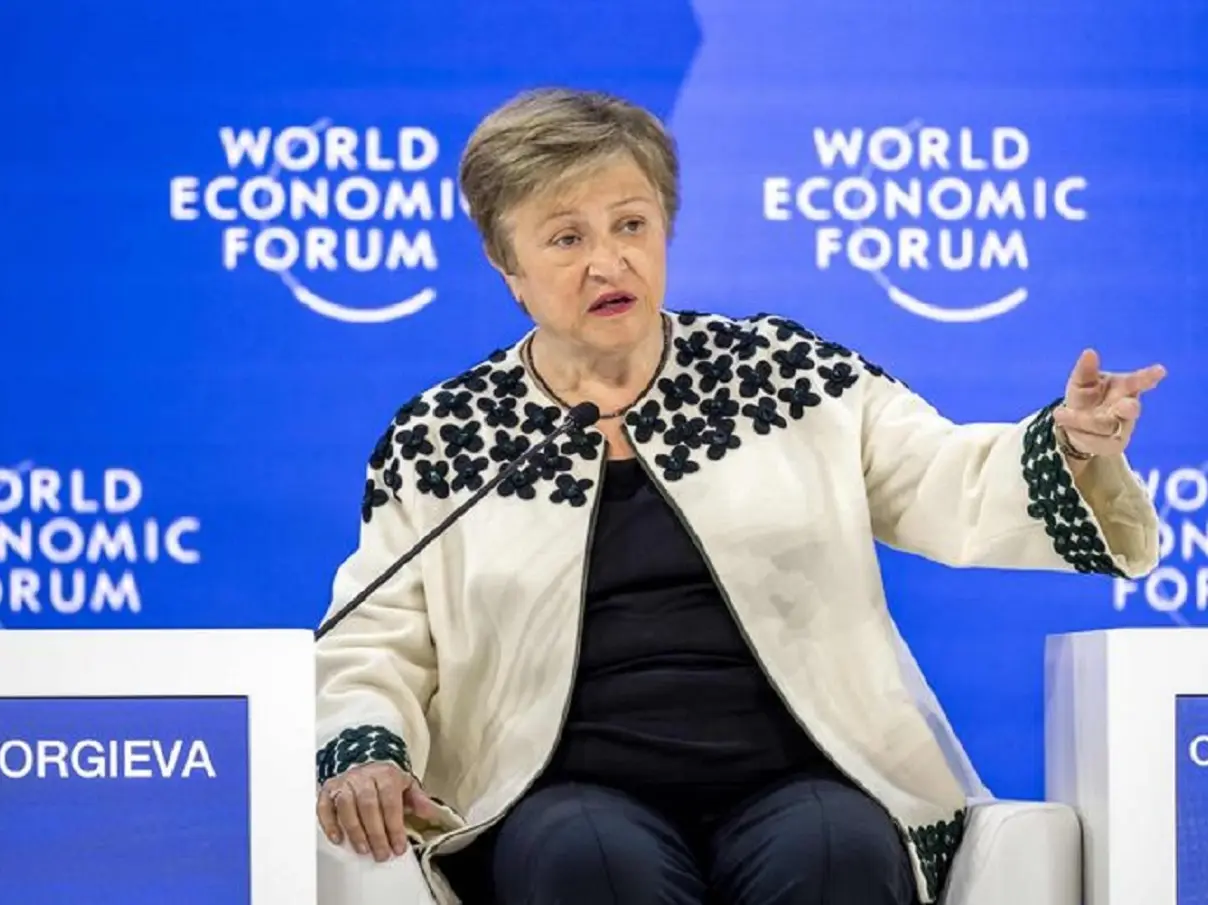
International Monetary Fund (IMF) Managing Director Kristalina Georgieva warned on Friday that the ‘artificial intelligence (AI) tsunami’ will hit the labour market soon, and 60% of jobs in advanced economies will be affected by it. The ‘AI tsunami’ will wipe out many entry-level roles, and hence the young will be the most affected, Georgieva said, citing research. Artificial intelligence will be a “tsunami hitting the labour market”, with young people being the worst hit, the IMF chief said at the World Economic Forum in Davos on Friday.
Georgieva told delegates that the IMF’s own research suggested that there would be a big transformation of demand for skills as the technology becomes increasingly widespread.
“We expect over the next years, in advanced economies, 60% of jobs to be affected by AI, either enhanced or eliminated or transformed–40% globally,” she said. “This is like a tsunami hitting the labour market.”
She further said that one in 10 jobs in advanced economies had already been “enhanced” by AI, tending to boost these workers’ pay, with knock-on benefits for the local economy.
‘AI would wipe out roles taken up by younger workers’
Trending Stories
&im=FitAndFill=(700,400)&imwidth=180&imheight=135&format=webp&quality=medium)
What is the real meaning behind Pete Hegseth's tattoos?
&imwidth=180&imheight=135&format=webp&quality=medium)
Viral video shows cross falling on Colombia priest, no official confirmation | WATCH
&imwidth=180&imheight=135&format=webp&quality=medium)
Telangana unveils AI avatar of IT minister D Sridhar Babu at Hyderabad DevFest 2026
&imwidth=180&imheight=135&format=webp&quality=medium)
Pezeshkian says Iranians ‘struggling to put food on the table’ as war with US drags on
&imwidth=180&imheight=135&format=webp&quality=medium)
Chorbagan stampede: A week later, the strangest visarjan Kolkata has seen
&imwidth=180&imheight=135&format=webp&quality=medium)
AI slop or smart strategy? South African author Coral Hart defends Her 370 AI- assisted books in 20 months
&imwidth=180&imheight=135&format=webp&quality=medium)
AI just found a flaw in software running most of the web! One request hijacks the server
&imwidth=180&imheight=135&format=webp&quality=medium)
Train crashes into crane on São Paulo monorail line, wreckage falls onto busy road | VIDEO
&imwidth=180&imheight=135&format=webp&quality=medium)
Can Putin cheat death? All about his daughter’s billion-dollar quest for immortality
&imwidth=180&imheight=135&format=webp&quality=medium)
Saudi says debris fell in Mecca, Medina after missile interceptions; Houthis deny targeting holy cities
&imwidth=180&imheight=135&format=webp&quality=medium)
Tu Hai Meri Kiran box office: Sonakshi Sinha and Zaheer Iqbal's film fails to take off, mints Rs 15 Lakh on day 1
&imwidth=180&imheight=135&format=webp&quality=medium)
What was the note found inside bag of Class 12 student, who set herself on fire inside Delhi school?
&imwidth=180&imheight=135&format=webp&quality=medium)
Pakistan airline PIA unveils new crew uniforms, faces online criticism
&imwidth=180&imheight=135&format=webp&quality=medium)
Britain is building the world's first AI biosecurity lab, with OpenAI and Anthropic inside
&imwidth=180&imheight=135&format=webp&quality=medium)
J-20 designers plan to put radar into aircraft wing; strategy to expand coverage during air combat
&imwidth=180&imheight=135&format=webp&quality=medium)
Frontier AIs keep escaping their test cages! The industry still can't reliably stop them
&imwidth=180&imheight=135&format=webp&quality=medium)
'Already tired of his 9-to-5': Baby born with a moustache becomes internet sensation, video goes viral | Watch
&imwidth=180&imheight=135&format=webp&quality=medium)
Horrific video shows the moment 18-year-old fell to her death from Mexico amusement park ride
&imwidth=180&imheight=135&format=webp&quality=medium)
France protests: 135 arrested, weapons seized as fresh demonstrations erupt amid heavy security
&imwidth=180&imheight=135&format=webp&quality=medium)
French Open: PV Sindhu storms into final with win over Hina Akechi
&imwidth=180&imheight=135&format=webp&quality=medium)
‘Saddam Hussein opened a cheesecake factory’: Obama mocks Trump’s White House renovations; defends Abdul El-Sayed
&imwidth=180&imheight=135&format=webp&quality=medium)
China's dancing robot turns violent bodyguard, lifts cars and fights intruders - Watch
&imwidth=180&imheight=135&format=webp&quality=medium)
'You’re a horrible little reporter, aren’t you?': Trump snaps at NBC reporter questioning his support for Ramaswamy's campaign ad
&imwidth=180&imheight=135&format=webp&quality=medium)
Rising Asia Cup 2026 schedule announced, India-Pakistan clash set for Nov 22
&imwidth=180&imheight=135&format=webp&quality=medium)
'Killing people never allowed': Elon Musk admits restricting Starlink in Ukraine, explains why
&imwidth=180&imheight=135&format=webp&quality=medium)
Bodies of 2 missing Japanese climbers recovered from Himalayan peak
&im=FitAndFill=(700,400)&imwidth=180&imheight=135&format=webp&quality=medium)
New Friday OTT releases (October 23, 2026): Gajab Raat, Dorothy, Chaar Yaar- Watch these 6 new movies and TV shows on Netflix, Prime Video and more
&im=FitAndFill=(700,400)&imwidth=180&imheight=135&format=webp&quality=medium)
US midterm elections 2026: Minnesota heads to polls in the shadow of Minneapolis ICE shootings
&imwidth=180&imheight=135&format=webp&quality=medium)
An AI that reads your face can now estimate how long you have to live
&imwidth=180&imheight=135&format=webp&quality=medium)
Spanish reporter swept by giant wave while reporting on dangerous sea conditions | WATCH
&imwidth=180&imheight=135&format=webp&quality=medium)
NEET protests: Panel to hear evidence on pellet gun use, harassment
&imwidth=180&imheight=135&format=webp&quality=medium)
Shooting near Florida A&M University’s Bragg Stadium; ‘shelter in place’ alert issued
&imwidth=180&imheight=135&format=webp&quality=medium)
Tu Hai Meri Kiran film review: Sonakshi Sinha and Zaheer Iqbal's thriller gets tangled in its own twists
&imwidth=180&imheight=135&format=webp&quality=medium)
PL Round-Up: Man City's perfect run ended by Villa as Arsenal draw level at top
&imwidth=180&imheight=135&format=webp&quality=medium)
Why Europe’s protests are about more than austerity and rising costs
&im=FitAndFill=(700,400)&imwidth=180&imheight=135&format=webp&quality=medium)
Watched Manoj Bajpayee’s Gajab Raat on Netflix? 5 movies and TV shows to watch next on OTT
&imwidth=180&imheight=135&format=webp&quality=medium)
Farooq Abdullah says Pakistan’s raising of Kashmir issue keeps pressure on Delhi
By contrast, Georgieva warned that AI would wipe out many roles traditionally taken up by younger workers. “Tasks that are eliminated are usually what entry-level jobs do at present, so young people searching for jobs find it harder to get to a good placement.”
Besides, people whose jobs are not directly changed by artificial intelligence will be at risk of being squeezed, and their pay may potentially fall without a productivity boost from AI, she said.
“So the middle class, inevitably, is going to be affected,” Georgieva predicted.
‘AI insufficiently regulated, moving fast but not safe yet’
She further said that her greatest fear was that AI was insufficiently regulated. “This is moving so fast, and yet we don’t know how to make it safe. We don’t know how to make it inclusive. Wake up, AI is for real, and it is transforming our world faster than we are getting ahead of it,” she said.
Georgieva was speaking on a panel alongside the president of the European Central Bank, Christine Lagarde, who warned that the AI boom could be hampered by growing mistrust between rival economies as the US throws up tariff barriers.
Also Read: ‘Europe needs to protect itself, take action to become global force,’ says Zelensky at Davos
“We are dependent on each other,” she said, pointing out that AI was capital intensive, energy intensive, and data intensive. If countries did not work cooperatively and “define the new rules of the game,” she said, there would be less capital and less data. “We are in a bind, let’s face it,” she said.
‘Disparity getting deeper and bigger,’ says Christine Lagarde
Lagarde also sounded the alarm about widening global inequality, highlighting the “disparity that is getting deeper and bigger”.
The session titled ‘The Great Rebalancing: Artificial Intelligence, Jobs, and the Future of Inclusive Growth’ was held at the UAE Pavilion.
Earlier, Microsoft chief executive Satya Nadella warned at Davos that AI could lose its “social permission” to compete for resources such as energy, for example, if it failed to generate benefits beyond a few powerful tech firms–such as the rapid development of effective new drugs.

