A startup is handing full control of a spacecraft to an AI, with zero commands from Earth

&imwidth=600&imheight=450&format=webp&quality=medium "A startup is handing full control of a spacecraft to an AI, with zero commands from Earth")
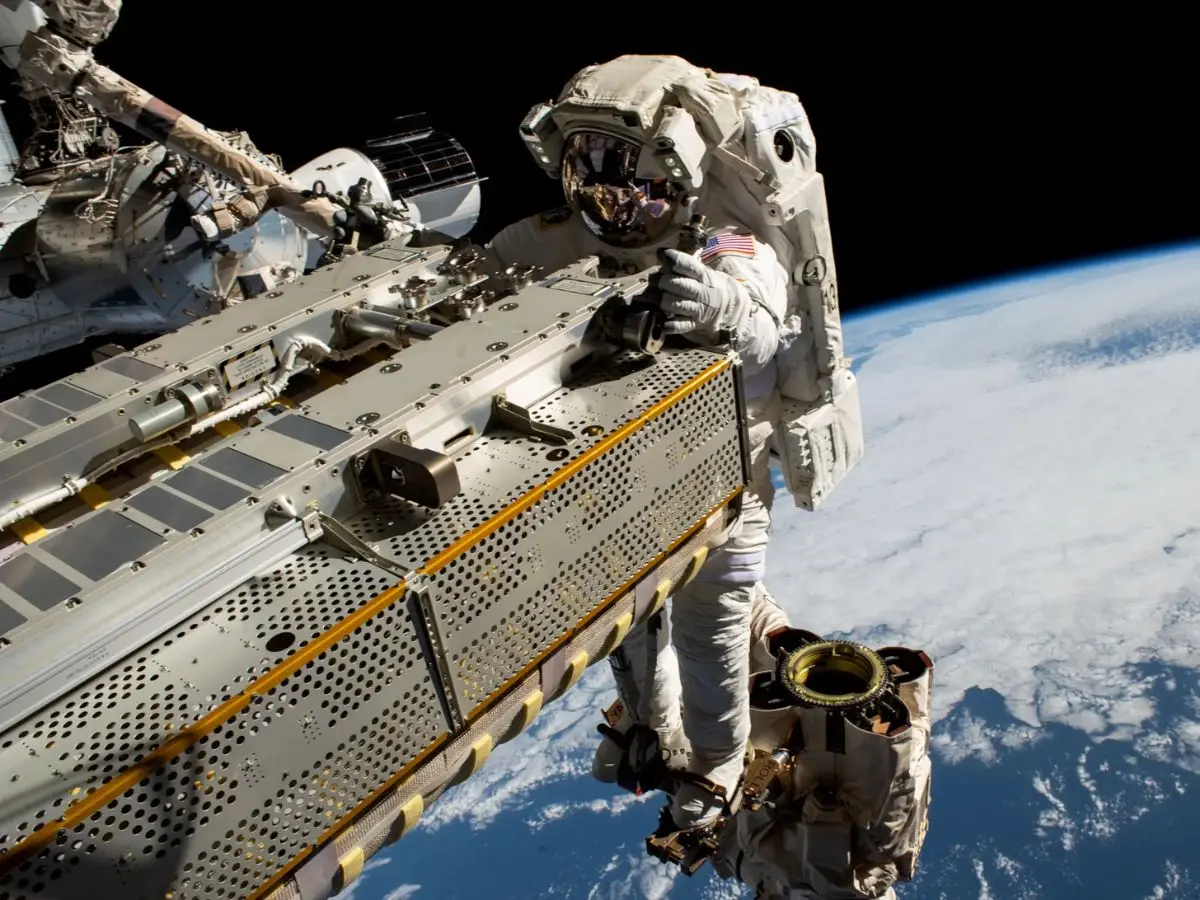
A startup is handing full control of a spacecraft to an AI, with zero commands from Earth Photograph: (NASA)
The asteroid-mining company AstroForge says its 2027 Autonomy-1 mission will be the first spacecraft to complete its objectives with no commands from Earth after it separates from the launch vehicle. An in-house AI model called Solo will run the ship — and it will be carrying a real NASA science payload, not just a test.
Spacecraft are flown from the ground. Teams of engineers send commands, wait out the signal delay, and correct course. AstroForge says its next mission will do away with that entirely.
The asteroid-mining startup says its Autonomy-1 spacecraft, booked to launch in early 2027, will be the first space mission to complete its objectives after separation from the rocket without a single command from Earth. Running it will be an AI system the company built in-house, called Solo.
What Solo Is
Solo is described as a transformer-based model — the same broad architecture behind large language models — trained to coordinate a spacecraft's onboard systems and make decisions in real time during flight.
It does not replace the traditional flight software so much as sit on top of it. The company says Solo works above its existing deterministic, physics-based control code, and was trained on data from roughly 2,500 spacecraft sensors to handle anomalies — the unexpected faults that normally send a problem back to human controllers on the ground.
Why Full Autonomy Is A Real Leap
Trending Stories
)
)
)
)
)
)
)
)
)
)
)
)
)
)
)
)
)
)
)
)
)
)
)
&im=FitAndFill=(700,400))
)
)
)
)
)
)
)
)
)
&im=FitAndFill=(700,400))
)
)
&im=FitAndFill=(700,400))
)
Deep-space missions already operate with heavy automation, because the distances make live human control impractical — a command can take many minutes to arrive. But there is a human in the loop, sending plans and responding to problems.
Removing that entirely is different in kind. A fully autonomous craft has to diagnose and resolve its own faults, decide its own actions, and keep a mission on track with no one able to intervene in time. That is exactly the situation deep-space exploration faces at the edge of the solar system, which is why the capability matters beyond one startup.
The Detail That Raises The Stakes
This is not a bare technology demonstration flying an empty spacecraft.
Autonomy-1 will carry a real scientific payload — a NASA heliophysics instrument — and Solo will be responsible for supporting that instrument's work as well as flying the ship. Putting a genuine science mission in the hands of an autonomous AI, rather than testing the AI in isolation first, is a meaningful bet on the system's reliability.
The Sensible Caution
It is worth being clear about what has and has not happened, because 'AI flies spacecraft alone' invites more certainty than the facts support.
This is an announced plan for a 2027 launch, not a completed flight. The company also says its earlier next mission will run Solo in 'shadow mode' — the AI operating and making decisions onboard, but with those decisions not actually executed, so its judgement can be checked against reality before it is trusted with control. That is a prudent step, and it signals the full-autonomy claim is a destination, not yet a demonstrated result.
There is also the obvious risk. An autonomous system that gets it wrong in deep space cannot be talked down by a ground team. The upside of removing the human is also the danger of removing the human.
What To Watch
Whether the shadow-mode mission validates Solo's decisions against what human controllers would have done. Whether Autonomy-1 launches on schedule in 2027 and completes its objectives unaided. And whether space agencies take interest, because reliable full autonomy is the capability that missions to the outer solar system have needed all along.
