
&imwidth=800&imheight=600&format=webp&quality=medium "'Recording has to stop here': US commander confronts Israeli counterpart over alleged surveillance — Report")
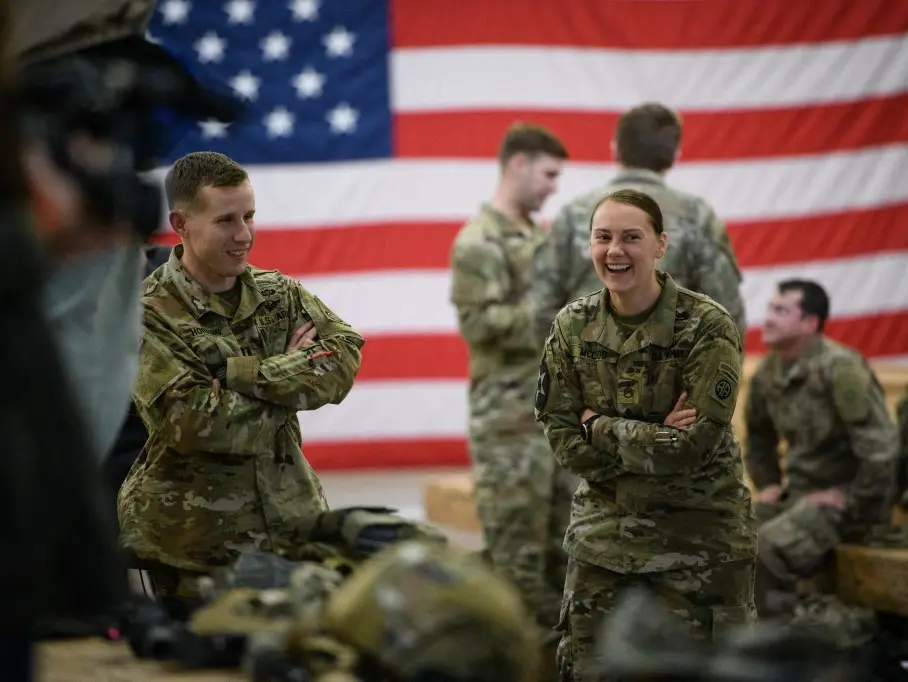
Israeli personnel have been accused of extensive monitoring of US troops and partner representatives working at a newly established American base in southern Israel, according to individuals briefed on disputes surrounding both overt and concealed recordings of internal exchanges. The extent of the alleged surveillance at the Civil-Military Coordination Center (CMCC) alarmed US commanders enough that Lt. Gen. Patrick Frank reportedly called in an Israeli military counterpart to firmly insist that “recording has to stop here.”
Concerns have come not only from US personnel but also from visiting delegations from additional allied countries. Several have privately warned colleagues to avoid sharing sensitive details inside the facility, fearing they could be captured and misused. Both the US military and the Israel Defense Forces declined to address the specific allegations. Israel’s military, however, said it routinely documents meetings in which its officers participate and described any claim that it was collecting intelligence on partners as “absurd,” stressing that conversations inside the CMCC are unclassified. The CMCC was created in October to oversee the ceasefire in Gaza, coordinate humanitarian shipments, and begin shaping Gaza’s postwar structure under Donald Trump’s 20-point framework. Oversized prints of that plan are displayed prominently throughout the building.
Although the center was intended to increase the flow of aid into Gaza, Israeli authorities have repeatedly limited or halted deliveries of essential supplies. A total blockade earlier this year contributed to famine conditions in several areas. When the CMCC began operating, media reports suggested the US might take the lead on aid oversight. But two months into the ceasefire, one US official says Israel still controls what enters Gaza: “They remain the hand, and the CMCC has become the glove.”

American logistics teams dispatched to the center, many experienced in difficult disaster-relief environments, initially believed they could dramatically expand aid access. Within weeks, many realized Israeli restrictions were a far greater barrier than physical or operational challenges; dozens ultimately returned to their home bases. Diplomats say persistent dialogue within the CMCC has helped persuade Israel to loosen portions of its “dual-use” restrictions, which have blocked items such as tent poles and chemicals needed for water purification. Dutch foreign minister David van Weel said he was told during a visit that one such barrier was lifted following these discussions. Other items, including basic school supplies like pencils and paper, remain barred with no clear justification.
Palestinians excluded entirely
Trending Stories
)
'Lot of things to learn from experienced players': Jayasuriya backs Rohit, Virat for 2027 ODI World Cup
&im=FitAndFill=(700,400))
Kareena Kapoor birthday special: Inside her net worth, best movies, luxurious lifestyle and love story with Saif Ali Khan
)
Trump says he'll build an 'AI Force' and appoint a czar, for 'high IQ' people only
)
Punjab man consumes poison outside DC office; Congress, BJP target AAP government
)
SNL UK takes aim at Ed Sheeran with AI Princess Diana sketch
)
Iran sets 7 conditions to end war with US: What are Tehran’s demands?
)
AI actress Tilly Norwood glitches mid-interview, switches from English to Chinese | Watch
)
Mahabharat actor Saurav Gurjar arrested in Hyderabad, sent to 14-day judicial custody in sexual exploitation case
)
Chancellor Friedrich Merz vows to stay on as exit polls signal major poll setback
)
J&K Assembly Session begins amid chaos: BJP, ruling alliance clash as statehood demand dominates
)
Taylor Swift has a 'proud wife' moment as Travis Kelce scores first touchdown of season: 'That’s my husband!'
)
'Were you here to sell chickpeas?': Wasim Akram criticises Babar Azam's captaincy
&im=FitAndFill=(700,400))
New OTT releases this week (September 21-27, 2026): Shaque: Trust No One, Hunkkaar, Don’t Be Shy- 5 new titles coming to Netflix, Prime Video and more
)
Noel Tata challenges Chandrasekaran’s reappointment as Tata Sons chairman. What happened at the board meeting
)
Italy moves to ban face veils in schools as Meloni pushes new integration measures
)
TIFF 2026: Theja Rio’s Angh wins Platform Prize, puts Nagaland story on global stage
)
Delhi: Flagged voters remain on the draft roll but face hearings
)
Saudi Arabia exits China-led mBridge digital currency platform amid Saudi-Houthi conflict
)
40-foot waves crash into cruise ship in dangerous stretch near Antarctica. Watch
)
Jailer 2: Vidya Balan joins Rajinikanth's upcoming film as Kantha | Watch
)
‘0% chance’: Nvidia CEO Jensen Huang dismisses AI extinction fears by 2030
)
Samsung raises Galaxy S26 prices by Rs 20,000: Here’s what each model now costs
)
Bessent meets China’s He Lifeng to prepare for Trump-Xi summit
)
CDU suffers historic defeat in eastern Germany as AfD surges, Merz vows to stay on
)
China now makes advanced memory chips without the machines it was banned from buying
)
Arvind Kejriwal, family members, Delhi CM Rekha Gupta get SIR notices
)
Trump-Xi summit: US Treasury Secretary holds meeting with Chinese Vice Premier
)
Fleming's aspirations as England Test coach include WTC, top ranking and Ashes
)
Saudi vs Houthis: Houthis claim missiles & drones used in attack on key Saudi sites
)
Delhi Air pollution: Strict crackdown on waste burning
)
Apple reportedly building AI server with M8 Ultra chips, may use Nvidia technology
&im=FitAndFill=(700,400))
What TSMC's 2nm technology means for Apple
)
Glitch in the matrix caught on camera: Woman vanishes after talking to reporter
)
Several petrol pumps, other businesses to refuse UPI payments above Rs 2,000 from Oct 16: Is it legal?
)
AI kill switch explained: Why shutting down a dangerous AI may not be as simple as pressing a button
)
Microsoft executive called AI training the ‘largest theft of labour in human history’
)
Pilot recreates Mona Lisa in sky over Oklahoma and Arkansas in four-hour flight: VIDEO
)
US ships in Indian Ocean ‘will be attacked’ if war resumes, warns Iran
)
Samay Raina-Mukesh Chhabra controversy explained: What happened over girlfriend joke on India's Got Latent?
)
Putin's United Russia party wins 355 seats in Duma election; 4 other parties cross threshold to enter parliament
)
S Jaishankar, former Army chief among high-profile names issued Delhi SIR notices
The CMCC hosts military planners from the US, Israel, the UK, and the UAE, along with diplomats and humanitarian groups invited to weigh in on aid flows and long-term planning. Yet Palestinians, whether from civil society, humanitarian agencies, or the Palestinian Authority, have no seat at the table. Attempts to include Palestinian voices through video teleconferencing were repeatedly interrupted or shut down by Israeli officials, according to multiple sources.
Internal U.S. military planning documents avoid using the terms “Palestine” or “Palestinian,” instead referring to the population simply as “Gazans.” Israeli Prime Minister Benjamin Netanyahu has also framed the CMCC as a bilateral US-Israeli project, omitting mention of the additional partners.
Located in a multistory building in the industrial area of Kiryat Gat, about 20 km from Gaza, the center occupies a facility previously used by the Gaza Humanitarian Foundation, whose food-distribution points later became deadly for hundreds of Palestinians during earlier crises. Remnants of the group’s aid stock still sit in the basement.
The interior resembles a tech startup more than a military post: astroturf carpeting, scattered whiteboards forming ad-hoc workspaces, and American corporate terminology woven into daily routines. Some teams use mnemonics considered deeply insensitive, given Gaza’s devastation, including “Wellness Wednesdays” for planning hospital restorations and “Thirsty Thursdays” for work on water and sanitation, services that are currently failing and contributing to disease outbreaks.
Diplomats and aid staff remain uneasy about the CMCC. Many worry the center blurs military and humanitarian roles, lacks an international mandate, excludes Palestinians entirely, and could violate international law. Yet they also fear that staying away would leave critical decisions about Gaza’s future solely in US and Israeli hands, even though many of the newly deployed American planners have a limited understanding of Gaza’s political realities. “This is the only avenue we have to be heard by the Americans,” one diplomat said, admitting uncertainty about whether their efforts will ultimately matter.
With dozens of US military specialists already rotating out after their official assignments were completed, the CMCC’s influence may already be diminishing. Planning Gaza’s future in a political vacuum, absent Palestinian participation, has proved surprisingly easy compared with past negotiations, though it remains unclear whether any of these plans will ever be implemented.

