THIS is the world's oldest sales receipt. It is 3500-year-old and exists in the form of cuneiform tablet

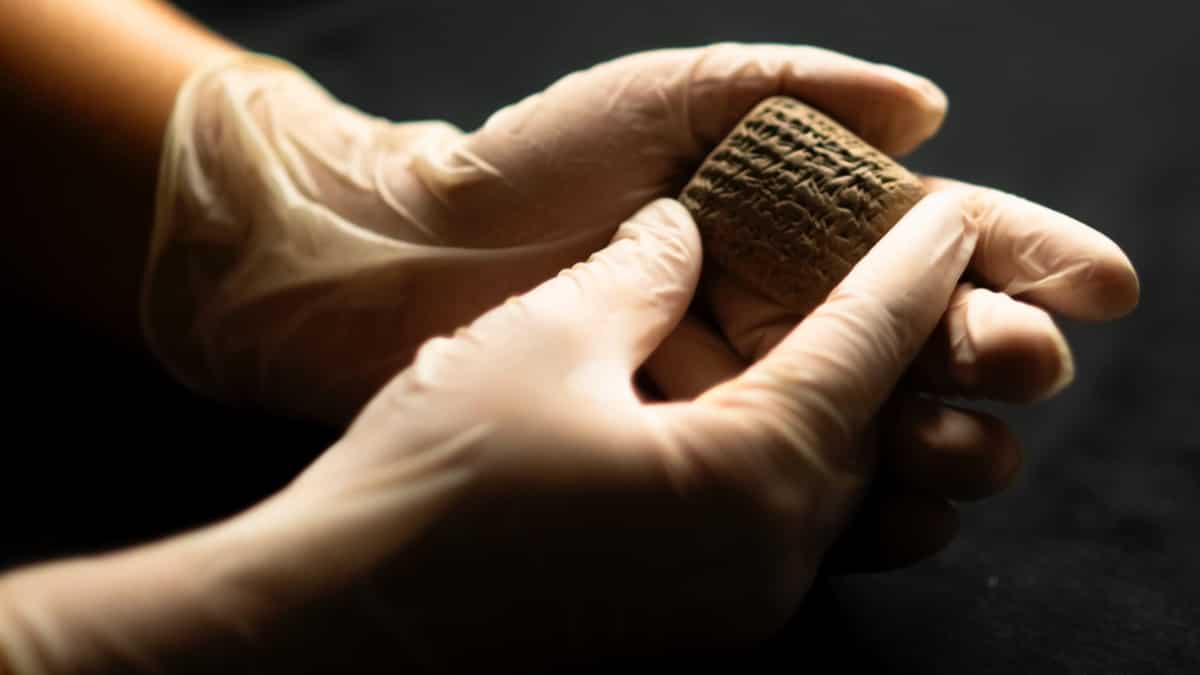
Image of cuneiform tablet which has world's oldest sales receipt.
The archaeologists made a stunning discovery when they stumbled upon a clay tablet engraved with one of the oldest sales receipts in the world in southern Turkey.
The tablet, which is written in cuneiform, is an ancient document which belonged to the 15th century BCE. The tablet is a record of wooden furniture purchased in large quantities.
Turkish Minister of Culture and Tourism Mehmet Ersoy announced the discovery and said that the historic relic was found by researchers at Eski Alalah, in the southern province of Hatay.

Also Read:Archaeologists discover ruins of 4,000-year-old ceremonial temple
The ancient site, which is also known as the Aççana Mound, is situated in the old city of Alalah. The tablet was found by the workers when they were carrying out restoration work after an earthquake.
&im=FitAndFill=(700,400)&imwidth=180&imheight=135&format=webp&quality=medium)
Navratri 2026: 9 days, 9 forms of Goddess Durga and 9 colours- Check the complete list
&imwidth=180&imheight=135&format=webp&quality=medium)
Bigg Boss 20: Isha Rikhi evicted after three weeks in Salman Khan’s show
&imwidth=180&imheight=135&format=webp&quality=medium)
Russian woman and Bihar boy's love story goes viral after she reaches India to marry him
&imwidth=180&imheight=135&format=webp&quality=medium)
Arijit Singh 9-city India stadium tour to start from January: Check venue and ticket prices
&imwidth=180&imheight=135&format=webp&quality=medium)
‘Hernia, aneurysm, injuries’: Salman Khan reveals health struggles behind his changing physique on Koffee With Karan 9
&imwidth=180&imheight=135&format=webp&quality=medium)
F1 set to return to Africa for first time since 1993
&imwidth=180&imheight=135&format=webp&quality=medium)
'Don't ever mess with nature!': Trump’s tiger attack post triggers social media backlash as victim's family issues heartbreaking tribute
&imwidth=180&imheight=135&format=webp&quality=medium)
Trump's $100,000 H-1B fee: Why neither Republicans nor Democrats want to make it a 2026 US Midterm issue
&im=FitAndFill=(700,400)&imwidth=180&imheight=135&format=webp&quality=medium)
Which jobs are safest from humanoid robots?
&imwidth=180&imheight=135&format=webp&quality=medium)
‘Rise up, young patriots!’: American singer Mary Millben says US donors funding CJP, backs Modi govt
&imwidth=180&imheight=135&format=webp&quality=medium)
Nobel Peace Prize winner Navi Pillay calls on US to 'get back to' being defender of human rights
&imwidth=180&imheight=135&format=webp&quality=medium)
Iranian woman, 23, handed death sentence for ‘blasphemy’ in social media post; appeals for help
&imwidth=180&imheight=135&format=webp&quality=medium)
'Turn approver, resign, we'll forgive you': Rahul Gandhi claims receiving messages from CEC Gyanesh Kumar
&imwidth=180&imheight=135&format=webp&quality=medium)
Somaliland celebrates after Trump calls it 'a totally different country', raise hopes of US recognition
&imwidth=180&imheight=135&format=webp&quality=medium)
Afghan FM Muttaqi to CdA Yatin Patel: We attach importance to relations with India
&imwidth=180&imheight=135&format=webp&quality=medium)
'FWD Supreme' to use AI for flight and threat identification
&imwidth=180&imheight=135&format=webp&quality=medium)
‘My president, I mean my husband’: Trump's new press secretary Katie Zacharia's first briefing goes off the rails in 14 minutes
&imwidth=180&imheight=135&format=webp&quality=medium)
Mars is not for man: Human heart is too weak to survive the trip, study shows
&imwidth=180&imheight=135&format=webp&quality=medium)
‘600,000 people without electricity’: Zelensky calls for ‘strong’ US sanctions on Russia, accuses Moscow of violating Trump’s energy ceasefire
&imwidth=180&imheight=135&format=webp&quality=medium)
Sheikh Hasina warns of 'deep sense of insecurity' among Bangladesh's minorities in Durga Puja message
&imwidth=180&imheight=135&format=webp&quality=medium)
FBI refutes media report claiming Kash Patel is in Russia for talks, says he is in Virginia
&imwidth=180&imheight=135&format=webp&quality=medium)
US inflation hits 3.7% as rising fuel prices pose challenge for Trump ahead of midterms
&imwidth=180&imheight=135&format=webp&quality=medium)
IND vs WI 4th T20I: Shai Hope hundred and Keemo Paul's five-for level series for West Indies
&imwidth=180&imheight=135&format=webp&quality=medium)
Girl 'dead' for 8 hours wakes up at her own funeral, dad insists she wasn't breathing
&imwidth=180&imheight=135&format=webp&quality=medium)
'Ouch!!! That must hurt': Kangana Ranaut hails Kamal Haasan's sharp reply to Elon Musk over Starlink row
&imwidth=180&imheight=135&format=webp&quality=medium)
Three Indians killed in suspected arson attack in Germany, Romanian resident arrested
&imwidth=180&imheight=135&format=webp&quality=medium)
'Totally unacceptable': MEA slams attacks on Saudi civilian infrastructure after Indian national's death
&im=FitAndFill=(700,400)&imwidth=180&imheight=135&format=webp&quality=medium)
New OTT releases this week (October 12-18, 2026): Sacrifice, Koffee with Karan S9, Roadies Rebirth- 6 titles coming on Netflix, JioHotstar and more
&imwidth=180&imheight=135&format=webp&quality=medium)
Did the US withhold missile warnings? Ukraine questions Washington's 'bad weather' explanation after Russian strikes kill six, cut power to 600,000
&imwidth=180&imheight=135&format=webp&quality=medium)
US Singer Mary Millben alleges foreign funding for CJP, warns against anti-Modi forces: All you need to know
&imwidth=180&imheight=135&format=webp&quality=medium)
Global energy crisis hits Indian economy
&imwidth=180&imheight=135&format=webp&quality=medium)
Durga Puja 2026: Power banks, water bottles and more, a foolproof guide to pandal hopping
&imwidth=180&imheight=135&format=webp&quality=medium)
Netflix layoffs: Streaming giant to cut 1,000 jobs globally amid slow growth and declining user engagement
&imwidth=180&imheight=135&format=webp&quality=medium)
Zelensky feels betrayed by Trump, urges Musk to restore Starlink in Ukraine; Musk responds
&imwidth=180&imheight=135&format=webp&quality=medium)
'Girls are uncomfortable': Salman Khan calls out paparazzi for bad angles, speaks on PR on Koffee With Karan
&imwidth=180&imheight=135&format=webp&quality=medium)
After flydubai co-pilot attack, Air France bans Pakistani, Muslim-majority crew on Israel flights
Cuneiformis the world's oldest known writing systemdeveloped nearly 5,500 years ago and used across ancient Mesopotamia for nearly three millennia.
The cuneiformtext was created by impressing reed styluses into clay. It was used by different cultures, which included Babylonians, Assyrians, and Sumerians, and each of them used it differently as per their language.
Cuneiform tablet of sales receipt belonged to Akkadian Empire
Minister Ersoy said that the newly found sales slip had been written in Akkadian, which was the Akkadian Empire's lingua franca.
The Akkadian Empire, which survived for little more than a century, had its capital city situated along the banks of the Euphrates River and the empire's now-extinct dialect was among the most ancient Semitic languages - Hebrew and Arabic.
Watch:Mercury's Diamonds: What lies beneath the planet's crust?
As of now, the linguists are working on deciphering the text and in the first few lines, they found the sale and purchase of chairs, tables, and stools documented, as well as the identities of the buyers and sellers mentioned.
“We believe that this tablet, weighing 28 grammes [1 ounce], will provide a new perspective in terms of understanding the economic structure and state system of the Late Bronze Age,” Ersoy said, in astatement.
(With inputs from agencies)