&imwidth=800&imheight=600&format=webp&quality=medium "Sun has not been shining much on India for nearly 40 years. Blame the government")
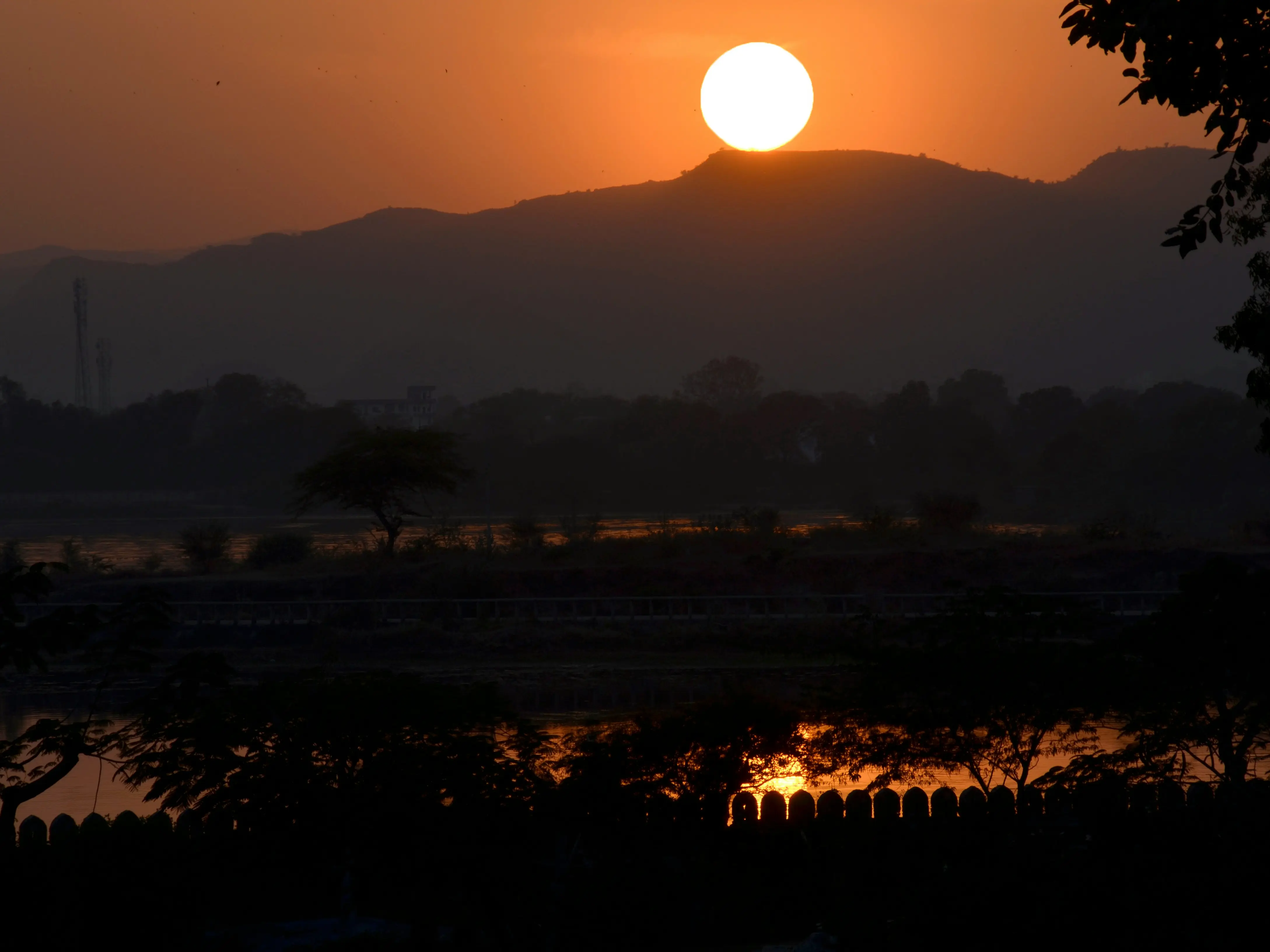
India is losing sunshine hours, and this trend has greatly increased in the past three decades. A study done by Indian scientists shows that since 1988, the Sun's date with India has been on a downward trend, thanks to the cloud cover and the increasing number of aerosols in the air. The Banaras Hindu University, Pune-based Indian Institute of Tropical Meteorology (IITM) and the India Meteorological Department (IMD) collaborated on a study that studied data from 1988 to 2018. The monthly sunshine hours (SSH) analysis from 20 meteorological stations and from nine regions showed that the annual sunshine hours in India have been consistently declining. The research was published in the journal Nature on October 2.
The study noted that there was a "persistent decline of SSH in the Indian subcontinent on all temporal scales, excluding the north eastern region, where mild seasonal levelling off was found." Meanwhile, there was a "significant increment from October to May followed by significant drops from June to July in six regions, except the northern inland and Himalayan region that showed comparatively opposite monthly trends." Previous studies have found decreasing trends in solar radiation across India and a persistent solar dimming in the 21st century. The researchers blame this on the rising aerosol levels, which went up because of urbanisation in the early 1990s.

India did not take timely steps to control aerosols in environment
The study notes that during the 1990s, "India’s economic growth drove urbanisation, land-use changes, and industrialisation, leading to increased fossil fuel consumption, vehicular emissions, and biomass burning." As a result, aerosol concentrations in the atmosphere rose, consequently reducing solar radiation. India was not the only country to undergo changes in the early 90s, with China and Japan also witnessing similar changes. However, the two countries implemented policies to control aerosol pollution. Beijing cracked down with the Clean Air Action Plan, while Japan successfully implemented clean technologies and emission controls. This lowered aerosol levels and caused a brightening trend, the study authors wrote.
Trending Stories
)
BRICS Summit 2026 full schedule: Day-wise agenda, timings and key issues - All you need to know
)
BRICS Summit 2026: Iran's Pezeshkian praises PM Modi at BRICS
)
India bridging Gulf divide amid war? Iran’s Pezeshkian meets UAE Crown Prince at BRICS
)
‘Differences should not become disputes’: Modi, Xi stress long term India-China ties during bilateral talks
)
BRICS Summit: All about Xi Jinping's armoured limousine Hongqi that will ferry him in New Delhi
)
BRICS Summit 2026: Modi-Xi meeting to test India-China reset after border tensions
)
BRICS Summit 2026: 30+ countries seek BRICS membership
)
Frustrated man demolishes his kitchen after thousands flock to see Mother Mary his wife spotted on the wall
)
BRICS summit: India faces delicate Iran-UAE diplomatic test
)
From drones to KAAN fighters: Turkey outlines 229% surge in defence spending amid regional shifts
)
What’s in the menu for BRICS Summit gala dinner hosted by PM Modi? Details here
)
Odisha gets investment proposals worth Rs 2.42 trillion from UAE with 6.18 lakh potential jobs
)
Bigg Boss 20: Uditi Singh reacts to ex Karan Wahi’s possible wildcard entry
)
800 million years old - Scientists discover 'fingerprints' of supercontinent Gondwana in ancient rocks
)
ENG vs PAK: Joe Root breaks Sachin Tendulkar’s record for most Test fifties
)
BRICS Declaration: China, Russia back India’s UN role, push for greater Global South representation
)
Osama Bin Laden's son ALIVE? Al-Qaeda releases video 7 years after US declared him dead
)
Israel spent nearly $470,000 on PM's hair, makeup since 2019, data shows
)
From India, Putin warns Europe against sending troops to Ukraine, Zelensky expresses willingness to meet him at G20 Summit
)
BRICS Summit 2026: Special BRICS session on 'inclusive global governance'
)
9/11 attack anniversary: The day that changed America forever
)
9-year-old Chennai prodigy clears Cambridge IGCSE grade 10 exams
)
BRICS Summit: China resumes Guangzhou-New Delhi flight, issues 'good-neighbourliness' remark ahead of Xi-Modi meet
)
BRICS Summit 2026: PM Modi says India and Iran should pursue win-win strategy
)
Rizwan, Imam-ul-Haq questioned by Pakistan’s cybercrime department in Lahore
)
BRICS Summit 2026: India ensures consensus: BRICS nations to issue joint statement today
)
Baba Vanga's first prophecy for 2027 is out, and straight out of science fiction
)
'A more balanced, multipolar world': India welcomes Chinese President Xi Jinping for BRICS Summit
)
BRICS declaration calls for stronger people ties, women-led growth and greater youth cooperation
)
Modi, Putin, Xi ‘bromance’ goes viral as leaders captured holding hands at BRICS Summit
)
IND vs AFG, 1st T20I: When and where to watch live streaming in India?
)
Kabir Khan recalls being in NYC during 9/11; ‘Witnessed a city shaken by unimaginable tragedy’
)
Mumbai-based Air India pilot found dead at Vasant Kunj hotel
)
Anthropic is giving Claude to schools free, and the reason is not philanthropy
&im=FitAndFill=(700,400))
BRICS Summit 2026: Inside PM Modi’s meetings with global leaders
Cloud cover increasing because of aerosols
They added that weather conditions have also driven this change, with clouds obstructing sunlight and reducing solar radiation and sunshine hours. Aerosols are responsible for the increasing cloud cover, the study states. "As per the theory of condensation for warm cloud systems, bigger cloud droplets are formed when the natural balance of aerosols and humidity persists, and formation of perceptible clouds is achieved." However, when the number of aerosols goes up in the same amount of humidity, "a greater number of smaller-sized cloud droplets are developed and the cloud lifetime is prolonged." As a result, the hours during which the solar radiation can reach the surface would also be impacted.