

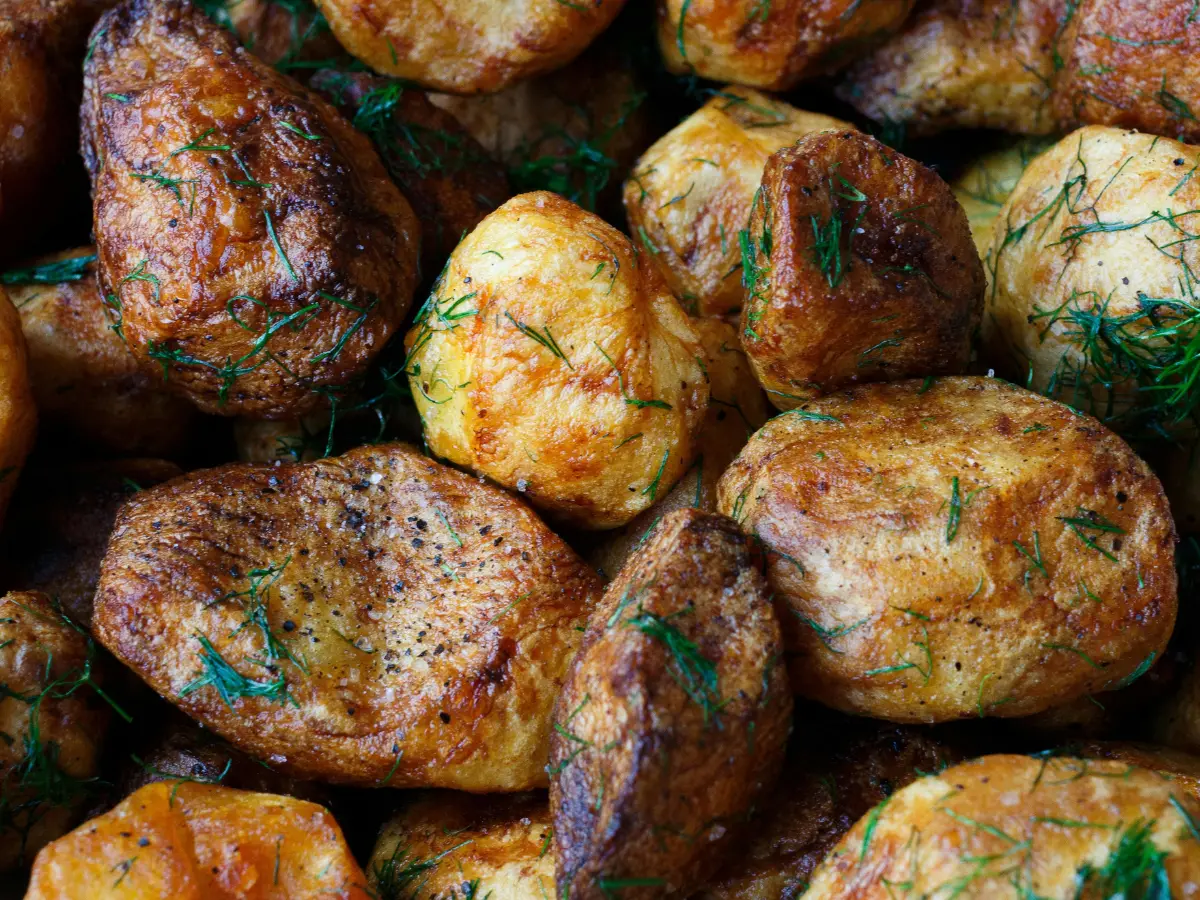
&imwidth=800&imheight=600&format=webp&quality=medium "Potato has a mother, and you won't believe who it is. Hint: It's a fruit")
Scientists have figured out how potatoes were born. Turns out, one of its parents is the tomato. Eight to nine million years ago, tomatoes and a species that looked like a potato existed. The humble vegetable's lineage is quite confusing. It belongs to a line of species called Petota, which is believed to have been born when the ancestors of the tomato mated with Etuberosum, a species of wild potato. The latter is found in central Chile. This interbreeding is what caused today's potatoes, or tubers, to be born. When wild tomatoes, which grew in the Andes, got together with the wild potato species, a new combination of genes was born in the Petota lineage. This triggered the birth of the potato we eat today. Tubers have not been found in the ancestors of modern tomato and Etuberosum plants. They have never been observed in either lineage since they interbred to produce a hybrid. Researchers who conducted the study said it is amazing how something totally new could be created when two separate species mate with each other. The findings were published Thursday (July 31) in the journal Cell. Also Read: Frozen in time: Baby born from 30-year-old embryo makes history
Tomato is the mother, and Etuberosum is the father
"We've finally solved the mystery of where potatoes came from," Sanwen Huang, a professor at the Agricultural Genomics Institute at Shenzhen, who led the study, said in a statement. "Our findings show how a hybridisation event between species can spark the evolution of new traits, allowing even more species to emerge," he said. “Tomato is the mother, and Etuberosum is the father." The potato's father is different from today's potato in a major way. While they look the same above the ground, Etuberosum has thin underground stems and no starchy potato tubers. While studying how the potato was born, the researchers turned to the tomato. It is a completely different species and is actually a fruit. But Huang says they belong to the same plant family, along with eggplant and tobacco. "But tomato, potato, and Etuberosum are closest genetically, he added, and so they decided to take a closer look. Also Read: Klyuchevskaya volcano eruption is not the last. Several more in Ring of Fire will explode, experts warn
Tomatoes and Etuberosum had their last common ancestor between 13 million and 14 million years ago
The analysis revealed that an event that occurred nine million years ago led to the creation of the potato. They identified "mosaic-like" genetic patterns in Petota, which meant that there was an even mix of DNA inherited from both Tomato and Etuberosum. The ancient hybridisation event between Etuberosum and Tomato became possible because they shared a common ancestor between 13 million and 14 million years ago. Even after this last ancestor disappeared, Tomato and Etuberosum continued to share some genetic traits, which made them mate with each other five million years later. This led to a reshuffling of genes and led to tubers being formed by the new lineage. SP6A, a gene from the Tomato lineage, is what passed on instructions on growing tubers in potatoes. Also Read: Ghostly silence from blue whales is an ominous sign for the world
Petota was stronger that Etuberosum and Tomato plants
Trending Stories
&imwidth=180&imheight=135&format=webp&quality=medium)
Lula campaign accuses Meta of election interference after social media content blocked
&imwidth=180&imheight=135&format=webp&quality=medium)
100,000 strikes in 3 years: How October 7 redefined Israel's war
&imwidth=180&imheight=135&format=webp&quality=medium)
‘Your people don’t even let us near it’: IAF chief’s blunt response on US F-35; India yet to decide on Russia’s Su-57
&imwidth=180&imheight=135&format=webp&quality=medium)
Real or fake? PIB fact-checks protest videos; Delhi Police clarifies on Gurdwara Bangla Sahib clip
&imwidth=180&imheight=135&format=webp&quality=medium)
UK navy hit by espionage scandal: Sailor accused of spying for Russia | Gravitas
&imwidth=180&imheight=135&format=webp&quality=medium)
Saudi Arabia's King Khalid International Airport attack kills 12, injures 309; India calls it 'unacceptable'
&imwidth=180&imheight=135&format=webp&quality=medium)
‘Never-ending flow of cheap labour’: JD Vance hits back at Indian-origin Congresswoman over US green card curbs for major tech companies
&imwidth=180&imheight=135&format=webp&quality=medium)
Panama president declares ‘major disaster’ after powerful 7.7-magnitude earthquake; over 80 aftershocks recorded
&imwidth=180&imheight=135&format=webp&quality=medium)
HYBE’s Weverse Con India sets ticket sale date for March 2027 festival
&imwidth=180&imheight=135&format=webp&quality=medium)
Messi scores twice in Inter Miami return following final match for Argentina
&imwidth=180&imheight=135&format=webp&quality=medium)
CJP's Abhijeet Dipke, Ashutosh Ranka, Saurav Das released 22 hours after flight detention
&imwidth=180&imheight=135&format=webp&quality=medium)
'Jantar Mantar not the story of India': BJP's Sambit Patra claims 'anarchists' tried to hold Delhi captive
&imwidth=180&imheight=135&format=webp&quality=medium)
Nicolas Cage refuses AI waiver for Spider-Noir, hints at Amazon exit and True Detective role
&imwidth=180&imheight=135&format=webp&quality=medium)
Riyadh airport hit in missile attack, dozens injured; 5 in intensive care
&imwidth=180&imheight=135&format=webp&quality=medium)
'Spent Rs 2,000 cr to elect Trump': Elon Musk bought US President's loyalty by writing the biggest political cheque in human history
&imwidth=180&imheight=135&format=webp&quality=medium)
Powerful 7.7 magnitude earthquake strikes Panama, tsunami warning issued
&imwidth=180&imheight=135&format=webp&quality=medium)
US mid-term elections: What are PACs - Unique American System that lets corporates shape voting
&imwidth=180&imheight=135&format=webp&quality=medium)
'Ouch!!! That must hurt': Kangana Ranaut hails Kamal Haasan's sharp reply to Elon Musk over Starlink row
&imwidth=180&imheight=135&format=webp&quality=medium)
Hamas used double agents, deceived Israel to carry out October 7 massacre
&imwidth=180&imheight=135&format=webp&quality=medium)
Bigg Boss 20: Who is Manish Goel? Meet the new wild card contestant on Salman Khan’s show
&imwidth=180&imheight=135&format=webp&quality=medium)
Portugal Federation confirms Cristiano Ronaldo’s return to national team despite suspension
&imwidth=180&imheight=135&format=webp&quality=medium)
Kim Kardashian brings glamour to Singapore Grand Prix while supporting boyfriend Lewis Hamilton
&imwidth=180&imheight=135&format=webp&quality=medium)
All 22 Indian seafarers safe in attack on Panama-flagged tanker off UAE coast
&imwidth=180&imheight=135&format=webp&quality=medium)
‘Time for Ukraine to get a new president’: Trump lashes out at Zelensky over Russia strikes
&im=FitAndFill=(700,400)&imwidth=180&imheight=135&format=webp&quality=medium)
Amitabh Bachchan @ 84: A look at his most iconic on-screen avatars - Anthony Gonsalves, Vijay Kumar and more
&im=FitAndFill=(700,400)&imwidth=180&imheight=135&format=webp&quality=medium)
Food shortages, suicide attempts and more: USS Abraham Lincoln returns to US after 321 day deployment — What happened aboard the US carrier?
&imwidth=180&imheight=135&format=webp&quality=medium)
Thai queen becomes first reigning monarch to fly jet solothailand #queen #wion
&imwidth=180&imheight=135&format=webp&quality=medium)
Rahul Gandhi calls Modi, Shah ‘cowards’ amid CJP protest crackdown in Delhi
&imwidth=180&imheight=135&format=webp&quality=medium)
‘Had he known, would have been here’: CJP Chief Abhijeet Dipke denied news of grandmother's death, family claims
&imwidth=180&imheight=135&format=webp&quality=medium)
Why was CJP founder Abhijeet Dipke detained? What Delhi Police said
&imwidth=180&imheight=135&format=webp&quality=medium)
Where are Abhijeet Dipke, Ashutosh Ranka, Saurav Das? CJP gives big update after flight detention
&imwidth=180&imheight=135&format=webp&quality=medium)
Putin conveys Iran’s proposal to Trump, offers to take Tehran’s enriched uranium
&imwidth=180&imheight=135&format=webp&quality=medium)
'It’s been 12 hours': CJP writes to Delhi Police, demands release of Dipke, Saurav Das and Ranka
The emerging potatoes from this hybridisation were more resilient to the harsh climate and conditions, the study stated. They could store nutrients and water, while the same was not true for Etuberosum and Tomato plants. This led them to spread far and wide in the world, and also prevented mating with Etuberosum and Tomato plants. This is how Petota evolved into a completely new lineage, thus giving us the humble potato.

