Reason behind Venice's Grand Canal turning fluorescent green revealed

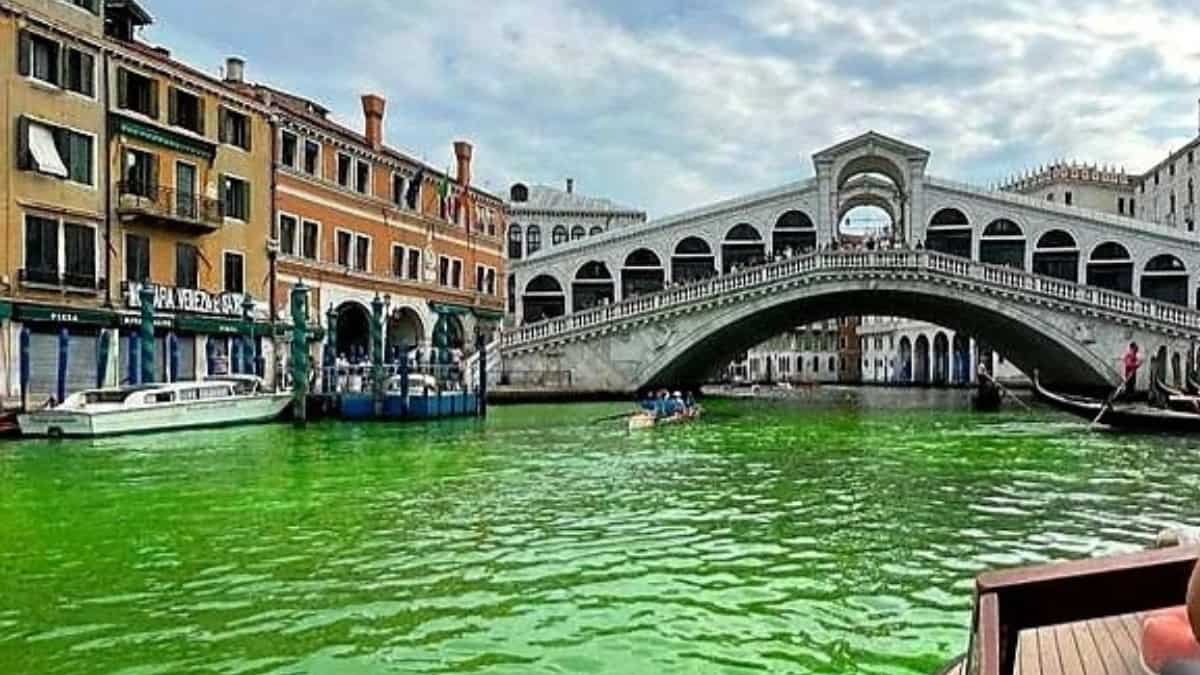
Venice's Rialto Bridge
Italy's fire department said overthe weekend that the authorities are working to find out why the waters in Venice's main canal turned fluorescent green on Sunday in the area near the Rialto bridge.
The department said in a tweet that the regional environmental protection agency was working to identify the substance that changed their colour.
The green water painted an eerie picture of the spectacular city of Venice — one of the most famous tourist spots across Europe.

Now the reason has finally beenrevealed.Local authorities said on Monday that the transformation was due to fluorescein, a non-toxic substance used for testing wastewater networks.
The Regional Agency for Environmental Prevention and Protection of Veneto (Arpav) said that the analysis showed "the presence of fluorescein in samples taken".
Watch this report:
)
Mushtaq Khan dies at 56: When Welcome actor opened up about his salary for iconic role Ballu
)
US Supreme Court backs Trump administration's use of SAVE database to check voter citizenship
)
Heart of the Beast review: Brad Pitt leads a gripping tale of survival and loyalty
)
Outrage erupts after 3-year-old is married to 60-year-old man in Pakistan, link to her sister's murder being probed
)
Pakistan deploys over 20,000 security personnel as PTI vows march for Imran Khan's release
)
Asian Games: Shooting spree continues as India win silver in women’s 50m rifle 3P team event
)
‘Not just a local tragedy’: Nepal PM Shah warns UN of growing climate threat, says Nepal floods were 'a warning to the world'
)
OpenAI AI Agents hacked 4 websites before Hugging Face, researchers reveal
)
Pentagon quietly adds 37 wounded troops to Iran war tally without explaining when or how
)
Asian Games 2026: India women’s kabaddi team edge Iran 37-34 to clinch 3rd gold medal
)
Saudi Arabia still harbours intent to develop nuclear weapons, reveals US intelligence: Report
&im=FitAndFill=(700,400))
New Friday OTT releases (September 25, 2026): Don’t Be Shy, Hunkkaar: The Roar, Mango Pachcha- 6 movies and TV shows on Netflix, Prime Video and more
)
Yemen's war escalates: Saudi-backed leader calls for general mobilisation against the Houthis
)
‘Attack on Mecca a red line for Pakistan’: Shehbaz Sharif warns Houthis at UN
)
Tesla is preparing something big for Optimus: new Gen 3 models surface in app
)
Bias or safety concerns? Bengaluru CEO says firm will not hire men from UP, Bihar, Rajasthan, MP. Here's why
)
Did Hitler kill his niece Geli Raubal? Newly found records reopen a 95-year-old mystery
)
Indian diplomat Petal Gahlot raises deteriorating situation in Pakistan-occupied Kashmir in right of reply at UN
)
Nigeria Navy moves to boost oil security, tackle crude theft and infrastructure threats
)
Scientists detect first radio signals directly from faraway planet
)
‘It is all possible’: Putin weighs next steps on Ukraine talks, rules out Europe conflict
)
10,000 gather in support of 87-year-old forcefully evicted from home of 71 years
)
Trump rejects Iran's 7-day ceasefire proposal as US weighs renewed bombing after midterms: Report
)
Red Sea crisis: Houthis promise not to target European ships; UNSC condemns Saudi attacks
)
Gaza's war turned environmental damage into second crisis
)
Saudi oil exports surge despite Iran war
)
Trump-Xi summit wrap: Big pageantry, Iran talks, few major developments and more meetings planned
)
'Making history': Xi Jinping praises Trump as US-China leaders dine at White House
)
India's UN Envoy slams Pakistan: 'They claim security by day, terrorism by night'
)
Jay-Z rape case: Accuser says allegations were false, never met rapper
)
Myanmar training camp case: US national, 6 Ukrainians allowed to meet their families abroad
)
'FIRST LOOK from inside Noah’s Ark': Researchers share video from inside mysterious mound in Turkey
)
Cindy Crawford’s son Presley Gerber cremated as death probe continues
)
India's insurance regulator overhauls policies
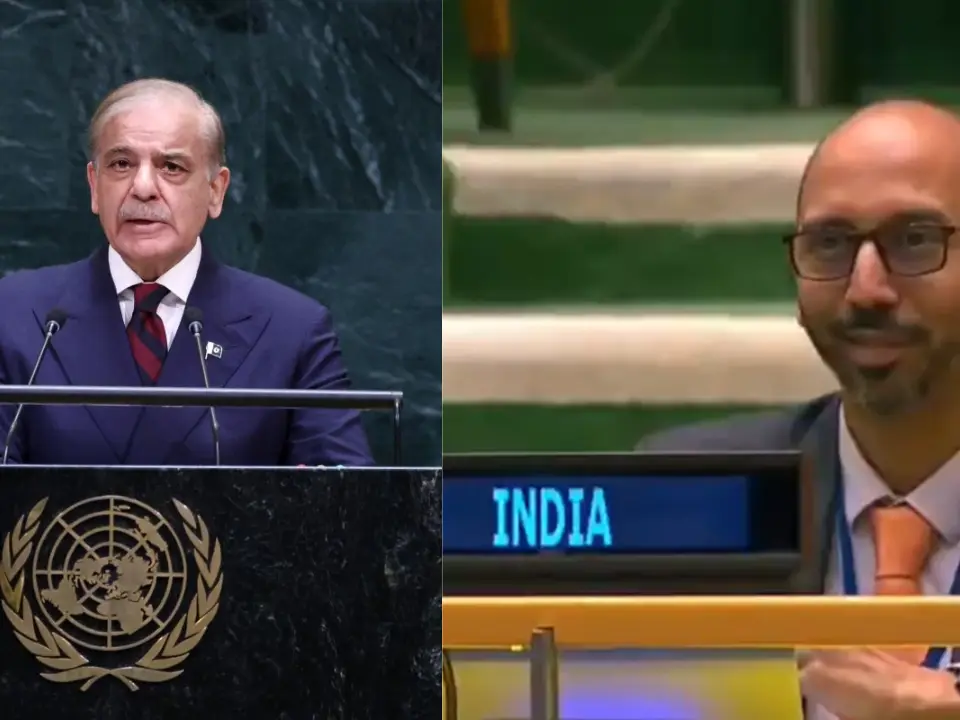)
WATCH | As Shehbaz Sharif claims Pakistan’s ‘victory’ during 2025 conflict, Indian diplomat R Srinivas laughs at UN
)
‘Goal is to win it’: Virat Kohli confirms 2027 ODI World Cup will be his final tournament for India
)
'A terrorist country is asking me that question?': Jaishankar hits back at Pakistani journalist at UN; flags attacks on commercial shipping
)
US court backs Pentagon's decision to exclude Anthropic over Claude AI restrictions
The agency didn't reveal from where the substance originated as it added that the results "have not shown the presence of toxic elements in the samples analysed".
This is not the first time that the Grand Canal has turned green. During the 34th Venice Biennale in 1968, Argentine artist Nicolas Garcia Uriburu painted the waters of Venice's Grand Canal green with a fluorescent dye in order to raise environmental awareness.
Climate-related protests in Italy
There were a few incidents when environmental groups protested against the climate crisis by colouring monuments In Italy, such as using vegetable charcoal to make the waters of Rome's Trevi fountain black in protest of fossil fuels.
Earlier this month, seven young activists protesting against climate change climbed into the Trevi Fountain in Rome and poured diluted charcoal into the water to turn it black.
The protesters from the "Ultima Generazione" ("Last Generation") group held up banners saying "We won't pay for fossil (fuels)," and shouted, "Our country is dying".
Viral videos showed that uniformed police waded into the water to remove the demonstrators, with several tourists photographing the incident.
Ultima Generazione issued a statement calling for an end to public subsidies for fossil fuels and linking the protests to recent tragic floods in the northern Italian region of Emilia-Romagna. According to the organisation, one in every four dwellings in Italy is at risk of floods.
Rome mayor Roberto Gualtieri condemned the protest. "Enough of these absurd attacks on our artistic heritage," he wrote on Twitter.