Owls inspire future aircraft design as rise in turbulence scare fliers. Here is how

&imwidth=600&imheight=450&format=webp&quality=medium "Owls inspire future aircraft design as rise in turbulence scare fliers. Here is how")
Owls are inspiring aircraft design Photograph: (Others)
Turbulence is a big issue in aviation now. Companies and scientists are looking at nature for inspiration to solve this
Frequent reports of turbulence are scaring many air passengers away from flying. The increasing regularity of turbulence is being attributed at least partially to climate change. Aviation engineers are looking at various methods to avert this. And many of them are looking at nature's design for inspiration, particularly one bird: the owl. Why is the owl's body design inspiring future aircraft design? Here are some fascinating insights:
How owl wing features make them effective, silent fliers
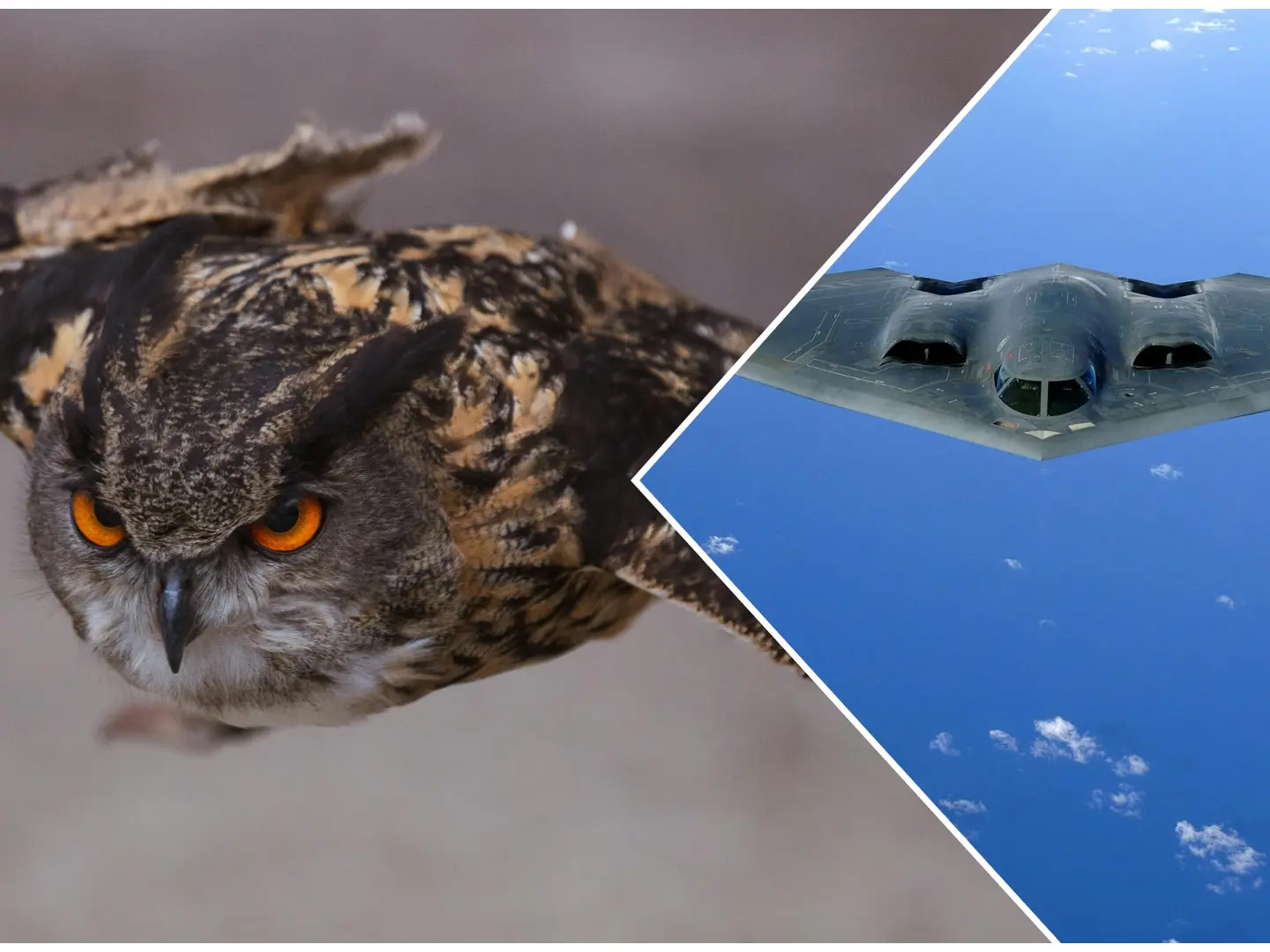
The owls’ wing features include serrated leading edges, fringed trailing edges, velvety down, and flexible wing control. Together, these make the bird's flight low-noise and turbulence-resistant. Aviation engineers are increasingly modelling the bird's adaptations to enhance stability and reduce noise in aircraft, drones, and turbines.
How is the owl wing adaptations relevant to turbulence?
The leading‑edge serrations are one key aspect. These teeth-like edges on bird feathers break up turbulent air into smaller vortices, preventing flow separation at high angles, and stabilising the airflow. Trailing‑edge fringes allow for the smooth flow of the body in the air, by breaking up pressure fluctuations. Velvety down feathers with porous texture absorb high-frequency noise and dampen vibrations caused by turbulence and reducing drag. Owls also have what's called ‘preflex reaction’: the flexible wing adjustments that are similar to suspension systems, instinctively compensating for gusts of wind to stabilise flight.
Turbulence is growing due to climate change
Trending Stories
&im=FitAndFill=(700,400))
)
)
)
)
)
)
)
)
)
)
)
)
)
&im=FitAndFill=(700,400))
&im=FitAndFill=(700,400))
)
)
)
)
)
)
)
)
)
)
)
)
)
)
)
)
)
)
)
)
)
)
&im=FitAndFill=(700,400))
)
Turbulence is leading to increased risk of injuries for passengers. A 2023 study found that the world's skies are now nearly 55 per cent bumpier than 40 years ago due to climate-change-driven wind shear . Injuries caused by turbulence are rising, and airlines bear costs of between $150 million and 500 mn each year.
Feather-like flaps for aircraft could be a reality
In 2024, Princeton University researchers developed birdfeather-inspired flexible flaps. These flaps, which mimic covert feathers, were tested on a model aircraft. In test flights, the flaps improved aircraft lift by up to 45 per cent and reduced drag by 31 per cent. The stall onset was delayed, enhancing stability during gusts of wind.
Silent flight and turbulence reduction inspired by owls
Recent studies have found that wider leading-edge serrations can reduce airflow fluctuations and aerodynamic noise. Wind tunnel tests found that serrations and fringes can stabilise flow and suppress noise. Trailing-edge fringes can reduce airborne noise by up to 10 dB without losing lift.
Owl aerodynamics in motion: Reducing the dreaded ‘eddies’
Eddies, or vortices, are the swirling, circular movement of air that deviates from the main airflow. Eddies result from obstacles or uneven terrain and cause turbulence. Eddies can affect aircraft stability and handling. Recent scientific studies demonstrated that during owl flights, the eddies appear to dissipate faster, thanks to the aerodynamic design of their bodies.
In the case of all birds, the turbulence during their flapping flight is short-lived and dissipates fast.
Bio‑inspired engineering could be the future of flight design
Using computer design and high-speed imaging, Jonathan Stevenson documented owl preflex responses. That became the inspiration for Airbus’s hinged-wing AlbatrossOne prototype. Justin Jaworski created 3D-printed attachments that cut wind turbine noise by roughly 10 dB, maintaining aerodynamic efficiency. In 2023, scientists designed hybrid serrations combining owl and cicada wing geometries.
This design reportedly achieved nearly 10 per cent noise reduction and 48 per cent improved propulsive efficiency. A March 2025 study confirmed the structural viability of airfoils inspired by owls in wind turbines of aircraft.
Engineering applications inspired by owls are here
In research and implementation, owl body design is being slowly adapted on aircraft and drones, such as passive feather-like flaps and hinged wingtips to reduce the effects of turbulence. On wind turbines and fans, serrated airfoils and porous coatings are being used to lower noise and improve efficiency. On rotating machinery, serrated trailing edges and velvety coatings are being used to suppress turbulence-induced noise.
Nature to the rescue for aviation turbulence
Turbulence is a real issue in aviation now. Companies and scientists are looking at nature for inspiration to solve this. Biological designs for aircraft might take time due to challenges in finding the right material and certification delays. The research is ongoing for the perfect design.
Birds and insect flight have been the inspiration for aviation design since the inception of human flight. In the not-so-distant future, we might see passenger aircraft resembling more birds, including the owl.

