

&imwidth=800&imheight=600&format=webp&quality=medium "Indian geologist finds 3.5bn-year-old evidence of life in the rocks of Jharkhand")
A team of Indian geologists has found our planet's earliest lifeforms that lived and died 3.5 billion years ago. Geologist Trisrota Chaudhuri of the Geological Survey of India and her team discovered the remnants of an ancient microbial community and directly dated the material for the first time. Chaudhuri said that, since well-preserved biological material and datable zircons were present in the same rock, an extremely rare occurrence, they were able to directly link the age of the rock and the evidence of life. Chaudhuri collaborated with scientists in Europe and the US for her analysis, and the study has been published in the Proceedings of the National Academy of Sciences.
Finding the earliest organisms that inhabited Earth has proved to be extremely difficult since any signs of them have changed over billions of years. But sometimes conditions lead the traces of dead microbes to be preserved inside silica. They sit there as thin layers of carbon and are not affected even when the rock is bearing the brunt of heat and pressure, causing changes in it.
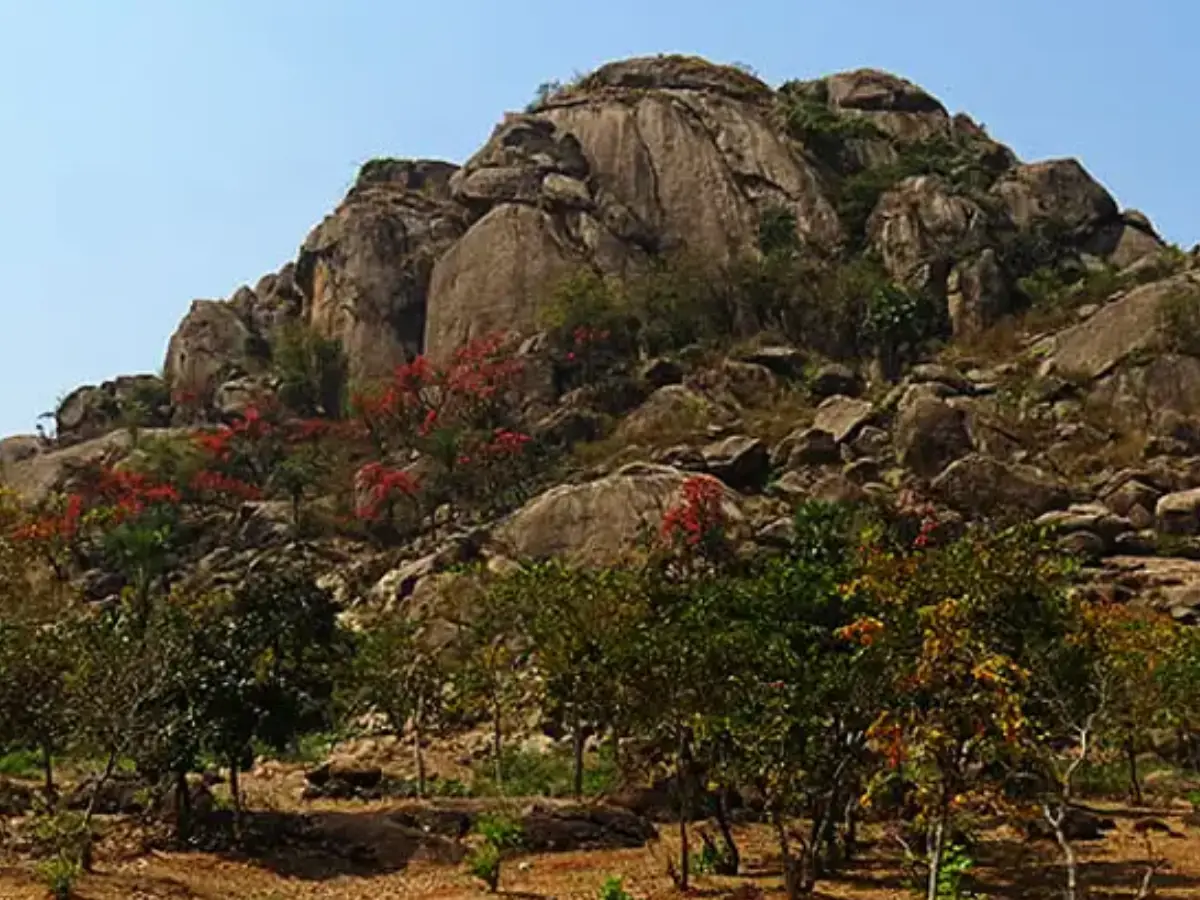
The discovery was made near Jamshedpur in Jharkhand
Chaudhuri and her team made the discovery at the Singhbhum Craton, one of Earth's oldest surviving blocks of continental crust. Some rocks in Singhbhum are 3.5 billion years old. A set of black-and-white patterns was embedded in the ancient rock near Bhitardari, Jamshedpur, in the state of Jharkhand. The researchers said that these bands are remnants of microbial mats, fossilised remains in which single-celled organisms resided. "
Studying the carbon in the rock
She said that the chemical signatures preserved in this rock suggest that life forms were already using sophisticated ways of turning carbon dioxide into organic matter 3.5 billion years ago. This carbonaceous layer could have come from non-biological processes, such as volcanism, or could belong to something that lived all those years ago. To determine exactly which argument was true, they used Raman spectroscopy. They used a laser to light up the carbon, enabling them to study its structure to learn about when it formed and the alterations it went through over the years.
Trending Stories
&imwidth=180&imheight=135&format=webp&quality=medium)
'Baseless and misconceived': India issues statement after Elon Musk's 'oligarchs' claim over Starlink delay
&imwidth=180&imheight=135&format=webp&quality=medium)
‘You earned that love’: Messi’s wife shares heartfelt message as football icon bids farewell to international stage
&imwidth=180&imheight=135&format=webp&quality=medium)
BJP chief Nitin Nabin calls Rahul Gandhi ‘anarchist’, says Oppn ‘spreading poison’ in society
&imwidth=180&imheight=135&format=webp&quality=medium)
‘Team first and team ahead’: India coach Gambhir pens heartfelt wish for chief selector Ajit Agarkar
&imwidth=180&imheight=135&format=webp&quality=medium)
Trump's naked 23-karat gold statue unveiled near European Parliament
&imwidth=180&imheight=135&format=webp&quality=medium)
Nana Patekar: Remembering a legend of the Indian cinema
&imwidth=180&imheight=135&format=webp&quality=medium)
Thai Actors Fourth Nattawat, Gemini Norawit face racism accusations from Indian fans over viral Bollywood act
&imwidth=180&imheight=135&format=webp&quality=medium)
Captain Smit Machchhar on feet again, walks 10 steps as recovery continues after Flydubai flight attack
&imwidth=180&imheight=135&format=webp&quality=medium)
Ronaldo sends 'a hug' after Messi says he misses 'wearing the blue and white'
&imwidth=180&imheight=135&format=webp&quality=medium)
Trump distances himself from senior political advisers over work for pro-Russian government
&imwidth=180&imheight=135&format=webp&quality=medium)
A Love Other Than Yours: The temptation to cheat and what pushes people over the edge
&imwidth=180&imheight=135&format=webp&quality=medium)
Narendra Modi Stadium bomb threat declared hoax; India & Australia U19 squads safe
&imwidth=180&imheight=135&format=webp&quality=medium)
US midterms 2026: Why the Latino vote could shape control of Congress
&imwidth=180&imheight=135&format=webp&quality=medium)
BTS agency HYBE announces first-ever Weverse Con Festival in India
&imwidth=180&imheight=135&format=webp&quality=medium)
US Midterms 2026: Barack Obama hits campaign trail to boost Democratic candidates
&imwidth=180&imheight=135&format=webp&quality=medium)
Shia LaBeouf and Mia Goth head for divorce after nearly 10 years
&imwidth=180&imheight=135&format=webp&quality=medium)
Who is DogeDesigner? All we know about the X account that sparked India-Musk-Starlink ‘oligarchs’ controversy
&imwidth=180&imheight=135&format=webp&quality=medium)
Nicolas Maduro, wife likely to face new charges over alleged torture of US citizens: Report
&imwidth=180&imheight=135&format=webp&quality=medium)
Christa Pike wakes after failed execution, asks 'Where am I and who are you?'
&imwidth=180&imheight=135&format=webp&quality=medium)
Christa Pike 'angry' and 'confused' after failed execution; judge orders to preserve evidence
&imwidth=180&imheight=135&format=webp&quality=medium)
Nigerian President Bola Ahmed Tinubu hails Modi’s 25-year leadership milestone, calls for deeper Nigeria-India strategic ties
&im=FitAndFill=(700,400)&imwidth=180&imheight=135&format=webp&quality=medium)
US midterms 2026: 10 leaders and candidates to watch in the battle for Congress
&imwidth=180&imheight=135&format=webp&quality=medium)
Nana Patekar's #MeToo controversy: From Tanushree Dutta’s allegations to court ruling
&imwidth=180&imheight=135&format=webp&quality=medium)
Atlantic hurricane Isaias could make landfall as a strong Category 2 storm, tornado warnings issued
&imwidth=180&imheight=135&format=webp&quality=medium)
Veteran actor Nana Patekar dies at 75 after suffering cardiac arrest
&imwidth=180&imheight=135&format=webp&quality=medium)
Musk alleges ‘oligarchs’ blocking Starlink in India, here is what we know so far
&imwidth=180&imheight=135&format=webp&quality=medium)
Lightning strikes IndiGo Patna-Lucknow flight at 17,000 feet, damages nose; all 110 safe
&imwidth=180&imheight=135&format=webp&quality=medium)
Mall of America attack: FBI arrests man over alleged ISIS-inspired mass shooting plot with AK-47 and 200 rounds
&imwidth=180&imheight=135&format=webp&quality=medium)
France holds talks with Taliban government amid diplomatic outreach
&imwidth=180&imheight=135&format=webp&quality=medium)
IndiGo flight struck by lightning at 17,000 feet, nose of Patna-Lucknow flight damaged
&imwidth=180&imheight=135&format=webp&quality=medium)
US readying to strike Iran? Report suggests Trump preparing to put on show of strength ahead of US midterms
&im=FitAndFill=(700,400)&imwidth=180&imheight=135&format=webp&quality=medium)
World’s top vehicle producers: Top 10 countries making the most cars. Check where India stands
&imwidth=180&imheight=135&format=webp&quality=medium)
Trump to honour Elon Musk, Sergey Brin and Jensen Huang with top science honour at White House. Check the full list here
&imwidth=180&imheight=135&format=webp&quality=medium)
'We don't think so': Trump says Russian plague lab worker's death not linked to bio-weapon
&imwidth=180&imheight=135&format=webp&quality=medium)
Sri Lankan Tamil worker gets death sentence in Saudi Arabia over blasphemy, calls for pardon intensify
&imwidth=180&imheight=135&format=webp&quality=medium)
France protests: How a Gen Z school movement turned into a political war | The Verdict
For it to be from an organism that was once alive, they had to establish that the carbon was indigenous to the rock and did not come from another geological event. The maximum temperature endured by the carbon was between 324 and 369 degrees Celsius, while the later veins of quartz had been heated at much higher temperatures. The cooler layers showed that the carbon was part of the original rock.
Why the discovery matters
To find the age of the material, researchers analysed eight zircon crystals. To know when the zircon was formed, scientists looked at the ratio of uranium to lead in a zircon sample. While four crystals had undergone several changes, the other four revealed the true age, dating them back to around 3.5 billion years ago. "What we find most remarkable is that our study again confirms that primitive life thrived in a chemically extreme world 3.5 billion years ago. These microorganisms lived alongside active volcanism, in an ocean rich in iron and silica," Chaudhuri told ScienceAlert.

