In 1998, a bet was made between a neuroscientist and a philosopher. 25 years later, we have a winner

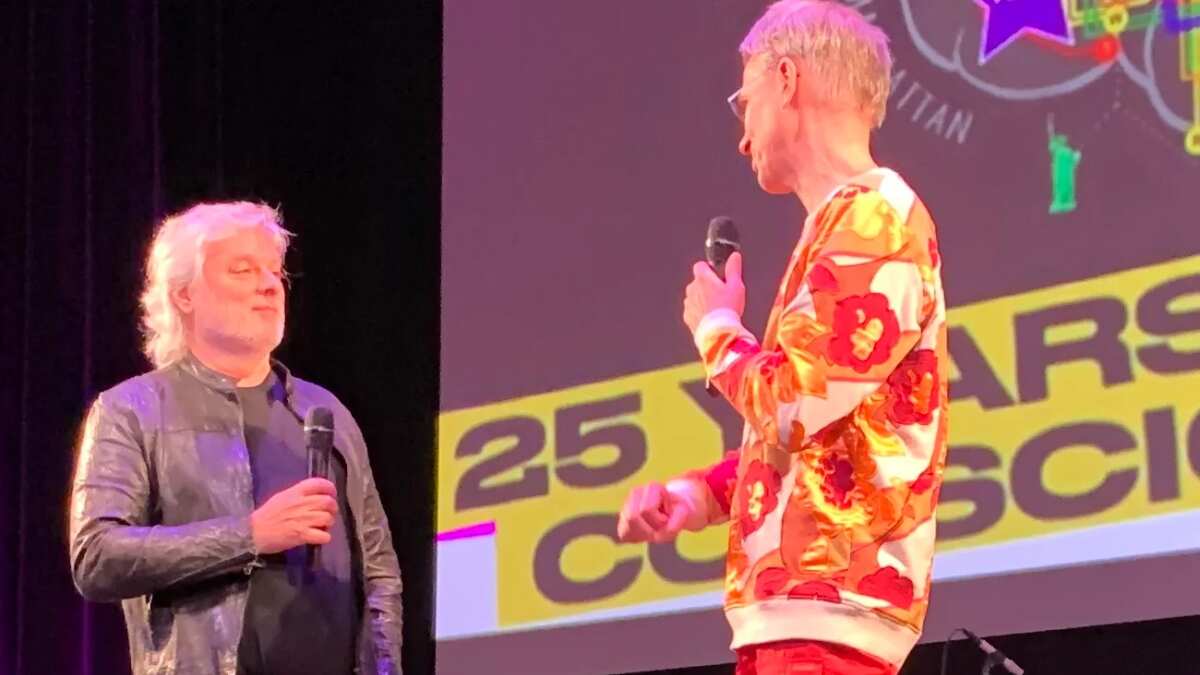
David Chalmers (L) and Christof Koch
In 1998, a neuroscientist and a philosopher had placed a bet. It took them 25 years to decide who was the ultimate winner.
A day after lecturing at a conference on consciousness, neuroscientist Christof Koch and philosopher David Chalmers had engaged in an intense discussion.
After a few drinks at a bar in Germany’s Bremen city, their discussion turned into an argument and eventually led to a wager.

Koch challenged Chalmers that by 2023 someone would discover the mechanism by which the brain’s neurons produce consciousness.
That bet got ultimately settled at an annual meeting of the Association for the Scientific Study of Consciousness (ASSC) in New York City, where Chalmers was declared the winner, reported Nature.
The years-long bet came to an end after a study was presented testing two leading hypotheses about “the neural basis of consciousness”.
These hypotheses were presented by Integrated information theory (IIT) and global network workspace theory (GNWT).
The theory
IIT proposed that consciousness is a ‘structure’ in the brain formed by a specific type of neuronal connectivity that is active for as long as a certain experience, such as looking at an image, is occurring. This structure is thought to be found in the posterior cortex, at the back of the brain.
On the other hand, GNWT suggested that consciousness arises when information is broadcast to areas of the brain through an interconnected network. The transmission, according to the theory, happens at the beginning and end of an experience and involves the prefrontal cortex, at the front of the brain.
Six labs tested both of the theories, but the results did not “perfectly match” either of them.
Winner gets a case of wine
Chalmers acknowledged that it was always a "relatively good bet" for him and a bold one for Christof. He also agreed that there has been a lot of progress in the field and the scientists will soon find an answer.
“It started off as a very big philosophical mystery,” Chalmers said.
“But over the years, it’s gradually been transmuting into, if not a ‘scientific’ mystery, at least one that we can get a partial grip on scientifically.”
Koch was reluctant to admit defeat, he nevertheless honoured the wager and bought Chalmers a “case of fine Portuguese wine” the day before the ASSC session.
He was also ready to double down on the wager with another 25 years as a window.
Koch is a German-American neurophysiologist and computational neuroscientist. He started his search for the neural footprints of consciousness in the 1980s and has been invested in identifying neurons that are necessary to “generate a feeling of seeing or hearing or wanting.”
(With inputs from agencies)
WATCH WION LIVE HERE