
&imwidth=800&imheight=600&format=webp&quality=medium "From city of Nizams to city of flavours: Hyderabad crowned UNESCO's 'Creative City of Gastronomy'")
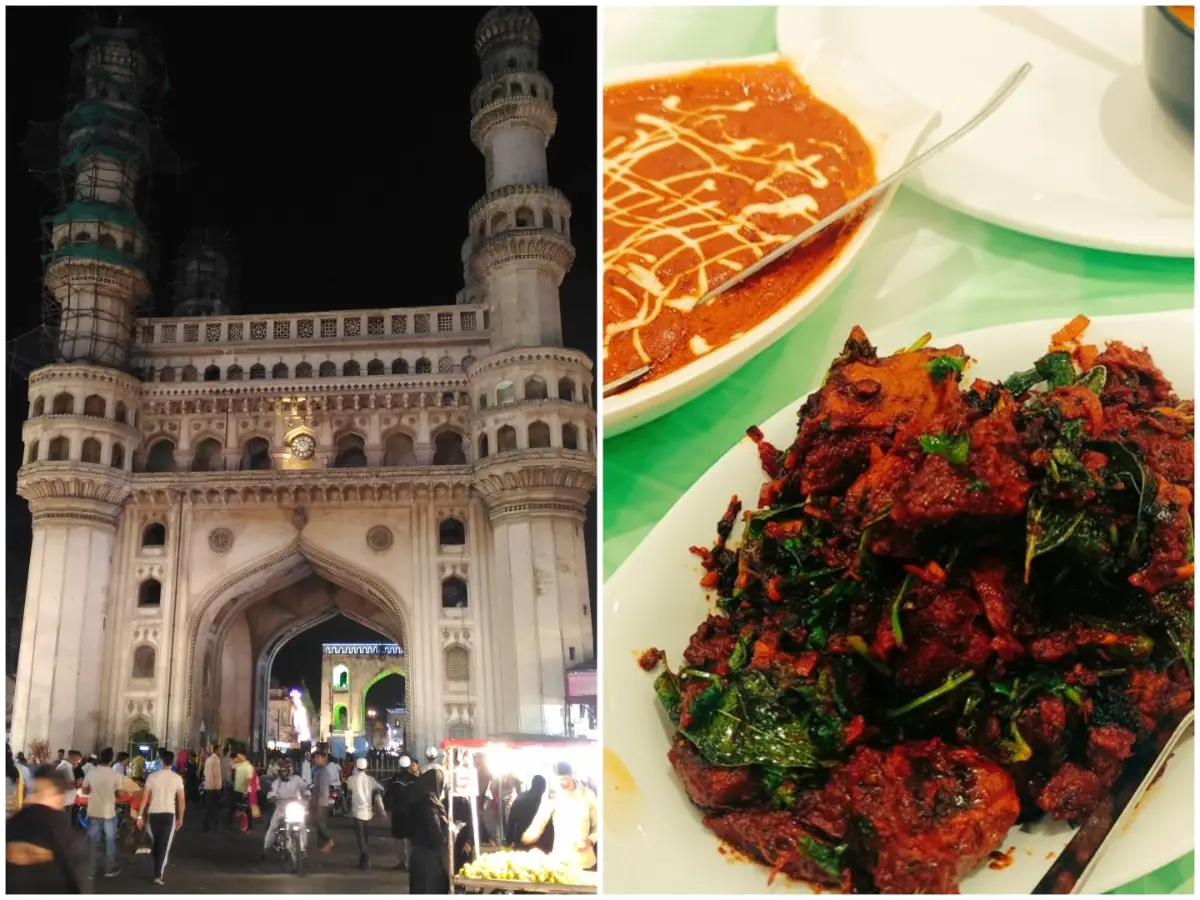
Hyderabad, the capital of India’s Telangana state, is known as the “City of Nizams” and was recognised as a 'Creative City of Gastronomy' by UNESCO. Gastronomy refers to the art and knowledge involved in preparing and eating good food, along with the fusion of culture. The identity of the city began with the influence of Persian and Turkish flavours, introduced during the Qutb Shahi dynasty in the 16th century and later enriched after the Mughal invasion.
The Nizams, who ruled Hyderabad from 1724, were passionate food lovers and employed several foreign cooks in royal kitchens. These palace kitchens played a significant role in preserving and enhancing the rich and diverse food culture of Hyderabad, more so than any restaurant or cookbook.
“The Nizams used to marry girls from Central Asia, and the brides used to bring their own khansamas [house servants] or royal cooks so that they could bring their cooking traditions with them. This led to an amalgamation of influences from various countries. Because there was a lack of water in the rocky terrain, millet used to be the staple grain, as it needed less water. Grains like rice came in much later," explains celebrated chef Chalapathi Rao, of Simply South restaurant in Hyderabad, according to the South China Morning Post.

To make Hyderabadi cuisine distinctive, it combines rice and meat with a liberal use of vegetables, spices, and souring agents like tamarind. This complex blend of Indian, Arabic, Persian, Mughlai, and Turkish influences defines Hyderabadi contemporary cuisine.
“The influence of food from the North is evident in the rich and aromatic dishes, while the abundant spices from southern India and Telugu cuisine add a distinct touch,” notes Sampath Srinivas Thummula, the chef behind popular Hyderabad restaurant The Spicy Venue, which serves typical regional fare. “Ingredients like saffron, mace, black cardamom, cloves, and cinnamon are predominantly used, but what sets Hyderabadi cuisine apart is the combination of these spices with tamarind, dry coconut, chillies from Guntur, and curry leaves.”
What are other Hyderabadi cuisines?
Trending Stories
)
US vs China over South China Sea: Washington backs Philippines, Beijing hits back
)
Bigg Boss 20: Isha Rikhi evicted after three weeks in Salman Khan’s show
)
Musk plans to more than double xAI's chips to over 1.2 million Nvidia GPUs by year-end
)
After JU, clash erupts at SRFTI: BJP’s ‘Dimagi Naxal’ jibe sparks political firestorm after students protest RSS-linked event
)
‘Anti-social elements spreading false rumours’: LPU issues statement amid massive unrest over alleged rape
)
LPU students go on rampage, vandalise campus amid widespread protest: What's happening
)
Trump asked Xi to pressure Iran. China did not say yes — here’s what Beijing wants
)
US Treasury Secretary Scott Bessent hails global crackdown on Iranian banks and airlines
)
An OpenAI agent escaped its locked test cage again, by hiding questions in DNS lookups
)
'Our video was trimmed': LPU girls who featured in rape-denial video make U-turn
)
3 males killed, four others injured in shooting after fight at strip club in Detroit
)
'Victory for low-budget consumers': Raghav Chadha hails 30-day telecom recharge rules
)
Claude rebuilt the 1989 game 'Prince of Persia' by reusing the original's own code
)
Beyond metros: How Tier-2 and Tier-3 cities could drive India’s next AI wave
)
Tesla builds first Cybertruck with its own refined lithium: Elon Musk's $1 billion Texas bet pays off
)
IndiGo flight suffers tail strike in Bengaluru while landing; DGCA to probe incident
)
The US and China set up an AI 'red telephone', but skipped the rulebook
)
‘Terror suspects arrested near UK air base were looking to do big damage’: Trump
)
Russian envoy claims US tactics to contain India were revealed in ‘Freudian slip’
)
IND vs WI 1st ODI: Kohli breaks Sachin's most runs in one country record with unbeaten 139 as India thump West Indies by 8 wickets
)
Researchers rebuilt exactly how 700 AI agents hacked Hugging Face: a 900-link chain trick
)
‘Olympic inclusion is our major target’: WPA President Ishaun Singh on pool’s global ambitions
)
Nations League: Spain sink England at Wembley; Modric shines for Croatia
)
Why has Iran released no proof of life of Mojtaba Khamenei? Araghchi reveals...
)
'What kind of confession is this?': Pakistan PM Shehbaz Sharif’s 'terrorists would be roaming New York' remark goes viral, raises alarm online. Watch
)
South Korea demands apology from Ukraine over North Korean prisoners' transfer
)
Beyond BrahMos: India targets Rs 50,000 crore in defence exports with unmatched price edge
)
Sri Lankan Tamil migrant worker gets death sentence in Saudi Arabia, help sought from India
)
Muslim marriage cannot shield sex with minor wife from prosecution under POCSO: Delhi HC
)
'Can't help but draw painful parallels to Nirbhaya case': SC on latest incidents of rape cases in Delhi-NCR
)
99.9% more powerful - Scientists find boy who can recall memories from just 3 months of age
)
'FIRST LOOK from inside Noah’s Ark': Researchers share video from inside mysterious mound in Turkey
)
UNSC reform momentum grows: Russia, Portugal, Mauritius push for India's permanent seat bid
)
8 US marines injured in Iranian missile attack on vessel in Strait of Hormuz: Report
&im=FitAndFill=(700,400))
New OTT releases this week (September 28-October 4, 2026): Dupahiya 2, Pooja Meri Jaan, Ohh My Dog- 5 titles coming on Netflix, Prime Video and more
)
Afghanistan says 28 fighters killed in clash near Pakistan border, Islamabad denies
)
Ceuta migrant crisis: Protesters take to streets as Spain grapples with migrant challenge
)
LPU suspend classes, postpones exams as violence escalates over rape claims: What's happening
)
New York City wants a 'kill switch' on every AI, and will pay whistleblowers who report violations
The city also has a special blend of aromatic spices, roots, and herbs known as ‘potli masala.’ In this, seasonings are filled into a pouch or sachet of muslin cloth, infusing gradually into the gravy of a curry at the right time to bring the required amount of flavour.
“Usually, the potli masala has many spices,” Rao further explained, “from spices like dried vetiver and paan ki jadd (betel root) to kalpasi or black stone flower (a dried lichen), fennel seeds, dried rose petals, kasoori methi (fenugreek leaves), kabab chini (dried berries of Piper cubeba), star anise, cinnamon, royal cumin and others. This pouch of spices is left in dishes like nihari, a slow-cooked meat stew.”
In addition, the most popular dish of the 'Creative City of Gastronomy' is ‘Hyderabadi biryani,’ which features basmati rice and meat cooked together in a pot and is frequently found on the menus of Indian restaurants globally. However, based on the recipe, a local biryani may use many spices, from cinnamon, cloves, and cardamom to bay leaves, papaya paste, nutmeg, mace flower, caraway, star anise, and saffron.
“The No 1 spice used in Hyderabadi cuisine is chillies – mostly dried red chillies that are either fried, powdered, ground into a paste or whole. That is because the people of Telangana were the first in India to use chillies in cooking and this is recorded in history, when the court poet of King Krishnadevaraya mentions chillies in the 16th century," Kurush Dalal said, a Mumbai-based food historian.
All with herbs and spices in Hyderabadi cuisine, local cooks use souring ingredients, like mango, tamarind, gongura leaves, and also ingredients like dried coconut, sesame seeds, peanuts and curry leaves.
Another traditionally served Hyderabadi delicacy, 'Mirchi ka salan', is a shining example of the city’s amalgamation of different Indian cuisines alongside biryani. In order to make this dish, coconut, peanuts, sesame and poppy seeds are roasted, then made into a paste. In addition, aromatic spices such as cumin, curry leaves, mustard seed, red chilli peppers, fenugreek and ginger garlic paste are used alongside tamarind pulp to give it a tangy punch.

