Extreme warming in Indian Ocean added 695 billion tons of ice to Antarctica ice sheet

&imwidth=600&imheight=450&format=webp&quality=medium "Extreme warming in Indian Ocean added 695 billion tons of ice to Antarctica ice sheet")
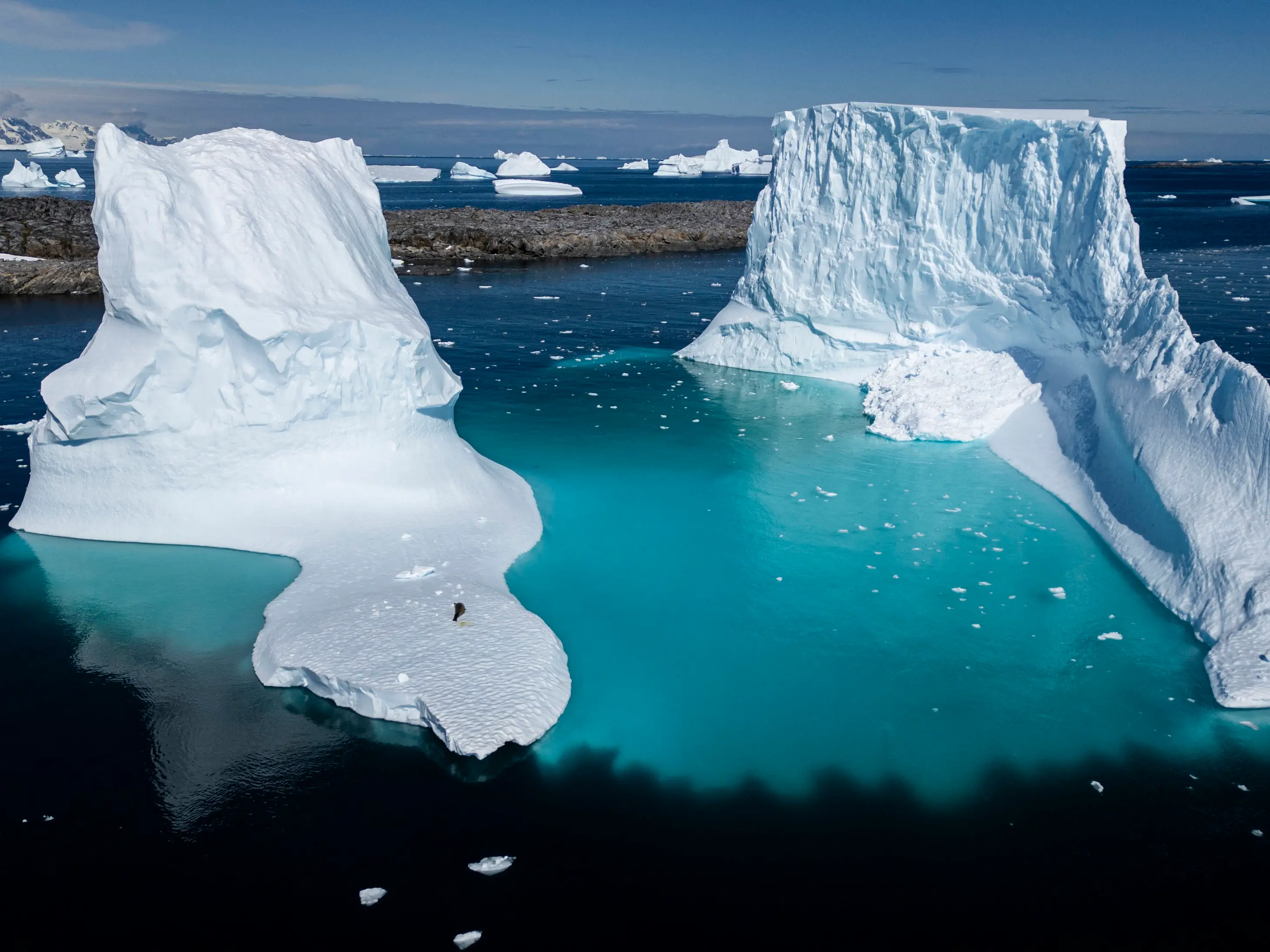
Ice gain in Antarctica was caused by extreme heating in the tropical region. Photograph: (AFP)
While climate change is melting glaciers, the East Antarctic ice sheet grew by nearly 700 billion tons over three years. While that might sound like good news, it is actually proof that global warming can wreak havoc on the planet. Here is what actually happened.
Between 2021 and 2023, East Antarctica gained 695 billion tons of ice because of extreme warming in the western Pacific and eastern Indian Ocean. A study published in Nature revealed that this temporary gain was recorded by the GRACE satellites. This happened because the heat in the tropical region altered atmospheric circulation, sending more moisture towards East Antarctica.
Over the past two decades, East Antarctica has been losing 140.5 billion tons of ice per year. The 695-billion-ton addition does nothing much to reverse it, and essentially only throws light on how a warming event thousands of kilometres away in a tropical region could affect snowfall and the ice sheet in Antarctica.
Researchers led by the Institute of Oceanology of the Chinese Academy of Sciences (IOCAS) investigated the cause of the ice gain. Observations from a gravity satellite, ice-core snow-accumulation records, water-vapour tracking, and atmospheric circulation simulations were put together to understand the strange occurrence.
Tropical heat drove increase in ice sheet in Antarctica
Their study found that the tropical warm pool at the juncture of the western Pacific and the eastern Indian Ocean was warmer than usual in those years. This triggered a Rossby wave train that moved towards the high southern latitudes, affecting the atmospheric circulation over East Antarctica. Eddy-mean flow feedbacks became stronger and more persistent, leading to a north–south dipole with low-pressure anomalies south of Australia and high-pressure anomalies along the East Antarctic coast.
Trending Stories
)
)
&im=FitAndFill=(700,400))
)
)
)
)
)
)
)
)
&im=FitAndFill=(700,400))
)
)
)
&im=FitAndFill=(700,400))
)
)
)
)
&im=FitAndFill=(700,400))
)
)
)
)
)
)
)
&im=FitAndFill=(700,400))
)
)
)
The circulation from this change caused moisture from the midlatitude Indian Ocean to flow towards Antarctica, causing more number of atmospheric rivers to reach the frozen continent. The moist air led to heavy snowfall across the Queen Mary Land–Wilkes Land region, adding mass to the ice sheet. Experiments linked to atmospheric circulation showed that the circulation and the snow were a direct result of the tropical warm pool.
"We found a previously underrecognized ‘tropical warm pool–East Antarctic Ice Sheet’ teleconnection pathway," said Yunhe Wang, first author of the study. "Our research provides a theoretical basis for understanding Antarctic ice-sheet mass changes and conducting future research on the East Antarctic climate."
The study identified the north–south dipole circulation over East Antarctica as the common link between tropical warming and the increase in the mass of the ice sheet in Antarctica.

