&imwidth=800&imheight=600&format=webp&quality=medium "3I/Atlas origin and trajectory: Interstellar object could have come from a 'conical disk'")
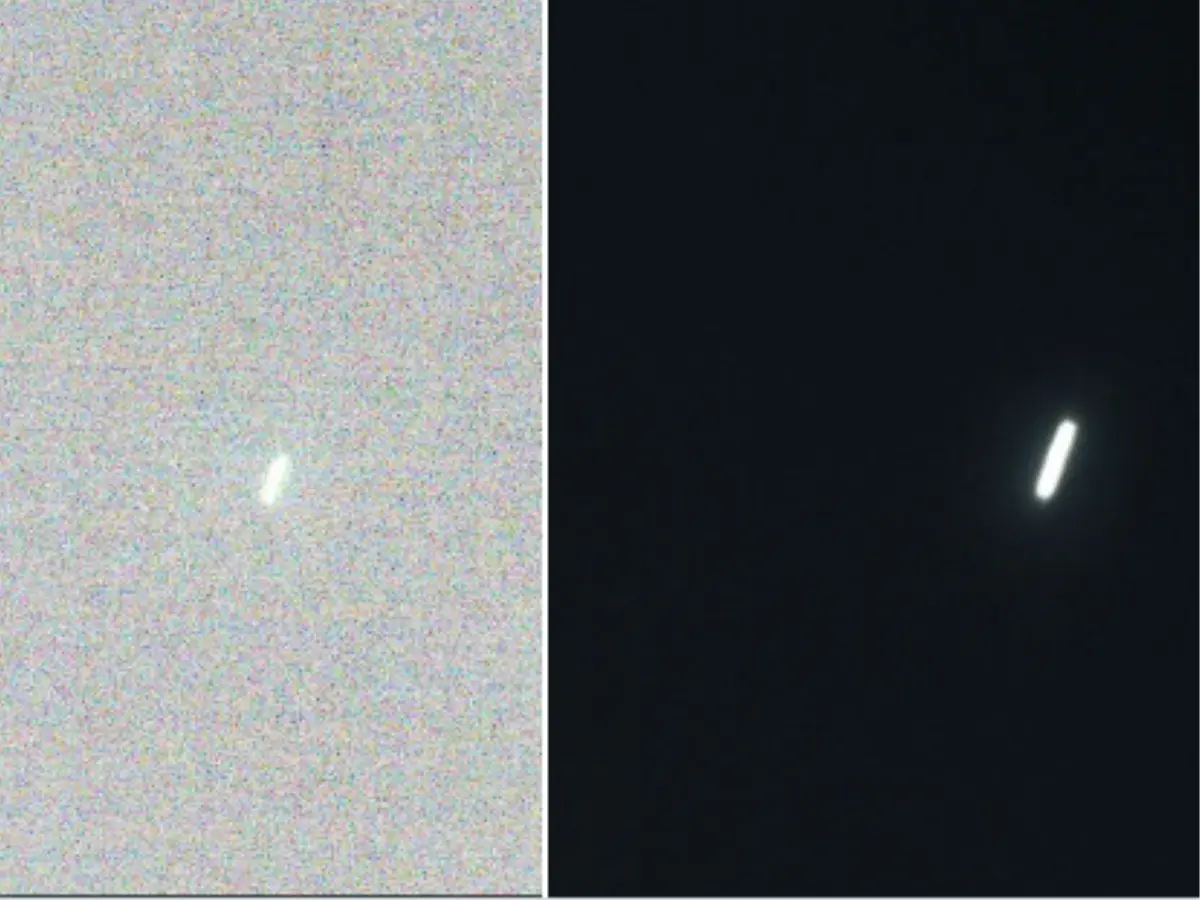
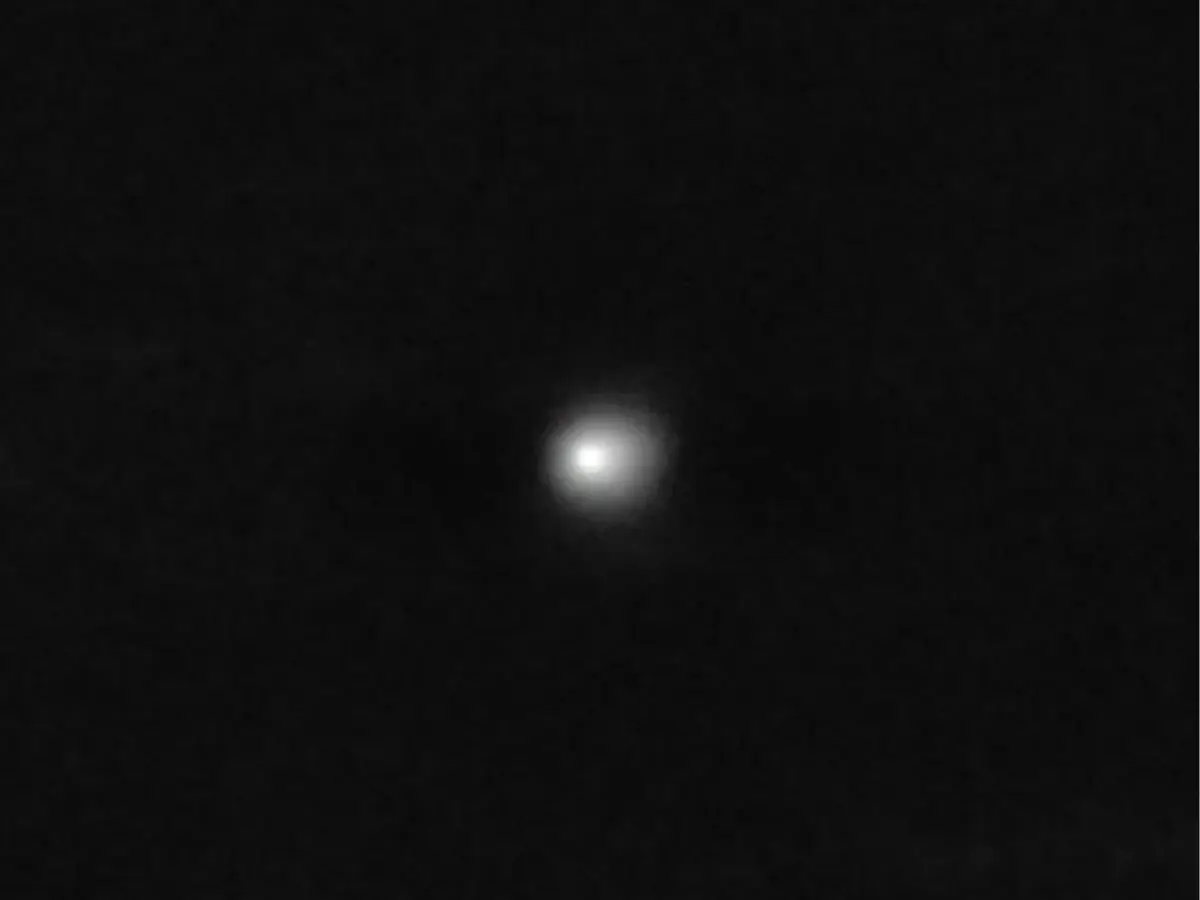
Interstellar object 3I/ATLAS has several anomalies and strange patterns, as flagged by several scientists. Its trajectory is one of them. In fact, this is what revealed that it was travelling from outside the solar system. 3I/Atlas is travelling on a straight path, which brings it near some planet. Harvard scientist Avi Loeb has repeatedly called this highly unusual. In a blog post, he has again talked about the trajectory of 3I/ATLAS and why it is a hint that it has been sent by an intelligent alien civilisation. 3I/ATLAS passed within 29 million kilometres from Mars on October 3, and will encounter Jupiter on March 16, 2026, when it will be 54 million kilometres from the gas giant. He says that this shows a "near alignment by 4.89 degrees of the retrograde orbital plane of 3I/ATLAS with the ecliptic plane of the Earth around the Sun," and the chances of this happening are only 0.002. He also calculated the chances of it arriving right at the planets’ orbital radii, which stand at a mere 0.0002. When both components are combined, the chances of this happening together fall to less than a millionth.
Also Read: 3I/Atlas, 'first contact or existential threat'? Why some netizens are convinced something is wrong
Loeb deduced location of these ‘extraterrestrial observers’

For a natural object to take such a perfect path through our solar system seems unfathomable, a reason why Loeb thinks 3I/Atlas is not a natural space rock. He further deduced the location of these extraterrestrials who could have sent this object. The professor says that for a civilisation to make such sharp observations about our solar system, with the asteroid belt around us, they need to have advanced telescopes, besides being located at a point from where they can peer through the stars and note the position of the planets. "If the planetary system around the Sun was discovered through a transit survey of stars, then the extraterrestrial observers who could have discovered it are located within a conical disk aligned with the ecliptic plane, from where the solar system planets appear to cross the face of the Sun," he wrote.
How is 3I/ATLAS traversing while dodging hundreds of thousands of space debris?
Trending Stories
)
What’s in a name? Trump’s 'Lake America' move gets a tit-for-tat response from Canada
)
Outrage erupts after 3-year-old is married to 60-year-old man in Pakistan, link to her sister's murder being probed
)
Trump gifts Xi a bald eagle sculpture at White House dinner: Here’s what it symbolises
)
‘Not just a local tragedy’: Nepal PM Shah warns UN of growing climate threat, says Nepal floods were 'a warning to the world'
)
Farhan, who went viral for AK47 celebration vs India in Asia Cup, hopes to lead Pakistan beyond Asian Games
)
CNN, Politico and MS NOW back in White House after judge blocks Trump’s media ban
)
India-New Zealand FTA is ‘an expression of trust’, NZ High Commissioner Patrick John Rata says
Don't Be Shy movie review: A frothy coming-of-age tale that is too shy to experiment
)
Park Ji Hyun makes history as first Korean actress nominated for International Emmy
)
Tesla is preparing something big for Optimus: new Gen 3 models surface in app
)
Bias or safety concerns? Bengaluru CEO says firm will not hire men from UP, Bihar, Rajasthan, MP. Here's why
)
Trump's welcome to Xi demonstrates 'attraction' to dictators: Chuck Schumer
)
Nations League: Germany draw on Klopp debut; Portugal, Norway win
)
WION Iconic Tourism Summit 2026: Union Minister Shekhawat on 'experiential travel', peace diplomacy
)
Scientists detect first radio signals directly from faraway planet
)
A seven-day roadmap? Iran proposes plan to end war, reopen Strait of Hormuz and resume nuclear talks
)
The Vvaan Review: This Ekta Kapoor's Tulsi Virani-coded world can't be saved by Sidharth Malhotra and Tamannaah Bhatia
)
China to test supersonic jet that moves at Mach 2, double the speed of sound
)
Xi Jinping's 'special plane' vs Trump's Air Force One: What's the difference?
)
Ruckus in J&K Assembly over statehood resolution; BJP leaders enter well of house
)
UNGA 2026: Israeli PM attacks Britain, France for past colonialism
)
West Indies coach Sammy looking at India series as opportunity to finetune ahead of ODI World Cup 2027 qualifiers
)
‘We’ve never gotten along better’: Trump praises Xi, jokes about White House ballroom at high-stakes state dinner
)
Air India pilot suspended after failing pre-flight alcohol test on Zurich-Delhi route
)
Yemen called Trump for US military support in fight against Houthis: Official
)
Meet Adrian Abraham: 9-year-old Indian-origin guitar prodigy aiming for a Guinness World Record
)
US faces fresh cost crunch as mortgage rates hit 7%, oil tops $107 and gas prices surge
)
'Blockbuster' nor'easter develops an eye similar to hurricanes as warnings are issued
)
WATCH: Pak PM Shehbaz Sharif refuses to answer on Hafeez Sayeed, walks away
)
OpenAI is building AI to fight cyber threats: What GPT-6 Cyber means for security
)
'Making history': Xi Jinping praises Trump as US-China leaders dine at White House
)
'What kind of confession is this?': Pakistan PM Shehbaz Sharif’s 'terrorists would be roaming New York' remark goes viral, raises alarm online. Watch
&im=FitAndFill=(700,400))
Netanyahu at UN: Mass walkout, attack on Mamdani and Iran threats | In Pics
)
'We do not wish to continue. It's America that must choose': Iran president Pezeshkian calls on US to end war
)
Bollywood mourns Mushtaq Khan: Sunny Deol, Rajpal Yadav and others pay tribute
)
Myanmar training camp case: US national, 6 Ukrainians allowed to meet their families abroad
)
'FIRST LOOK from inside Noah’s Ark': Researchers share video from inside mysterious mound in Turkey
)
'Fund people, not bombs': Hundreds take to New York streets as Netanyahu delivers speech at UN; dozens arrested
)
Susan Sarandon and Hannah Einbinder detained by NYPD outside UN Headquarters
)
He added that the observers could also observe the debris in the asteroid belt with advanced extraterrestrial telescopes, and their transits would show a characteristic orbital period of 3–6 Earth years. He has previously claimed that 3I/Atlas has a mass of 33 billion tonnes, while the biggest rocket built by humans, the Starship, weighs 6 million times less, only 5.5 thousand tons. So not only did they build such a huge rocket, but they also managed to put it on a path that brings it into our solar system without crashing into any of these objects in the asteroid belt.
This, he says, shows that the "telescopes used by the senders of 3I/ATLAS are capable of noticing transits by rocky objects that are smaller than Earth."
3I/Atlas anomalies
Loeb has, this time, detailed the problems and anomalies with the trajectory of 3I/Atlas, adding more calculations and insights. Its speed, light and size are some of the other anomalies the scientist has noted. Data from the observations made by Mars orbiters - Mars Reconnaissance Orbiter, Mars Express, TGO, MAVEN, Tianwen-1 and Hope is yet to be revealed. Meanwhile, Juice and Juno will also look at it in March. These are the only observations that will help reveal the true nature of 3I/Atlas.