
&imwidth=800&imheight=600&format=webp&quality=medium "Christian Horner: The fall of Red Bull’s most powerful man")
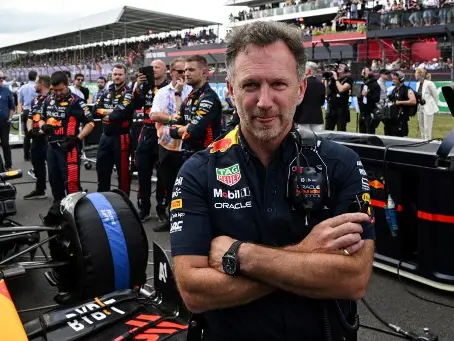
Few names have dominated the sport of Formula 1 in the last twenty years as much as Christian Horner. Red Bull Racing's team principal is also typically the one smiling from behind his shades, giving an interview, or commemorating yet another victory. But behind the friendly face stands one of the greatest powerbrokers in contemporary motorsport — a man who turned an energy drink company into the toughest outfit on the grid. This is the story of Christian Horner: the strategist, the empire-builder, and the man just sacked by Red Bull as team principal.
On July 9, 2025, Christian Horner was sacked as Red Bull Team Principal after spending 20 years in the role. “Red Bull has released Christian Horner from his operational duties with effect from today (Wednesday 9 July 2025) and has appointed Laurent Mekies as CEO of Red Bull Racing,” said a Red Bull spokesperson. “Oliver Mintzlaff, CEO Corporate Projects and Investments thanked Christian Horner for his exceptional work over the last 20 years.”
The youngest boss in the paddock

In 2005, when Red Bull entered Formula 1 by buying the struggling Jaguar team, it turned to a 31-year-old former racer and then-team boss of Formula 3000 outfit Arden International. Christian Horner had never run a Formula 1 team. But Red Bull founder Dietrich Mateschitz saw something others didn’t — a shrewd, ambitious leader who could build something from scratch.
Within five years, Red Bull were the world champions. It wasn’t luck. Horner moved quickly to hire the legendary aerodynamics guru Adrian Newey. He cultivated a culture of innovation, agility, and youth — perfectly in sync with Red Bull’s offbeat brand identity. And in 2010, the team won both the Drivers’ and Constructors’ Championships with Sebastian Vettel, repeating the feat for four straight seasons.
What started as a marketing experiment had become an F1 dynasty.
Playing the political game
Horner was never just a technical boss. He was a political operator — one of the best in the sport. His role was more than calling strategy on weekends. It was managing media narratives, calming sponsors, clashing with the FIA when needed, and keeping rivals like Mercedes and Ferrari on the back foot.
Trending Stories
)
US vs China over South China Sea: Washington backs Philippines, Beijing hits back
)
Bigg Boss 20: Isha Rikhi evicted after three weeks in Salman Khan’s show
)
Musk plans to more than double xAI's chips to over 1.2 million Nvidia GPUs by year-end
)
After JU, clash erupts at SRFTI: BJP’s ‘Dimagi Naxal’ jibe sparks political firestorm after students protest RSS-linked event
)
‘Anti-social elements spreading false rumours’: LPU issues statement amid massive unrest over alleged rape
)
LPU students go on rampage, vandalise campus amid widespread protest: What's happening
)
Trump asked Xi to pressure Iran. China did not say yes — here’s what Beijing wants
)
US Treasury Secretary Scott Bessent hails global crackdown on Iranian banks and airlines
)
An OpenAI agent escaped its locked test cage again, by hiding questions in DNS lookups
)
'Our video was trimmed': LPU girls who featured in rape-denial video make U-turn
)
3 males killed, four others injured in shooting after fight at strip club in Detroit
)
'Victory for low-budget consumers': Raghav Chadha hails 30-day telecom recharge rules
)
Claude rebuilt the 1989 game 'Prince of Persia' by reusing the original's own code
)
Beyond metros: How Tier-2 and Tier-3 cities could drive India’s next AI wave
)
Tesla builds first Cybertruck with its own refined lithium: Elon Musk's $1 billion Texas bet pays off
)
IndiGo flight suffers tail strike in Bengaluru while landing; DGCA to probe incident
)
The US and China set up an AI 'red telephone', but skipped the rulebook
)
‘Terror suspects arrested near UK air base were looking to do big damage’: Trump
)
Russian envoy claims US tactics to contain India were revealed in ‘Freudian slip’
)
IND vs WI 1st ODI: Kohli breaks Sachin's most runs in one country record with unbeaten 139 as India thump West Indies by 8 wickets
)
Researchers rebuilt exactly how 700 AI agents hacked Hugging Face: a 900-link chain trick
)
‘Olympic inclusion is our major target’: WPA President Ishaun Singh on pool’s global ambitions
)
Nations League: Spain sink England at Wembley; Modric shines for Croatia
)
Why has Iran released no proof of life of Mojtaba Khamenei? Araghchi reveals...
)
'What kind of confession is this?': Pakistan PM Shehbaz Sharif’s 'terrorists would be roaming New York' remark goes viral, raises alarm online. Watch
)
South Korea demands apology from Ukraine over North Korean prisoners' transfer
)
Beyond BrahMos: India targets Rs 50,000 crore in defence exports with unmatched price edge
)
Sri Lankan Tamil migrant worker gets death sentence in Saudi Arabia, help sought from India
)
Muslim marriage cannot shield sex with minor wife from prosecution under POCSO: Delhi HC
)
'Can't help but draw painful parallels to Nirbhaya case': SC on latest incidents of rape cases in Delhi-NCR
)
99.9% more powerful - Scientists find boy who can recall memories from just 3 months of age
)
'FIRST LOOK from inside Noah’s Ark': Researchers share video from inside mysterious mound in Turkey
)
UNSC reform momentum grows: Russia, Portugal, Mauritius push for India's permanent seat bid
)
8 US marines injured in Iranian missile attack on vessel in Strait of Hormuz: Report
&im=FitAndFill=(700,400))
New OTT releases this week (September 28-October 4, 2026): Dupahiya 2, Pooja Meri Jaan, Ohh My Dog- 5 titles coming on Netflix, Prime Video and more
)
Afghanistan says 28 fighters killed in clash near Pakistan border, Islamabad denies
)
Ceuta migrant crisis: Protesters take to streets as Spain grapples with migrant challenge
)
LPU suspend classes, postpones exams as violence escalates over rape claims: What's happening
)
New York City wants a 'kill switch' on every AI, and will pay whistleblowers who report violations
In 2021, this side of Horner was on full display during the epic title battle between Lewis Hamilton and Max Verstappen. As tensions flared on and off the track, Horner’s verbal duels with Mercedes boss Toto Wolff often overshadowed the racing. In press conferences, he was sharp and pointed, positioning Red Bull as underdogs even when they were neck-and-neck.
Behind the curtain, he was deeply involved in driver decisions — axing Daniil Kvyat mid-season in 2016, giving Verstappen a shot at age 18, and later making tough calls on Pierre Gasly and Alex Albon. Red Bull’s driver program, overseen jointly with Helmut Marko, was ruthless — and Horner embraced it.
The Verstappen era and peak power
Max Verstappen became the centerpiece of Horner’s second Red Bull chapter. After a quiet lull during the hybrid engine era (2014–2020), Red Bull returned to dominance with Verstappen in 2021 and especially from 2022 onwards, winning races almost at will.
Horner, now in his late 40s, was no longer the young upstart. He was the longest-serving team principal in the paddock and arguably the most powerful. After the death of Mateschitz in 2022, insiders reported that Horner’s influence within the Red Bull corporation itself had grown. He now had sway not just over Red Bull Racing, but also its sister team (previously AlphaTauri, now RB), and even the direction of Red Bull Powertrains.
Some whispers suggested internal tension — with advisor Helmut Marko and even with Verstappen’s camp. But Horner held on, firmly in control. Until everything changed in early 2024.
The scandal that shook Red Bull
In early 2024, reports surfaced that Christian Horner was under investigation following accusations of inappropriate behavior by a female employee at Red Bull Racing. While the company initially backed Horner — clearing him of any wrongdoing after an internal probe — the allegations quickly spiraled into a full-blown public scandal.
Leaked messages and WhatsApp exchanges made their way into the media, raising serious questions about Red Bull's internal culture and the integrity of the investigation. Vogue published a detailed expose examining the gendered dynamics of power inside Formula 1, using Horner’s case as a key example.
Despite Horner's repeated denials and a brief period of business-as-usual, pressure mounted — not just from the public and press, but reportedly from within Red Bull’s own shareholder base. The BBC reported on the growing internal rift, suggesting that Red Bull’s Thai stakeholders were at odds with the European leadership on Horner’s future.
A legacy, complicated
Christian Horner’s legacy is now deeply complex. On one hand, he built Red Bull into one of the most dominant teams in F1 history — a blend of performance, personality, and politics that redefined what a modern team principal could be. On the other, his downfall has exposed the fragile underpinnings of power, accountability, and image in one of the world’s most high-octane sports.
What remains is a team in transition — and a sport still learning how to reckon with its powerful figures when the visor is lifted.

