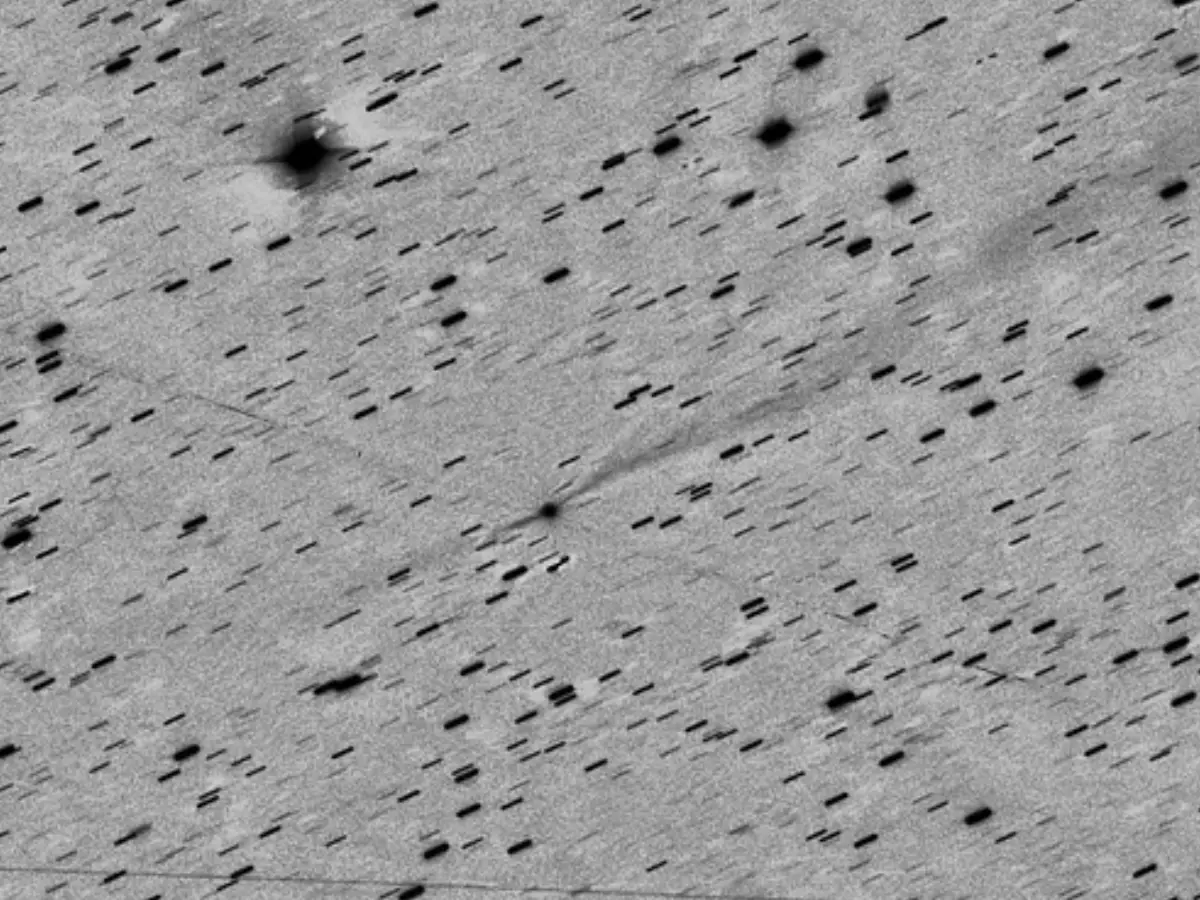
New photo of 3I/ATLAS is out: ESA's Juice probe captured a hyperactive comet

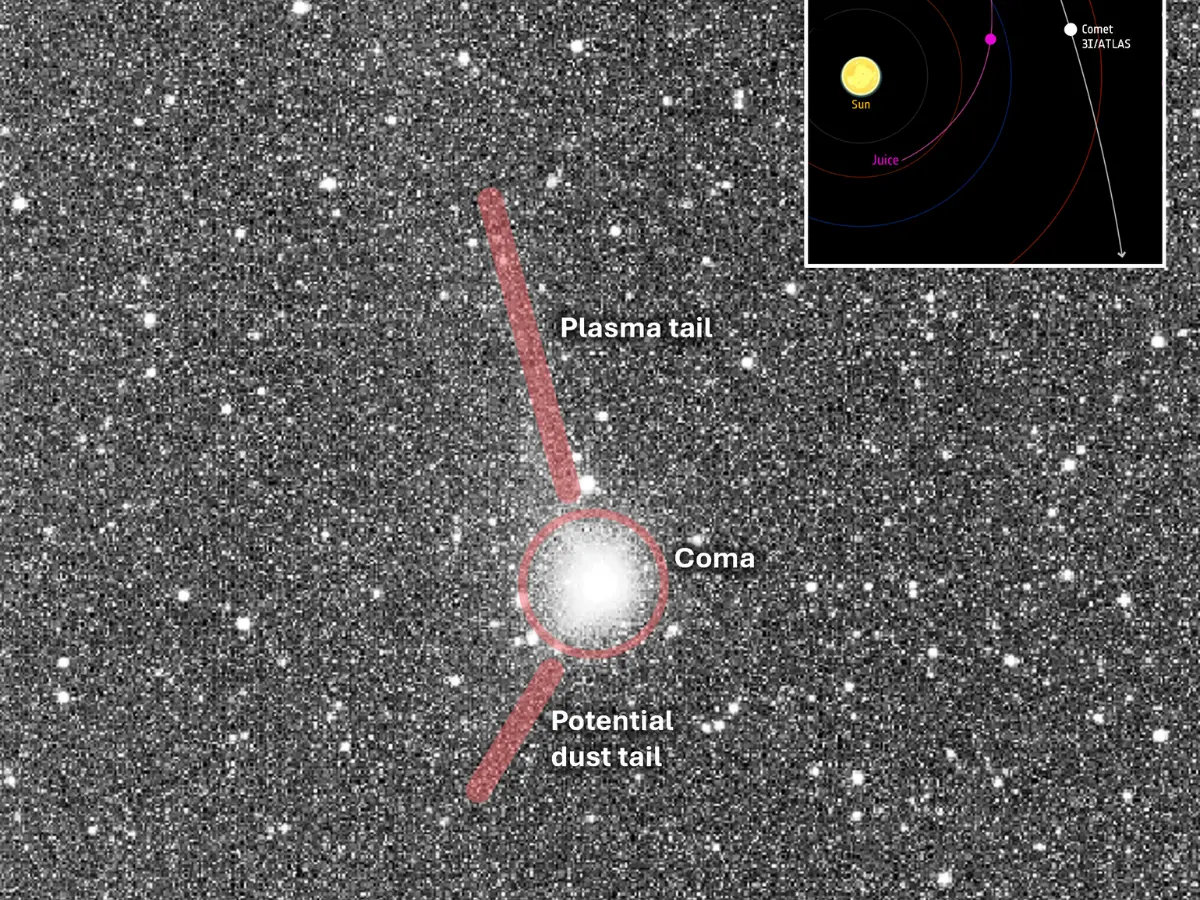&imwidth=600&imheight=450&format=webp&quality=medium "New photo of 3I/ATLAS is out: ESA's Juice probe captured a hyperactive comet")
European Space Agency has released a new photo of the interstellar comet. Photograph: (ESA)
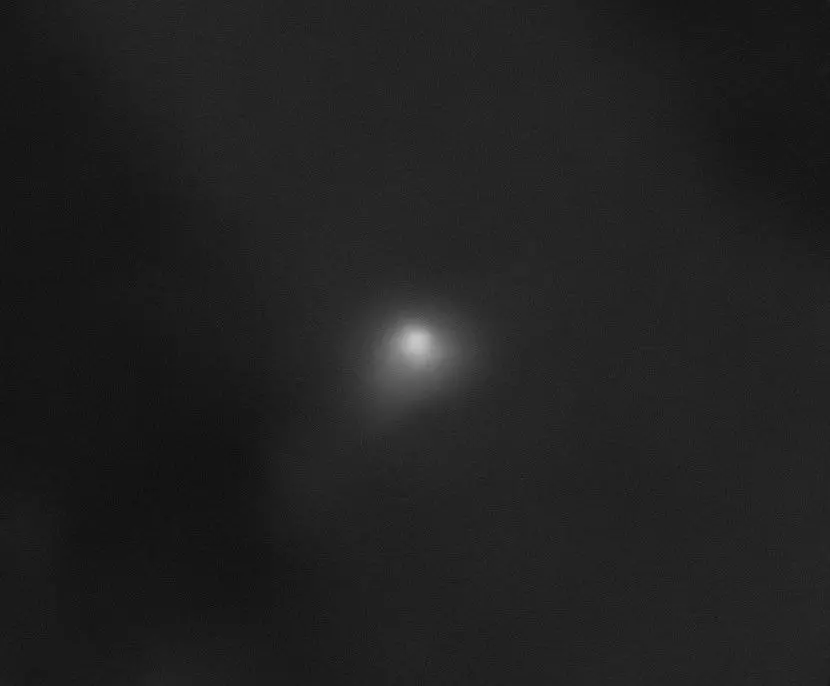
3I/ATLAS update: A new photo of 3I/ATLAS has been released by the European Space Agency. This picture was taken on November 4 by the Juice probe travelling to Jupiter and shows the interstellar comet in a highly active state. However, this is only a tiny bit of what Juice saw.
The European Space Agency has released a new image of 3I/ATLAS taken by its Jupiter Icy Moons Explorer (Juice) probe. The spacecraft spotted the interstellar comet a week after it reached perihelion on October 29. Five instruments on board JUICE fired up to click pictures of the alien object that has been travelling inside our solar system at breakneck speed. It captured the composition and shape of the plume of gas and dust around 3I/ATLAS. While we will have to wait until February to see the full image, ESA has downloaded a quarter of a single NavCam image. The photo shows a glowing halo of gas and dust (coma) surrounding 3I/ATLAS with a hint of two tails. "Not only do we clearly see the glowing halo of gas surrounding the comet known as its coma, we also see a hint of two tails," the ESA wrote.
Juice probe and its cameras
Notably, Juice is using its main high-gain antenna to protect itself from the Sun's heat and radiation. So it is using its smaller medium-gain antenna to send the picture at a lower rate.ESA stated that the Navigation Camera (NavCam) on board has been designed to help navigate Jupiter's icy moons when it arrives in 2031. It is not a high-resolution science camera, and so it could not get the best view of 3I/ATLAS.
Juice saw 3I/ATLAS in a much more active state
ESA added that one of the two tails seen in the photo is the "plasma tail", "made up of electrically charged gas", stretching out towards the top of the frame. There is also a "fainter dust tail" comprising tiny solid particles. 3I/ATLAS made its closest approach to Juice on November 4, and was about 66 million km away from the spacecraft. The picture was taken two days before that. This distance was much more than the Mars orbiter was when the comet flew by the Red Planet on October 2. What Juice saw was way better than the TGO orbiter since the former got a chance to observe it right after perihelion, making it much more active.
Trending Stories
)
)
&im=FitAndFill=(700,400))
)
)
)
)
)
)
)
)
)
)
)
)
)
)
)
)
)
)
&im=FitAndFill=(700,400))
)
)
)
)
)
)
&im=FitAndFill=(700,400))
)
)
)
)
)