
&imwidth=800&imheight=600&format=webp&quality=medium "'HR not required': China cuts 12,000 courses in ultimate push for AI education")
China has carried out the most dramatic restructuring of its higher education system in a generation. Between 2021 and 2025, Chinese universities revoked or suspended 12,200 undergraduate degree programmes — more than 30 per cent of the country's total, while simultaneously launching 10,200 new ones. The programmes being cleared out are in the humanities, arts, foreign languages, human resources and management. What is being built in their place is an AI-first curriculum aligned entirely with Beijing's ambitions to dominate the industries of the future.
The Courses That Did Not Survive
The subjects on the chopping block tell a clear story. Public administration, accounting, HR management, international economics, editing and advertising, these are fields that produced millions of graduates annually but are now being treated as redundant in an economy where AI handles hiring screens, financial reconciliations, content moderation and customer service. Foreign language departments, long a prestige staple of Chinese universities, are being wound down as large language models increasingly outperform human translators. Of the roles that Chinese graduates have historically targeted, programming, accounting, editing, and sales, all have seen sharp declines in job postings since 2018, with AI tools eating into demand faster than the labour market can adjust.

What Is Replacing Them
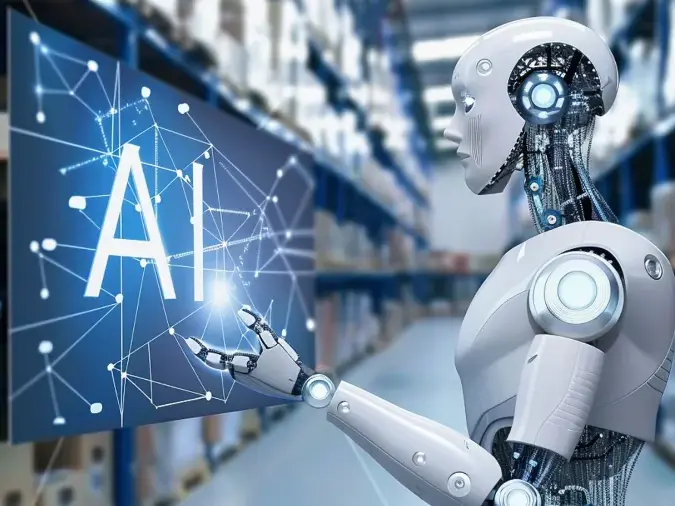
The incoming programmes are tightly anchored to Beijing's industrial policy. Universities are launching majors in semiconductor design, robotics engineering, AI systems integration and a fast-emerging field called embodied intelligence — the science of embedding advanced AI into physical machines and humanoid robots so they can operate in the real world. Nine universities have already added formal degree programmes in embodied intelligence, a subject that barely existed as an academic discipline five years ago. The shift is not just about teaching students to use AI tools, it is about training an entire generation to build, deploy and iterate on the systems that will power China's next industrial base.
The Jobs Crisis Driving The Overhaul
Trending Stories
)
Trump bans CNN, MS NOW and Politico from White House over ‘FAKE NEWS’
)
Russia holds first parliamentary elections since the beginning of the Ukraine war
)
Fast bowler Brydon Carse faces no charges over Derby nightclub incident
)
Flying cars in UAE: Ras Al Khaimah signs deal with Chinese company to test new transport
&im=FitAndFill=(700,400))
From Abhishek Sharma to Sahil Chauhan, 5 batters with fastest T20I hundreds
)
Indian Cinema bets big on mythology, brings ancient stories to modern audiences
)
US And Denmark reach Greenland deal, Trump announces expanded military presence
)
Drone strikes cooling tower at Russia's Kursk Nuclear Plant, IAEA confirms
)
‘Will go to any extent’: Pakistan vows to defend Saudi Arabia amid Houthi attacks
)
Trump signs Russia sanctions law: India faces fresh 100% tariff threat over Russian oil
)
How did an Australian river with 500 crocodiles pass the Olympic test? Here's how
)
Ukraine plans record $109 bn defence spending, nearly two thirds of budget amid Russia war
)
India seeks to build a full semiconductor supply chain
)
'Gangsta' crab shoves knife blade at man and his dog in Florida - Watch
)
Pentagon revives mandatory testosterone testing for male troops aged 30 and above
)
Why Ranveer Singh’s Dhurandhar missed India’s Oscar entry; FFI jury member reveals what happened
)
Who is Khalilur Rahman? All you need to know about 81st UN General Assembly President
)
FACT CHECK: Why did PM Modi ask Xi ‘is it okay’ at BRICS Summit? New video reveals...
)
Indian activist-lawyer Prashant Bhushan's post brings focus on ‘conflict of interest’ appointments of ex-govt officials at Reliance, Adani groups
&im=FitAndFill=(700,400))
Meet top 5 bowlers in latest ICC T20I rankings
)
Trump signs Russia sanctions bill into law, targets Moscow’s energy sector
)
Laura Wolvaardt sets new world record for most WT20I runs in a year
)
IIT Bombay student dies by suicide, was caught seeking AI help during exams
)
Former India player Diana Edulji wants Smriti Mandhana to replace Harman as skipper at the earliest
&im=FitAndFill=(700,400))
Meet top 5 Indian batters with fastest T20I centuries
)
Africa is splitting, and a lot sooner than estimated, giving way to a new ocean
)
Godfather of AI Geoffrey Hinton gives US lawmakers a one-year warning on AI
)
China may have gained access to US's classified F-35 jets; parts meant for repairs diverted to Hong Kong, sparking Pentagon inquiry
&im=FitAndFill=(700,400))
New Friday OTT releases (September 18, 2026): Lust Stories 3, You+Me, Best of the Best- 8 new titles coming on Netflix, Prime Video and more
)
Shivakumar attends 79th Kalyana Karnataka Utsav in Kalaburagi
)
Three labourers killed as DU student loses control of his car, rams into them on Dwarka Expressway
)
Trump 2.0: Dark days ahead for America’s ‘imperial presidency’
)
Trump's Greenland dream comes true? POTUS announces 'Infinite Life' deal with Denmark, claims permanent US control
&im=FitAndFill=(700,400))
Meet top 5 batters in the latest ICC T20I Rankings
)
The Verdict | When precision fails: US commits war crime in Minab school strike, UN finds
Beijing's decision is not purely ideological, it is a response to a jobs emergency. Youth unemployment in China has hovered between 15 and 19 per cent for the 16-24 age group, and more than 12.7 million students were set to graduate in 2026 alone. The old model, expand university enrolment broadly across all disciplines and trust the economy to absorb graduates, stopped working years ago. Millions of degree holders have been unable to find work that matches their qualifications, fuelling public frustration and a cultural backlash against traditional education. The government is now responding by forcibly aligning what universities teach with what the economy actually needs, regardless of which departments resist.
A Signal To The World
China's move carries implications well beyond its own borders. The country is essentially running a live experiment in centrally directed curriculum design at national scale, stripping out fields it has decided AI will render redundant and doubling down on fields where it believes human-AI collaboration will remain essential. Whether this produces the skilled AI workforce Beijing is betting on, or simply trades one kind of graduate unemployment for another, will become visible within the next five years. For countries like India, where HR, MBA and accounting degrees remain among the most enrolled programmes, the Chinese overhaul is an early, unavoidable question: how long before the same reckoning arrives?
