

&imwidth=800&imheight=600&format=webp&quality=medium "Google unveils AI smart glasses with Gemini, targets Meta’s dominance")
Google has entered the AI smart glasses market with a new product powered by Gemini, marking a direct challenge to Meta, which currently leads the segment.
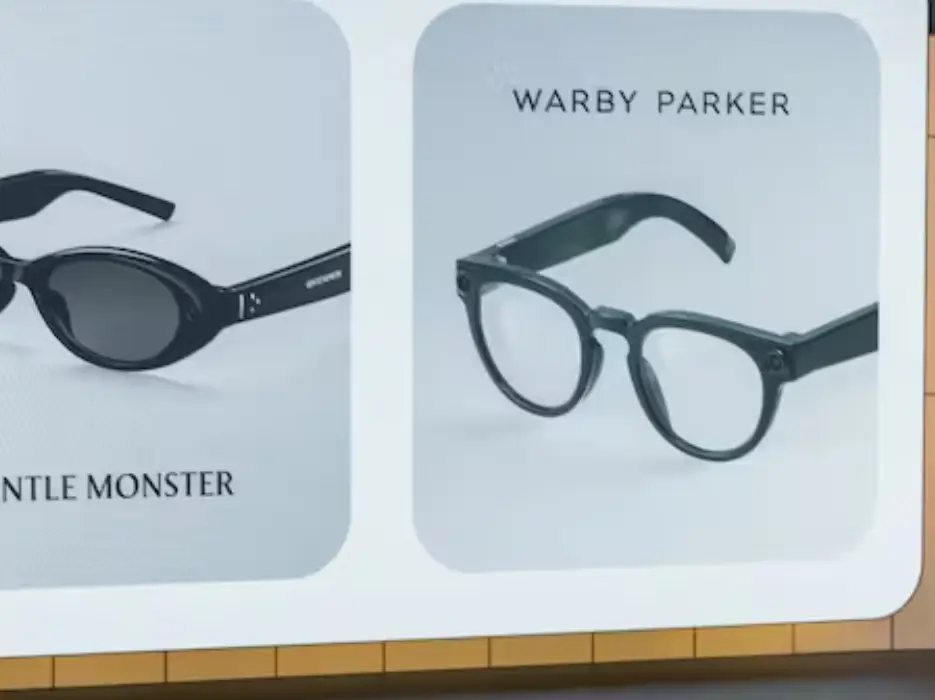
The announcement was made at Google I/O 2026, where the company introduced its “intelligent eyewear” built in partnership with Samsung, Warby Parker and Gentle Monster. The product is expected to launch in fall 2026, though pricing details have not yet been disclosed.
What Google’s AI smart glasses can do
The glasses are designed around an audio-first experience and do not include a display inside the lens. Instead, they rely on voice interaction powered by Gemini AI.
Key features include:
Real-time translation across languages
Trending Stories
&im=FitAndFill=(700,400)&imwidth=180&imheight=135&format=webp&quality=medium)
What is the real meaning behind Pete Hegseth's tattoos?
&imwidth=180&imheight=135&format=webp&quality=medium)
Zohran Mamdani's Garba dance goes viral as he joins Indian community's Navratri celebrations | WATCH
&imwidth=180&imheight=135&format=webp&quality=medium)
Rafale Marine fighter begins flight trials in Goa ahead of Indian Navy induction
&imwidth=180&imheight=135&format=webp&quality=medium)
Explosions heard in Iran’s Hormozgan province near Strait of Hormuz: State media
&imwidth=180&imheight=135&format=webp&quality=medium)
Shock, anger and despair in Bangladesh over the executions
&imwidth=180&imheight=135&format=webp&quality=medium)
Russia to send first tanker carrying 40,000 tonnes diesel to US after Trump-Putin deal – What we know
&imwidth=180&imheight=135&format=webp&quality=medium)
WATCH | Mysterious haze grips Ohio city as toxic chemical leak forces mass evacuation – What is happening?
&imwidth=180&imheight=135&format=webp&quality=medium)
Kim Jong Un death rumors explode | China accused of secretly sending troops to Pyongyang
&imwidth=180&imheight=135&format=webp&quality=medium)
James Bond auction: Own Daniel Craig's Skyfall suit, Ana de Armas' dress and 300+ rare 007 collectibles
&imwidth=180&imheight=135&format=webp&quality=medium)
Trump says end to Ukraine war is 'closer than ever'; Witkoff's Putin remarks spark criticism
&imwidth=180&imheight=135&format=webp&quality=medium)
Trump waves at 'empty space' in viral video,' critics claim 'mental decline getting worse' | WATCH
&imwidth=180&imheight=135&format=webp&quality=medium)
US Midterms 2026: Sugar Land, Plano, Irving: How Texas’s Indian-American belt could shape poll outcomes
&imwidth=180&imheight=135&format=webp&quality=medium)
Macron slams Trump and other foreign leaders' 'stupid comments' on France riots as fresh protests loom
&imwidth=180&imheight=135&format=webp&quality=medium)
IND vs NZ T20Is: Will Sooryavanshi play? Skipper Shreyas Iyer clears the air on Samson vs Vaibhav debate
&imwidth=180&imheight=135&format=webp&quality=medium)
US midterms: Democrats sue Trump administration over alleged 'threats and intimidation' ahead of election, Musk issues warning to Dems
&imwidth=180&imheight=135&format=webp&quality=medium)
‘Her heart and mind in good shape’: What Helen Haines’ husband said after MP loses both legs in ‘targeted’ attack
&imwidth=180&imheight=135&format=webp&quality=medium)
Israel election 2026: Three possible scenarios after October 27 polls
&imwidth=180&imheight=135&format=webp&quality=medium)
US midterms 2026: What polls and prediction markets indicate about Congress
&imwidth=180&imheight=135&format=webp&quality=medium)
US Midterms 2026 and money: From Bloomberg to Musk, corporate donors, super PACs and lobbies, it's all about the cash
&imwidth=180&imheight=135&format=webp&quality=medium)
Ramayana promotion takes a funny turn after Ranbir Kapoor's verbal blunder, leaves fans in splits | Watch
&imwidth=180&imheight=135&format=webp&quality=medium)
US orders embassy staff, families to leave Saudi Arabia amid Houthi attacks: Report
&imwidth=180&imheight=135&format=webp&quality=medium)
Priyanka Chopra celebrates Dussehra 2026 with Nick Jonas and daughter Malti Marie | See pics
&im=FitAndFill=(700,400)&imwidth=180&imheight=135&format=webp&quality=medium)
New OTT releases this week (October 19-25, 2026): Gajab Raat to Chaar Yaar-8 titles to watch during Dussehra week on Netflix, Prime Video and more
&imwidth=180&imheight=135&format=webp&quality=medium)
US business activity grows in June, but tariffs and inflation cloud outlook
&imwidth=180&imheight=135&format=webp&quality=medium)
'I’m not saying it’s extraterrestrial' - 'Mutant' creature forces Mexicans to flee their homes
&imwidth=180&imheight=135&format=webp&quality=medium)
‘I caution the president...’: Trump’s ex-press secretary warns after Zacharia’s exit
&imwidth=180&imheight=135&format=webp&quality=medium)
Hunger makes alcohol more appealing, study finds
&imwidth=180&imheight=135&format=webp&quality=medium)
Finance influencer dies by suicide in Chennai; father accuses tech CEO, who denies charge
&imwidth=180&imheight=135&format=webp&quality=medium)
France protests: 'Block everything' movement escalates as public fury over austerity grows; over 200 arrested. Here's all you to need to know
&imwidth=180&imheight=135&format=webp&quality=medium)
Kolkata airport: CISF detects ₹1.13 crore in US dollars hidden in bags of 2 Bangkok-bound passengers
&imwidth=180&imheight=135&format=webp&quality=medium)
Feds obtain DNA evidence that could prove Ilhan Omar married her brother: Report
&imwidth=180&imheight=135&format=webp&quality=medium)
US midterms 2026: Trump's approval rating hits record low as Democrats gain ground
&imwidth=180&imheight=135&format=webp&quality=medium)
Turkey, Qatar, Pakistan and Indonesia sign 'Badr' defence cooperation pact in Doha
Navigation with voice-based directions
Reading signs and identifying surroundings using camera input
Managing calls, messages and notifications
Taking photos and editing them using AI
Completing tasks like ordering food or booking rides
Users can activate the assistant by saying “Hey Google” or tapping the frame.
iPhone support expands market reach
One of the major highlights is that the glasses will support both Android and iPhone devices. This is a strategic move by Google, as it allows the company to reach a wider audience instead of limiting the product to Android users. Industry reports suggest that cross-platform support is important in this category, especially as Meta’s smart glasses already work across both ecosystems.
Partnership-led hardware strategy
Unlike its earlier Google Glass project, the company is now working with established eyewear brands to improve design and usability.
Warby Parker will focus on practical and prescription-friendly frames
Gentle Monster will bring fashion-focused designs
Samsung is handling hardware engineering and production
Google has also confirmed future collaborations, including a luxury segment with Gucci planned for 2027.
Competition with Meta’s smart glasses
Meta currently leads the smart glasses market, with around 85 per cent global share and over 7 million units sold in 2025, according to industry estimates. Google’s main advantage lies in Gemini AI, which can handle more complex, multi-step tasks compared to existing systems. However, Meta already has an established user base and hardware presence, giving it a strong position in the market.
What comes next in AI wearables
Google has indicated that this is just the first step. A future version with a built-in display is expected around 2027, which could show visual information directly in the user’s field of view. The company is also working on extended reality (XR) devices under its Android XR platform, aiming to build a broader ecosystem around AI-powered wearables.
What this means for the tech industry
The launch signals growing competition in the AI wearable space, with companies focusing on integrating AI into everyday devices.
Instead of traditional screens, the focus is shifting towards voice-based interaction and real-time assistance.
What happens next
The glasses will roll out gradually after launch, with more details on pricing and availability expected closer to release. As companies like Google, Meta and others continue to invest in AI wearables, the market is likely to expand in the coming years, shaping how users interact with technology in daily life
