
&imwidth=800&imheight=600&format=webp&quality=medium "'9 billion litres': Here's how much water Amazon's data centres used in 2025")
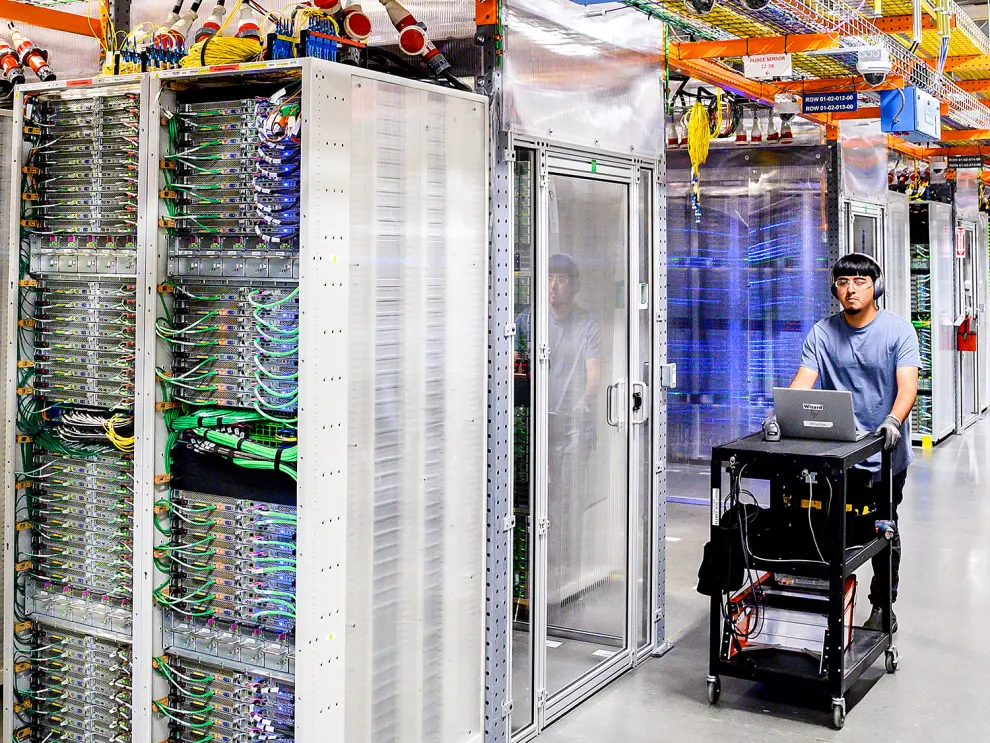
As artificial intelligence drives a global race to build bigger and more powerful data centres, questions are growing about the resources needed to run them. Now, Amazon has released a key figure that it had never publicly disclosed before: its global data-centre operations used about 2.5 billion gallons, or more than 9 billion litres, of water in 2025.
The announcement comes at a time when governments, researchers and local communities are paying closer attention to the environmental footprint of data centres, particularly those supporting AI systems.
Amazon said water consumption at data centres it directly owns and operates actually fell by 2 per cent compared with 2024 levels, despite the company expanding its data-centre footprint. The disclosure was made through a company blog post as scrutiny of AI infrastructure continues to intensify.

Data centres require significant amounts of electricity and cooling. As AI models become larger and more complex, the facilities powering them are attracting increased attention over their impact on water supplies and energy networks. Public concern is also growing. A recent Reuters poll found that while one in three Americans support data-centre construction, only 14 per cent said they would be comfortable having one built near where they live.
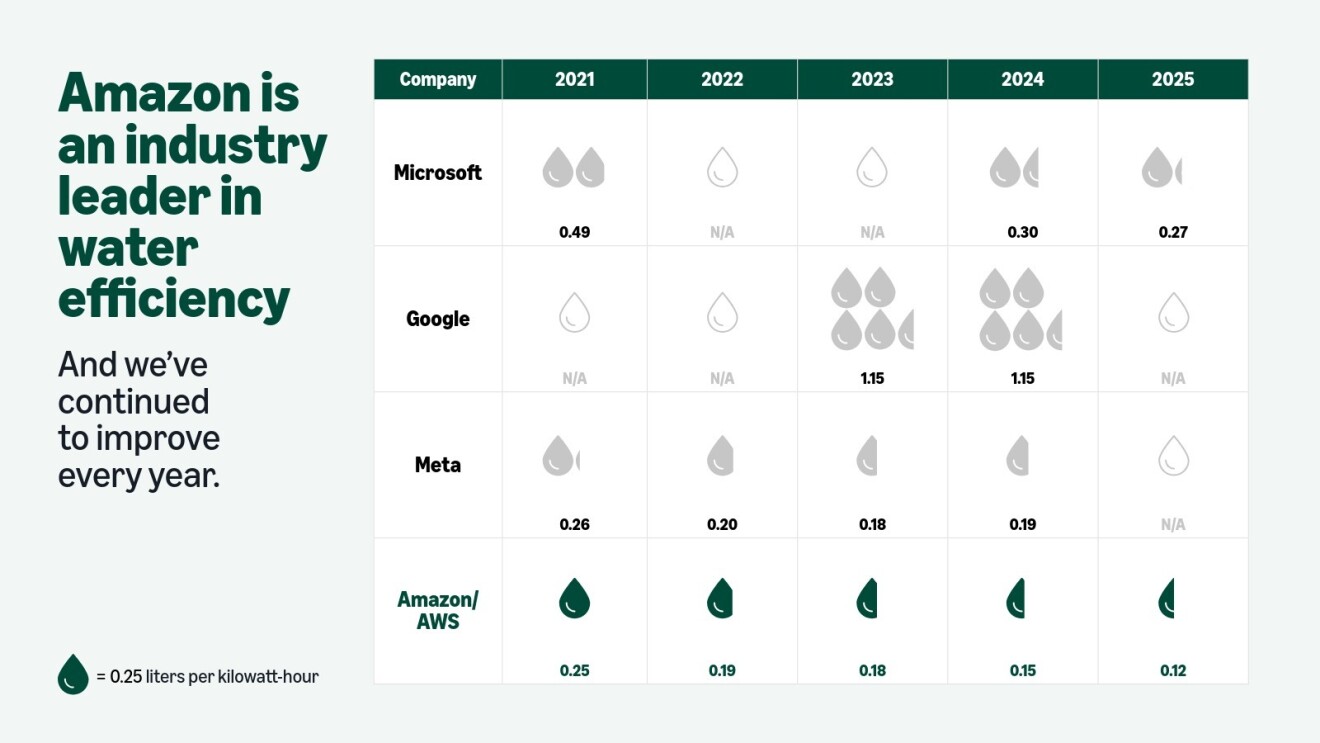
Amazon says it uses less water than rivals
Amazon also used the disclosure to highlight what it says is its efficiency advantage. According to figures shared by the company, its data centres used 0.12 litres of water per kilowatt-hour of electricity in 2025. Amazon says this was lower than comparable figures published by rivals including Microsoft, Google and Meta. However, comparisons come with important caveats.
Google's figures cited by Amazon focus on Gemini AI-related data centres, which generally require more cooling because of their use of powerful AI processors. Amazon's reported water use also does not include water used during data-centre construction or water consumed by power plants generating electricity for its facilities.
Amazon currently operates around 924 data centres globally, according to industry reports.
The wider debate over AI and water
The discussion extends well beyond Amazon.
Trending Stories
)
Trump-Xi Summit: Trade, Taiwan and the red lines shaping US-China talks | Race To Power
)
US citizen injured in Illinois after ICE agents mistook him for fugitive, hospitalised
)
US judge questions Trump’s decision to ban CNN, MS NOW and Politico from White House
)
Afghan woman cyclist who disguised herself as a boy to escape Taliban, wins Asian Games medal
)
Trump signs Greenland security deal with Denmark, paving way for two new US military bases
)
IIT Bombay CCTV footage emerges: Sahil Wakode seen looking at phone in examination hall
)
Cyclone Arnab: Landfall expected before midnight tomorrow as IMD issues orange alerts across six states
)
NBA player Steven Adams shares hilarious GTA VI theory
)
WION Iconic Tourism Summit 2026: Union Minister Shekhawat on 'experiential travel', peace diplomacy
)
ICC plans T20I expansion and fewer ODIs in 2027–2031 FTP cycle: Report
)
'AI got into my speech': Prince Harry jokes after teleprompter failure at event in New York
)
WION Iconic Tourism Summit: Seychelles envoy says India partnership is important for Seychelles
)
Scientists detect first radio signals directly from faraway planet
)
China to test supersonic jet that moves at Mach 2, double the speed of sound
)
WION Iconic Tourism Summit: 'Hanuman Ansh' Director on blockbuster success
)
Open AI, Anthropic CEO urges caution over rapid AI development at UN Security Council, call for 'extreme care'
)
Bomb scare in New York amid UNGA: Suspicious suitcase found near UN headquarters
)
Hours before Xi-Trump meeting, US announces visa curbs targeting birth tourism: What is it?
)
'Partners rather than rivals': Xi Jinping's first message after landing in US for Trump summit
)
WION Iconic Tourism Summit: Is India's travel boom outrunning its airports, airlines and hotels?
)
WION Iconic Tourism Summit and Awards 2026: Key voices to discuss India’s tourism future
)
Trump-Xi state dinner 2026: Who is invited? Full guest list of tech CEOs, business leaders and officials
)
American manufacturing is reshoring faster than its factory floors can absorb
&im=FitAndFill=(700,400))
New OTT releases this week (September 21-27, 2026): Shaque: Trust No One, Hunkkaar, Don’t Be Shy- 5 new titles coming to Netflix, Prime Video and more
)
WATCH | China President Xi Jinping lands in US as Trump greets him ahead of high-stakes summit
)
Australian PM Anthony Albanese calls OpenAI AI incident 'unacceptable' after restricted data access
)
'What kind of confession is this?': Pakistan PM Shehbaz Sharif’s 'terrorists would be roaming New York' remark goes viral, raises alarm online. Watch
)
WION Iconic Tourism Summit: How local tourism MSMEs must upskill for AI integration
)
Elephants hide behind trees, stage surprise attack on poachers targeting rhinos in South Africa
)
Pilot recreates Mona Lisa in sky over Oklahoma and Arkansas in four-hour flight: VIDEO
)
'Putin is patient zero': Zelensky slams Russian president at UNGA, accuses him of using fighters from 47 countries
&im=FitAndFill=(700,400))
National Film Awards 2026: Kartik Aaryan, Mammootty, Yami Gautam, Randeep Hooda and other key winners
)
El Niño 2026 heats up to become strongest in 1,000 years
)
Israeli envoy to US Yechiel Leiter’s son critically injured in West Bank ramming attack
&im=FitAndFill=(700,400))
Trump welcomes Xi Jinping in rare airport gesture: Photos from Chinese President's arrival in US
)
Anne Hathaway to run in supporting race for Nolan's epic
)
Xi-Trump meeting: China’s human rights red line and past protests explained
Researchers at the United Nations University Institute for Water, Environment and Health estimate that the global water footprint of data centres could reach 9.3 trillion litres annually by 2030. According to the institute, that volume would be enough to meet the yearly domestic water needs of all 1.3 billion people living in sub-Saharan Africa.
At the same time, transparency around data-centre water use is increasing.
In Oregon, legal action led to the release of records detailing water consumption linked to Google's facilities. Meanwhile, Utah recently passed legislation requiring certain new data-centre projects to disclose annual water usage.
Amazon's plan to become 'water positive' Amazon says it wants to return more water to communities than it consumes.
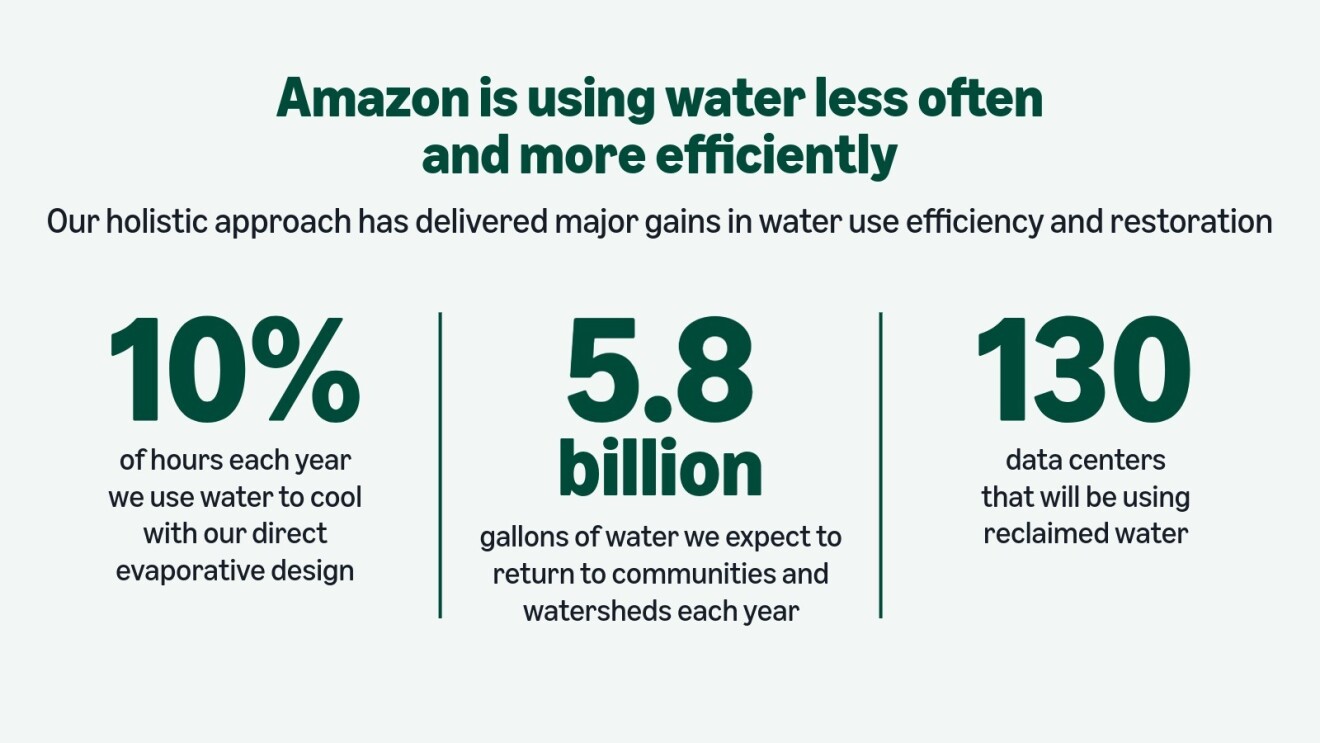
The company aims to become water positive by 2030 and says it has already achieved about 75 per cent of that goal.
Part of the strategy involves using reclaimed and treated wastewater rather than drinking water. Amazon says 26 sites now operate entirely on reclaimed water, while agreements have been signed for another 130 facilities worldwide.
The company also argues that its cooling systems reduce water demand. According to Amazon, its data centres rely on outside air cooling roughly 90 per cent of the time and only use water-based evaporative cooling during the hottest periods of the year.
The disclosure highlights a growing challenge facing the technology industry. AI services are becoming more powerful and more widely used, but the infrastructure supporting them requires enormous amounts of electricity, computing power and water. As governments push for greater transparency and communities demand more information, companies such as Amazon, Google and Microsoft may face increasing pressure to show not only how much AI can achieve, but also what resources it consumes.
