She couldn’t reach the Olympics herself. Now she wants India’s women to make history. The story of Narengbam Lakshmi Devi

&imwidth=600&imheight=450&format=webp&quality=medium "She couldn’t reach the Olympics herself. Now she wants India’s women to make history. The story of Narengbam Lakshmi Devi")
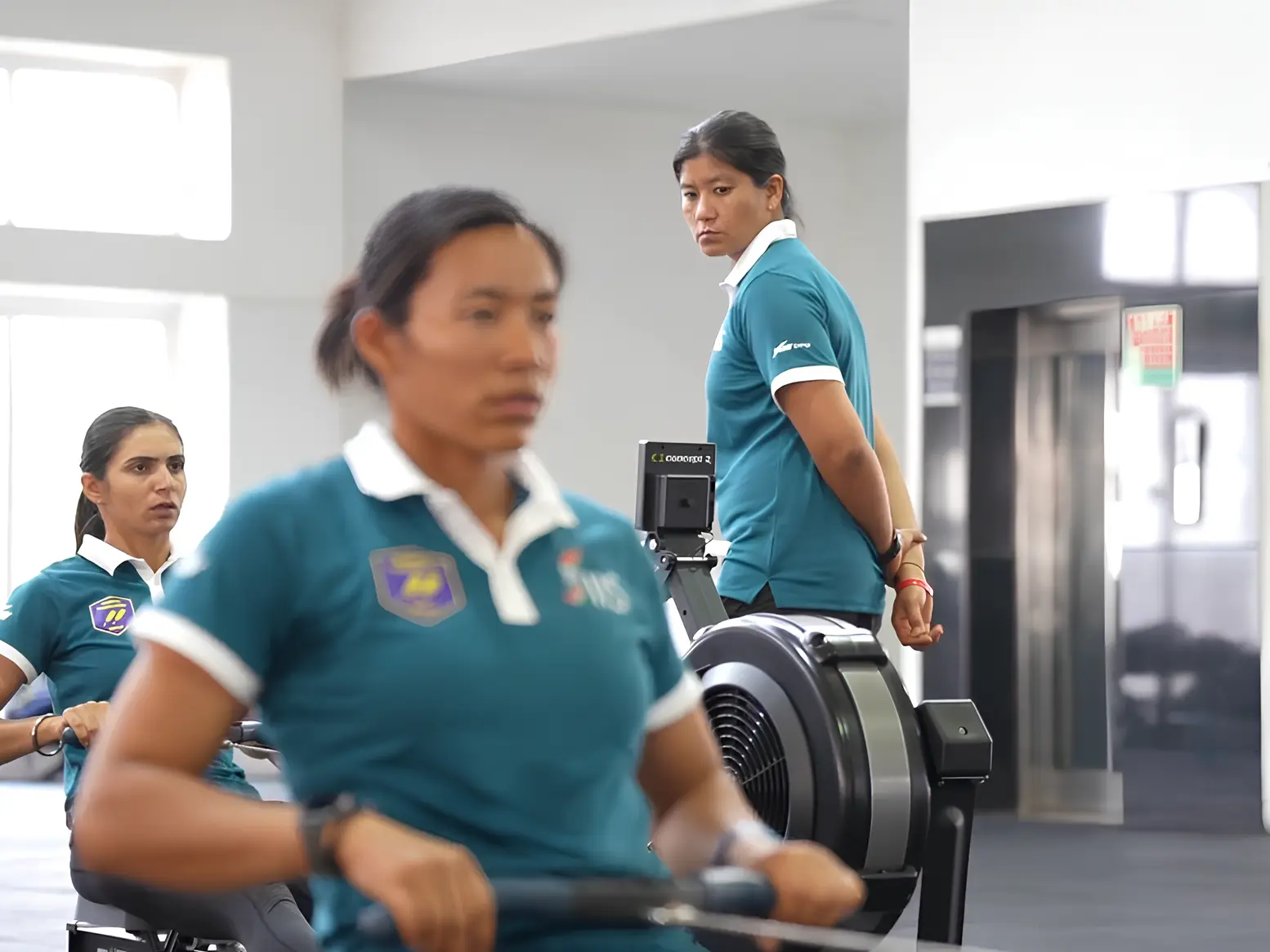
Coach Narengbam Lakshmi Devi looks on during a training session Photograph: (Inspire Institute of Sport)
Manipur's Narengbam Lakshmi Devi missed her Olympic dream as a rower by the barest of margins. Now, she is chasing it again by coaching India’s women rowers
Some dreams end quietly. And then some dreams refuse to die. Narengbam Lakshmi Devi’s Olympic dream belongs to the second category. Fourteen years after missing out on Olympic qualification, the pain still survives somewhere inside her. It appears briefly in her pauses, in the way she talks about ‘margins’, and in the silence that follows whenever 2012 is mentioned. Back then, she was not a coach standing beside India’s women rowers. She was one of them, a girl from Manipur carrying impossible hopes on narrow shoulders. She had already travelled further than most people from her village ever imagined possible.
A fisherman’s daughter. A lower-middle-class household. Old equipment. Limited facilities. No qualified coaches. No certainty that rowing would ever change her life. Yet every morning, she kept rowing. Because somewhere in those waters, she had found belief. “We thought if we pushed a little more, we could achieve something,” Lakshmi Devi said in an exclusive conversation with WION during a training session at the rowing facility in Inspire Institute of Sport. That belief carried her from Manipur to the Indian national camp in 2011. Suddenly, the Olympics no longer felt impossible.
For athletes growing up in privilege, Olympic qualification is often viewed as a sporting target. For athletes like Lakshmi Devi, it becomes something much bigger: escape, identity, dignity, and proof that life can change. She remembers the fear of leaving home more than the races themselves. “There was a language problem. We were scared to go outside,” she recalls. But fear was easier to fight than poverty. Her father worked as a fisherman. Money was scarce. Opportunities even scarcer. Sport became survival. In Manipur, she says, many youngsters enter sports because it offers one thing families desperately need: jobs through the sports quota system. But Lakshmi Devi wanted something bigger. She wanted the Olympics. And for a while, it felt within touching distance.
Also Read: ICC meeting to be held in Ahmedabad during IPL final; will Pakistan chief Mohsin Naqvi attend?
She competed internationally, represented India at major events, and continued fighting through years where India’s rowing camps lacked continuity and support systems remained inconsistent. Still, she kept going. Then came the heartbreak. Qualification slipped away. Not because she lacked effort. Not because she lacked hunger. Sometimes elite sport can simply be cruel. “I gave 100 percent. I wanted to qualify for the Olympics,” she says. She could not do it in 2012. She could not do it in 2016 either. For many athletes, this is where the story fades. They leave camps, take stable jobs, and slowly move away from sport because sport moves away from them first.
Lakshmi Devi almost did the same. Her family wanted her to apply for jobs in the central forces, a stable salary, and a stable future. But she could not leave rowing behind. Because rowing had already become her identity. “Rowing gave me everything,” she says. So instead of walking away from the sport, she walked deeper into it.
Trending Stories
)
)
)
)
)
)
)
)
)
)
&im=FitAndFill=(700,400))
)
)
)
&im=FitAndFill=(700,400))
)
&im=FitAndFill=(700,400))
)
)
)
)
)
&im=FitAndFill=(700,400))
)
)
)
)
)
)
)
)
)
)
)
)
)
)
)
)
)
She became a coach. And perhaps that decision changed Indian women’s rowing more than her own Olympic qualification ever could have.
Back in Manipur, Lakshmi Devi realised there were barely any coaches guiding young girls in rowing. So she decided to become the person she herself never had, a mentor, a guide, and someone who could make young athletes believe. She formally studied coaching, joined the NIS programme, and slowly started building rowers from scratch. Not with world-class infrastructure. Not with modern boats or elite systems. Sometimes with equipment that had existed since 2006. Sometimes with girls who had never even imagined rowing as a career.
But Lakshmi Devi understood something important: talent in India is not the problem. Opportunity is. One of the first athletes she spotted was Priya, a young athlete from athletics whose physique convinced Lakshmi Devi she could become a rower. She persuaded families, built trust, and convinced girls to take a chance on a sport few people understood. Slowly, she started creating athletes who dreamed bigger than she once could. Now, when she talks about the current Indian women’s rowing team, she sounds less like a coach and more like someone protecting a shared dream.
“There are young girls now… Gauri, Malem, and Priya. Our main vision is to qualify for the Olympics,” she says. Then comes the line that truly explains her life. “If not me, then my children.” She is not talking about biological children. She means her athletes. The girls she trains. The girls whose boats now carry the weight of her unfinished dream. That is why Olympic qualification means something different to her now.
If India’s women rowers qualify for Los Angeles 2028 or Brisbane 2032, Lakshmi Devi will not officially become an Olympian. But emotionally, a part of her journey will finally reach the destination it missed years ago. “If they qualify, we are blessed. Our hard work has paid off,” she says. There is no bitterness in her voice. Only purpose. Perhaps because she now understands something many athletes spend lifetimes trying to learn, dreams do not always belong to one person forever. Sometimes they are passed down. From athlete to athlete. From coach to student. From one boat to another.
Indian rowing still struggles for visibility. Lakshmi Devi knows it. The women’s competition pool remains small compared to the men’s side, while sponsorship and public attention are still limited. But she also believes change is coming. More competitions. More exposure. More support. More girls are daring to believe they belong in rowing. And perhaps that belief itself is her greatest achievement.
Because years ago, a frightened girl from Manipur once entered a boat hoping sport would change her life. Today, she stands beside India’s women rowers trying to change theirs. And somewhere between those two journeys, Narengbam Lakshmi Devi discovered that maybe the Olympics were never only about reaching the Games.
Maybe they were about giving someone else the courage to dream of them.

