

&imwidth=800&imheight=600&format=webp&quality=medium "No shortage of money, coaches or facilities. So why isn't India winning more Olympic medals?")
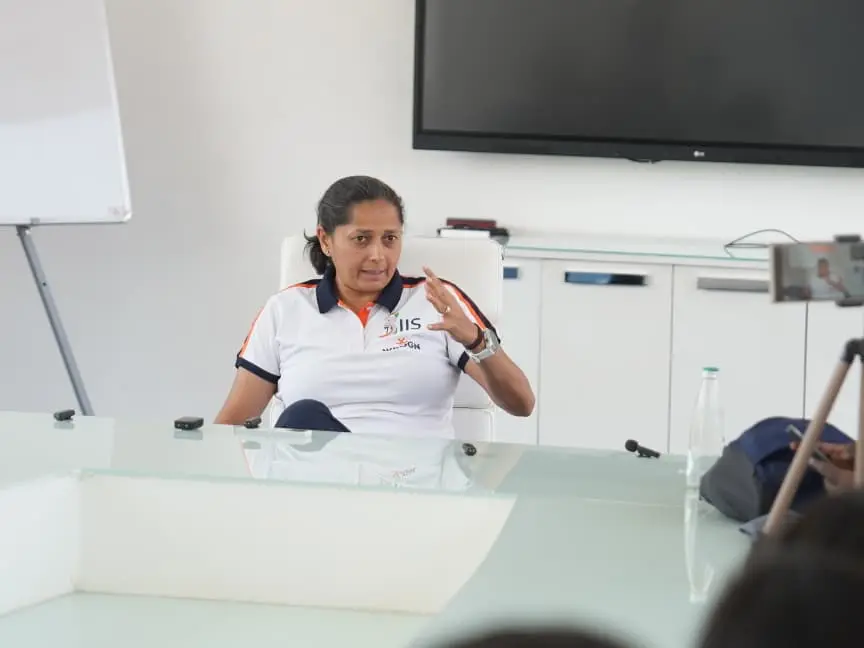
For years, Indian sport has relied on a familiar explanation whenever Olympic results disappoint: not enough funding, poor facilities, inadequate coaching, or a lack of government support. But what if those excuses no longer hold? According to former Indian tennis player and Inspire Institute of Sport (IIS) President Manisha Malhotra, India today has more resources than ever before. High-performance centres have emerged, sports science has become mainstream, athletes travel abroad regularly, and federations have access to unprecedented funding. Yet when the Olympic Games arrive, India still finds itself asking the same uncomfortable question: why are countries far smaller and poorer continuing to outperform us?
"The Indian system looks excellent on paper," Malhotra says in an exclusive conversation with WION. “There is no shortage of money, coaches, facilities, or training opportunities. Then why are we not winning?” It is a question that cuts to the heart of India's Olympic ambitions, especially as the country eyes a bigger role in global sport and dreams of becoming a serious medal contender. For Malhotra, the answer lies beyond infrastructure. The real challenge, she argues, is accountability.
In Indian sport, blame often travels faster than responsibility. Athletes blame federations. Federations blame systems. Coaches blame circumstances. Administrators blame a lack of support. The result is a cycle where everyone can point to a problem, but very few own the outcome. "All of us have to be accountable," she says. "If this place doesn't produce results, I'm accountable. Coaches are accountable. Why should athletes be any different?"
Her comments come at a time when Indian sport is transforming. The country has embraced data analytics, sports science, and modern training methodologies. However, Malhotra believes that possessing data and knowing how to use it are two very different things. "We have the data," she says. “I'm not sure we yet have enough expertise to interpret it.” That gap between collecting information and extracting performance gains may be one of the hidden reasons India continues to struggle on the biggest sporting stage.
Yet the problems begin much earlier. While conversations around Olympic medals often focus on elite athletes, Malhotra believes India's greatest weakness remains at the foundation. Despite frequent discussions about grassroots development, she argues that a genuine grassroots structure barely exists. The reason is simple: a shortage of developmental coaches. India has millions of children in schools, but very few trained professionals dedicated to identifying and nurturing athletic talent at an early age.
Trending Stories
&im=FitAndFill=(700,400)&imwidth=180&imheight=135&format=webp&quality=medium)
What is the real meaning behind Pete Hegseth's tattoos?
&imwidth=180&imheight=135&format=webp&quality=medium)
Kim Jong Un death rumours: State media shares photos to prove dictator is alive amid reports of brain haemorrhage
&imwidth=180&imheight=135&format=webp&quality=medium)
Two Indians among 28 arrested in California over alleged voter registration fraud, DOJ says
&imwidth=180&imheight=135&format=webp&quality=medium)
‘Nuclear-use decision should be taken by humans’: India flags AI risks at UN
&imwidth=180&imheight=135&format=webp&quality=medium)
Flying car race: Alef Aeronautics welcomes Tesla Roadster '11 years' later, but are the two models the same?
&imwidth=180&imheight=135&format=webp&quality=medium)
Dussehra 2025: Why is Ravana not burnt but worshipped in these places of India?
&imwidth=180&imheight=135&format=webp&quality=medium)
Shastri backs Shami comeback; lauds Bhuvi and warns Bumrah on format workload ahead of World Cup
&imwidth=180&imheight=135&format=webp&quality=medium)
Netanyahu rival Benny Gantz quits Israel election race, vows to push for unity government
&imwidth=180&imheight=135&format=webp&quality=medium)
US Midterm 2026: What do opinion polls and prediction markets say less than two weeks before voting
&imwidth=180&imheight=135&format=webp&quality=medium)
Mariah Carey wins $20 million legal battle over brother’s defamation lawsuit against her bestselling memoir
&imwidth=180&imheight=135&format=webp&quality=medium)
WATCH | Albania protesters set Supreme Court on fire as anti-Rama riots escalate
&imwidth=180&imheight=135&format=webp&quality=medium)
Indian Air Force turns to homegrown firefighting robot developed under iDEX programme
&imwidth=180&imheight=135&format=webp&quality=medium)
Pete Hegseth meets Benjamin Netanyahu during unannounced visit to Israel ahead of election
&im=FitAndFill=(700,400)&imwidth=180&imheight=135&format=webp&quality=medium)
Ghaziabad is world's fastest-growing city; Surat, Patna, Rajkot also feature on list
&imwidth=180&imheight=135&format=webp&quality=medium)
'It's a joy to see the makers bring it on such a grand scale': SS Rajamouli on Ramayana
&imwidth=180&imheight=135&format=webp&quality=medium)
Dark fantasy, violence, adult themes: BBFC data reveals animation's shift towards older audiences
&imwidth=180&imheight=135&format=webp&quality=medium)
Far-left parties, global networks among 54 groups linked to France protests, only 16 are youth outfits: Report
&imwidth=180&imheight=135&format=webp&quality=medium)
WATCH | Japan launches historic mission to collect samples from Mars' moon Phobos
&imwidth=180&imheight=135&format=webp&quality=medium)
India begins National Red List Assessment of 1,211 bird species to boost conservation
&imwidth=180&imheight=135&format=webp&quality=medium)
PCB omits Atherton, Hussain from tri-series commentary panel over Imran Khan interview row
&imwidth=180&imheight=135&format=webp&quality=medium)
Trump calls on New Mexico to become 'New America', claims 'home values and incomes would rise'
&im=FitAndFill=(700,400)&imwidth=180&imheight=135&format=webp&quality=medium)
Priyanka Chopra to Shilpa Shetty: 6 Bollywood actresses and their fitness secrets
&imwidth=180&imheight=135&format=webp&quality=medium)
Pujara says 'Samson and Vaibhav cannot be in Playing XI' for India on NZ tour
&imwidth=180&imheight=135&format=webp&quality=medium)
US midterms 2026: From Pooja Sethi to Vivek Ramaswamy, here are Indian-origin candidates to watch out for
&im=FitAndFill=(700,400)&imwidth=180&imheight=135&format=webp&quality=medium)
New OTT releases this week (October 19-25, 2026): Gajab Raat to Chaar Yaar-8 titles to watch during Dussehra week on Netflix, Prime Video and more
&imwidth=180&imheight=135&format=webp&quality=medium)
Baby orangutan rescued in India returns to Indonesia
&imwidth=180&imheight=135&format=webp&quality=medium)
India moves to buy 10,000 more AI chips for a national compute pool open to startups
&imwidth=180&imheight=135&format=webp&quality=medium)
Prince Harry, Meghan Markle never accepted Queen Elizabeth’s terms for royal exit: Report
&imwidth=180&imheight=135&format=webp&quality=medium)
'Whatever I can do to end this war': Trump floats China Summit with Putin and Xi, questions Zelensky's role in peace talks
&imwidth=180&imheight=135&format=webp&quality=medium)
'We feel like Mr India': Gujarat’s undercover SHE team guard garba nights at Navratri
&imwidth=180&imheight=135&format=webp&quality=medium)
Cattle-feed bran in biscuits, detergent in milk: FSSAI acts against 3 companies
&imwidth=180&imheight=135&format=webp&quality=medium)
Feds obtain DNA evidence that could prove Ilhan Omar married her brother: Report
&imwidth=180&imheight=135&format=webp&quality=medium)
Ramayana advance booking: Ranbir Kapoor, Yash's film cross $500K ahead of Diwali release
&imwidth=180&imheight=135&format=webp&quality=medium)
AUS vs SA: Boland grabs opportunity with both ends to help Australia dominate
Physical education often remains an afterthought rather than a specialised profession. "The most important coaches are the foundational coaches," she says. “They set the tone for everything that follows.” Without that base, the pipeline of future champions becomes fragile regardless of how much money is invested at the elite level. Malhotra also challenges another long-held belief in Indian sport, the idea that success can simply be imported through foreign exposure.
For years, athletes and parents viewed overseas training as the ultimate solution. But according to her, champions are not created by plane tickets alone. What separates successful sporting nations is not a foreign training camp. It is a culture, a system, and an environment that develops athletes every single day. That is why she believes India requires far more high-performance centres like IIS. Not one. Not two. At least ten. "If India wants to become a top Olympic nation, we need many more centres of excellence across the country," she says.
The argument becomes even more relevant as India explores the possibility of hosting the Olympic Games in the future. Hosting would bring prestige, visibility, and global attention. But it would also expose the country's sporting depth. A host nation receives representation across a wide range of sports. To compete credibly, India would need significantly larger athlete pools in disciplines such as athletics, swimming, gymnastics, cycling, rowing, and combat sports. Those are not problems that can be solved overnight.
They require long-term investment, stronger systems, and a culture that rewards excellence while demanding accountability. Perhaps the most striking part of Malhotra's vision, however, is that it extends beyond medals. She believes sport should create informed, confident, and ethical individuals, athletes who understand their craft, question decisions, think critically, and develop values that last beyond competition.
She points to Neeraj Chopra not merely as an Olympic champion, but as an example of character. His humility, discipline, and grace have made him one of India's most admired sporting figures. Because ultimately, Olympic medals may define success in the public eye. But for those building the future of Indian sport, success is also measured by the kind of people that sport produces. India's Olympic journey has undoubtedly progressed over the last decade. Funding has increased. Facilities have improved. Sports science has advanced.
The next leap, according to Malhotra, will require something harder to build than stadiums or training centres. It will require accountability, expertise, and a sporting culture willing to confront uncomfortable truths. Only then, she believes, can India begin converting its immense potential into Olympic success.

