Punjab election 2017: Is the state poised to break past trend?

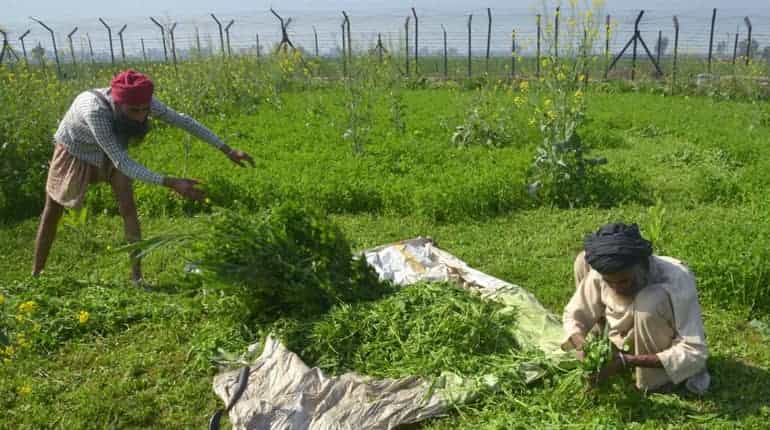
Continuing the trend, 2017 elections witnessed a high electoral participation, at 75 per cent, higher than the national average
Aam Aadmi Party has clearly emerged as a game-changer, challenging the dominance of Akali Dal and Congress in Punjab
Election was held in Punjab on 4 February 2017 to elect the 117 members of the Punjab Legislative Assembly.Several elements and episodes make the 2017 Punjab electionthe gripping talk of the nation.
There is a great amount of political speculation on whether the Aam Aadmi Party (AAP) will be able to re-doits impressive performance of 2014 Lok Sabha election. If AAP succeeds, they will putan end to the 50-year-long two party dominance in the state.
This year'selection is also of crucial significanceto the Congress party. Avictory in this state election is the party'sonly chance to break the cycle of repeated nationwide defeats since 2014. Among the five states that have gone for election, the party isin poor shape in Goa andUttarakhand has exercised anti-incumbent vote against it. It is only in Uttar Pradesh wherein Congress is a junior alliance of the ruling Samajwadi party.

In Punjab, the ruling Shiromani Akali Dal (SAD), in alliance with the Bharatiya Janata Dal (BJP), has remained in power for two consecutive terms. For SAD, it is more about retaining the traditional social support base of rural Jat Sikhs so that it canhold on to their position.
In manyways, the 2017 elections was not out of ordinary for Punjab since it exhibited some long-established, state-specific trends.
The three electoral regions i.e. Malwa, Doaba and Majha have their own distinct electoral issues and voting patterns. But rather than dwelling on issues of ethnic conflict, as it did prior to the 1997 election, this year's election campaigns revolved aroundissues of development and governance. While SAD and BJP claimed to bring about development if elected to power, the Congress party and AAP accused the ruling combine of corruption, nepotism and non-performance.
)
No Pandya as Auqib Nabi earns maiden ODI call-up; Mayank returns for WI T20Is| check full squads
)
Chiefs tight end Travis Kelce named one of the victims in $35 million ponzi scheme
)
Trump praises India’s Opium crackdown, hails anti-drug efforts
)
Sydney Sweeney defends provocative ad choice, the internet is still not impressed
)
Former India player Diana Edulji wants Smriti Mandhana to replace Harman as skipper at the earliest
)
Trump calls Canada-EU associate membership plan ‘laughable’ and threatens 'very serious tariffs'
)
Protests erupt over migrant housing plan in Piddington
)
Shahzad Bhatti Network declared terrorist organisation under UAPA: Govt order
)
Europe wants a common playbook for security threats, seeks security beyond NATO
)
Formula One reveals the 2027 race calendar; Monaco to host sprint race for the first time
)
All Indian goods to get duty-free access to New Zealand
)
Bigg Boss 20: Mahhi Vij reveals she lost Yuva role to Kareena Kapoor; 'didn’t work out in my favour'
)
Lionel Messi for 2026 Ballon d’Or over Mbappe and Yamal, says Diego Simeone
)
US House votes 417-3 to pass Ratepayer Protection Act targeting AI data center electricity costs
)
Hong Kong unveils 11 new measures to boost birth rates, offers higher cash bonuses and housing perks
)
Former OpenAI researcher warns of growing risks from Artificial Intelligence
)
Veteran actor Anant Nag honoured with Indian cinema’s highest award
)
AUS vs SA: Steve Smith still gets 'little flashbacks' from sandpaper gate
)
Pakistan naval vessel returns to harbour with 'severe damage' after collision with Indian warship in Arabian Sea
)
Fed raises rates for first time in 3 years, Kevin Warsh defies Trump as inflation mounts
)
Katrina Kaif’s postpartum weight is not the problem; your gaze is
)
Taiwan seeks deeper India ties as direct flights restart soon and chip projects advance
)
Daayra movie review: Kareena Kapoor, Prithviraj Sukumaran shine in Meghna Gulzar’s cop-versus-cop crime thriller
)
Saudi Vs Houthis: Yemeni military rebels clash with Houthis
)
Pak batter Rizwan's petition against being questioned by cyber crime agency rejected by court
)
US trade tariff: 100% tariff targets Russian buyers amid trade tensions
)
Pakistan: Imran Khan's sons Kasim & Sulaiman claim their father is 'tortured' in jail
&im=FitAndFill=(700,400))
New OTT releases this week (September 14-20, 2026): Lust Stories 3, Waiting Hai, Irumudi- 5 new titles coming on Netflix, Prime Video and more
)
Trump gets new power to hit India, China with up to 100% tariffs as US Senate clears Russia sanctions bill
)
Prime Minister Narendra Modi's birthday: Italian PM Meloni sends birthday wishes
)
‘Imagine 50 AI fighters cornering one manned jet’: India’s mobbing doctrine eyes a new era of air warm
)
Saudi vs Houthis: Riyadh claims to have shot Houthi drone targeting Mecca
)
US Treasury rallies global financial institutions for Op Economic Outcast to isolate Iran
)
India breaks silence on US Russia sanctions bill, 100% tariff threat: ‘Committed to energy security’ for 1.4 billion
)
Pakistan boycotts chess match against Israel at Olympiad
)
Want to get married within a year? Why 18 lakh people rush to Jaipur for ‘sacred henna’
&im=FitAndFill=(700,400))
Suriya and Jyothika say ‘I do’ again after 20 years! See their dreamy wedding pics
)
Abhishek Sharma rises to No. 2 in T20Is; ENG’s Robinson 3rd after record Pakistan Tests
)
The Early Spring season 2 is happening, but fans have one request - 'don't change the actors'
Concerns raised by the opposition parties included the regular issues related to roads, water, electricity, and employment. Additionally,problems related to farming, such as foodgrain procurement, indebtedness, cash crops failure, minimum support price and lack of incentives to businessmenwere very much part of the political discourse.
On the flip side, competitive patronage based on clientelistic politics rather than programmatic politics continued, asparties madeunrealistic promises in campaigns.
Continuing with the trend, the 2017 Assembly election has witnessed huge electoral participation.At 75 per cent, the state's electoral participation is much higher than the national average.
Viewed in terms of leadership profiles, electoral politics of the state continued to remain lopsided. All prominent leaders belonged to land-owning and financially powerful Jat landed peasantry. In a state with 31.9 per cent Dalit population, Bahujan Samaj Party (BSP) has continued to lose its ground even in the Doaba region where the Dalits constitute themajority. Its sway over the people of Punjab has wanedas the BSP leadership's sole focus continues to beon Uttar Pradesh (read Mayawati) at the cost of neglecting the Punjab region.
However, there were also important deviations, which have turnedthe 2017 Assembly elections in Punjab into an exceptional contest.This year's election brought to an endthe long-standing bi-partyelectoral system in the state. At present, the Aam Admi Party has emerged as a key player along with Congress and Akali Dal.
The AAP’s incredible electoral journey had commenced with the 2014 Lok Sabha election when it had surprised everybody by polling 24.4 per cent of the vote and winning four out of 13 constituencies. It finishedthird in eight constituencies (34 of the 117 Assembly segments). That performance defied received electoral wisdom, as AAP did not have a recognisable leadership, organisation, or support base. Neither did it haveelectoral agenda or the winnablity factor in a state, which has been witness to high level of electoral participation and contestation.
Irrespective of the number of seats AAP has won in the past, it has clearly emerged as a game changer by forcing the Congress and Akali Dal to address hitherto ignoredbut vital issues, such asdrugs, plight of poor farmers and dynastic rule.In terms of leadership too, there was an aberration. For the first time in the electoral history of the Punjabi Suba, Arvind Kejriwal, a non-Punjabi speaking Hindu from the neighboring state of Haryana, has emerged as the face of the AAP campaign. Evidently, he hascaused scare in the heart of established contenders like Parkash Singh Badal and Amarinder Singh.
There was also a notable shift in the traditional social support base ofpanthic parties like SAD. The party that have always managed to gain support of rural voters so far, especially the Jat Sikhs, faced an alienated rural constituency. They have failed to preventrepeated crops failures, provided inadequate compensation to farmers, and poor qualitypesticides were distributed when the party was in power. In addition to all these, the SAD adopted a flawed crop procurement process, farmers commttedsuicides and there was minimum support price for crops. Most significantly, the inability of the Akali government to capture the culprits behind desecration of the holy Guru Granth Sahib also drove awaythe devout Sikhs.
SAD's attempt to enlist the support of Dera Sacha Sauda right before the election might have brought Dera Premi votes, however, it annoyed the traditional rural panthic constituency of the SAD. The Dera chief is not only charged with serious crimes but was also accused of personating himself as the tenth Sikh Guru.
Beyond these significant departures, several innovative electoral strategies were witnessed in 2017. The AAP, for instance, not only came out with separate manifestos for different social constituencies, but also adopted creative door-to-door and social media campaigns. The youth of Punjab emerged as a new secular ‘voting category’.There were visible techniques used by parties to woo the younger bracket, particularly, the women.Issues related to women received particular attention in this year's state election. But on the flip side, youth in rural Punjab are critically affected by the spread of synthetic drugs. Much of the drug problem has been blamed on Akali politicians, including Bikram Singh Majithia, the brother-in-law of Sukhbir Badal. The allegation stigmatised the Akalis and led to loss of votes among their core constituency.
Arguably, the 2017 election was not the most interesting in the history of the state but definitely one that can turn out to be a game changer. Since 1992, Punjab has not seen a hung assembly but there is a distinct chance of having such an assemblythis year which would then open up interesting scenarios.
There is palpable tension in the air and Punjab waits with bated breath for theresults to be announced on 11 March.