How Bengal won the 'Rosogolla war' over Orissa

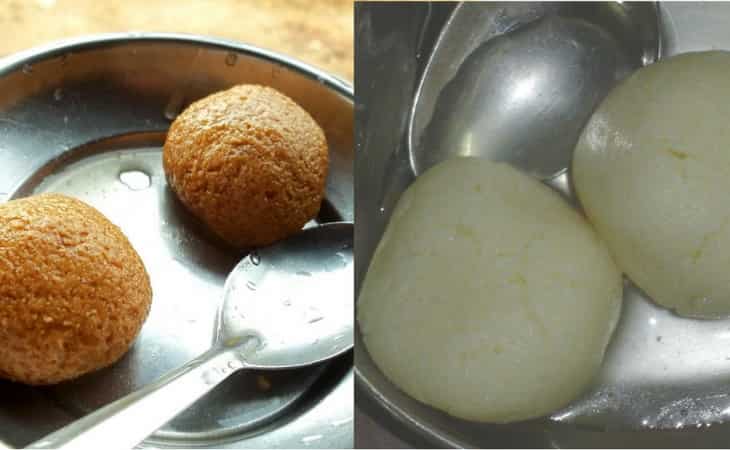
rasagolas
The fight over Rosogolla is actually a cultural battle; a tussle over an urban and a more rural version of Rosogolla.
After Hilsa, a hard battle was fought over Rosogolla-the famed sweet of Bengal. This time the contestants were Bengal and Odisha and not India and Bangladesh as was the case with the bony fish of Padma and Ganga. The two states of India fought over who will get the GI claim over the sweetmeat. The battle started with Odisha staking a claim overRosogolla in 2016. A committee was formed by the state government, stating that the sweet has its roots in the Land of Jagannath.
To bolster its claim, Odisha has primarily taken recourse to religious ritual as evidence. It drew from mythology to argue that Rosogolla is the sweet that Lord Jagannath offered to his consort Goddess Lakshmi when she was upset at his long absence during Rathayatra. Goddess Lakshmi relented upon taking a bite of the sweet, proving for eternity the heavenly taste of Rosogolla.
Till date, Rosogolla is an important part of 'Niladri Bije' celebration in Puri, Odisha.

But unlike Odisha, Bengal in claiming a GI status over Rosogolla, hasn't walked the religious line. Instead, the Bengal government took a very technical line. In the letter to the Geographical Indications Registry office in Chennai, the state department of food processing industries and horticulture said the way the dessert is made in Bengal is different from that of other states.
)
Mushtaq Khan dies at 56: When Welcome actor opened up about his salary for iconic role Ballu
)
Hawaii braces for Hurricane Nolo: NOAA warns of flash flooding and mudslides
)
Bangkok declares flood disaster as heavy rain submerges roads and homes
)
US Supreme Court backs Trump administration's use of SAVE database to check voter citizenship
)
Outrage erupts after 3-year-old is married to 60-year-old man in Pakistan, link to her sister's murder being probed
)
Donald Trump shares image of Xi's arrival in Washington, carries signs of AI
)
Pakistan deploys over 20,000 security personnel as PTI vows march for Imran Khan's release
)
Anthropic says Claude found a new gene-editing enzyme but science isn't confirmed
)
Farhan, who went viral for AK47 celebration vs India in Asia Cup, hopes to lead Pakistan beyond Asian Games
)
Prince Harry offers rare glimpse into Archie and Lilibet’s life after UK move
)
OpenAI AI Agents hacked 4 websites before Hugging Face, researchers reveal
)
Pentagon quietly adds 37 wounded troops to Iran war tally without explaining when or how
&im=FitAndFill=(700,400))
New Friday OTT releases (September 25, 2026): Don’t Be Shy, Hunkkaar: The Roar, Mango Pachcha- 6 movies and TV shows on Netflix, Prime Video and more
)
Asian Games 2026: India face Afghanistan in quarterfinal on Sep 28; Pakistan clash with Hong Kong
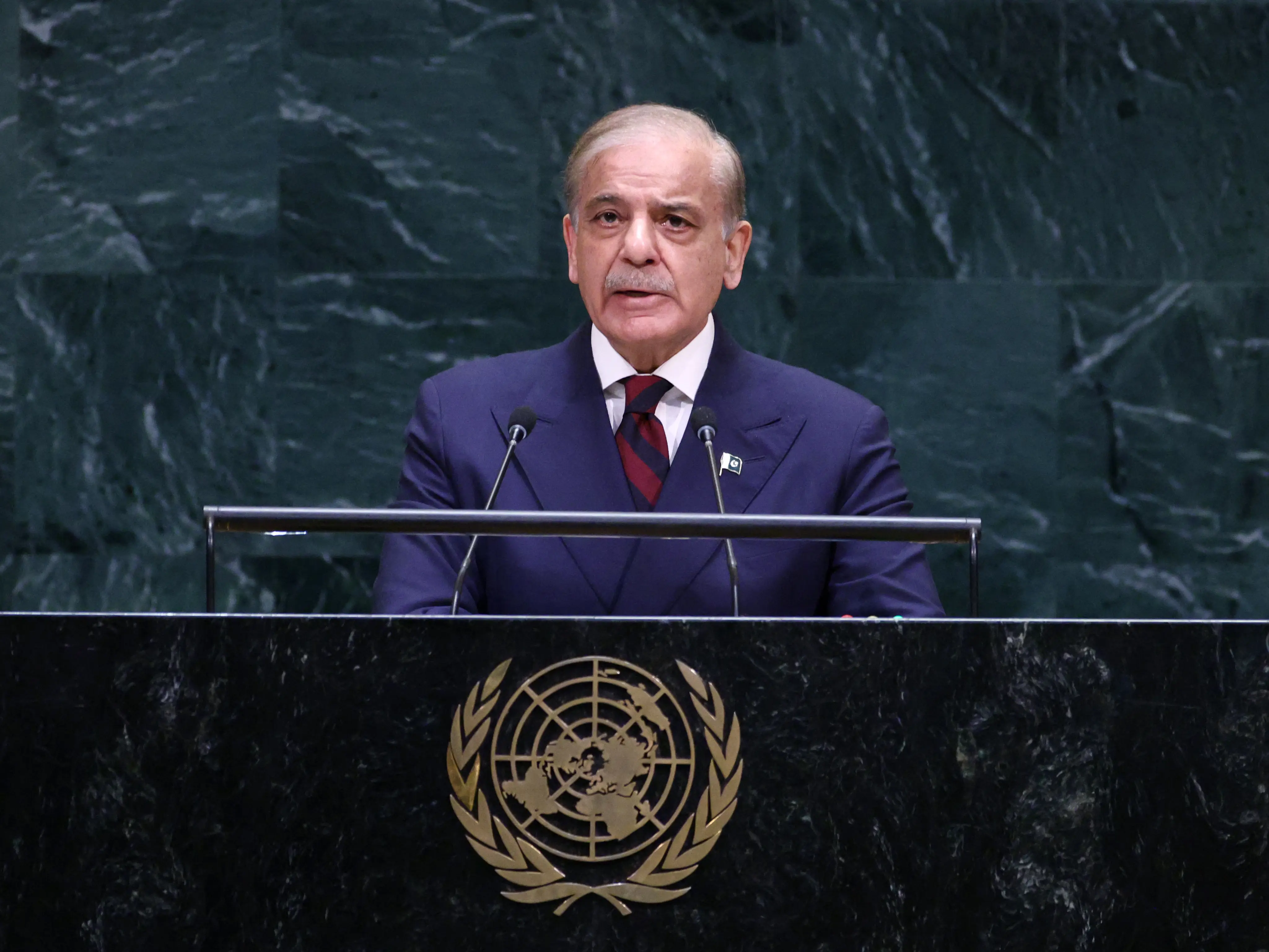)
‘Attack on Mecca a red line for Pakistan’: Shehbaz Sharif warns Houthis at UN
)
‘I rejected it’: Trump confirms turning down Iran’s proposal to reopen Hormuz, claims Tehran is losing ‘badly’
)
Death toll rises to 64 in Indonesia's Java Sea ferry incident; 71 still missing
)
Did Hitler kill his niece Geli Raubal? Newly found records reopen a 95-year-old mystery
)
Nigeria Navy moves to boost oil security, tackle crude theft and infrastructure threats
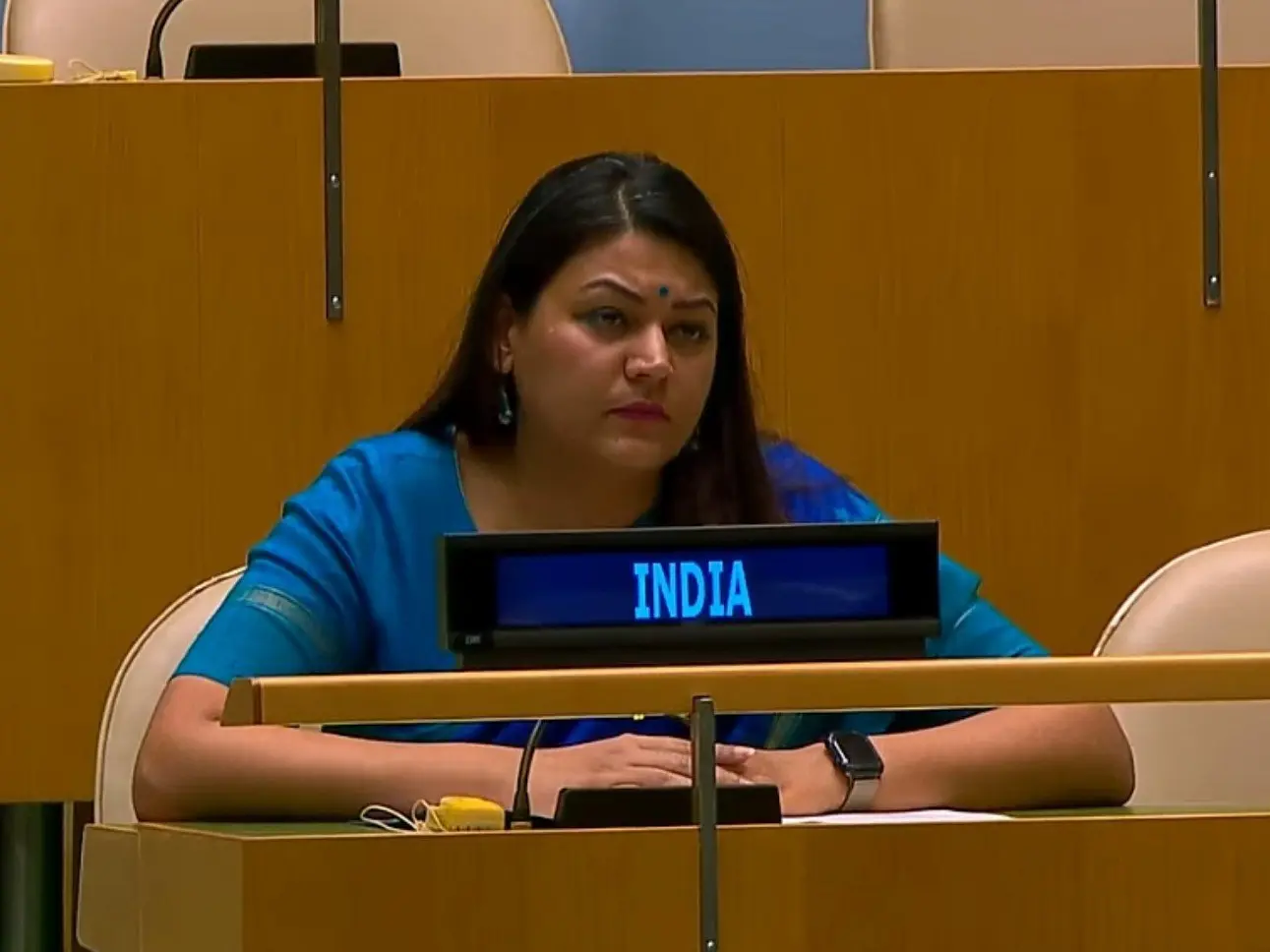)
Indian diplomat Petal Gahlot raises deteriorating situation in Pakistan-occupied Kashmir in right of reply at UN
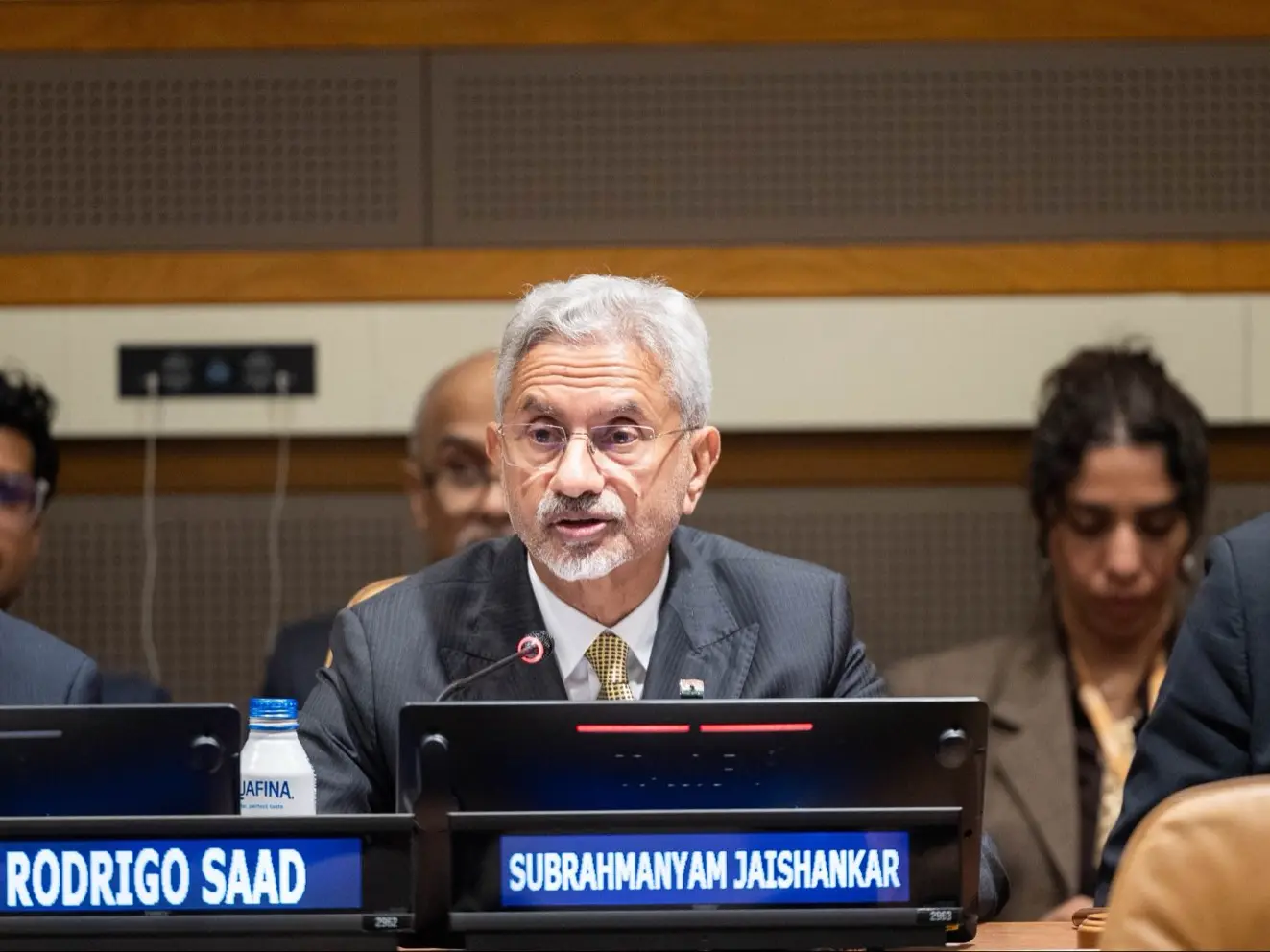)
'Countries far from conflict are penalised': Jaishankar calls for Gulf peace, seafarer safety at UN
)
What Gisele Bündchen allegedly told Tom Brady before their divorce
)
‘It is all possible’: Putin weighs next steps on Ukraine talks, rules out Europe conflict
)
Global community 'absent' in Gulf crisis: Saudi at UN calls for freedom of navigation, pre war status for Hormuz
)
The Paradise: Nani reacts to mixed reviews from critics and audience; ‘I have also learnt from the flaws’
)
Trump rejects Iran's 7-day ceasefire proposal as US weighs renewed bombing after midterms: Report
)
Gaza's war turned environmental damage into second crisis
)
Trump-Xi summit wrap: Big pageantry, Iran talks, few major developments and more meetings planned
)
'What kind of confession is this?': Pakistan PM Shehbaz Sharif’s 'terrorists would be roaming New York' remark goes viral, raises alarm online. Watch
)
Myanmar training camp case: US national, 6 Ukrainians allowed to meet their families abroad
)
'FIRST LOOK from inside Noah’s Ark': Researchers share video from inside mysterious mound in Turkey
)
Cindy Crawford’s son Presley Gerber cremated as death probe continues
)
WATCH | As Shehbaz Sharif claims Pakistan’s ‘victory’ during 2025 conflict, Indian diplomat R Srinivas laughs at UN
)
'A terrorist country is asking me that question?': Jaishankar hits back at Pakistani journalist at UN; flags attacks on commercial shipping
)
Russia will achieve Ukraine war aims; Europe doing everything to block peace talks: Lavrov at UN
)
‘Serial practitioner of terrorism’: Jaishankar calls out Pakistan’s ‘state-sponsored’ terror at UNGA
)
US court backs Pentagon's decision to exclude Anthropic over Claude AI restrictions
The officials of the Ministry goes on to elaborate, "The preparation of light sugar syrup is unique and it contributes towards the taste of Rasogolla. Light syrup adds to the unique mouth-fill characteristic which is traditional in nature and well documented in different books unlike other similar products."
The 'unique' feature of 'Banglar Rasogolla', therefore, lay in the use of light syrup. The Rosogolla's from Odisha, on the other hand, use dense thick syrup, it is brownish in colour and it is, as the petitioners from West Bengal, pointed out is 'chewy' and 'sticky' as opposed to the 'light' and 'fluffy' test of Bengali Rosogolla.
So far I have witnessed two types of reactions to this Rosogolla debate: there are many among us who completely find the battle trivial; they are nodding in disbelieve as to how can possibly there be a fight over a type of sweetmeat. There are equally as many people, perhaps more vociferous, who are treating the episode in all seriousness.
However, what we are missing to note is, the fight over Rosogolla is not entirely a fight over the origin. The fight is actually a cultural battle; a tussle over an urban and a more rural version of Rosogolla. The one that got the GI tag will not only bring more business but also emerge as the most coveted type. All Rosogollas, losing their distinctive character, will aspire to become the Kolkata type.
It is in this close braiding of economic and cultural aspects wherein lies the significance of the Rosogolla battle.
Made of cheeseballs that are dipped in syrup, Rosogolla has been the iconic sweet of Bengal. Wherever Bengalis went, they have ensured Rosogolla is made available at least on special occasions. I have seen Rosogolla selling in the restaurants of New York City in a very similar way to 'mishthanna bhandars' (sweetmeat shops) of Hatibagan, a 19-century old neighbourhood of north Kolkata. If the Bengal historians are to be trusted that Nobin Chandra Das was the inventor of Bengali Rosogolla, then it is area around Hatibagan and Shyambazar that must have seen the first emergence of these sweet cottage balls.
The small pyramid of spongy white balls tugged my heart more than any other symbol of my homeland.
The popularity of Rosogollas ensured that it became the first canned sweetmeat of Bengal. KC Nag, a very old sweet seller from Kolkata, showed the foresight to can, pack, and fly out Rosogollas to distant lands. KC Nag's marketing made the soft, fluffy, spongy Rosogollas the representative sample of the sweetmeat. This particular type emerged as the hegemonic Rosogolla of Bengal.
For good or bad, Kolkata-type of Rosogollas very successfully erased the business potential of all other kinds of Rosogollas worldwide. The educated, urban middle-class Bengali made this spongy type their own. That is what began to be served during all festivities, celebrations, and all kinds of occasions.
The type of Rosogollas found outside India or in the major metropolis of India is basically this Kolkata type.
But does that mean that rest of Bengal swoon over the same type? Not at all. Go to the mufassils and you will see them selling Rosogollas which are brown, chewy, heavy and large. To put it simply, most of Bengal have Rosogolla's that are very similar (if not exact) to Odhisa ones. Kolkata, in this case, is a distant cousin.
Winning the GI tag for 'Banglar Rasogolla' (Bengal's Rasgulla) serves as a fantastic instance of a cultural imposition when Kolkata thrust its own type of Rosogolla as the Rosogolla of Bengal.
But this is the official discourse. As far as what we consume, there is an old saying in Bengal: aap ruchi khana i.e eat what you want.