Bangladesh: Is recognising Qawmi Madrasas mainstreaming or appeasement?

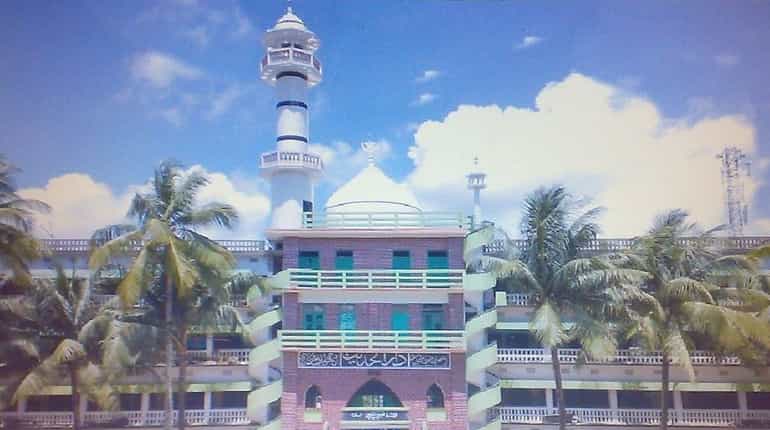
Madrasa
The informal, orthodox Islamic education will be considered the equivalent of a master's degree. Some are worried
Bangladeshi Prime MinisterSheikh Hasina has recentlydeclared that the "Dawra-e-Hadith"degree of the Qawmi Madrasas (Islamic seminary) of Bangladesh will be recognised as a master degree on Islamic Studies and Arabic.
An education ministry gazette followed, detailing the procedures. Her declaration has stirred considerable controversy in Bangladesh. The governmentand its supporters maintain that it’s important to mainstream the Qawmi education.Critics argue that thisformal recognition is far fromideal. This step was recommended to the prime minister by the ministry of education following a meeting with Qawmi Madrasa Education Board membersand the leaders of the orthodox outfit Hefazat-i-Islami, suspectedly after getting a political nod for it.
As per the understanding,the Qawmi Madrasa education board, which itself is still unrecognised by the government, has constituted an examination board to conduct exams of "Dawra-e-Hadith"degree which is to be recognised as a post-graduate one. The chairman of the examination board is Shah Ahmed Shafi, the main leader of Hefazat-i-Islami. The government will have nosupervisory power over the exams andrelated procedures. The examination board’s decision will be final. This has been acceded to fulfill the demands made by Hefazat-i-Islami leaders and the board members. This examination board will not even allow any representative from the government either - such a high price to be paid just to bring into fold, if it is at all, a segment until recently considered an unimportant fringe one.

However, there are about 14,000 Qawmi Madrasas in Bangladesh which have about 1.4 million students at any given point of time. These figures are quite big actually, despite their erstwhile fringe status. Often there arecriticisms about the curricula and pedagogical methods applied in these madrasas. Also, under criticism is the religious orthodoxy they preach, which is suspected as one of the key reasons for pushing many poor youths into Islamic radicalisation. These Qawmi madrasas, by and large, follow the teachings of their traditional ideological hub – Darul Ulum of Deoband, India.
&im=FitAndFill=(700,400))
National Handloom Day 2026: From Alia Bhatt to Samantha Ruth Prabhu; Actresses who celebrated India's textile heritage as brides
)
The Royals enter the Doctor Who universe: King Charles and Queen Camilla beam into Commonwealth Games in TARDIS
)
Unitree Robotics targets $9 billion valuation in landmark IPO backed by DeepSeek and Tencent
)
India names 27 sites in Arunachal Pradesh
)
Bharat Bhhagya Viddhaata OTT: When will Kangana Ranaut's film stream online?
&im=FitAndFill=(700,400))
How many soldiers operate one S-400 battery?
)
Shakib Al Hasan ready to return to Bangladesh—under one condition
)
‘Fake news’: MEA rejects report claiming India sought defence pact with Israel after Pakistan, Saudi Arabia, Turkey deal
)
Rockstar to unveil GTA 6 extended look ahead of November launch
)
Russia forms Ukrainian Volunteer Spetsnaz Brigade to fight Ukraine
)
Drug-resistant fungus that hides in hair and enters bloodstream reported in 23 US states
)
Technology transfer deal boosts India's defence manufacturing ambitions
)
Border row erupts in Europe after Ceuta crossings, Spain imposes border controls on Italy
)
Morale plummets on USS Abraham Lincoln: Are US sailors reaching a breaking point? | GRAVITAS
)
'Security can't be bought with Pakistan, Turkey deal': Iran tells Saudi Arabia
)
Baba Vanga's 2026 prophecy: 2 predictions 'already came true', 3 terrifying ones remain. Details inside
)
Colombia’s new president Abelardo de la Espriella vows to ‘defeat narco-terrorists’, signals hardline shift
&im=FitAndFill=(700,400))
New Friday OTT releases (August 7, 2026): Operation Safed Sagar, Vadhandhi, Main Vaapis Aaunga- 6 movies and TV shows on Netflix, Prime Video and more
)
Squadron Leader Bhawana Kanth scripts history as Indian Air Force gets its first woman ‘Top Gun’ pilot
)
RSS says Gen Z protests reflect genuine distress
)
Trump says Iranian school bombing photos could be AI-generated - 'I don’t think...'
)
IAF officer held for sharing sensitive information in 'honey trap' case, booked under Official Secrets Act
)
Stray Kids under scrutiny? Fans react to Grammy submission silence after BTS boycott
&im=FitAndFill=(700,400))
Why the Su-30MKI doesn't need external fuel tanks to fly vast distances
)
Jugal Hansraj reunites with Shekhar Kapur after 40 years for Masoom: The Next Generation
)
New speed limits, automatic challans: Big traffic change coming to Delhi-Meerut Expressway. All you need to know
)
India officially names 27 places in Arunachal to counter China's renaming claims
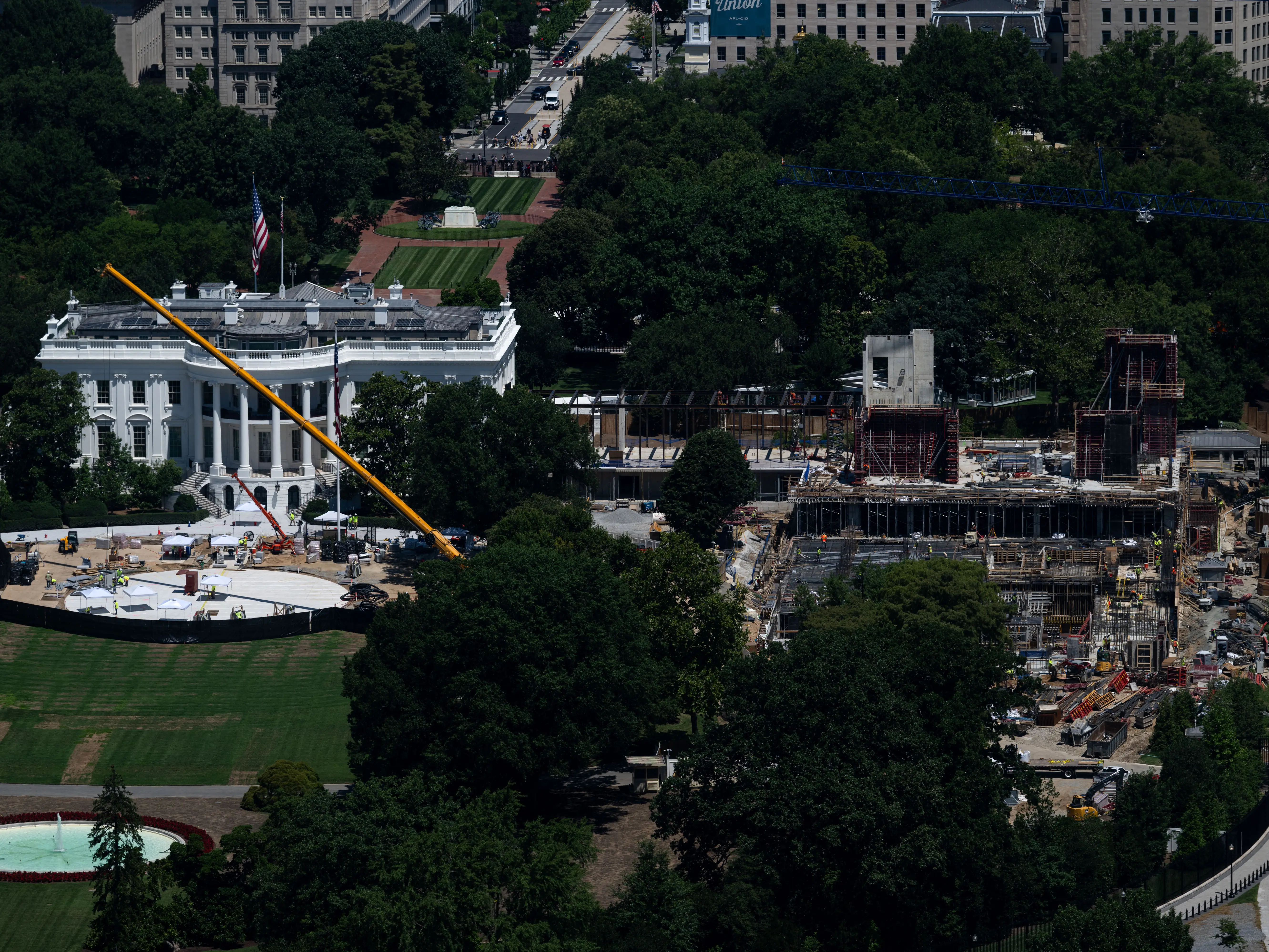)
Trump calls White House ballroom ruling a 'national disgrace' as court says Congress approval needed
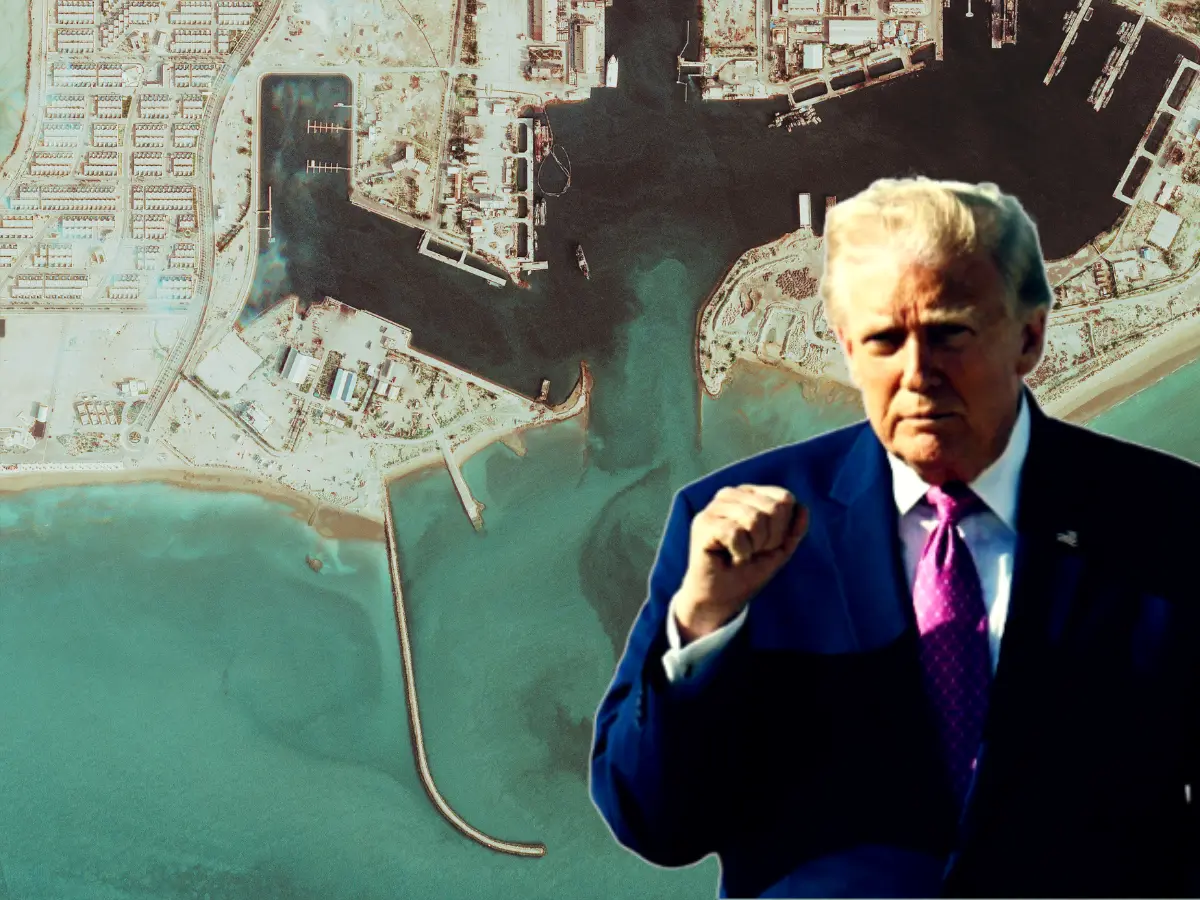)
US sanctions Iran’s crypto network after Strait of Hormuz attacks, offers $15m bounty for intel on IRGC finance
&im=FitAndFill=(700,400))
Why the Su-30MKI is one of the heaviest fighters ever built
)
Uttarakhand young innovator builds India's own flying vehicle, conducts first test flight: WATCH
)
Chilling video shows students take cover as teen opens fire at Thai school
)
Reese Witherspoon's father hospitalised after poolside incident in Nashville: Report
There is another type of madrasa though.Aliyah Madrasashavebeenrecognised by the governmentsince the British period. Theyare historically of Calcutta Aliyah Madrasa tradition, and followcurricula very close to modern education. The curricula includes Bangla, English, science, mathematics, social science, religious education, et cetera. In addition,there is normally one or two additional Arabic or Islamic subjects. There is a GovevernmentMadrasa Education Board in Bangladesh and it regulates the Aliyah Madrassas.
On the other hand, the main focus for the Qawmi Madrasa education is faith-based religious subjects like the Quran, Hadith, Islamic jurisprudence, Islamic theology, Islamic philosophy, Islamic social customs, Islamic economy, et cetera.Also, some subjects historically specific to sub-continental Muslims, likeArabic, Farsi andUrdu. There is hardly any relevance of Farsi and Urdu inpresent day Bangladesh, which is out-rightly dominated by Bangla and English. Also, all the Islamic subjects have no connection to modern living or modern, public or occupational life. Of late, being under continuous criticism from the enlightened quarters, the Qawmi Madrasas have included a little bit of Bangla, English, science, and mathematics,but their proportion in the wider curriculums is still marginal. These are more like subsidiary subjects in their syllabus rather than main subjects, and that too leaving aside important other subjects like history andsocial science.
The most worrying aspects of the Qawmi education are theirrejection of modernity as a whole, including modern education, and theiremployment of vigorous indoctrination techniquesrather than methodical pedagogy. This has led to many of the students becomingterrorists. A number of the homegrown terrorists and killers of rationalist bloggers hadQawmi Madrasa backgrounds. Furthermore, the mobilisation capacity of the socio-political outfits related to Qawmi education has becomeworrying. They were able to mobilise several hundred thousand, mostly young Qawmi Madrasa students, from across Bangladesh in the centre of Dhaka in 2013 as a reaction to blogs by secular bloggers criticising orthodox Islam.
There is nothing called universal freedom of expression to the Ulemas, and students of Qawmi Madrasas and if they get a chance, they meddle with other people’s affairs, public policy and state affairs. Their worldview is the highly conservative early Islamic one, which interprets the Quran literally.They reject modern liberal ideas, inventions, artistic creativityand believe only in the supremacy of Islam, whichtheytake it upon themselves to spread. They have very little regardfor objective knowledge, other faiths or opinions, and cultures, and they consider all non-Muslims to be infidels.
If mainstreaming the Qawmis is the aim, then the question is: What sort of mainstreaming is this? This programme under question is more like religiousteachingsrather than any standard modern Islamic studies. By approving this as a degree, isn’t the governmentalso tacitly approvingits contents and the way they teach?Some people close to the governmentargue that, it’s just one degree; the other Qawmi degrees aren’t recognised implicitly, assuring the liberals that it will have minimal effecton Bangladesh’s education system. But, when the junior certifications haven’t been recognised yet, how can the senior degree of a student of the same stream be valid in isolation?Orit’s just the opening ofPandora’s box, and more demands for recognition and fulfillment of the same to be followed? Once a principle has been set by recognising one, what grounds is the authorityleft with to deny the others?
The students coming out of this Qawmi system will hardly be equivalent tomainstream students, and very unlikely to be able to compete with the former for regular jobs. Essentially, this officiallyaccepts and validatesan education system that is archaic, regressive.It mayencourage orthodox Islamists to set up more such seminaries, tofurther spread this form of education.
Many suspect that the governmentis rather appeasing the Islamists who arewilling to side partially swith the governmentand play the role of a semi-domesticated, de facto opposition, especially at a time when the governmenthas sidelinedthe erstwhile main opposition BNP and their Islamist ally who are also controversial in many ways. Hence, the whole matter, given its timing, seems more like a political act rather than an educational reform move.
Butthe fact is it strengthens the hands of another more regressive category of Islamists. Will the, officially secular, AwamiLeague governmentbe able to control the potentially adverse fallouts of this playing with fire - even after watching the Pakistan example? Bangladeshi polity appears to be passing a complex transitional phase.
What’s on the other side of the tunnel is anybody’s guess.
(WION)