Chandrayaan-3: World's eyes glued to the Moon to track and monitor India's lunar mission


Chandrayaan-3
With just over an hourto go for the lunar landing of India'sChandrayaan-3, various ground stations across the world are already constantly monitoring, tracking and communicating with the craft, thereby keeping it under constant watch. While the nerve-centre of operations is the Mission Operations Complex (MOX), ISRO Telemetry, Tracking And Command Network (ISTRAC) in Bengaluru, different international space agencies are aiding ISRO, as the agency aims to make India the fourth nation to make a lunar soft landing.
If all goes well and all technical parameters are found to be normal, the powered descent process that leads to the lunar soft-landing will commence at 5:45 pm IST. In 19 minutes, by 6:04 pm IST, the outcome of the soft landing would be known.
Mission operations

Inlayman's view, a rocket launch mission is considered successful if the satellite is injected into its orbit. However, that is just the beginning of the constant process of mission monitoring, where various aspects of the spacecraft's health and performance have to be kept track of. For a spacecraft to work properly and safely, it has to be able to generate its own power, its antennae have to be positioned towards the Earth, its systems and sensors must be functional, it must be kept clear of space debris, it must be kept safe from solar storms etc. A spacecraft is constantly monitored from the time it is placed in orbit, till the time its operational life ends (or it is disposed of by de-orbiting).
Tracking, telemetry and command
It is one thing to launch rockets and spacecraft from the Earth, but the purpose of the mission is fulfilled only if there is a constant communication link between the ground stations and the spacefaring rocket and spacecraft. Simply put, tracking and telemetry serve as the eyes and ears of any space agency. Using giant antennae positioned at various locations, it is possible to locate the craft, communicate with it, receive the data being shared by the craft and even issue commands to the craft.
)
Trump-Xi Summit: Trade, Taiwan and the red lines shaping US-China talks | Race To Power
)
Trump signs Greenland security deal with Denmark, paving way for two new US military bases
)
IND vs JPN T20I: How an overturned wide became point of difference between India's win and a tie
)
IIT Bombay CCTV footage emerges: Sahil Wakode seen looking at phone in examination hall
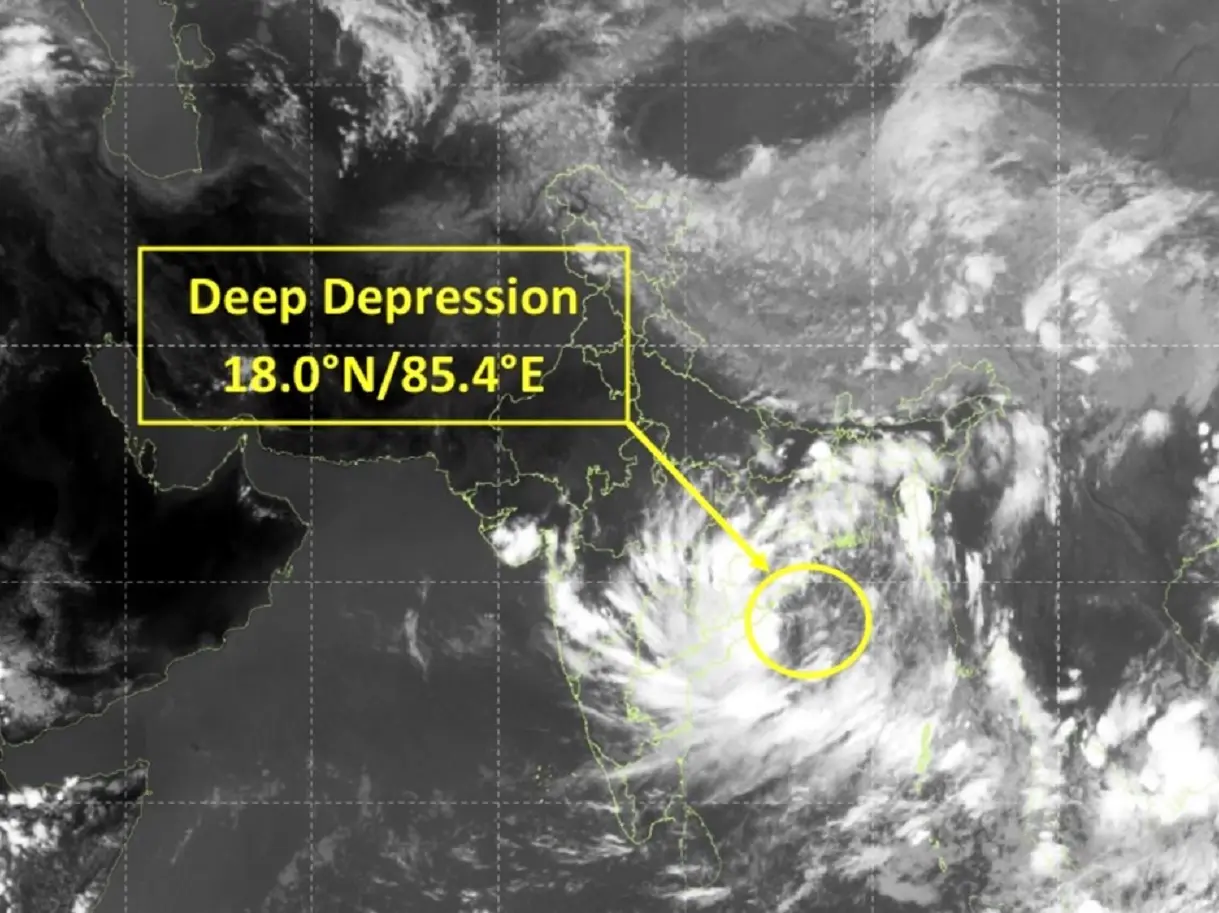)
Cyclone Arnab: Landfall expected before midnight tomorrow as IMD issues orange alerts across six states
)
TMC revives impeachment push against CEC Gyanesh Kumar after report of internal dissent
)
ICC plans T20I expansion and fewer ODIs in 2027–2031 FTP cycle: Report
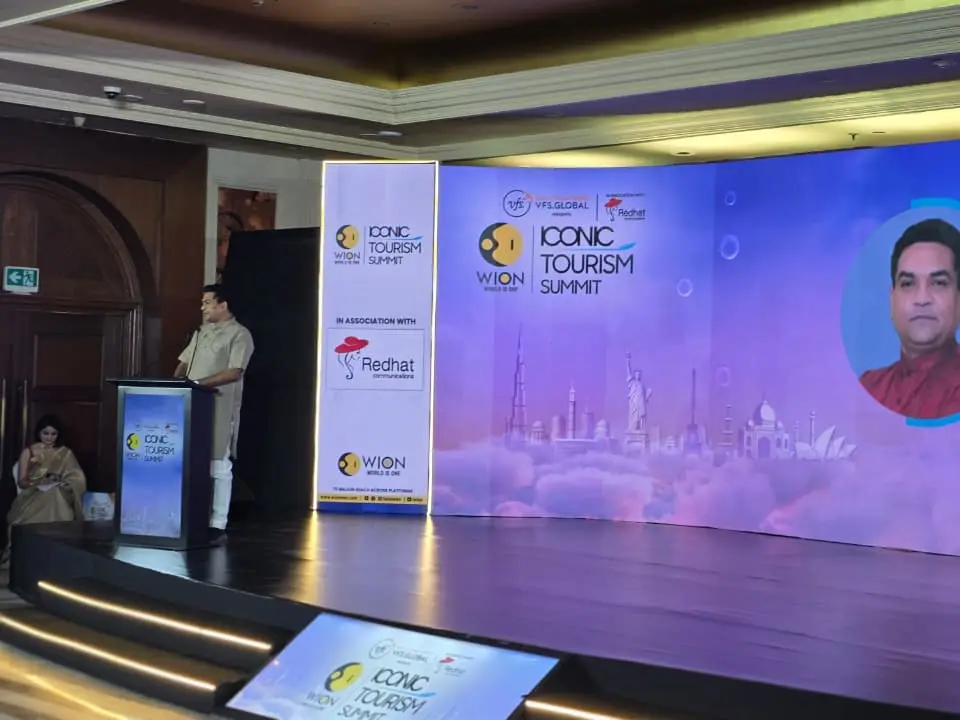)
WION Iconic Tourism Summit: Minister Kapil Mishra shares Delhi tourism future, invites industry to be partners
)
'AI got into my speech': Prince Harry jokes after teleprompter failure at event in New York
)
WION Iconic Tourism Summit: South African envoy pushes for direct air connectivity with India
)
WION Iconic Tourism Summit: Seychelles envoy says India partnership is important for Seychelles
)
Scientists detect first radio signals directly from faraway planet
)
China to test supersonic jet that moves at Mach 2, double the speed of sound
)
Forget apps: Qualcomm CEO says AI agents will change how we use smartphones
)
Xi-Trump meeting: China’s human rights red line and past protests explained
)
Bomb scare in New York amid UNGA: Suspicious suitcase found near UN headquarters
)
WION Iconic Tourism Summit: Is India's travel boom outrunning its airports, airlines and hotels?
)
WION Iconic Tourism Summit and Awards 2026: Key voices to discuss India’s tourism future
)
Trump-Xi state dinner 2026: Who is invited? Full guest list of tech CEOs, business leaders and officials
)
American manufacturing is reshoring faster than its factory floors can absorb
&im=FitAndFill=(700,400))
New OTT releases this week (September 21-27, 2026): Shaque: Trust No One, Hunkkaar, Don’t Be Shy- 5 new titles coming to Netflix, Prime Video and more
)
WATCH | China President Xi Jinping lands in US as Trump greets him ahead of high-stakes summit
)
Trump calls on nations to quit ‘rogue’ and ‘out-of-control’ International Criminal Court, rips UN
)
UP farmer kills wife, 2 priests during ‘spirit possession’ ritual, shoots 9yo son
)
'What kind of confession is this?': Pakistan PM Shehbaz Sharif’s 'terrorists would be roaming New York' remark goes viral, raises alarm online. Watch
)
Elephants hide behind trees, stage surprise attack on poachers targeting rhinos in South Africa
)
Pilot recreates Mona Lisa in sky over Oklahoma and Arkansas in four-hour flight: VIDEO
)
IIT Bombay professor Suryanarayana Doolla sent on leave amid Sahil Wakode death probe
)
'Putin is patient zero': Zelensky slams Russian president at UNGA, accuses him of using fighters from 47 countries
&im=FitAndFill=(700,400))
National Film Awards 2026: Kartik Aaryan, Mammootty, Yami Gautam, Randeep Hooda and other key winners
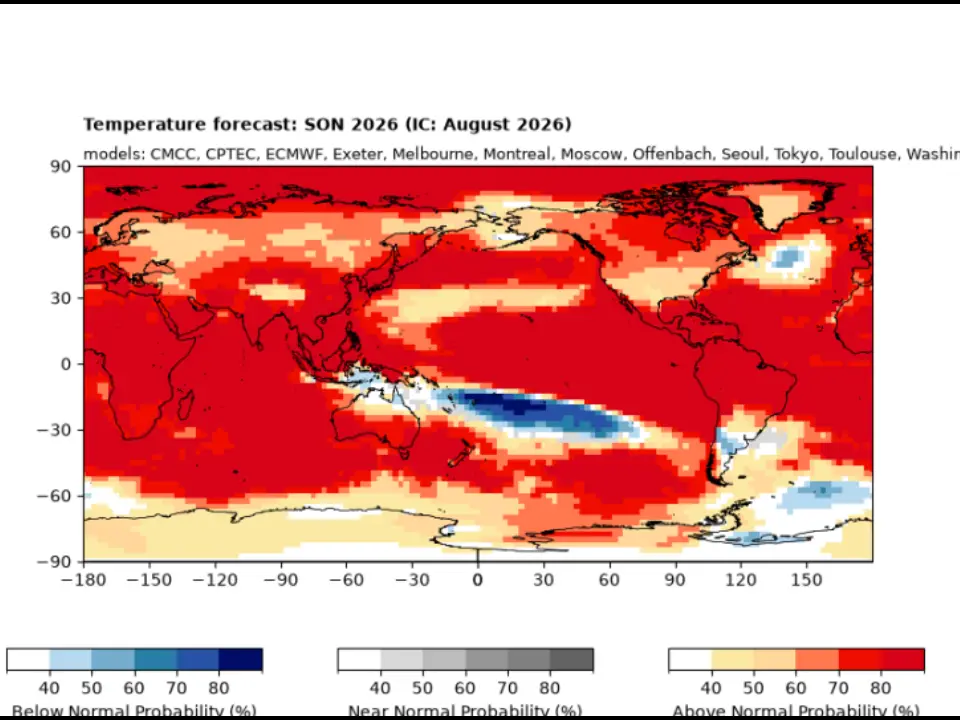)
El Niño 2026 heats up to become strongest in 1,000 years
)
Israeli envoy to US Yechiel Leiter’s son critically injured in West Bank ramming attack
)
Anne Hathaway to run in supporting race for Nolan's epic
)
From Gaddafi tearing up UN Charter to Trump’s ‘escalatorgate’: Most unforgettable UNGA moments
)
'Taiwan and human rights are red lines': China warns US ahead of Xi-Trump visit
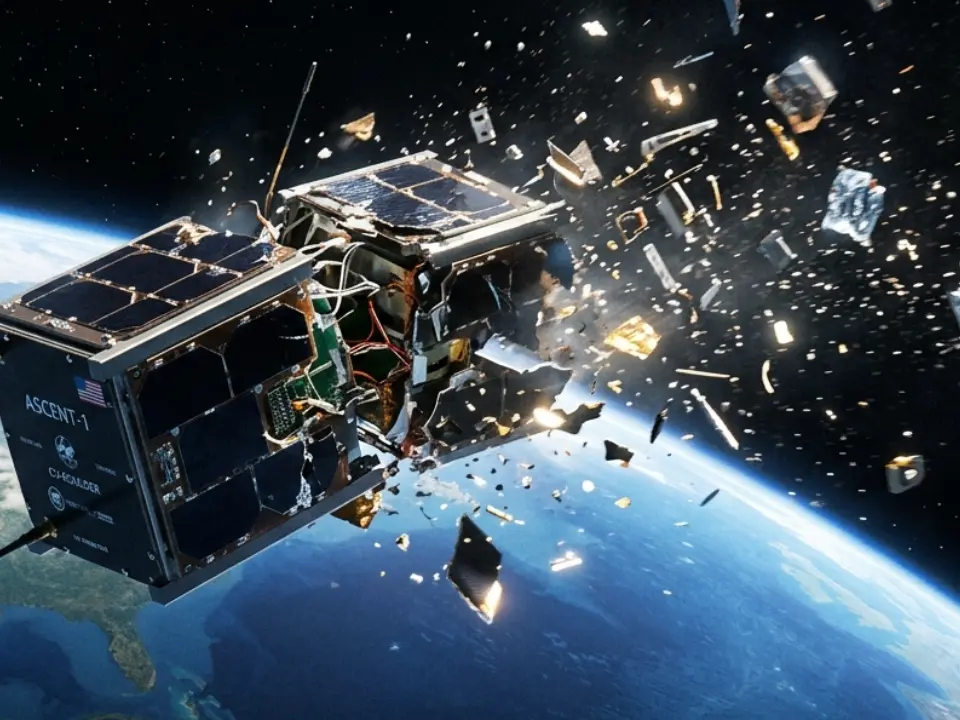)
US spy satellite from Cold War shatters 775 km above Earth
Throughout its 40-day journey to the moon, Chandrayaan-3 performed multiple manoeuvres to steer itself on its designated path. All of these manoeuvres performed by the craft are based on commands that are issued from the ground stations that ISRO operates and those of its international partners.
ISRO Telemetry, Tracking and Command Network (ISTRAC), Bengaluru handles the major responsibility of providing tracking support for all the satellite and launch vehicle missions of ISRO. The major objectives of the centre are to carry out mission operations of all operational remote sensing and scientific satellites, providing Telemetry, Tracking and Command (TTC) services from launch vehicle lift-off, till injection of the satellite into orbit and to estimate its preliminary orbit in space etc. In this endeavour, ISTRAC is supported by ISRO's Indian Deep Space Network, Karnataka.
Tracking deep space missions: An international collaborative effort
However large and capable, all radars and communication antennae have a specific range within which they can track and communicate. When tracking a rocket launch, tracking a global constellation of satellites or tracking deep space missions (interplanetary or Lunar missions), extremely wide coverage of antennae from various locations is required. Such antennae and related infrastructure have to be installed at multiple locations and can cost huge sums of money.
ISRO's ISTRAC has established a network of ground stations at Bengaluru, Lucknow, Mauritius, Sriharikota, Port Blair, and Thiruvananthapuram, within India. Brunei, Biak (Indonesia) are the friendly-foreign nations where ISTRAC operates its overseas facilities. However, when a spacecraft like Chandrayaan-3 circles the Earth and travels farther (the moon is 3.84 lakh kmaway), it is imperative to have a global network of stations that can offer tracking support.
As part of ISRO's International cooperation with major space agencies, multiple tracking stations belonging to NASA, the European space agency and Swedish Space Corporation are tracking Chandrayaan-3 from around the world. These include South Point Satellite Station in Hawaii, Goldstone in California, Kourou in South America (French Guiana), Madrid in Spain, Goonhilly in the UK and Canberra in Australia. The constant tracking from Indian and foreign stations ensures that India's Chandrayaan-3 spacecraft is visible to one or more stations at a time and can be monitored and safely steered towards the moon.
Why tracking depends on Moon visibility
Communicating with a spacecraft requires a line-of-sight, which means the antennae on the ground have to be aligned towards the satellite that is in space. That's why the DTH antenna that brings TV broadcasts to our homes is aligned towards a specific direction, where it can receive signals from the broadcast satellite.
However, the moon is 3.84 lakh kilometres away from the Earth. Also, the moon is not visible round-the-clock, sometimes it's visible during the day and sometimes during the night. Moonrise and transit times vary every day across the world.
Therefore, at the time, only some Earth-based antennae could see the moon and thereby monitor India's craft and communicate with it. To be able to track the craft near-constantly, ISRO is working with NASA and the European space agency. As and when the moon is visible above their stations, NASA & ESA stations in the US, Europe, Australia and other locations would be tracking the craft and sharing the data with ISRO.
WATCH WION LIVE HERE
You can now write for wionews.com and be a part of the community. Share your stories and opinions with us here.
