

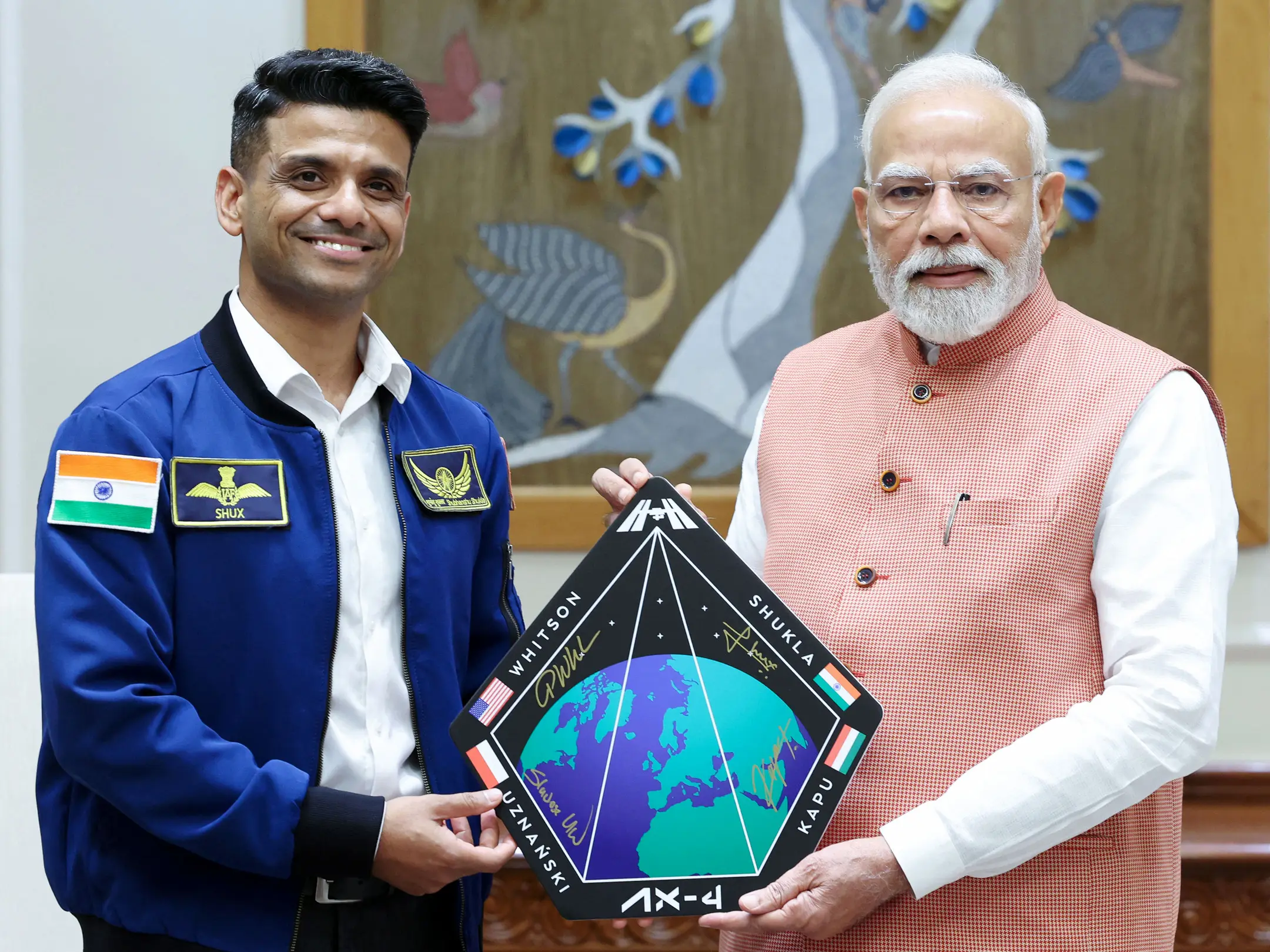
&imwidth=800&imheight=600&format=webp&quality=medium "When dreams touch the sky: National Space Day 2025 and India's unstoppable space spirit")
A Day Born from Historic Achievement
On August 23, 2025, India celebrates its second National Space Day with unprecedented enthusiasm and national pride. This special day, established to commemorate one of India's greatest technological achievements, carries deep significance that extends far beyond the realm of space exploration.
The story begins on August 23, 2023, when India scripted history at the Moon's South Pole. On this remarkable day, the Vikram Lander of the Chandrayaan-3 mission achieved a safe and soft landing at what is now called 'Shiv Shakti Point,' while the Pragyan Rover rolled onto the lunar surface. With this singular achievement, India became the fourth country to successfully land on the Moon and the first to conquer the challenging terrain near the Moon's South Pole.
Recognising the monumental significance of this achievement, the Government of India declared August 23 as National Space Day, creating an annual celebration that honours India's space accomplishments while inspiring future generations to reach for the stars.
The 2025 Theme: A Bridge Through Time
This year's theme, "Bridging the Past and Future: Honoring Traditional Astronomy and Showcasing Modern Space Achievements," perfectly captures the essence of India's space journey. The theme acknowledges that India's fascination with celestial bodies is not new—it dates back thousands of years to ancient astronomers like Aryabhata, Brahmagupta, and Bhaskara, who made groundbreaking contributions to understanding the cosmos.
Trending Stories
&imwidth=180&imheight=135&format=webp&quality=medium)
Viral video shows cross falling on Colombia priest, no official confirmation | WATCH
&imwidth=180&imheight=135&format=webp&quality=medium)
Rafale Marine fighter begins flight trials in Goa ahead of Indian Navy induction
&imwidth=180&imheight=135&format=webp&quality=medium)
Explosions heard in Iran’s Hormozgan province near Strait of Hormuz: State media
&imwidth=180&imheight=135&format=webp&quality=medium)
Shock, anger and despair in Bangladesh over the executions
&imwidth=180&imheight=135&format=webp&quality=medium)
India to develop first indigenous aviation gun for Prachand, Rudra attack helicopters, SSS Defence CEO confirms
&imwidth=180&imheight=135&format=webp&quality=medium)
Ranbir Kapoor apologises for Dussehra speech slip, clarifies remark at Ramayana event
&imwidth=180&imheight=135&format=webp&quality=medium)
Meta slapped with $25 billion fine in New Mexico over Facebook data practices, company plans appeal
&imwidth=180&imheight=135&format=webp&quality=medium)
Man marries off wife of 17 years to her lover in Uttar Pradesh
&imwidth=180&imheight=135&format=webp&quality=medium)
Russia to send first tanker carrying 40,000 tonnes diesel to US after Trump-Putin deal – What we know
&imwidth=180&imheight=135&format=webp&quality=medium)
WATCH | Mysterious haze grips Ohio city as toxic chemical leak forces mass evacuation – What is happening?
&imwidth=180&imheight=135&format=webp&quality=medium)
Kim Jong Un death rumors explode | China accused of secretly sending troops to Pyongyang
&imwidth=180&imheight=135&format=webp&quality=medium)
James Bond auction: Own Daniel Craig's Skyfall suit, Ana de Armas' dress and 300+ rare 007 collectibles
&imwidth=180&imheight=135&format=webp&quality=medium)
Trump says end to Ukraine war is 'closer than ever'; Witkoff's Putin remarks spark criticism
&imwidth=180&imheight=135&format=webp&quality=medium)
Trump waves at 'empty space' in viral video,' critics claim 'mental decline getting worse' | WATCH
&imwidth=180&imheight=135&format=webp&quality=medium)
US Midterms 2026: Sugar Land, Plano, Irving: How Texas’s Indian-American belt could shape poll outcomes
&imwidth=180&imheight=135&format=webp&quality=medium)
US-Iran war: Bibi, Trump gamble on new Iran war to save themselves in polls
&imwidth=180&imheight=135&format=webp&quality=medium)
US midterms: Democrats sue Trump administration over alleged 'threats and intimidation' ahead of election, Musk issues warning to Dems
&imwidth=180&imheight=135&format=webp&quality=medium)
Why websites around the world are suddenly going offline? What you need to know about PHP
&imwidth=180&imheight=135&format=webp&quality=medium)
Israel election 2026: Three possible scenarios after October 27 polls
&imwidth=180&imheight=135&format=webp&quality=medium)
US midterms 2026: What polls and prediction markets indicate about Congress
&imwidth=180&imheight=135&format=webp&quality=medium)
'You are a dummy, you are a stupid person': Trump loses temper with CNN, ABC reporters after questions about Russia sanctions
&imwidth=180&imheight=135&format=webp&quality=medium)
US Midterms 2026 and money: From Bloomberg to Musk, corporate donors, super PACs and lobbies, it's all about the cash
&imwidth=180&imheight=135&format=webp&quality=medium)
Are the US and Israel preparing for another major attack on Iran? Here's what report claims
&imwidth=180&imheight=135&format=webp&quality=medium)
Ramayana promotion takes a funny turn after Ranbir Kapoor's verbal blunder, leaves fans in splits | Watch
&imwidth=180&imheight=135&format=webp&quality=medium)
US orders embassy staff, families to leave Saudi Arabia amid Houthi attacks: Report
&imwidth=180&imheight=135&format=webp&quality=medium)
Priyanka Chopra celebrates Dussehra 2026 with Nick Jonas and daughter Malti Marie | See pics
&im=FitAndFill=(700,400)&imwidth=180&imheight=135&format=webp&quality=medium)
New OTT releases this week (October 19-25, 2026): Gajab Raat to Chaar Yaar-8 titles to watch during Dussehra week on Netflix, Prime Video and more
&imwidth=180&imheight=135&format=webp&quality=medium)
'I’m not saying it’s extraterrestrial' - 'Mutant' creature forces Mexicans to flee their homes
&imwidth=180&imheight=135&format=webp&quality=medium)
‘I caution the president...’: Trump’s ex-press secretary warns after Zacharia’s exit
&imwidth=180&imheight=135&format=webp&quality=medium)
'Father of all bombs' vs 'mother of all bombs': Iran threatens US with new weapon as Trump hints at MOAB strike
&imwidth=180&imheight=135&format=webp&quality=medium)
Hunger makes alcohol more appealing, study finds
&imwidth=180&imheight=135&format=webp&quality=medium)
Finance influencer dies by suicide in Chennai; father accuses tech CEO, who denies charge
&imwidth=180&imheight=135&format=webp&quality=medium)
Kolkata airport: CISF detects ₹1.13 crore in US dollars hidden in bags of 2 Bangkok-bound passengers
&imwidth=180&imheight=135&format=webp&quality=medium)
Saudi Arabia: Drone targeted oil facility near UAE border; violence continues in Yemen's Taiz
&imwidth=180&imheight=135&format=webp&quality=medium)
Cattle-feed bran in biscuits, detergent in milk: FSSAI acts against 3 companies
&imwidth=180&imheight=135&format=webp&quality=medium)
Feds obtain DNA evidence that could prove Ilhan Omar married her brother: Report
&imwidth=180&imheight=135&format=webp&quality=medium)
US midterms 2026: Trump's approval rating hits record low as Democrats gain ground
&imwidth=180&imheight=135&format=webp&quality=medium)
Khawaja Asif flags ‘bureaucratic exodus’ from Pak amid Munir’s growing clout, loss of faith in govt
Today, this ancient wisdom merges seamlessly with cutting-edge technology as ISRO continues to push boundaries in space exploration. The 2025 celebrations will highlight this beautiful continuity, showing how traditional astronomical knowledge laid the foundation for modern achievements like Chandrayaan-3, Mangalyaan, and the upcoming Gaganyaan mission.
Students at the Heart of Celebration
National Space Day 2025 places students firmly at the center of all activities. The day is designed to spark curiosity and inspire young minds through science fairs, planetarium shows, competitions, and interactive sessions with ISRO scientists. These activities aim to transform space science from a distant dream into an achievable career path for India's youth.
The celebrations will demonstrate how space technology directly benefits ordinary people through initiatives like SVAMITVA land-mapping using satellite images, disaster warning systems, real-time weather forecasts, telecommunication services in remote villages, and precision farming techniques that support agricultural development and rural prosperity.
From Fishing Village to Lunar Success: The ISRO Story
The foundation of India's space achievements was laid in 1962 when scientist Vikram Sarabhai chose Thumba, a humble fishing village near Thiruvananthapuram, to build India's first rocket station. This strategic location near the geomagnetic equator proved perfect for launching rockets. From that modest beginning, ISRO has evolved into one of the world's most respected space agencies, completing 100 successful launches and earning global recognition for achieving remarkable results with limited resources.
What makes ISRO's journey truly extraordinary is how space technology has quietly integrated into daily Indian life. Every phone call, weather forecast, GPS navigation, and disaster warning system relies on ISRO's satellites working tirelessly 36,000 kilometres above Earth. The INSAT communication satellites ensure connectivity across the vast Indian subcontinent, while NavIC—India's indigenous GPS system—helps everything from food delivery to precision agriculture.
The Chandrayaan-3 Triumph
The Chandrayaan-3 mission stands as a testament to ISRO's ability to learn from setbacks and achieve excellence. Following the lessons learned from Chandrayaan-2, this mission successfully demonstrated India's capability to safely land and operate a rover on the lunar surface. Launched by the LVM3 rocket from Sriharikota, the spacecraft carried the Lander and Rover to a 100-kilometer lunar orbit via a propulsion module, which also housed the SHAPE (Spectro-polarimetry of Habitable Planet Earth) instrument for studying Earth's characteristics from lunar orbit.
The success of Chandrayaan-3 proved that smart engineering, careful planning, and determination could overcome any challenge. It showed the world that India's space program had matured into a reliable, cost-effective, and technically sophisticated operation capable of the most complex missions.
Vision for the Future: Bold Space Goals
During a recent meeting with astronaut Shubhanshu Shukla, who became the first Indian to visit the International Space Station on the Axiom-4 mission, Prime Minister Narendra Modi outlined ambitious goals for India's space program. The Prime Minister emphasised the need to train and prepare 40-50 astronauts for future space missions, recognising that India's space ambitions require a substantial human spaceflight capability.
Shukla's 20-day space journey and his experiences living on the ISS have provided invaluable insights for India's upcoming missions. ISRO chief V. Narayanan confirmed that the mission was a "100% success," generating nearly 12,000 pages of detailed records that will prove extremely valuable for the Gaganyaan mission planned for mid-2027.
The roadmap ahead is clear and ambitious: India plans its first human spaceflight in 2027, aims to establish a space station by 2035, and intends to send an Indian astronaut to the Moon by 2040. These goals reflect not just technological ambition but a commitment to establishing India as a leading spacefaring nation.
Space Technology for the Common Good
National Space Day 2025 will showcase how space technology serves humanity. ISRO's satellites provide early warnings for cyclones, preventing disasters like the 2004 tsunami that cost thousands of lives due to lack of timely alerts. Today, these satellites maintain 24/7 vigilance over India's coasts and weather patterns.
The cost-effectiveness of India's space program has made it globally competitive. The Mars Orbiter Mission (Mangalyaan) reached Mars for just ₹450 crores—less than the budget of many commercial films—proving that excellence doesn't require excessive expenditure. This approach has made ISRO a preferred launch partner for many countries, earning foreign exchange while demonstrating that space technology can be accessible and affordable.
Learning from Challenges
ISRO's journey includes both triumphs and setbacks. Early GSLV rocket failures, the heartbreak of Chandrayaan-2's lander crash, and recent mission challenges have all contributed to the organization's growth. Each failure provided valuable lessons that strengthened subsequent missions. The successful Chandrayaan-3 landing exemplified how ISRO transforms setbacks into stepping stones for greater achievements.
Human Stories Behind the Success
Behind every ISRO mission are ordinary Indians achieving extraordinary results. Scientists like Ritu Karidhal, who helped guide Mangalyaan to Mars, and M. Vanitha, who led Chandrayaan-2, represent the talent and dedication that drives India's space program. The recent SpaDeX mission, featuring the complex orbital docking of two Indian satellites, was achieved by engineers who grew up in regular Indian families, studied in Indian institutions, and nurtured dreams of touching the sky.
Inspiring Future Generations
The true measure of ISRO's success lies not just in missions completed but in dreams planted in young minds across the country. When children in remote villages look up at the night sky and imagine building rockets, when girls from small towns decide to become space scientists, ISRO's mission reaches its highest fulfilment.
National Space Day 2025 will celebrate these dreams while showcasing the practical benefits of space exploration. The Ministries of Science & Technology and Culture are collaborating to create exhibits, educational content, and outreach programs that blend traditional astronomical wisdom with modern innovations, ensuring that India's space heritage continues to inspire future generations.
A Shared Victory for Humanity
As astronaut Prashant Balakrishnan Nair, who trained as backup for the ISS mission, eloquently stated, space achievements belong to all humanity. Referring to the concept of "one single consciousness," he emphasized that while individual astronauts undertake the physical journey, their accomplishments represent shared victories for all Indians and humanity as a whole.
Shubhanshu Shukla's experience reinforced this perspective. Looking down at Earth from space, he observed the unity of our planet—India appeared beautiful, but national borders disappeared, leaving him with a profound sense of Earth's oneness and humanity's shared destiny.
Looking to the Stars and Beyond
As India prepares for its biggest space challenge yet—sending humans into space through the Gaganyaan mission—National Space Day 2025 carries the hopes and dreams of 1.4 billion Indians. From a fishing village in Kerala to the south pole of the Moon, ISRO has demonstrated that with determination, innovation, and intelligent planning, India can achieve any goal it sets.
The theme "Bridging the Past and Future" perfectly encapsulates this journey. Ancient Indian astronomers mapped the heavens with remarkable precision, laying the intellectual foundation for today's space missions. Modern ISRO scientists continue this tradition, using advanced technology to explore new frontiers while remaining connected to the wisdom of their predecessors.
National Space Day 2025 will be more than a celebration—it will be a declaration that the stars are no longer the limit but merely the beginning of India's cosmic journey. As students participate in science fairs, interact with scientists, and dream of their own space missions, they carry forward a legacy that spans millennia, bridging ancient astronomical wisdom with tomorrow's space achievements.
The fishing village of Thumba may have provided ISRO's humble beginnings, but the destination has always been the infinite expanse of space, where Indian ingenuity continues to shine as brightly as the stars themselves.
