What would Earth look like after it dies? Mysterious iron bar inside Ring Nebula could be our planet's fate

&imwidth=600&imheight=450&format=webp&quality=medium "What would Earth look like after it dies? Mysterious iron bar inside Ring Nebula could be our planet's fate")
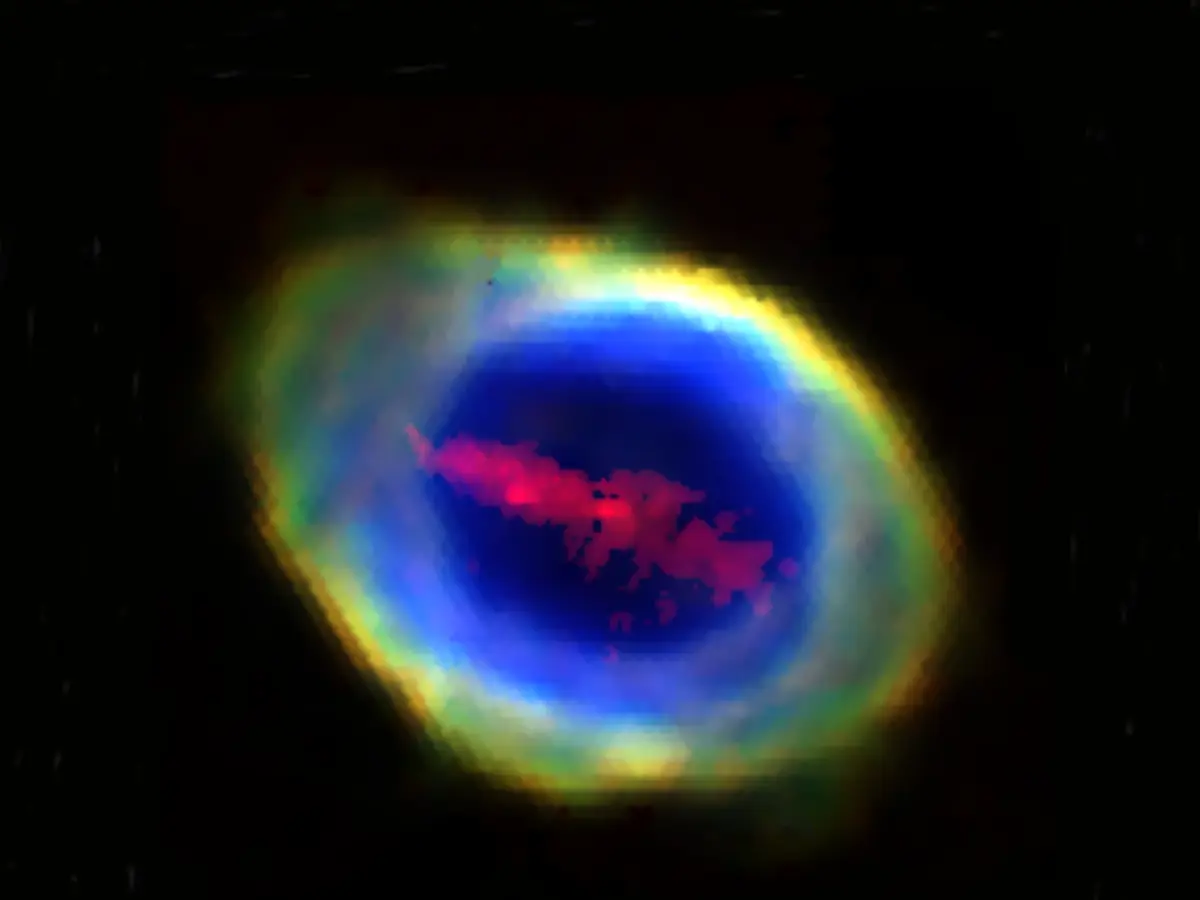
Ring Nebula with the iron bar inside it. Photograph: (Roger Wesson/University College London)
The Ring Nebula has a mysterious iron bar inside it. Scientists had never seen anything like it before, and the discovery has left them shocked. Where did this iron come from? Could it have been left behind by a planet like Earth?
Astronomers have known about the Ring Nebula for years now, yet they had missed something inside it. Located 2,283 light-years from Earth, they have just noticed a mysterious "iron bar" stretching across the nebula, something they have never seen before in the universe. They are not sure what it is or how it formed, but one theory suggests that it could be plasma left from the vaporisation of a rocky planet that got caught in the final rites of its star. It could be a glimpse into the future of Earth, which will be swallowed by the Sun billions of years from now. The discovery was made by a European team led by astronomers at University College London (UCL) and Cardiff University. The James Webb Space Telescope and other telescopes have often pictured this elliptically shaped nebula. The team used a mode (Large Integral Field Unit of LIFU) on a new instrument, the WHT Enhanced Area Velocity Explorer (WEAVE)4, installed on the Isaac Newton Group’s 4.2-metre William Herschel Telescope5. They were astonished to see a cloud of iron stretching 500 times that of Pluto’s orbit around the Sun.
Iron inside the nebula stretches to unimaginable lengths
Lead author Dr Roger Wesson said that WEAVE revealed a new aspect about the Ring Nebula that has been studied using many different telescopes and instruments in the past. "When we processed the data and scrolled through the images, one thing popped out as clear as anything – this previously unknown 'bar' of ionised iron atoms, in the middle of the familiar and iconic ring," he said. What this iron bar is and how it formed remains a mystery. The researchers say more analysis is needed to understand its true nature. However, for now, they have two theories, as stated in the study published in Monthly Notices of the Royal Astronomical Society.
How nebulae form?
First, let's understand how nebulae form. Astronomers believe that the Ring Nebula formed when a dying star threw away its outer layers about 4,000 years ago, creating this colourful shell. Stars like the Sun run on nuclear fuel, which will end someday. When this happens, its outer layers swell and become gigantic, pulling in the planets in its orbit. On the other hand, the core shrinks and cools and becomes a white dwarf. The outer layers that create a sort of boundary form the planetary nebula.
Trending Stories
&imwidth=280&imheight=210&format=webp&quality=medium)
&imwidth=280&imheight=210&format=webp&quality=medium)
&imwidth=280&imheight=210&format=webp&quality=medium)
&imwidth=280&imheight=210&format=webp&quality=medium)
&imwidth=280&imheight=210&format=webp&quality=medium)
&imwidth=280&imheight=210&format=webp&quality=medium)
&imwidth=280&imheight=210&format=webp&quality=medium)
&imwidth=280&imheight=210&format=webp&quality=medium)
&imwidth=280&imheight=210&format=webp&quality=medium)
&imwidth=280&imheight=210&format=webp&quality=medium)
&imwidth=280&imheight=210&format=webp&quality=medium)
&imwidth=280&imheight=210&format=webp&quality=medium)
&imwidth=280&imheight=210&format=webp&quality=medium)
&imwidth=280&imheight=210&format=webp&quality=medium)
&imwidth=280&imheight=210&format=webp&quality=medium)
&imwidth=280&imheight=210&format=webp&quality=medium)
&imwidth=280&imheight=210&format=webp&quality=medium)
&imwidth=280&imheight=210&format=webp&quality=medium)
&imwidth=280&imheight=210&format=webp&quality=medium)
&imwidth=280&imheight=210&format=webp&quality=medium)
&imwidth=280&imheight=210&format=webp&quality=medium)
&imwidth=280&imheight=210&format=webp&quality=medium)
&im=FitAndFill=(700,400)&imwidth=280&imheight=210&format=webp&quality=medium)
&imwidth=280&imheight=210&format=webp&quality=medium)
&imwidth=280&imheight=210&format=webp&quality=medium)
&imwidth=280&imheight=210&format=webp&quality=medium)
&im=FitAndFill=(700,400)&imwidth=280&imheight=210&format=webp&quality=medium)
&imwidth=280&imheight=210&format=webp&quality=medium)
&imwidth=280&imheight=210&format=webp&quality=medium)
&imwidth=280&imheight=210&format=webp&quality=medium)
&imwidth=280&imheight=210&format=webp&quality=medium)
&imwidth=280&imheight=210&format=webp&quality=medium)
&imwidth=280&imheight=210&format=webp&quality=medium)

&imwidth=280&imheight=210&format=webp&quality=medium)
Do other nebulae also have similar iron bar?
The Ring Nebula was also formed similarly. Scientists think that this iron rod inside it is nothing but an arc of plasma left behind from the vaporisation of a rocky planet that was gobbled up by the star as it expanded. The second possibility is that it could be something humans still don't know about, how the ejection of the nebula by the parent star happens. WEAVE is set to carry out our eight surveys over the next five years, during which it will observe white dwarfs and galaxies. Astronomers don't know whether they would see a similar iron bar in other nebulae. Wesson says it would be pretty surprising if it were unique to the Ring Nebula. Similar observations elsewhere could reveal the origin of the iron.