How will humans communicate with aliens? Whales might help us practise

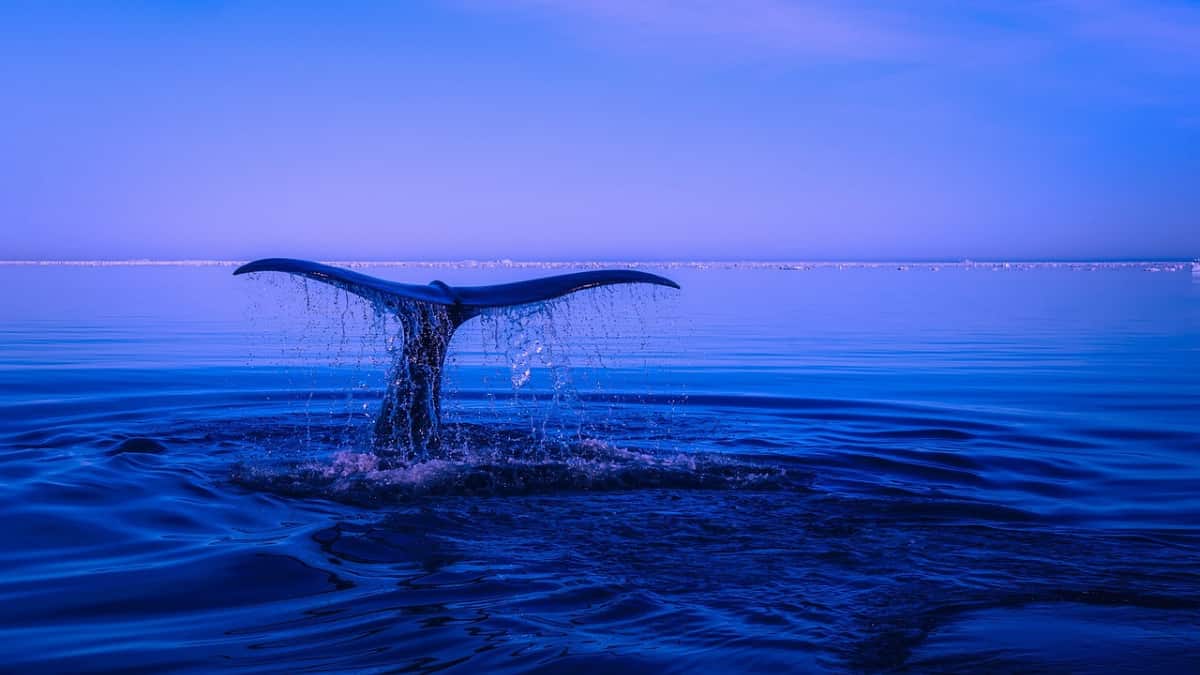
Whale
Does life exist on other planets? Do aliens exist? If yes, what do they look like, and how do they communicate? These are some of the questions that intrigue the scientists. They lookfor answers.
In the latest study, researchers at the Search for Extraterrestrial Intelligence (SETI) Institute believe that they might be successful in establishing communication with extraterrestrials by practising it in advance.
A team of scientists from the SETI Institute, University of California Davis and the Alaska Whale Foundation, had a close encounter with a non-human (aquatic) intelligence - whales.

The Whale-SETI team has been examining the communication networks of humpback whales in order to develop intelligence filters for the hunt for alien intelligence.
During the research, a humpback whale named Twain approached and circled the team's boat in response to a recorded humpback 'contact' call played into the sea via an underwater speaker.
)
Nigeria: Protesters take to the streets, police fire shots
)
US-Iran war: Tehran draws red lines — seven demands before any peace talks
&im=FitAndFill=(700,400))
‘Not the US or China’: These are the countries leading the world in arable land
)
Mark Carney mimics Trump in hilarious moment over C$70 billion clean-energy investment; room erupts in laughter
)
Pentagon revives mandatory testosterone testing for male troops aged 30 and above
)
Iran rebuilding nuclear facilities? New satellite images show Tehran may be rapidly restoring bombed Parchin base
)
FACT CHECK: Why did PM Modi ask Xi ‘is it okay’ at BRICS Summit? New video reveals...
)
China may have gained access to US's classified F-35 jets; parts meant for repairs diverted to Hong Kong, sparking Pentagon inquiry
)
Trump announces ‘AI Force’ as debate grows over AI risks and regulation
)
Iran sets 7 conditions to end war with US: What are Tehran’s demands?
)
Trump defends AI amid growing alarm, announces new 'AI force' and promises an 'AI czar'
)
Gaza under attack: Health chief's son killed in IDF strikes
)
Arvind Kejriwal, family members, Delhi CM Rekha Gupta get SIR notices
)
Cochin shipyard starts building Indian Navy's next-gen missile vessels
)
Russia extends ban on Western food imports for two more years in extended sanctions countermeasure
)
Brigitte Bardot’s private collection set for Paris auction; key items and prices revealed
)
How did an Australian river with 500 crocodiles pass the Olympic test? Here's how
)
‘Will go to any extent’: Pakistan vows to defend Saudi Arabia amid Houthi attacks
&im=FitAndFill=(700,400))
Ananya Panday to Sharvari: 5 actresses serving major princess vibes
66 years of the Indus Waters Treaty: How India and Pakistan settled a bitter river dispute
)
The Verdict | When precision fails: US commits war crime in Minab school strike, UN finds
)
Trump signs Russia sanctions bill into law, targets Moscow’s energy sector
)
Pak: A series of counter terrorism operations in Khyber Pakhtunkhwa
)
Flying cars in UAE: Ras Al Khaimah signs deal with Chinese company to test new transport
)
Reacher star Alan Ritchson opens up about alleged blackmail, suicide attempt during difficult period
)
Africa is splitting, and a lot sooner than estimated, giving way to a new ocean
)
Ajit Agarkar’s future as chief selector to be decided at right time, says BCCI secretary
)
Trump bans CNN, MS NOW and Politico from White House over ‘FAKE NEWS’
)
Trump 2.0: Dark days ahead for America’s ‘imperial presidency’
&im=FitAndFill=(700,400))
How many F-35s does Britain, Japan and Israel have?
)
Harry Brook targets long reign at top of T20I rankings after Sri Lanka sweep
)
Tirupati Laddu ghee adulterated with chemicals, says ED, supplier arrested
)
Russia holds first parliamentary elections since the beginning of the Ukraine war
&im=FitAndFill=(700,400))
Meet top 5 Indian batters with fastest T20I centuries
)
‘System run by six individuals’: Rahul Gandhi targets PM Modi, Amit Shah, NSA Doval
)
The scientists said that the whale responded in a conversational style to the whale 'greeting signal' and the communication lasted for 20 minutes. Twain also responded to each playback call and matched the interval variations between each signal.
The peer-reviewed research has been published in a recent issue of the journal Peer J. entitled: "Interactive Bioacoustic Playback as a Tool for Detecting and Exploring Nonhuman Intelligence: 'Conversing' with an Alaskan Humpback Whale."
As quoted in reports, lead author Dr Brenda McCowan of UC Davis, said: "We believe this is the first such communicative exchange between humans and humpback whales in the humpback 'language'."
Co-author Dr Fred Sharpe of the Alaska Whale Foundation said, "Humpback whales are extremely intelligent, have complex social systems, make tools - nets out of bubbles to catch fish -and communicate extensively with both songs and social calls."
Dr Laurance Doyle of the SETI Institute, a co-author on the paper, said: "Because of current limitations on technology, an important assumption of the search for extraterrestrial intelligence is that extraterrestrials will be interested in making contact and so target human receivers. This important assumption is certainly supported by the behavior of humpback whales."
The Whale-SETI team is examining intelligent, terrestrial, non-human communication systems. They aim at developing filters to apply to any alien signals received, the same as how Antarctica is being studied as a proxy for Mars.