Vikram-S: India's first private rocket blasts off successfully, everything about 'Prarambh Mission'

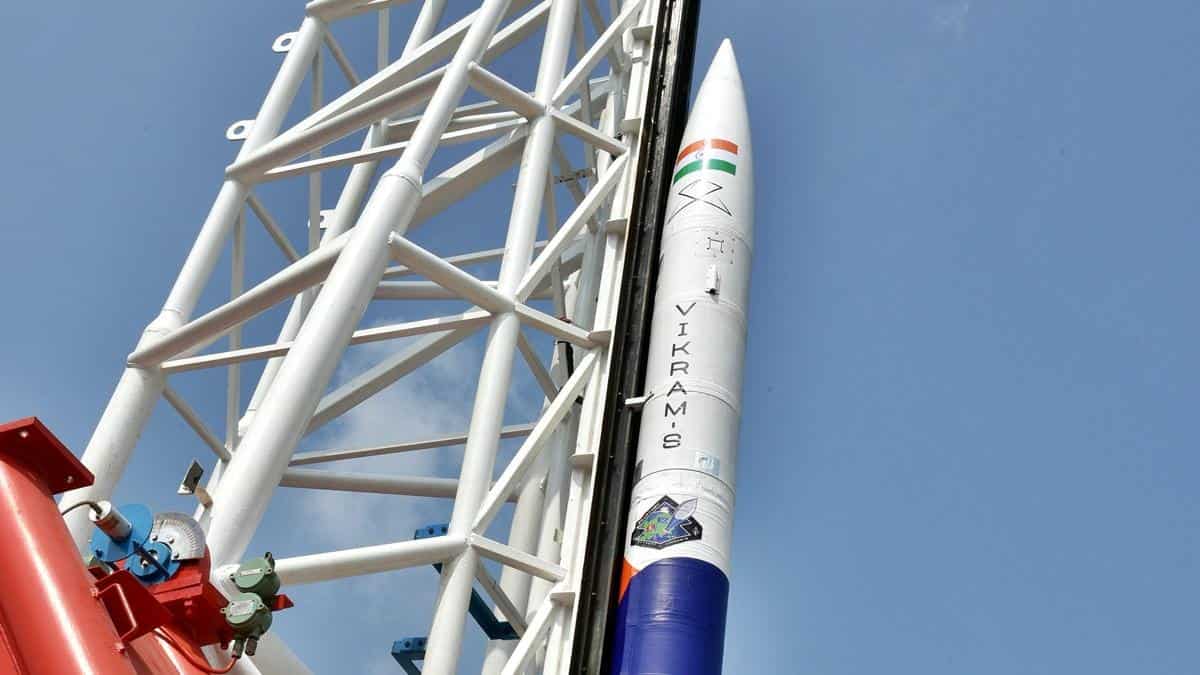
Skyroot aces maiden launch of India's first privately made rocket, Vikram-S
India's first privately developed rocket hasbeensent into orbit by Skyroot Aerospace on Friday, marking the nation's first private space launch. The Vikram-S launch vehicle is intended to carry out the Prarambh mission as a demonstration flight in the second week of November.The mission will be significant since the Indian Space Research Organisation (ISRO) formerly controlled the creation, design, and launch of space missions in India, making rockets a public sector enterprise.
"Mission Prarambh is successfully accomplished. Congratulations" ISRO announced on Twitter.The rocket launch, according to Union Minister Jitendra Singh, who was in Sriharikota, Andhra Pradesh to witness the historic launch, marked a turning moment for Indian startups.

Why the name 'Prarambh'?
Prarambh, which means "the beginning" and denotes a new era for the private space industry, is the name given to the mission by the Hyderabad-based rocket start-up.
With this first mission, Skyroot Aerospace will launch a rocket into orbit for the first time as a commercial space enterprise in India, ushering in a new era for the space industry, which was recently opened up to allow for private sector participation, the company stated.
&imwidth=180&imheight=135&format=webp&quality=medium)
Russian woman and Bihar boy's love story goes viral after she reaches India to marry him
&imwidth=180&imheight=135&format=webp&quality=medium)
Anupam Kher joins Ranbir Kapoor's Ramayana as Jatayu, new poster unveiled
&imwidth=180&imheight=135&format=webp&quality=medium)
F1 set to return to Africa for first time since 1993
&imwidth=180&imheight=135&format=webp&quality=medium)
France accuses Musk of ‘online harassment’ of European leaders, warns of poll interference
&imwidth=180&imheight=135&format=webp&quality=medium)
CMs Vijay-Naidu meet in Vijayawada, discuss water sharing, river-linking
&imwidth=180&imheight=135&format=webp&quality=medium)
'Ouch!!! That must hurt': Kangana Ranaut hails Kamal Haasan's sharp reply to Elon Musk over Starlink row
&imwidth=180&imheight=135&format=webp&quality=medium)
Trump accuses Houthis of driving up oil prices before US midterms, warns of consequences
&imwidth=180&imheight=135&format=webp&quality=medium)
'Turn approver, resign, we'll forgive you': Rahul Gandhi claims receiving messages from CEC Gyanesh Kumar
&imwidth=180&imheight=135&format=webp&quality=medium)
'Don't ever mess with nature!': Trump’s tiger attack post triggers social media backlash as victim's family issues heartbreaking tribute
&imwidth=180&imheight=135&format=webp&quality=medium)
‘My president, I mean my husband’: Trump's new press secretary Katie Zacharia's first briefing goes off the rails in 14 minutes
&im=FitAndFill=(700,400)&imwidth=180&imheight=135&format=webp&quality=medium)
New OTT releases this week (October 12-18, 2026): Sacrifice, Koffee with Karan S9, Roadies Rebirth- 6 titles coming on Netflix, JioHotstar and more
&imwidth=180&imheight=135&format=webp&quality=medium)
New Delhi rejects Beijing’s claims and remarks on Ladakh location naming exercise
&imwidth=180&imheight=135&format=webp&quality=medium)
CJP slams 'Coward Sarkar' as Saurav Das, Ashutosh Ranka sent to 5 days' judicial custody over Jantar Mantar protest
&imwidth=180&imheight=135&format=webp&quality=medium)
Girl 'dead' for 8 hours wakes up at her own funeral, dad insists she wasn't breathing
&imwidth=180&imheight=135&format=webp&quality=medium)
Measles kills again: 6 dead in Pennsylvania as America faces its worst outbreak in decades | Gravitas
&imwidth=180&imheight=135&format=webp&quality=medium)
New Cold War: Why is China buying more gold? Explained
&imwidth=180&imheight=135&format=webp&quality=medium)
MI5 chief warns Russia is UK’s ‘aggressor number one’ as Iran and AI threats grow
&imwidth=180&imheight=135&format=webp&quality=medium)
Pakistan to chair UN-backed global Borrowers’ Platform as its own debt burden mounts, triggers sarcastic reactions on social media
&im=FitAndFill=(700,400)&imwidth=180&imheight=135&format=webp&quality=medium)
Navratri 2026: 9 days, 9 forms of Goddess Durga and 9 colours- Check the complete list
&imwidth=180&imheight=135&format=webp&quality=medium)
Netanyahu wants to join Saudi's war on Houthis, but Crown Prince denies: Report
&imwidth=180&imheight=135&format=webp&quality=medium)
China's counter-surveillance industry booms amid heightened espionage fears | Gravitas
&imwidth=180&imheight=135&format=webp&quality=medium)
Cornell University suspends fraternity parties over 2024 gang rape allegations
&imwidth=180&imheight=135&format=webp&quality=medium)
Marco Rubio to visit India next week, focus on energy cooperation and strategic ties
&imwidth=180&imheight=135&format=webp&quality=medium)
1,500 drones illuminate Mumbai sky as Cordelia Cruises unveils second ship, Cordelia Sky
&imwidth=180&imheight=135&format=webp&quality=medium)
US Midterms 2026: In Alaska, cost-of-living anxiety meets strangest ballot in high-stakes Senate race
&imwidth=180&imheight=135&format=webp&quality=medium)
Arijit Singh 9-city India stadium tour to start from January: Check venue and ticket prices
&imwidth=180&imheight=135&format=webp&quality=medium)
Inside Aneet Padda's 24th birthday bash with rumoured boyfriend Ahaan Panday and Alia Bhatt
&imwidth=180&imheight=135&format=webp&quality=medium)
UK school ditches technology, shifts from screen to pen and paper for learning
&imwidth=180&imheight=135&format=webp&quality=medium)
Trump reconsidering calling off Nidal Hasan's execution livestream. Here's why
&imwidth=180&imheight=135&format=webp&quality=medium)
Sidhu Moose Wala’s younger brother wins hearts by recreating late singer’s signature move at Toronto Hologram Show
&imwidth=180&imheight=135&format=webp&quality=medium)
Delhi Police arrest Cockroach Janta Party's Saurav Das, Ashutosh Ranka, Ajinkya Shinde in Jantar Mantar case, to be produced before court
&imwidth=180&imheight=135&format=webp&quality=medium)
Air India Flight from Frankfurt diverted to Jaipur after hijack alert, probe on
&imwidth=180&imheight=135&format=webp&quality=medium)
Durga Puja 2026: Kolkata roads get a splash of colours
&imwidth=180&imheight=135&format=webp&quality=medium)
‘How many people did she illegally bring from Somalia?’ Trump targets Ilhan Omar, questions her net worth
“We could build and get our Vikram-S rocket mission-ready in such a short time only because of the invaluable support we received from ISRO and IN-SPACe, and the technology talent that we inherently possess," said Pawan Kumar Chandana, CEO and Co-Founder.
The name "Vikram" is given to Skyroot Aerospace's launch vehicles in honour of Dr Vikram Sarabhai, the eminent scientist who founded the Indian Space Programme.
All about Vikram-S
In honour of Vikram Sarabhai, the pioneer of India's space programme, a small-lift launch vehicle known as the Vikram S was created.
The chief operating officer of Skyroot, Naga Bharath Daka, described the Vikram-S rocket as a single-stage sub-orbital launch vehicle that would be able to transport three client payloads and assist test and verifying most of the technology in the Vikram family of space launch vehicles.
Three rockets, dubbed Vikram I, II, and III, are part of the "Vikram" series. Broadband internet, GPS, and Internet of Things (IoT) from orbit and imagery of the planet will all be supported by these rockets.
According to Skyroot, "The leading technology architecture of Vikram vehicles offers unique capabilities like multi-orbit insertion, interplanetary missions; while providing customised, dedicated and rideshare options covering a wide spectrum of small satellite customer needs.”
According to Skyroot, the Vikram series is engineered to be manufactured and launched in less than 72 hours and has the "lowest cost in the payload sector."
These rockets are capable of launching satellites into sun-synchronous polar orbits and low Earth orbits that may weigh up to 815 kg each (SSPOs).
The highlight of the mission
Three customer satellites from Skyroot Aerospace will be launched aboard Vikram S in a sub-orbital flight as part of the Prarambh project. Three client payloads will be carried by Vikram S during this mission, which will also assist in the testing and validation of technologies for the Vikram family of space launch vehicles.
The 2.5-kilogramme payload "Fun-Sat," which was created by kids from India, the US, Singapore, and Indonesia, will also be launched on board Vikram S by Spacekidz, an aerospace firm located in Chennai.
Significance of the mission
Suborbital spaceflight is often conducted at a lower altitude than orbital spaceflight, frequently at a height of around 100 kilometres above the surface of the Earth, and it is believed that they are essential for completing space mission experiments before true commercial trips take place.
Three separate Vikram rocket versions are currently being developed by Skyroot. According to sources, the Vikram-I, Vikram-II, and Vikram-III can launch payloads weighing up to 480 kilogrammes, 595 kilogrammes, and 815 kilogrammes into a 500-kilometre low-inclination orbit, respectively.
To send commercial satellites into orbit, the business is creating cutting-edge space launch vehicles. It wants to lower entry barriers for low-cost satellite launch services as well as space travel by expanding its mission of making spaceflights accessible, dependable, and common for everyone.
(With inputs from agencies)