

&imwidth=800&imheight=600&format=webp&quality=medium "The world’s largest space telescope finds 2,100 new asteroids. Know what else it can do.")
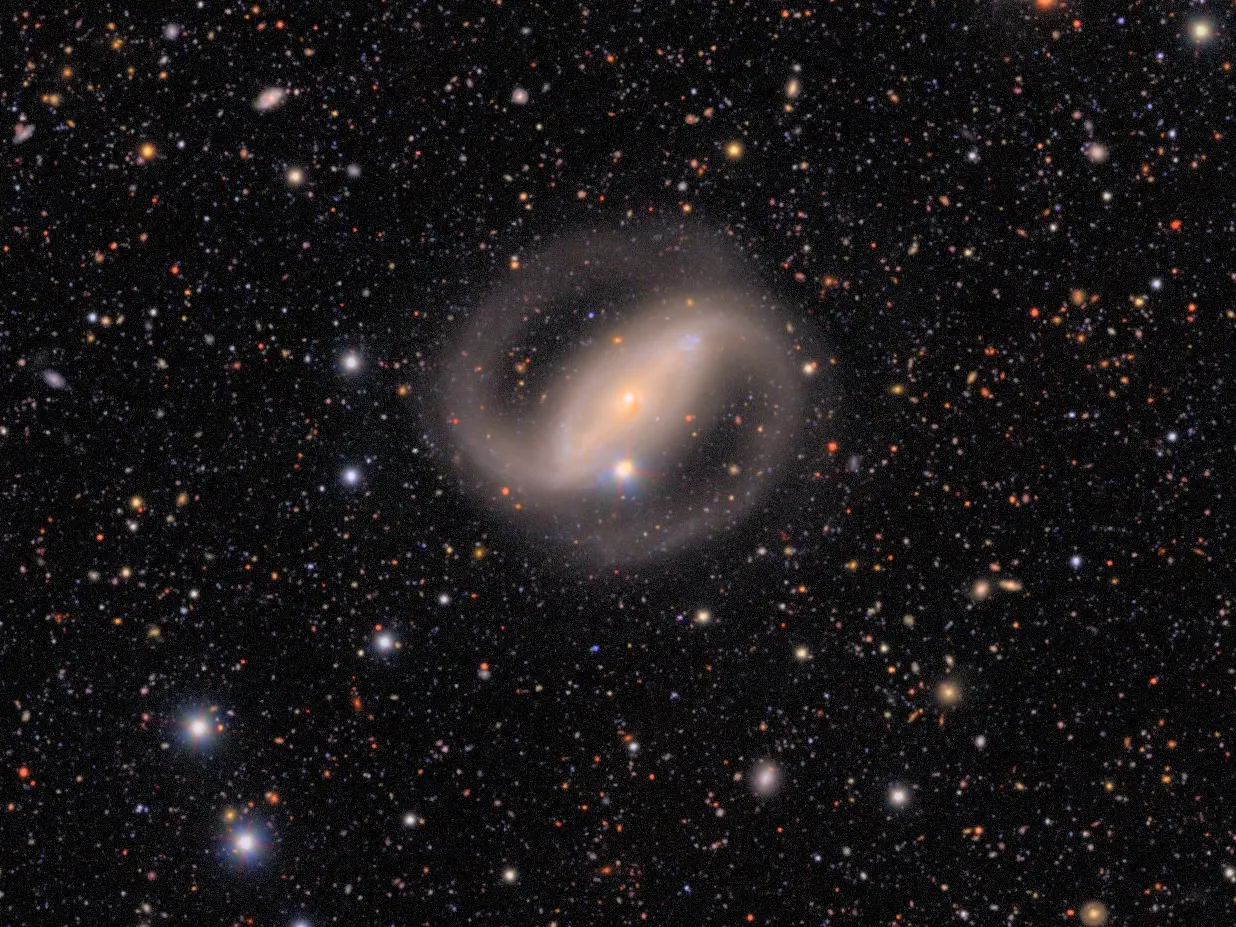
Chile’s Vera Rubin telescope captures 2,100 new asteroids in just 10 hours. A powerful new eye in the sky. Chile’s Vera C. Rubin Observatory has officially begun its mission to observe the universe like never before. The Chile observatory features the world’s largest digital camera, a 3,200 Megapixel sensor, and recently shared its first images from space. Located on Pachon Hill in northern Chile, the telescope aims to uncover new details about how the solar system formed and spot possible asteroid threats to Earth.
2,100 new asteroids detected
In just 10 hours, the Rubin Observatory discovered more than 2,100 previously unknown asteroids, focusing on a small area of the visible sky. To compare, all global observatories combined typically detect about 20,000 asteroids per year.
“It’s really going to change and challenge the way people work with their data,” said William O’Mullane, a project leader for data at the observatory.
The telescope's vast capabilities allow it to collect data on a massive scale.
“I’ll give you a million galaxies. I’ll give you a million stars or a billion even,” O’Mullane said.
Covering the whole southern sky
Trending Stories
Each night, the observatory takes around 1,000 images of the southern hemisphere sky. Within three to four nights, it can complete a full scan of the entire southern sky. Its location in Chile’s Atacama Desert, one of the darkest and driest regions on Earth, makes it ideal for deep-sky observations.
The observatory is named after Vera C. Rubin, an American astronomer known for her work on dark matter, an invisible substance that makes up most of the universe’s mass.
Data flood needs artificial intelligence
The Rubin Observatory is expected to send out so much information that it would overwhelm any human team working alone. “The number of alerts the telescope will send every night is equivalent to the inboxes of 83,000 people,” said Chilean astrophysicist Francisco Foster.
To handle this, astronomers plan to use artificial intelligence tools to help process and analyse the data in real time.
The observatory is set to play a major role in discovering asteroids, galaxies, stars, and dark matter; it can be considered as one of the most important astronomical projects of this decade.
