Scientists use artificial intelligence to confirm that birds are more colourful near equator

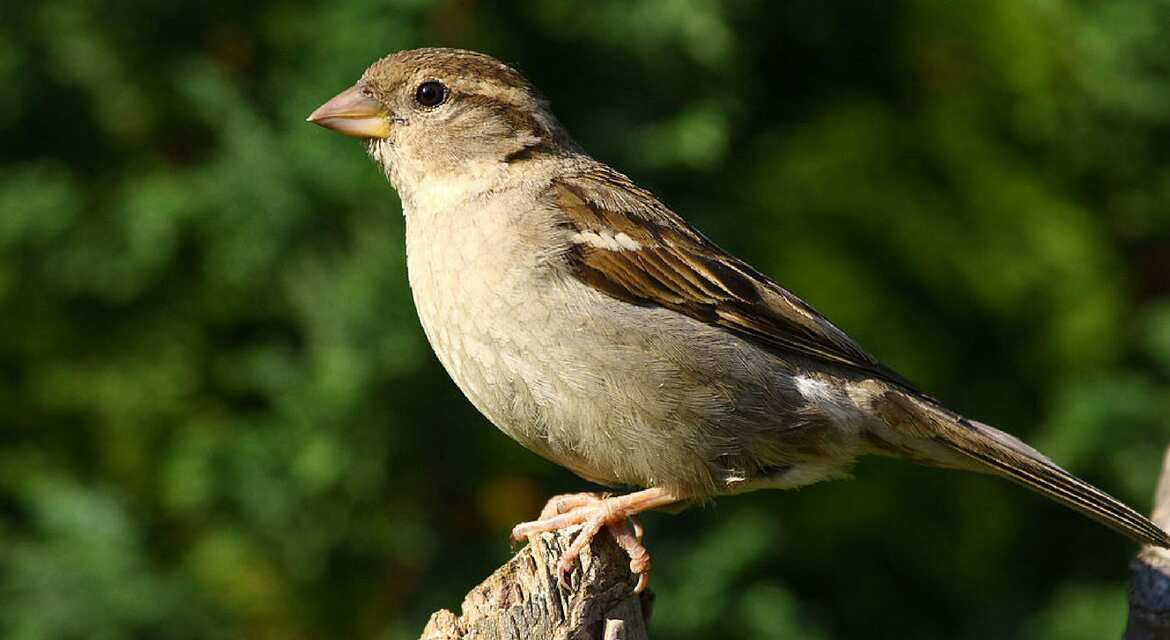
World Sparrow Day
Using artificial intelligence, scientists have confirmed that birds are more colourful near the equator.
According to the study's author Christopher Cooney, ''We found that colourfulness was highest in birds from dense, closed forest habitats.''
"In vibrant rainforests, having colours that stand out from the crowd may help tropical species to distinguish themselves from others", he added.

The study, published in the journal Nature Ecology and Evolution, has confirmed previous suspicions that colour patterns of animals vary as per their latitude.
The researchers have proved a theory proposed by biologists Charles Darwin, Alexander von Humboldt, and Alfred Russel Wallace in 1850.
After comparing the flora and fauna of northern Europe with the tropical region, they were all stunned.
As per German naturalist Humboldt, "The nearer we approach the tropics, the greater the increase in the variety of structure, grace of form, and a mixture of colours, as also in perpetual youth and vigour of organic life."
To confirm the previous theory, researchers at the University of Sheffield studied more than 4,500 species of passerine birds. These included songbirds such as wrens, sparrows and blackbirds across the globe.
They used artificial intelligence to extract data from the pixels of three photographs taken from the collection of the Natural History Museum in Tring, Britain.
During their analysis, they identified the colour at 1,500 different parts of the plumage of each adult bird and ranked them on the level of intensity of the colour.
As the birds came closer to the equator their colour became brighter. While if they went farther it became duller due to the "luxuriant vegetation of the tropics."
This acted as a natural camouflage for the birds all year round. Meanwhile, the birds in the north had to adapt their plumage to handle bare trees every winter.
(With inputs from agencies)