Scientists suggest a rise in phytoplankton in oceans could help tackle climate change

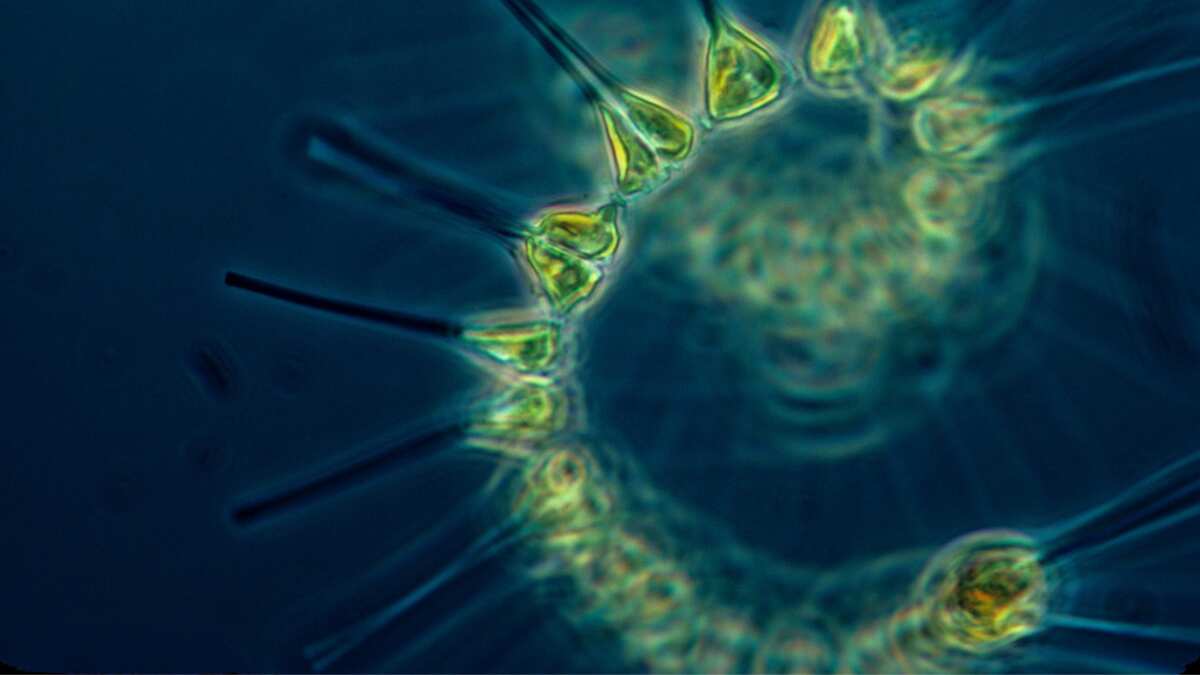
Phytoplankton
The long-term shifts in temperatures and weather patterns show that climate change is happening at a very fast pace. Continuous rise in temperatures, disruption of the usual balance of nature, changes in the intensity and frequency of precipitation, and warmer oceans, are some of the clear indications of climate change.
Global calls have been raised to tackle the situation that is worsening with every single moment.

Some climate scientists have suggested raising the number of phytoplankton present in the ocean can help remove more carbon from the atmosphere.
ALSO READ |Research suggests now-extinct megalodon shark could devour killer whale in just five bites
What are phytoplanktons?
)
Justice eludes Air India 1985 bombing victims as Canada probe goes 'inactive' | Gravitas
)
Trump revives India-Middle East-Europe economic corridor as India emerges central to West Asia’s future: What is it?
)
Erdogan again raises Kashmir issue at UNGA, calls for dialogue under UN Charter
)
The Verdict | Moral policing isn’t culture or discipline, it’s crime
)
Trump signs Greenland security deal with Denmark, paving way for two new US military bases
)
Most Americans want greater federal AI oversight
)
Major League Soccer referee sacked for sexist comment about female match referee
)
IND vs JPN T20I: How an overturned wide became point of difference between India's win and a tie
)
Trump-Xi summit: From trade to Taiwan, what will the US and Chinese presidents discuss in Washington?
)
Cyclone Arnab: Landfall expected before midnight tomorrow as IMD issues orange alerts across six states
)
ICC plans T20I expansion and fewer ODIs in 2027–2031 FTP cycle: Report
)
'Mumma’s boy from Gwalior who dared to dream': Kartik Aaryan pens long note after first National Award win
)
Gravitas | Boosting NHS productivity could save 20,600 lives in UK annually: Report
)
Nor'easter could batter 13 US states this week. What you should know
)
US and China vie for AI dominance as calls grow for regulation | Gravitas
)
Yemen clashes kill 154 people in two days as cornered Saudi battles Houthi offensive | Gravitas
)
Bomb scare in New York amid UNGA: Suspicious suitcase found near UN headquarters
)
IND vs JPN, one-off T20I: Japan captain Kendel on pushing India to the brink - ‘It was special’
)
Raaka creates history! Allu Arjun’s film secures Guinness World Record ahead of release
)
Mikel Arteta verbally agrees to three-year extension with Arsenal after title-winning Premier League season
)
WION Iconic Tourism Summit and Awards 2026: Key voices to discuss India’s tourism future
)
WION Iconic Tourism Summit and Iconic Awards 2026: India's travel economy leaders gather in Delhi
)
American manufacturing is reshoring faster than its factory floors can absorb
&im=FitAndFill=(700,400))
New OTT releases this week (September 21-27, 2026): Shaque: Trust No One, Hunkkaar, Don’t Be Shy- 5 new titles coming to Netflix, Prime Video and more
)
81st UN General Assembly: Burnham announces UK-US AI defence tie-up
)
Trump calls on nations to quit ‘rogue’ and ‘out-of-control’ International Criminal Court, rips UN
)
Infections transmitted from pregnant woman linked to autism risk
)
'What kind of confession is this?': Pakistan PM Shehbaz Sharif’s 'terrorists would be roaming New York' remark goes viral, raises alarm online. Watch
)
Elephants hide behind trees, stage surprise attack on poachers targeting rhinos in South Africa
)
IIT Bombay professor Suryanarayana Doolla sent on leave amid Sahil Wakode death probe
)
'This is normally what toddlers do': Why a psychiatrist is raising fresh questions about Trump’s recent behaviour
&im=FitAndFill=(700,400))
National Film Awards 2026: Kartik Aaryan, Mammootty, Yami Gautam, Randeep Hooda and other key winners
)
‘Strike a deal or drive Iran into hell’: Trump issues fresh warning to Tehran at UNGA
)
Anne Hathaway to run in supporting race for Nolan's epic
)
Over 4,200 books withdrawn from circulation in J&K colleges, 94% from Kashmir
)
From Gaddafi tearing up UN Charter to Trump’s ‘escalatorgate’: Most unforgettable UNGA moments
)
Explainer: Why rare-earth export licences and Board of Trade are US priorities ahead of Trump-Xi summit
)
Asia prepares for record El Nino, food shock
)
Oil slips to $98 as Saudi Arabia restarts East-West oil pipeline
)
Four female students raped during 'Red Zone' at California university. What we know
Phytoplanktons are microscopic marine algae. These single-celled photosynthetic organisms live suspended in water. They provide food for a wide range of sea creatures in a balanced ecosystem. Just like plants, they consume carbon dioxide, make carbohydrates using light energy, and release oxygen back into the atmosphere.
John Martin, the Moss Landing Marine Laboratories oceanographer, said in 1988 that if someone gave him half a tanker of iron, he would somehow cause an ice age.
The reference was the known fact that Iron is a crucial source of energy for the plankton community. It helps phytoplankton bloom.
ALSO READ|'The Calvine Photo': A myth or 'world's clearest' UFO photo that it released after 30 years?
Even a small addition of iron may lead to a substantial increase in the production of phytoplankton and eventually reduce atmospheric carbon dioxide levels.
Well, scientists have also claimed that this approach would require further investigations. Meanwhile, Ken Buesseler, who is a marine radiochemist from the Woods Hole Oceanographic Institution, investigated how and if adding iron changes the flux of carbon into the deep ocean. Reportedly, he discovered a sizable carbon-sequestering effect.
Buesseler reportedly said that his research demonstrated unequivocally that increasing iron leads to the uptake of carbon dioxide.
The research was completed nearly 20 years ago but it is more relevant now considering the climate crisis we are facing.
WATCH WION LIVE HERE
You can now write for wionews.com and be a part of the community. Share your stories and opinions with us here.