Scientists grow human embryo model without sperm or egg, pave way to unravel mysteries of early development

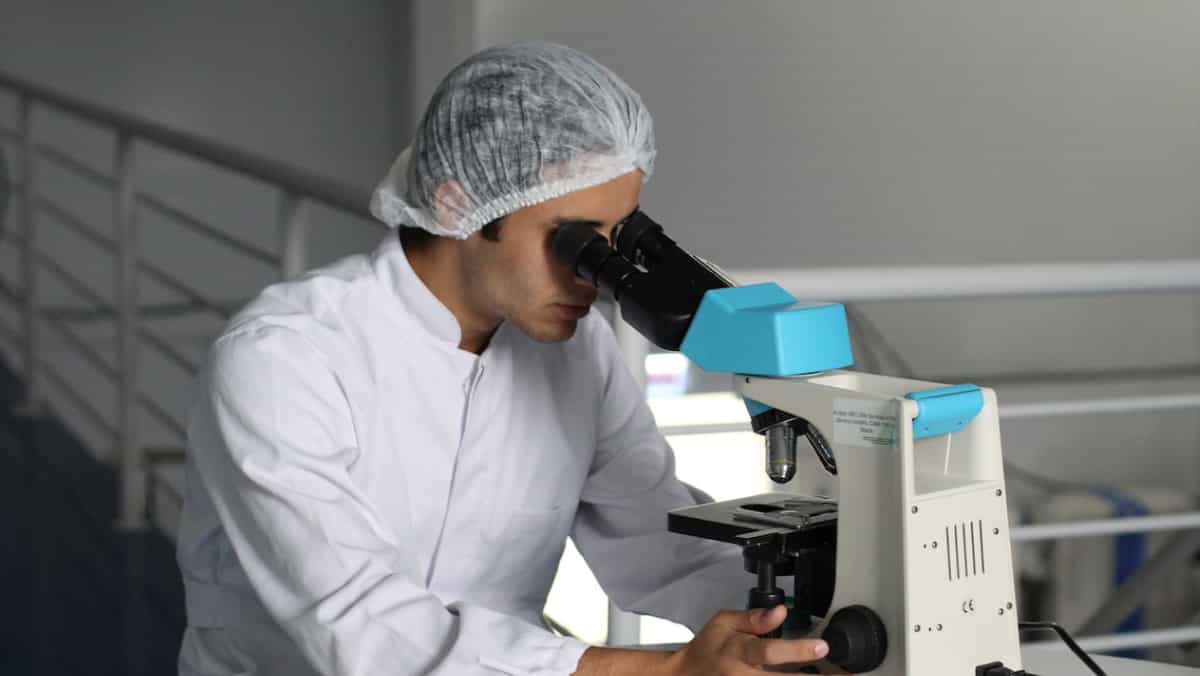
Scientist using microscope (Representative image)
Scientists at the Weizmann Institute have successfully created an "embryo model" that closely resembles a 14-day-old human embryo, all without the use of sperm, eggs, or a womb, media reports said citing the research.This research marks a significant milestone in the field of embryo modeling, offering a powerful tool to study the earliest stages of human development safely. This groundbreaking achievement used stem cells and then chemicals to coax these cells into forming four distinct types of cells typically found in early human embryos: epiblast cells (which develop into the embryo proper), trophoblast cells (which form the placenta), hypoblast cells (supportive yolk sac), and extraembryonic mesoderm cells, as per reports.
A remarkable achievement
In order to achieve the astounding feat, a precise mixture of 120 of these cells was prepared, and intriguingly, approximately 1 percentof them self-assembled into a structure. But this does not resemble a human embryo.

Also Read | Russia uses car tyres to cover military aircraft to deter Ukrainian drone attacks: Report
This process was observed until the model reached a stage comparable to a 14-day-old embryo, a crucial point in early development. "It's a black box and that's not a cliche — our knowledge is very limited," Weizmann Institute of Science Prof Jacob Hanna reportedly told a UK media outlet.
The resulting embryo models exhibited intricate details, including the trophoblast enveloping the embryo, cavities called lacuna that facilitate nutrient transfer from the mother's blood, a yolk sac with liver and kidney functions, and a bilaminar embryonic disc, a hallmark of this developmental stage, as per reports.
&imwidth=180&imheight=135&format=webp&quality=medium)
Premier League: Haaland wants Manchester City to 'try to enjoy the situation and win the game'
&imwidth=180&imheight=135&format=webp&quality=medium)
'Nidal Hasan's firing-squad execution to be livestreamed', says Pentagon; first US military execution since 1961
&imwidth=180&imheight=135&format=webp&quality=medium)
Trump's naked 23-karat gold statue unveiled near European Parliament
&imwidth=180&imheight=135&format=webp&quality=medium)
‘Never-ending flow of cheap labour’: JD Vance hits back at Indian-origin Congresswoman over US green card curbs for major tech companies
&imwidth=180&imheight=135&format=webp&quality=medium)
Thai Actors Fourth Nattawat, Gemini Norawit face racism accusations from Indian fans over viral Bollywood act
&imwidth=180&imheight=135&format=webp&quality=medium)
Nigeria govt rolls out 30-day NNPC petrol discount, insists it is not a subsidy
&imwidth=180&imheight=135&format=webp&quality=medium)
Captain Smit Machchhar on feet again, walks 10 steps as recovery continues after Flydubai flight attack
&im=FitAndFill=(700,400)&imwidth=180&imheight=135&format=webp&quality=medium)
Fastest-growing Asian economies in 2026: Who tops the chart? Where does India rank?
&imwidth=180&imheight=135&format=webp&quality=medium)
A Love Other Than Yours: The temptation to cheat and what pushes people over the edge
&imwidth=180&imheight=135&format=webp&quality=medium)
Russia president Putin promises to 'do everything' to help settle Middle East conflict as US-Iran negotiations stall
&imwidth=180&imheight=135&format=webp&quality=medium)
‘Wait till you discover the other guy’: Rahul Gandhi takes a swipe as Musk's 'Ambani real boss of India' remark triggers X subscription cancellations
&imwidth=180&imheight=135&format=webp&quality=medium)
BTS agency HYBE announces first-ever Weverse Con Festival in India
&imwidth=180&imheight=135&format=webp&quality=medium)
Trump has a new 'enemy': Anyone who calls it 'artificial intelligence'. Here's what we wants instead
&imwidth=180&imheight=135&format=webp&quality=medium)
India at UN: Pak allows terror groups to operate from its soil
&imwidth=180&imheight=135&format=webp&quality=medium)
Air India, Air India Express increase fuel surcharge on domestic, international flights amid rising ATF costs
&imwidth=180&imheight=135&format=webp&quality=medium)
'Something truly catastrophic will happen': Former OpenAI researchers sound the alarm, claim they were fired for prioritising AI safety
&imwidth=180&imheight=135&format=webp&quality=medium)
Scientists find highly radioactive nuclear particles at Chernobyl 40 years after the disaster
&imwidth=180&imheight=135&format=webp&quality=medium)
Nana Patekar's #MeToo controversy: From Tanushree Dutta’s allegations to court ruling
&imwidth=180&imheight=135&format=webp&quality=medium)
Pakistan denies reports of PAF jets being used in attacks against Iran-backed Houthis in Yemen
&imwidth=180&imheight=135&format=webp&quality=medium)
New York ICE shooting sparks protests as Mamdani to call on Trump to halt ICE operations
&imwidth=180&imheight=135&format=webp&quality=medium)
Atlantic hurricane Isaias could make landfall as a strong Category 2 storm, tornado warnings issued
&im=FitAndFill=(700,400)&imwidth=180&imheight=135&format=webp&quality=medium)
From Kramatorsk buses to Yandex fire: Russia-Ukraine war in the last 48 hours
&imwidth=180&imheight=135&format=webp&quality=medium)
AUS vs SA: 'That's fine,' says Cummins on Khawaja's book contents about Sandpapergate
&imwidth=180&imheight=135&format=webp&quality=medium)
Who is Nana Patekar's wife Neelakanti? The bank officer who earned Rs 2,500 when he earned Rs 50
&imwidth=180&imheight=135&format=webp&quality=medium)
KATSEYE’s Sophia Laforteza to return in 2027 after hiatus, agency issues statement
&imwidth=180&imheight=135&format=webp&quality=medium)
French students light European bonfire, protests erupt in Belgium, Italy & Greece | Gravitas
&imwidth=180&imheight=135&format=webp&quality=medium)
France student protests: Over 500 arrested, govt promises 3,000 substitute teachers
&imwidth=180&imheight=135&format=webp&quality=medium)
Arizona congressional candidate claims she was sexually assaulted while repairing signs
&imwidth=180&imheight=135&format=webp&quality=medium)
New Cold War: Why is China buying more gold? Explained
&imwidth=180&imheight=135&format=webp&quality=medium)
OpenAI shuts down Russian, Iranian influence operations using ChatGPT to spread propaganda
&imwidth=180&imheight=135&format=webp&quality=medium)
'Understood consequences of a few mistakes': Ishan Kishan reflects on journey back to India team
&im=FitAndFill=(700,400)&imwidth=180&imheight=135&format=webp&quality=medium)
435 House seats, 35 Senate races: The numbers behind US midterms 2026
&imwidth=180&imheight=135&format=webp&quality=medium)
Bangladesh named as Pakistan’s replacement for Asian Hockey Champions Trophy
&imwidth=180&imheight=135&format=webp&quality=medium)
SC asks Centre to frame mechanism against unethical pharma marketing practices
&imwidth=180&imheight=135&format=webp&quality=medium)
US suspends Microsoft, Infosys, Tata, Wipro from green card programme over alleged H-1B abuse
&imwidth=180&imheight=135&format=webp&quality=medium)
Trump honours Microsoft CEO Satya Nadella with top technology honour amid immigration scrutiny
&imwidth=180&imheight=135&format=webp&quality=medium)
Flydubai flight attack: Indian pilot Smit Machchhar to receive Israel's highest civilian bravery award for saving 174 lives
Unlocking the mysteries of early development
Researchers believe that these embryo models hold the potential to shed light on various aspects of early development, such as the emergence of different cell types, organ formation, and genetic diseases.
Also Read | 'Why won't he...': Musk questions Zuckerberg regarding cage fight
Additionally, there's hope that they could contribute to improving in vitro fertilization (IVF) success rates and testing the safety of medicines during pregnancy.
Challenges and ethical considerations
Despite the promising results, the current 99 percent failure rate in model development poses a challenge. Understanding the causes of miscarriages or infertility may be hindered if the model cannot reliably assemble itself.
The possibility of extending embryo development beyond the 14-day stage also raises ethical questions.
In some countries, this would not be illegal, as these models are legally distinct from actual embryos. However, opinions on this matter are divided.
Watch | Kenya hosts maiden climate summit in Africa
Prof Alfonso Martinez Arias, from the department of experimental and health sciences at Pompeu Fabra University, reportedly said, "The work has, for the first time, achieved a faithful construction of the complete structure [of a human embryo] from stem cells" in the lab and opens "the door for studies of the events that lead to the formation of the human body plan".
WATCH WION LIVE HERE You can now write for wionews.com and be a part of the community. Share your stories and opinions with us here.