Scientists discover a snake-like amphibian that produces milk for its young

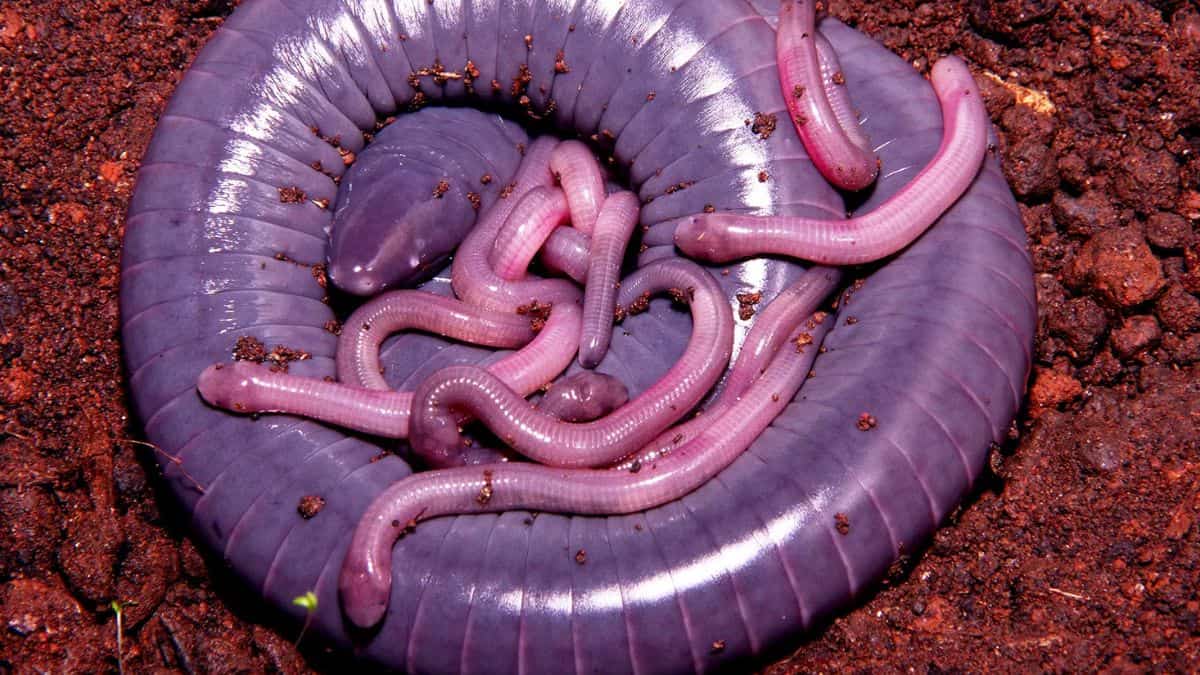
Caecilians
As per new evidence, mammals are not the only type of animals that produce milk, one amphibian that looks more like a worm also exhibits this behaviour.
Caecilians, a type of amphibian—like frogs and salamanders — are limbless creatures that release a milk-like substance for their young.
Full of surprises

As per a new study published on Thursday (Mar 7), Caecilians are full of surprises.
The paper explains that in a manner somewhat similar to mammals, the ringed caecilian (Siphonops annulatus) produces a milk-like substance to feed their young.
)
Yemen called Trump for US military support in fight against Houthis: Official
)
'What kind of confession is this?': Pakistan PM Shehbaz Sharif’s 'terrorists would be roaming New York' remark goes viral, raises alarm online. Watch
)
'Making history': Xi Jinping praises Trump as US-China leaders dine at White House
)
'Partners rather than rivals': Xi Jinping's first message after landing in US for Trump summit
)
China to test supersonic jet that moves at Mach 2, double the speed of sound
)
'Fund people, not bombs': Hundreds take to New York streets as Netanyahu delivers speech at UN; dozens arrested
)
Bias or safety concerns? Bengaluru CEO says firm will not hire men from UP, Bihar, Rajasthan, MP. Here's why
)
IIT Bombay CCTV footage emerges: Sahil Wakode seen looking at phone in examination hall
)
US faces fresh cost crunch as mortgage rates hit 7%, oil tops $107 and gas prices surge
&im=FitAndFill=(700,400))
Netanyahu at UN: Mass walkout, attack on Mamdani and Iran threats | In Pics
)
A seven-day roadmap? Iran proposes plan to end war, reopen Strait of Hormuz and resume nuclear talks
)
Nearly half of young people trust AI over humans to check facts, major study finds
)
'We do not wish to continue. It's America that must choose': Iran president Pezeshkian calls on US to end war
)
Trump gifts Xi a bald eagle sculpture at White House dinner: Here’s what it symbolises
)
Trump's welcome to Xi demonstrates 'attraction' to dictators: Chuck Schumer
Don't Be Shy movie review: A frothy coming-of-age tale that is too shy to experiment
)
Israeli envoy to US Yechiel Leiter’s son critically injured in West Bank ramming attack
)
Welcome actor Mushtaq Khan dies at 56 after battling cancer
)
Alarming video emerges as landslide damages houses in Sikkim’s Rimbi village. Watch
)
Outrage erupts after 3-year-old is married to 60-year-old man in Pakistan, link to her sister's murder being probed
)
'Blockbuster' nor'easter develops an eye similar to hurricanes as warnings are issued
)
Nations League: Germany draw on Klopp debut; Portugal, Norway win
)
Xi Jinping's 'special plane' vs Trump's Air Force One: What's the difference?
)
UNGA 2026: Israeli PM attacks Britain, France for past colonialism
)
‘We’ve never gotten along better’: Trump praises Xi, jokes about White House ballroom at high-stakes state dinner
)
WION Iconic Tourism Summit 2026: Union Minister Shekhawat on 'experiential travel', peace diplomacy
)
Trump-Xi state dinner 2026: Who is invited? Full guest list of tech CEOs, business leaders and officials
)
Bollywood mourns Mushtaq Khan: Sunny Deol, Rajpal Yadav and others pay tribute
)
West Indies coach Sammy looking at India series as opportunity to finetune ahead of ODI World Cup 2027 qualifiers
)
Scientists detect first radio signals directly from faraway planet
)
What’s in a name? Trump’s 'Lake America' move gets a tit-for-tat response from Canada
)
2,000-foot tube, laser tests and more: China builds towns to expand nuclear arsenal, satellite images show
)
Meet Adrian Abraham: 9-year-old Indian-origin guitar prodigy aiming for a Guinness World Record
)
CNN, Politico and MS NOW back in White House after judge blocks Trump’s media ban
)
'FIRST LOOK from inside Noah’s Ark': Researchers share video from inside mysterious mound in Turkey
)
Farhan, who went viral for AK47 celebration vs India in Asia Cup, hopes to lead Pakistan beyond Asian Games
)
‘Not just a local tragedy’: Nepal PM Shah warns UN of growing climate threat, says Nepal floods were 'a warning to the world'
)
WION Iconic Tourism Summit: How local tourism MSMEs must upskill for AI integration
)
Remarkably, the hungry hatchlings seem to beg their mother to release more milk—a type of behaviour that has never been observed in amphibians before.
How was this discovery made?
A BBC series Life in Cold Blood gets the credit for this discovery. Using an endoscopic camera, the team filming this show captured a ringed caecilian female and her offspring.
They observed the offspring getting into a frenzy of sorts at one point. This was a feeding frenzy, where the young ones tore at their mother's whitish outer skin layer that was only there in breeding females.
Scientists discovered that the skin was extremely nutritious and had proteins and fats.
Also read |Resurrecting the woolly mammoth: Scientists report major stem cell breakthrough in elephants
"We were so intrigued by this that we didn't pay much attention to the other behaviours we saw," said study co-author Marta Antoniazzi of the Butantan Institute.
However, over time, they realised that one mouthful of the nutritious skin can't sustain the caecilian offspring for long. This made them focus on another phenomenon.
"The babies' heads were close to the female’s cloacal opening all the time," says study co-author herpetologist Carlos Jared of the Butantan Institute in Brazil.
"Some even put their heads inside and seemed very excited," he added.
Comparing the intestines, bladders, cloacae, and oviducts of females with and without offspring, study co-author Pedro Mailho-Fontana of the Butantan Institute found that some large oviducts produce a milky substance that is rich in sugars and fatty acids. This also occurs in humans and cows.
Similar to mammals, young caecilians also seemed to have a method to encourage their mothers to release the milk.
"This behaviour seems akin to begging in birds, which, to my knowledge, had not been documented in caecilians before," says herpetologist Marcel Kouete of the Florida Museum of Natural History, who was not involved in the study but also works on caecilians. "This is pretty cool to learn," he added.
(With inputs from agencies)

