

&imwidth=800&imheight=600&format=webp&quality=medium "NASA’s Moon Base: How Chandrayaan-3 could give India an edge in the lunar race")
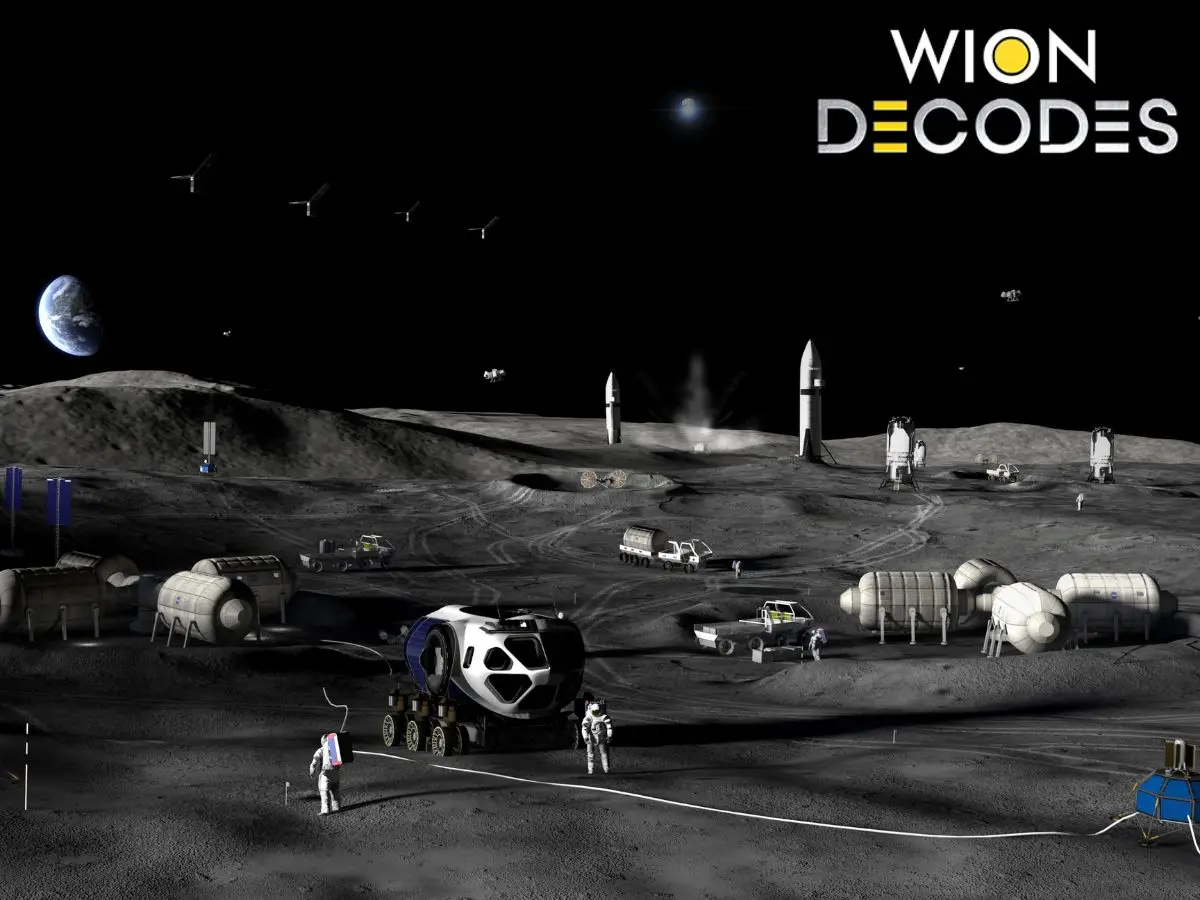
NASA’s plan for a long-term human presence on the Moon is moving beyond brief astronaut visits, with India now potentially playing a role in the effort. The agency is developing a Moon Base near the lunar South Pole, where Chandrayaan-3 has given India valuable experience. The outpost is envisioned as a place where astronauts can live, conduct research and test technologies for deeper-space missions.
What is the real objective of the Moon Base?
The Moon Base is not simply about putting a permanent building on the lunar surface. It is intended to test whether humans can live and work for extended periods away from Earth, while developing systems for power, transportation, communications, resource extraction and construction.
NASA is already working with commercial partners on cargo landers, rovers and other infrastructure, with some lunar deliveries targeted for 2028. The technologies being developed include systems to generate and store power, extract water and oxygen from local resources, and build landing pads and other infrastructure.
Why is the lunar South Pole important?
The lunar South Pole is valuable because some permanently shadowed craters are extremely cold and may preserve water ice and other volatiles. Water could become one of the most important resources for a future settlement – for drinking, life support and potentially producing hydrogen and oxygen for fuel.
Trending Stories
&imwidth=180&imheight=135&format=webp&quality=medium)
Rahul Gandhi's plea against Election Commission delayed as Supreme Court registry flags 14 ‘defects’
&im=FitAndFill=(700,400)&imwidth=180&imheight=135&format=webp&quality=medium)
Navratri 2026: 9 days, 9 forms of Goddess Durga and 9 colours- Check the complete list
&imwidth=180&imheight=135&format=webp&quality=medium)
Korean peninsula tensions escalate as North Korea launches multiple ballistic missiles, PACOM says 'no threat to US personnel'
&imwidth=180&imheight=135&format=webp&quality=medium)
Trump weighs firing Kimberly Guilfoyle as US ambassador to Greece amid misconduct allegations: Report
&imwidth=180&imheight=135&format=webp&quality=medium)
Anti-SIR protest in Mumbai: Protestors wear black masks & ribbons in Mumbai
&imwidth=180&imheight=135&format=webp&quality=medium)
UK PM Andy Birnham renews claims of Russian meddling in Brexit vote
&imwidth=180&imheight=135&format=webp&quality=medium)
BCCI rejects venue shift reports, India vs Sri Lanka 1st ODI to remain in Delhi
&imwidth=180&imheight=135&format=webp&quality=medium)
'Absolutely disgusting': Australia slams US plan to livestream Nidal Hasan's execution; Mike Johnson raises concerns, warns of terrorist propaganda
&imwidth=180&imheight=135&format=webp&quality=medium)
1,500 drones illuminate Mumbai sky as Cordelia Cruises unveils second ship, Cordelia Sky
&imwidth=180&imheight=135&format=webp&quality=medium)
Houthis warns US of 'painful response' if Washington joins Saudi war in Yemen as airlines suspend flights to Saudi Arabia
&imwidth=180&imheight=135&format=webp&quality=medium)
Congress demands action against chief election commissioner
&imwidth=180&imheight=135&format=webp&quality=medium)
Robot gropes girl, makes thrusting movements in bizarre crime in Germany
&imwidth=180&imheight=135&format=webp&quality=medium)
'Turn approver, resign, we'll forgive you': Rahul Gandhi claims receiving messages from CEC Gyanesh Kumar
&imwidth=180&imheight=135&format=webp&quality=medium)
'I will not be silenced': Ilhan Omar alleges political intimidation after federal officers search her Washington home
&imwidth=180&imheight=135&format=webp&quality=medium)
Pakistan's government blames PTI for rise of terrorism in Khyber Pakhtunkhwa
&imwidth=180&imheight=135&format=webp&quality=medium)
‘This is just the start’: Maaya Rajeshwaran on historic ITF title, confidence boost and future goals
&imwidth=180&imheight=135&format=webp&quality=medium)
I.N.D.I.A. Bloc lists 10 requests to Supreme Court
&im=FitAndFill=(700,400)&imwidth=180&imheight=135&format=webp&quality=medium)
IMF World Economic Outlook: 10 economies to watch for growth in FY27 and FY28 - Where does India stand?
&im=FitAndFill=(700,400)&imwidth=180&imheight=135&format=webp&quality=medium)
How does a robot decide what to do next?
&imwidth=180&imheight=135&format=webp&quality=medium)
Is the AI chip boom already over? Global semiconductor stocks slide as investors question unbridled spending
&imwidth=180&imheight=135&format=webp&quality=medium)
L Murugan resigns as Union Minister, expresses wish to return to grassroots
&imwidth=180&imheight=135&format=webp&quality=medium)
Trump says he 'may' meet North Korean leader Kim Jong Un during upcoming Asia trip
&imwidth=180&imheight=135&format=webp&quality=medium)
'Ouch!!! That must hurt': Kangana Ranaut hails Kamal Haasan's sharp reply to Elon Musk over Starlink row
&imwidth=180&imheight=135&format=webp&quality=medium)
Sidhu Moose Wala’s younger brother wins hearts by recreating late singer’s signature move at Toronto Hologram Show
&imwidth=180&imheight=135&format=webp&quality=medium)
Girl 'dead' for 8 hours wakes up at her own funeral, dad insists she wasn't breathing
&imwidth=180&imheight=135&format=webp&quality=medium)
UK school ditches technology, shifts from screen to pen and paper for learning
&imwidth=180&imheight=135&format=webp&quality=medium)
Opposition’s 10 demands in Supreme Court petition range from stay on SIR to audit of voter rolls
&imwidth=180&imheight=135&format=webp&quality=medium)
'I am thoroughly unamused': Judge slams Trump administration after 400 trees cut at Washington golf course
&im=FitAndFill=(700,400)&imwidth=180&imheight=135&format=webp&quality=medium)
New OTT releases this week (October 12-18, 2026): Sacrifice, Koffee with Karan S9, Roadies Rebirth- 6 titles coming on Netflix, JioHotstar and more
&imwidth=180&imheight=135&format=webp&quality=medium)
China’s gold rush puts billion in focus
&imwidth=180&imheight=135&format=webp&quality=medium)
India's Ajit Doval, Iran's Mohsen Rezaei hold talks amid escalating West Asia tensions, discuss 'issues of mutual interest'
&imwidth=180&imheight=135&format=webp&quality=medium)
New Cold War: Why is China buying more gold? Explained
&imwidth=180&imheight=135&format=webp&quality=medium)
Anupam Kher joins Ranbir Kapoor's Ramayana as Jatayu, new poster unveiled
&imwidth=180&imheight=135&format=webp&quality=medium)
'Almost certainly': UK Prime Minister Andy Burnham says Iran's IRGC behind RAF Fairford threat
&imwidth=180&imheight=135&format=webp&quality=medium)
Elon Musk pumps $276 million into Republican campaigns ahead of US midterm elections
The region also contains areas that receive relatively prolonged sunlight, creating opportunities for solar power, while nearby shadowed regions could harbour ice. India has already contributed important knowledge about this difficult environment.
How does Chandrayaan-3 strengthen India’s position?
Chandrayaan-3 gave ISRO something far more valuable than a successful landing: first-hand experience of operating in the lunar South Polar region.
Vikram landed on August 23, 2023, and Pragyan conducted in-situ studies of the terrain. Its instruments measured temperature, seismic activity, plasma conditions and the elemental composition of lunar soil. ISRO says the rover travelled about 101 metres.
More recently, ChaSTE data have helped scientists understand the thermal behaviour of the polar regolith, information relevant to future habitat and resource planning.
What could ISRO’s role be – and what could India gain?
NASA invited ISRO to join its Moon Base programme during the India-US Civil Space Joint Working Group meeting in Bengaluru on August 5-6. The two sides also agreed to advance discussions on scientific data sharing.
India’s exact role has not yet been announced. But ISRO’s experience could make it a useful partner in robotic exploration, lunar science, landing technologies, surface mobility and resource mapping. Participation could also give Indian scientists and industry access to a much larger international lunar programme while strengthening India’s position in the emerging lunar economy.
Could the Moon become a resource hub and Mars launchpad?
The Moon could potentially become a resource hub and Mars launchpad – but that remains a long-term possibility, not an immediate reality.
If water ice can be extracted economically, it could support life-support systems and produce propellant. Lunar resources could eventually reduce the need to transport everything from Earth. The Moon’s lower gravity could also make it attractive for launching spacecraft deeper into the solar system.
That is why NASA describes the Moon Base as more than a destination. It is a test bed for technologies and operations needed for Mars. The lunar South Pole could ultimately become humanity’s first sustained foothold beyond Earth – and India now has an opportunity to help shape what that foothold becomes.

