NASA announces 13 ideas that won $175,000 under prestigious NIAC programme

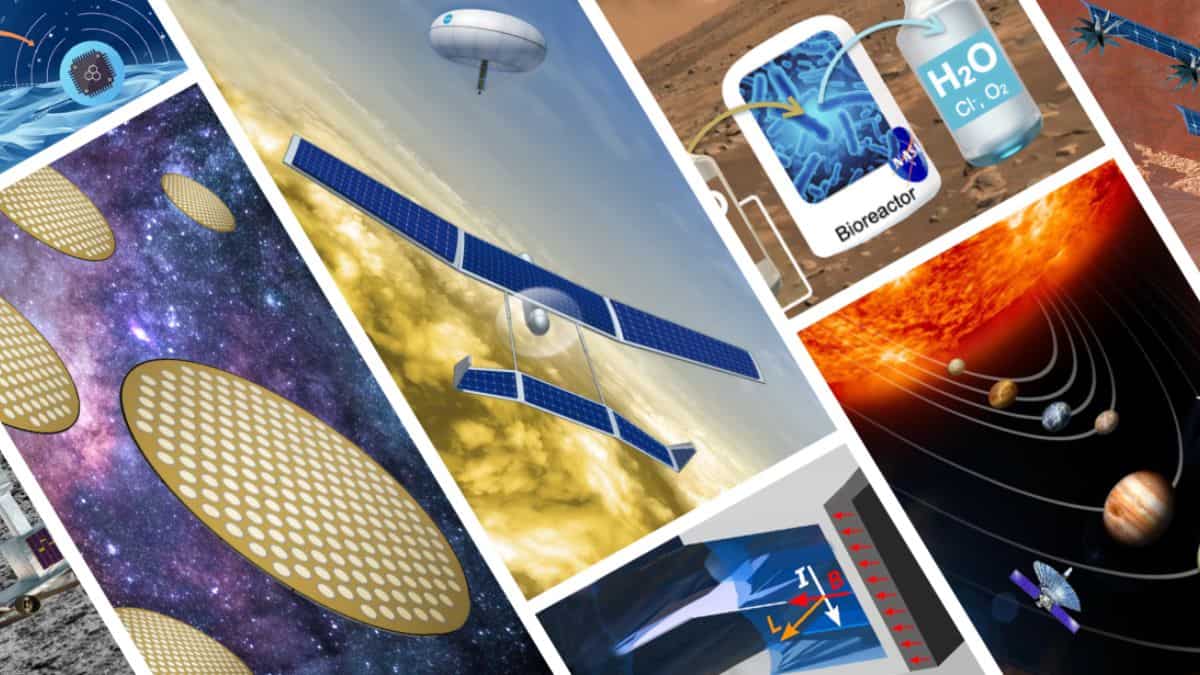
NIAC Phase I awardees
The National Aeronautics and Space Administration (NASA), on Thursday (Jan 4)announced the winners of Phase 1 of the 2024 NIAC (NASA Innovative Advanced Concepts) programme.
What is NIAC?
This programme, as per the US space agency, "fosters pioneering ideas by funding early-stage technology concept studies for future consideration and potential commercialization".

As per NASA Associate Administrator Jim Free, "The daring missions NASA undertakes for the benefit of humanity all begin as just an idea, and NIAC is responsible for inspiring many of those ideas."
"The Ingenuity helicopter flying on Mars and instruments on the MarCO deep space CubeSats can trace their lineage back to NIAC, proving there is a path from creative idea to mission success. And, while not all these concepts will fly, NASA and our partners worldwide can learn from fresh approaches and may eventually use technologies advanced by NIAC," he added.
)
10,000 gather in support of 87-year-old forcefully evicted from home of 71 years
)
Yemen's war escalates: Saudi-backed leader calls for general mobilisation against the Houthis
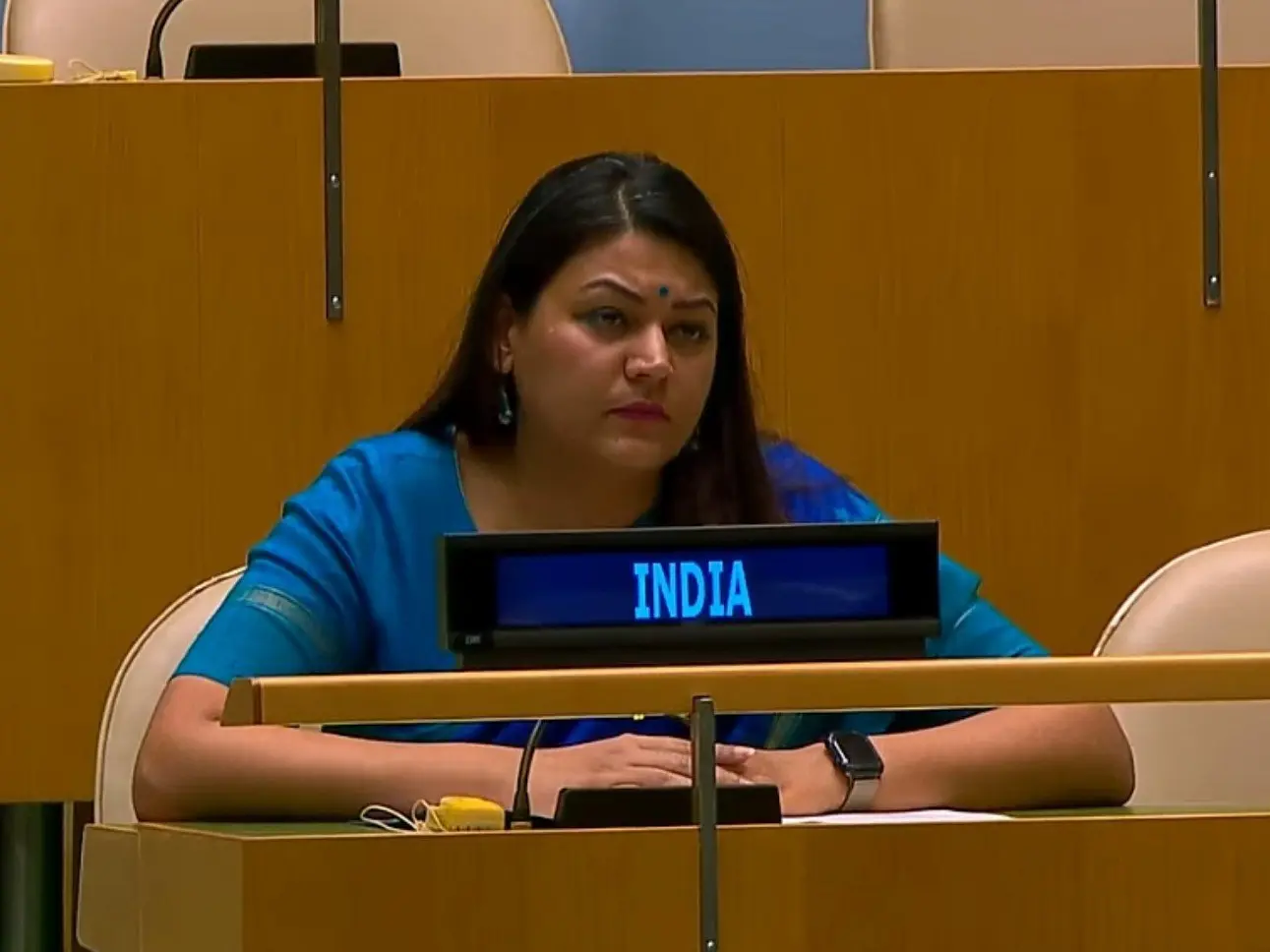)
Indian diplomat Petal Gahlot raises deteriorating situation in Pakistan-occupied Kashmir in right of reply at UN
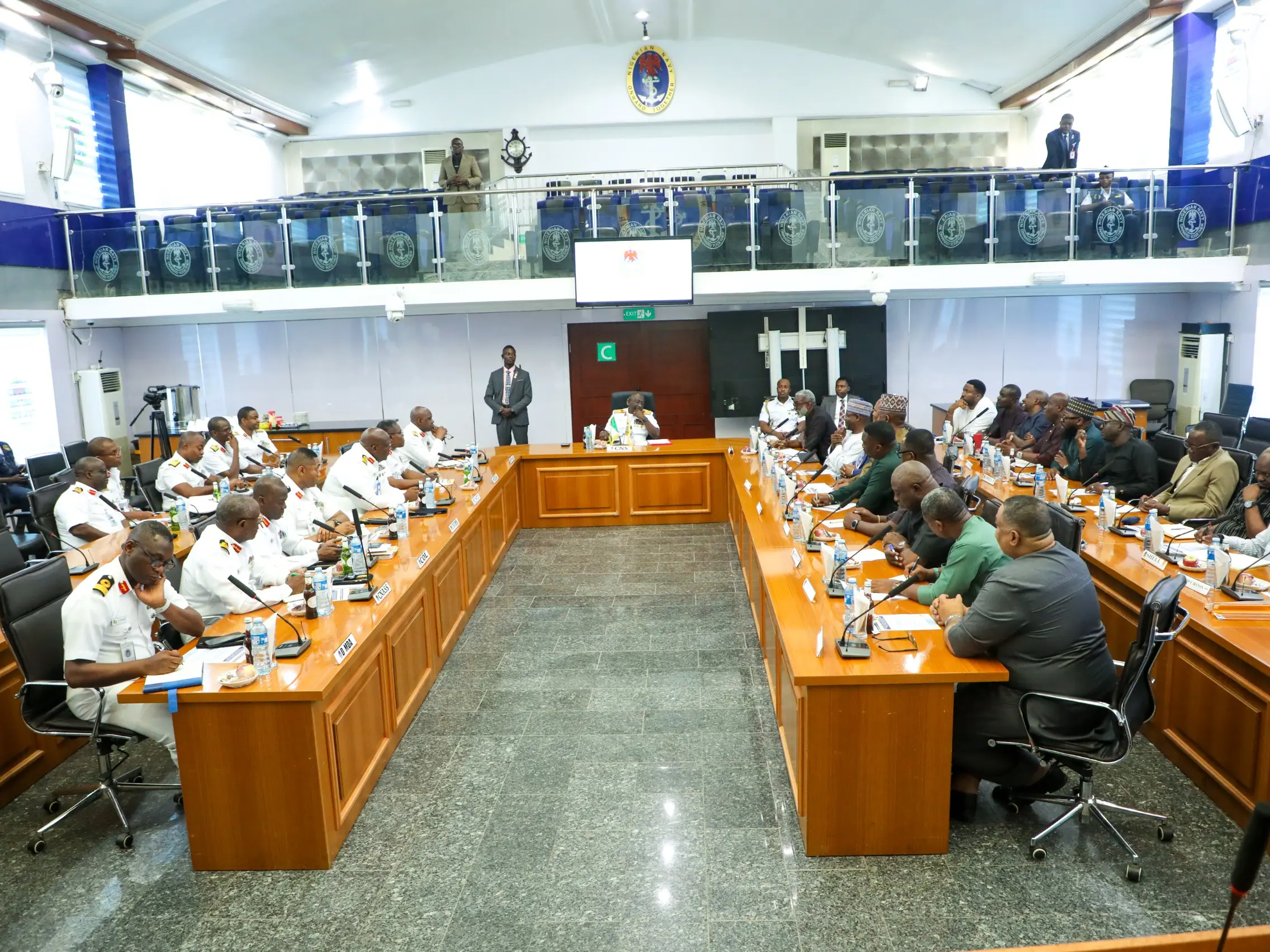)
Nigeria Navy moves to boost oil security, tackle crude theft and infrastructure threats
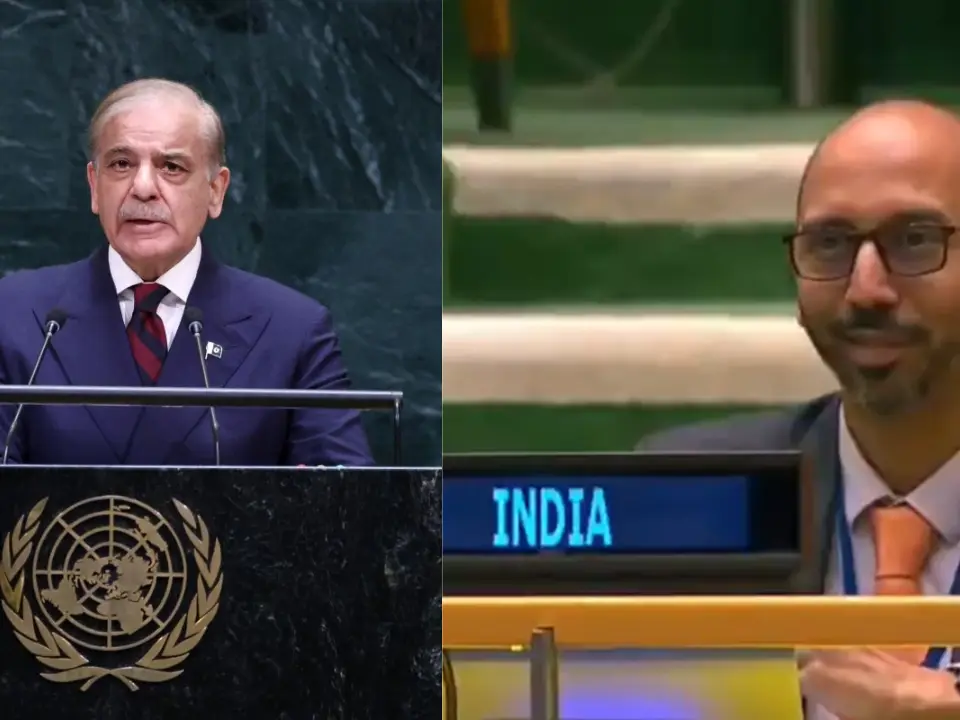)
WATCH | As Shehbaz Sharif claims Pakistan’s ‘victory’ during 2025 conflict, Indian diplomat R Srinivas laughs at UN
)
‘It is all possible’: Putin weighs next steps on Ukraine talks, rules out Europe conflict
)
Jay-Z rape case: Accuser says allegations were false, never met rapper
)
Did Hitler kill his niece Geli Raubal? Newly found records reopen a 95-year-old mystery
)
Trump-Xi summit wrap: Big pageantry, Iran talks, few major developments and more meetings planned
)
India's insurance regulator overhauls policies
)
'A terrorist country is asking me that question?': Jaishankar hits back at Pakistani journalist at UN; flags attacks on commercial shipping
)
India flags brutal violence in Pak-occupied Jammu Kashmir
)
OpenAI AI Agents hacked 4 websites before Hugging Face, researchers reveal
)
US court backs Pentagon's decision to exclude Anthropic over Claude AI restrictions
)
Heart of the Beast review: Brad Pitt leads a gripping tale of survival and loyalty
)
‘Not just a local tragedy’: Nepal PM Shah warns UN of growing climate threat, says Nepal floods were 'a warning to the world'
)
Trump rejects Iran's 7-day ceasefire proposal as US weighs renewed bombing after midterms: Report
)
Trump-Xi summit: Xi wraps up us visit with 21-gun salute as Trump, Xi lock in 'strategic stability'
)
Pentagon quietly adds 37 wounded troops to Iran war tally without explaining when or how
)
Cindy Crawford’s son Presley Gerber cremated as death probe continues
)
‘Attack on Mecca a red line for Pakistan’: Shehbaz Sharif warns Houthis at UN
&im=FitAndFill=(700,400))
New Friday OTT releases (September 25, 2026): Don’t Be Shy, Hunkkaar: The Roar, Mango Pachcha- 6 movies and TV shows on Netflix, Prime Video and more
)
Asian Games: Shooting spree continues as India win silver in women’s 50m rifle 3P team event
)
Myanmar training camp case: US national, 6 Ukrainians allowed to meet their families abroad
)
Asian Games 2026: India women’s kabaddi team edge Iran 37-34 to clinch 3rd gold medal
)
'FIRST LOOK from inside Noah’s Ark': Researchers share video from inside mysterious mound in Turkey
)
Saudi oil exports surge despite Iran war
)
India's UN Envoy slams Pakistan: 'They claim security by day, terrorism by night'
)
Outrage erupts after 3-year-old is married to 60-year-old man in Pakistan, link to her sister's murder being probed
)
Mushtaq Khan dies at 56: When Welcome actor opened up about his salary for iconic role Ballu
)
US Supreme Court backs Trump administration's use of SAVE database to check voter citizenship
)
Scientists detect first radio signals directly from faraway planet
)
‘Goal is to win it’: Virat Kohli confirms 2027 ODI World Cup will be his final tournament for India
)
Saudi Arabia still harbours intent to develop nuclear weapons, reveals US intelligence: Report
)
Pakistan deploys over 20,000 security personnel as PTI vows march for Imran Khan's release
)
Tesla is preparing something big for Optimus: new Gen 3 models surface in app
)
'Making history': Xi Jinping praises Trump as US-China leaders dine at White House
)
Gaza's war turned environmental damage into second crisis
In phase 1, NASA is funding 13 concepts it has chosen from among companies and institutions across the United States. Each idea will receive a maximum of $175,000 in grants.
Here are some interesting, "visionary" ideas that "could transform future NASA missions with the creation of breakthroughs ".
— Mars Aerial and Ground Global Intelligent Explorer (MAGGIE)
Ge-Cheng Zha Coflow Jet, LLC proposes a novel global mobility Mars exploration platform called the Mars Aerial and Ground Intelligent Explorer (MAGGIE). Powered by solar energy, MAGGIE a compact fixed-wing aircraft will fly in the Martian atmosphere with vertical take-off/landing (VTOL) capability.
— A Revolutionary Approach to Interplanetary Space Travel: Studying Torpor in Animals for Space-health in Humans (STASH)
Mammalian hibernation is suggested as a promising way to mitigate the physical and mental health risks of space travel. An essential feature of that is 'torpor' an energy-conserving state involving an active and often deep reduction in metabolic rate. Using animals, Ryan Sprenger from Fauna Bio Inc. wants to study this.
— Add-on to Large-Scale Water Mining Operations on Mars to Screen for Introduced and Alien Life
Steven Benner from the Foundation For Applied Molecular Evolution poses that planned human missions to Mars can complicate the search for life on the alien planet. This project states that dry cached rocks aren't enough and that water mined in preparation for human missions can be used to extract genetic polymers (DNA or alien) using an “agnostic life finding” (ALF) system.
— Swarming Proxima Centauri: Coherent Picospacecraft Swarms Over Interstellar Distances
Thomas Eubanks, Space Initiatives Inc. in Florida, poses that a swarm of tiny probes pushed by a laser light could travel to another star (Proxima Centauri) this century. This swarm of 1000s of probes holds the capability to send an optical signal strong enough to send data back to Earth.
— Sample Return from the Surface of Venus
Venus with temperatures of around 450°C and atmospheric pressure of around 92 has the most hostile environment. Geoffrey Landis NASA Glenn Research Center proposes a new approach to return samples from the planet. They want to use innovations in high-temperature technology and solar aircraft for this.
Apart from these, the following ideas have won the prestigious grant:
— James Bickford, Charles Stark Draper Laboratory, Massachusetts: Thin Film Isotope Nuclear Engine Rocket
— Peter Cabauy, City Labs, Inc., Florida: Autonomous Tritium Micropowered Sensors
— Kenneth Carpenter, NASA’s Goddard Space Flight Center, Greenbelt, Maryland: A Lunar Long-Baseline Optical Imaging Interferometer: Artemis-enabled Stellar Image
— Matthew McQuinn, University of Washington, Seattle: Solar System-Scale VLBI to Dramatically Improve Cosmological Distance Measurements
— Aaswath Pattabhi Raman, University of California, Los Angeles: Electro-Luminescently Cooled Zero-Boil-Off Propellant Depots Enabling Crewed Exploration of Mars
— Alvaro Romeo-Calvo, Georgia Tech Research Corporation, Atlanta: Magnetohydrodynamic Drive for Hydrogen and Oxygen Production in Mars Transfer
— Lynn Rothschild, NASA’s Ames Research Center, California’s Silicon Valley: Detoxifying Mars: The Biocatalytic Elimination of Omnipresent Perchlorates
—Beijia Zhang, MIT’s Lincoln Lab, Massachusetts: LIFA: Lightweight Fiber-based Antenna for Small Sat-Compatible Radiometry

