Here's how NASA is planning to reduce travel time between Mars and Earth

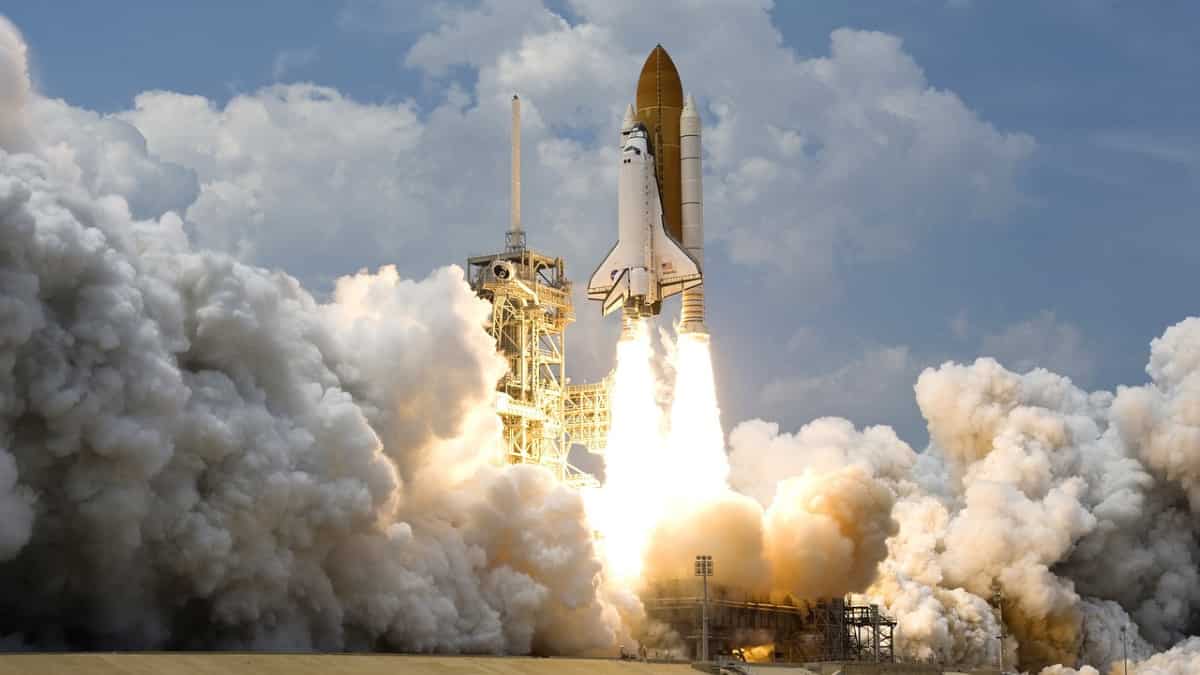
Representational image of rocket launch.
US space agency NASAhas collaborated with a private company to develop a new rocketthat canreduce space travel time between Earth and Mars.
The scientists will design the engine of this rocket in a way to sharply increase the amount of thrust for accelerating space travel and take rocketefficiency to another level.

Thrust is the force which lifts the spacecraft in the air. A propulsion system produces this thrust by burning a gas or liquid fuel at the back of a spacecraft to propel it forward at high speed.
The new design,which isknown as the Pulsed Plasma Rocket (PPR), is being developed by Howe Industries, an Arizona-based company. Currently, the company is in the early stages of studying thetechnologyafter which they will start working on building engine models.
Also Read:NASA launches satellite PREFIRE to monitor, predict and help mitigate climate change
)
Putin's United Russia party wins 355 seats in Duma election; 4 other parties cross threshold to enter parliament
)
Delhi Air pollution: Strict crackdown on waste burning
)
‘0% chance’: Nvidia CEO Jensen Huang dismisses AI extinction fears by 2030
)
Samay Raina-Mukesh Chhabra controversy explained: What happened over girlfriend joke on India's Got Latent?
)
Trump's helipad event overshadowed by audio failure as major TV networks suspend pool coverage
)
Russia-Ukraine war: Russian strikes knock out three of Ukraine's largest steel plants
)
'Needs time away from the international scene': England white-ball captain Brook on pacer Brydon Carse's future
)
Glitch in the matrix caught on camera: Woman vanishes after talking to reporter
)
Anti-AI activists storm summit, say 'incompetent' leaders are leading us into a disaster - 'We need a vote'
)
Samsung raises Galaxy S26 prices by Rs 20,000: Here’s what each model now costs
)
IIT Bombay tensions ease after three-hour open house; director’s assurances pacify students
)
J&K Assembly Session begins amid chaos: BJP, ruling alliance clash as statehood demand dominates
)
Shah Rukh Khan visits Lalbaugcha Raja with wife Gauri Khan and daughter Suhana
)
Bessent meets China’s He Lifeng to prepare for Trump-Xi summit
)
US and China vie for AI dominance as calls grow for regulation | Gravitas
)
FIFA chief Infantino wants to reform governing body with consultation from federations
)
The Verdict | The Mecca Agreement is under scrutiny as Houthis attack Saudis
)
India at UNGA81: Jaishankar warns global order under 'growing stress', pushes for ‘reformed multilateralism’
)
Saudi Arabia exits China-led mBridge digital currency platform amid Saudi-Houthi conflict
)
'Lot of things to learn from experienced players': Jayasuriya backs Rohit, Virat for 2027 ODI World Cup
)
$110 billion Warner Bros merger: Paramount reaches settlement with 12 US states
)
Mahabharat actor Saurav Gurjar arrested in Hyderabad, sent to 14-day judicial custody in sexual exploitation case
&im=FitAndFill=(700,400))
New OTT releases this week (September 21-27, 2026): Shaque: Trust No One, Hunkkaar, Don’t Be Shy- 5 new titles coming to Netflix, Prime Video and more
)
From ‘communist’ to ‘great mayor’: Trump praises Mamdani after New York meeting, discusses immigration and housing
)
Report: Zelensky meets CIA chief Ratcliffe at Shannon airport, weeks after his secret Moscow trip
)
WATCH | Mysterious lights over Tehran caught on video. Drone, aircraft or something else?
)
How Zaheer Khan came to be CSK's head coach of IPL 2027
)
Pilot recreates Mona Lisa in sky over Oklahoma and Arkansas in four-hour flight: VIDEO
)
UK PM Burnham agrees to 'defensive' military support for Saudi Arabia against Houthis
)
Jailer 2: Vidya Balan joins Rajinikanth's upcoming film as Kantha | Watch
)
Microsoft executive called AI training the ‘largest theft of labour in human history’
)
IIT Bombay student death: CCTV footage becomes key evidence as police reconstruct Sahil Wakode's final hours
)
40-foot waves crash into cruise ship in dangerous stretch near Antarctica. Watch
)
US-Iran war, peace deals and more: What to expect from Trump's UNGA 2026 speech
)
Explainer: Why rare-earth export licences and Board of Trade are US priorities ahead of Trump-Xi summit
)
BTS fans mock iHeartRadio’s day 2 turnout after short set controversy
)
Two infants die after fire breaks out at RIMS newborn care unit in Telangana's Adilabad
Howe Industries,in a recent statement, said,"Such rocket technology will be neededto supportNASA’splans to return humans to the moon and, after that, possibly Mars."
A goal hasbeen establishedby the space agencyfor building a long-term base in space.However, one hurdle in all these plans is the long travel times required in the current spacecraft systems.
As per the estimated distance of NASA, the moon is around 382,500 kilometresawayfrom Earth. The distance between Earth and its satellite keepsonchanging because of themoon'sorbit. The average distance between Earthand Mars is 225 million kilometres.
NASA says SLS rocket system is most powerful one built till now
NASAsaid it takes at least 200 days to reach Mars from Earth with existing spacecraft.The proposed Pulsed Plasma Rocket's developers saidthatitcould reduce travel time to the red planet toaround two monthsone way.
Howe Industries said that the new designhasgiven the rocket the power to reach extremely high speeds for completing “reasonable” space travel times.
Watch:NASA restores contact with Voyager 1 after months of silence
According to the developmentteam'sestimates, the PPR systemhas the capacity toproduce around 100,000 Newtons of thrust.
According toNASA,itsSpace Launch System(SLS) is the most powerful one ever built.The agency saidthat the SLS rocket system is likely to provide around 53 Newtons of thrust amid space travel.
PPR'sdevelopers said that along with a huge increase in thrust, the new design also gives a“specific impulse”rate of 5,000. Specific impulseis a method which is used to measure the levels of thrust and efficiency in rocket engines in seconds.
(With inputs from agencies)