FiloBot, a plant-inspired robot that shoots up like a vine plant

Plant-inspired robot
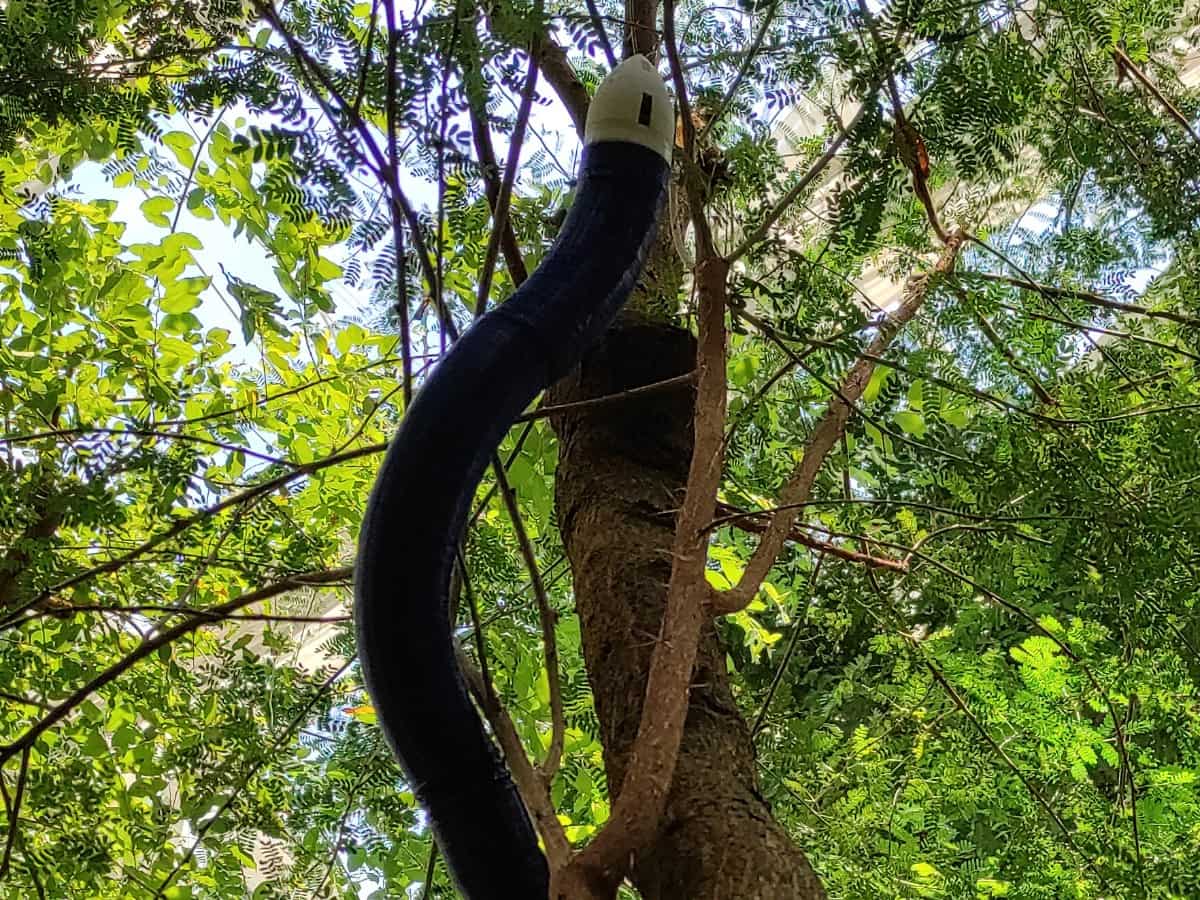
Innovation meets nature. A new innovative plant-inspired robot has been developed that climbs up structures just like climbing vines. This new innovation is named as FiloBot and has been developed by Emmanuela Dle Dottore and her team.
The team utilises a combination of plant behaviours like phototropism, negative phototropism and gravitropism and utilises these naturally occurring behaviours in high-tech robots.
The tests for FiloBot have been successful and displayed remarkable adaptability that adjusts its growth trajectory dynamically in response to moving light intensity.

Also Read |NASA’s orbiter ‘pings’ ISRO’s Chandrayaan-3 on the Moon
FiloBot: Nature-inspired robot that can revolutionise robotics
FiloBot is different from conventional climbing robots as it doesn’t depend on pre-programmed movements. It instead absorbs 3D printing filament through its head and extends its length over time, just like a creeper.
)
US ships in Indian Ocean ‘will be attacked’ if war resumes, warns Iran
)
Vibe vs Daayra box office collection day 2: Kunal Kemmu’s directorial stays ahead of Kareena Kapoor's crime thriller
)
Trump says he'll build an 'AI Force' and appoint a czar, for 'high IQ' people only
&im=FitAndFill=(700,400))
What TSMC's 2nm technology means for Apple
)
'Were you here to sell chickpeas?': Wasim Akram criticises Babar Azam's captaincy
)
Sikh bus driver assaulted, bus stolen and rammed into cars in England; video surfaces
)
Mark Carney mimics Trump in hilarious moment over C$70 billion clean-energy investment; room erupts in laughter
&im=FitAndFill=(700,400))
Top 10 countries in mathematics: See the world’s best performers in 2026
)
Trump signs Russia sanction bill. How will it impact India? WION Explains
)
BTS' fans question iHeartRadio’s treatment of group after brief festival set
)
Asian Games 2026: India win first medal as women’s 10m air rifle team claims silver
)
Samsung raises Galaxy S26 prices by Rs 20,000: Here’s what each model now costs
)
Trump defends AI amid growing alarm, announces new 'AI force' and promises an 'AI czar'
)
Iran sets 7 conditions to end war with US: What are Tehran’s demands?
)
S Jaishankar, former Army chief among high-profile names issued Delhi SIR notices
)
Trump announces ‘AI Force’ as debate grows over AI risks and regulation
)
Israeli President pardons combat medic who shot dead a badly wounded Palestinian attacker
)
Arvind Kejriwal, family members, Delhi CM Rekha Gupta get SIR notices
)
AI actress Tilly Norwood glitches mid-interview, switches from English to Chinese | Watch
)
Saudi vs Houthis: Houthis claim missiles & drones used in attack on key Saudi sites
)
Ed Sheeran addresses Macklemore's removal, Gaza conflict during Philadelphia concert: 'I cannot hide how I feel'
)
Saudi Arabia exits China-led mBridge digital currency platform amid Saudi-Houthi conflict
)
Italy to ban burqa and hijab in schools, limit foreign students per class: PM Giorgia Meloni
)
'Lot of things to learn from experienced players': Jayasuriya backs Rohit, Virat for 2027 ODI World Cup
)
9 women found dead near Johannesburg: South Africans rally, demand 'enough' to femicide
)
North Korea's nuclear tests triggered 1,399 earthquakes: Earth is still shaking | Gravitas
)
Several petrol pumps, other businesses to refuse UPI payments above Rs 2,000 from Oct 16: Is it legal?
)
Kampala-Ankara rift deepens: Uganda suspends military ties, seeks Fred Lumbuye's extradition
)
AUS vs ZIM, 3rd ODI: Ellis stars as Australia edge Zimbabwe by one wicket in last-over thriller
)
West Indies Squad for India Series: Hetmyer included for T20Is, Holder rested
)
China now makes advanced memory chips without the machines it was banned from buying
)
Harry Brook targets long reign at top of T20I rankings after Sri Lanka sweep
)
Trump in ‘deciding mode’ on Iran, says ‘very big things’ going to happen soon
)
Munich Mayor taps first keg to kick off Oktoberfest
"By equipping autonomous systems with transportable additive manufacturing techniques merged with bioinspired behavioural strategies, future robots can navigate unstructured and dynamic environments and even be capable of self-building infrastructure,”emphasised Del Dottore.
This new innovation has opened new potential impact of technology that can be applied in robotics, where adaptability and responsiveness redefine the capabilities of climbing robots.
Also Read |Turkey’s first astronaut launched on flight to International Space Station
Similar innovation has been led by Jessica Burgner-Kahrs at the University of Toronto Mississauga where her team has been working on developing snake-like robots that can be utilised in medical surgeries.
These robots are designed to be slender, flexible and extensible hands that could enable doctors to access difficult-to-reach places within the human body, offering a significant advancement in medical procedures.
If these robots are developed to their full potential, they can revolutionise the medical field by navigating intricate paths around vital tissues, making previously inoperable cases feasible.
Burgner-Kahrs highlights the transformative impact, stating, "Previously inoperable brain tumours might suddenly become operable."
Also Read |Japan's 'Moon Sniper' successfully lands on lunar surface, but solar cells not generating power
The development extends to semi-autonomous models, which, guided by surgeons, could use sensors to avoid obstacles, enhancing the precision and safety of surgeries.
A similar snake-like robot was unveiled by NASA’s Jet Propulsion Laboratory (JPL), which was specifically crafted to work on rough terrains of our solar system’s planets and moons.
The robot named Exobiology Extant Life Surveyor (EELS 1.0) is engineered to navigate diverse landscapes, including ice, sand, cliff walls, deep craters and lava tubes.
All these developments in plant-inspired and snake-like robots are significant steps in robotics that are inspired by nature and developed in labs.
(With inputs from agencies)