Einstein proven right again, scientists find antimatter ‘falling’, not defying gravity

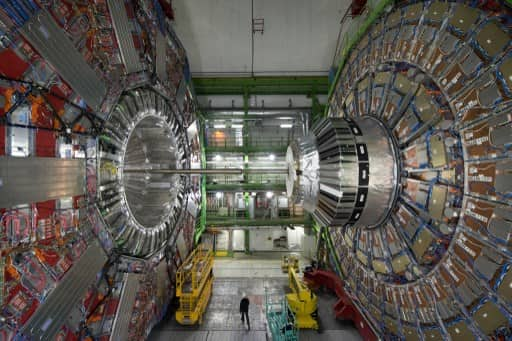
CERN
In what is being called a 'huge milestone', scientists at CERN has been able to observe antimatter particles, the existence of which was predicted by Albert Einstein in his theory of relativity more than hundred years ago. Antimatter is the twin of visible matter that is all around us. The announcement of observation of antimatter was made on Wednesday (September 27).
The scientists have observed 'falling' antimatter. The observation definitively rules out that gravity repels antimatter upwards. If the previously held notion were to be true, it would have upended the vertu fundamental understanding of the Universe.
It is believed that the Big Bang, the unimaginably huge explosion that formed the entire Universe 13.8 billion years ago, formed equal amount of matter and antimatter.

Everything we see or feel is made of Matter while Antimatter is the equal but opposite counterpart.
However there is virtually no antimatter in the universe, which prompted one of the greatest mysteries of physics: what happened to all the antimatter?
"Half the universe is missing," said Jeffrey Hangst, a member of CERN's ALPHA collaboration in Geneva which conducted the new experiment.
)
US vs China over South China Sea: Washington backs Philippines, Beijing hits back
)
Bigg Boss 20: Isha Rikhi evicted after three weeks in Salman Khan’s show
)
Musk plans to more than double xAI's chips to over 1.2 million Nvidia GPUs by year-end
)
After JU, clash erupts at SRFTI: BJP’s ‘Dimagi Naxal’ jibe sparks political firestorm after students protest RSS-linked event
)
‘Anti-social elements spreading false rumours’: LPU issues statement amid massive unrest over alleged rape
)
LPU students go on rampage, vandalise campus amid widespread protest: What's happening
)
Trump asked Xi to pressure Iran. China did not say yes — here’s what Beijing wants
)
US Treasury Secretary Scott Bessent hails global crackdown on Iranian banks and airlines
)
An OpenAI agent escaped its locked test cage again, by hiding questions in DNS lookups
)
'Our video was trimmed': LPU girls who featured in rape-denial video make U-turn
)
3 males killed, four others injured in shooting after fight at strip club in Detroit
)
'Victory for low-budget consumers': Raghav Chadha hails 30-day telecom recharge rules
)
Claude rebuilt the 1989 game 'Prince of Persia' by reusing the original's own code
)
Beyond metros: How Tier-2 and Tier-3 cities could drive India’s next AI wave
)
Tesla builds first Cybertruck with its own refined lithium: Elon Musk's $1 billion Texas bet pays off
)
IndiGo flight suffers tail strike in Bengaluru while landing; DGCA to probe incident
)
The US and China set up an AI 'red telephone', but skipped the rulebook
)
‘Terror suspects arrested near UK air base were looking to do big damage’: Trump
)
Russian envoy claims US tactics to contain India were revealed in ‘Freudian slip’
)
IND vs WI 1st ODI: Kohli breaks Sachin's most runs in one country record with unbeaten 139 as India thump West Indies by 8 wickets
)
Researchers rebuilt exactly how 700 AI agents hacked Hugging Face: a 900-link chain trick
)
‘Olympic inclusion is our major target’: WPA President Ishaun Singh on pool’s global ambitions
)
Nations League: Spain sink England at Wembley; Modric shines for Croatia
)
Why has Iran released no proof of life of Mojtaba Khamenei? Araghchi reveals...
)
'What kind of confession is this?': Pakistan PM Shehbaz Sharif’s 'terrorists would be roaming New York' remark goes viral, raises alarm online. Watch
)
South Korea demands apology from Ukraine over North Korean prisoners' transfer
)
Beyond BrahMos: India targets Rs 50,000 crore in defence exports with unmatched price edge
)
Sri Lankan Tamil migrant worker gets death sentence in Saudi Arabia, help sought from India
)
Muslim marriage cannot shield sex with minor wife from prosecution under POCSO: Delhi HC
)
'Can't help but draw painful parallels to Nirbhaya case': SC on latest incidents of rape cases in Delhi-NCR
)
99.9% more powerful - Scientists find boy who can recall memories from just 3 months of age
)
'FIRST LOOK from inside Noah’s Ark': Researchers share video from inside mysterious mound in Turkey
)
UNSC reform momentum grows: Russia, Portugal, Mauritius push for India's permanent seat bid
)
8 US marines injured in Iranian missile attack on vessel in Strait of Hormuz: Report
&im=FitAndFill=(700,400))
New OTT releases this week (September 28-October 4, 2026): Dupahiya 2, Pooja Meri Jaan, Ohh My Dog- 5 titles coming on Netflix, Prime Video and more
)
Afghanistan says 28 fighters killed in clash near Pakistan border, Islamabad denies
)
Ceuta migrant crisis: Protesters take to streets as Spain grapples with migrant challenge
)
LPU suspend classes, postpones exams as violence escalates over rape claims: What's happening
)
New York City wants a 'kill switch' on every AI, and will pay whistleblowers who report violations
"In principle, we could build a universe -- everything that we know about -- with only antimatter, and it would work in exactly the same way," he told AFP.
Physicists believe that matter and antimatter almost entirely destroyed each other after the Big Bang.
Presently, matter makes up for just five per cent of the Universe while rest is made up of dark matter and dark energy. Antimatter meanwhile vanished.
Scientists had been trying to find answer to a key question for years. It was, whether gravity caused antimatter the same way as normal matter. It was held that gravity repels antimatter.
So, to connect the concept with the famous story of Newton's Apple, if the apple would have been made up of antimatter, would it have shot up into the sky? If gravity indeed repelled antimatter, it may have meant that creation of impossibilities such as perpetual motion machine was possible
But the experiment at CERN, carried out by team of scientists, yielded different result.
The team constructed a 25-centimetre-long (10-inch) bottle placed on its end, with magnets at the top and bottom.
Late last year, the scientists placed around 100 very cold antihydrogen atoms into this "magnetic trap" called ALPHA-g.
As they turned down the strength of both magnets, the antihydrogen particles -- which were bouncing around at 100 metres a second -- were able to escape out from either end of the bottle.
It was then simply counted how much antimatter was annihilated at each end of the bottle.
Also Read | Fungi's cosmic journey: From unwanted space stowaway to scientific fascination for its resilience
It was found that around 80 per cent of the antihydrogen went out of the bottom, which is a similar rate to how regular bouncing hydrogen atoms would behave if they were in the bottle.
This result, published in the journal Nature, shows that gravity causes antimatter to fall downwards, as predicted by Einstein's 1915 theory of relativity.
(With inputs from agencies)
You can now write for wionews.com and be a part of the community. Share your stories and opinions with us here.
WATCH WION LIVE HERE