China working on world's largest deep sea telescope to explore cosmic rays origin


Telescope
Chinese sectists have started building a massive neutrino telescope in the South China Sea, South China Morning Post (SCMP) reported on Wednesday (Oct 18), providing some other details. The telescope is said to be the world's largest "ghost particle" detector, which will be 3,500 metres beneath the surface of the ocean.
The scientists hope that the telescope will help them to the origin of cosmic rays, which will solve the century-old puzzle of the exploration of the extreme universe.
The Tropical Deep-sea Neutrino Telescope (Trident), which is named Hailing (Ocean Bell) in Chinese, will be the largest and most advanced in the world when completed in 2030, the project team said.

Also read:'Nature's missing law': Scientists propose 'survival of fittest' like law for non-living things
The report stated that the Trident array will be anchored to the seabed 3.5km below the Western Pacific Ocean. The instrument will scan the surrounding seawater for the flashes of light generated when cosmic neutrinos collide with water molecules.
Neutrinos are the most abundant particles that have mass in the universe. It is said that every time atomic nuclei come together or break apart, they produce neutrinos.
)
US Supreme Court backs Trump administration's use of SAVE database to check voter citizenship
)
Beijing to Washington! Ivanka Trump makes a style statement in Chinese designer Guo Pei for President Xi Jinping’s White House welcome
)
Outrage erupts after 3-year-old is married to 60-year-old man in Pakistan, link to her sister's murder being probed
)
Trump gifts Xi a bald eagle sculpture at White House dinner: Here’s what it symbolises
)
‘Not just a local tragedy’: Nepal PM Shah warns UN of growing climate threat, says Nepal floods were 'a warning to the world'
)
India-New Zealand FTA is ‘an expression of trust’, NZ High Commissioner Patrick John Rata says
)
OpenAI AI Agents hacked 4 websites before Hugging Face, researchers reveal
)
Pentagon quietly adds 37 wounded troops to Iran war tally without explaining when or how
&im=FitAndFill=(700,400))
New Friday OTT releases (September 25, 2026): Don’t Be Shy, Hunkkaar: The Roar, Mango Pachcha- 6 movies and TV shows on Netflix, Prime Video and more
)
Watch: PM Modi joins Bhajan Clubbing event in Delhi on Deendayal Upadhyaya's birth anniversary
)
‘Attack on Mecca a red line for Pakistan’: Shehbaz Sharif warns Houthis at UN
)
Tesla is preparing something big for Optimus: new Gen 3 models surface in app
)
Bias or safety concerns? Bengaluru CEO says firm will not hire men from UP, Bihar, Rajasthan, MP. Here's why
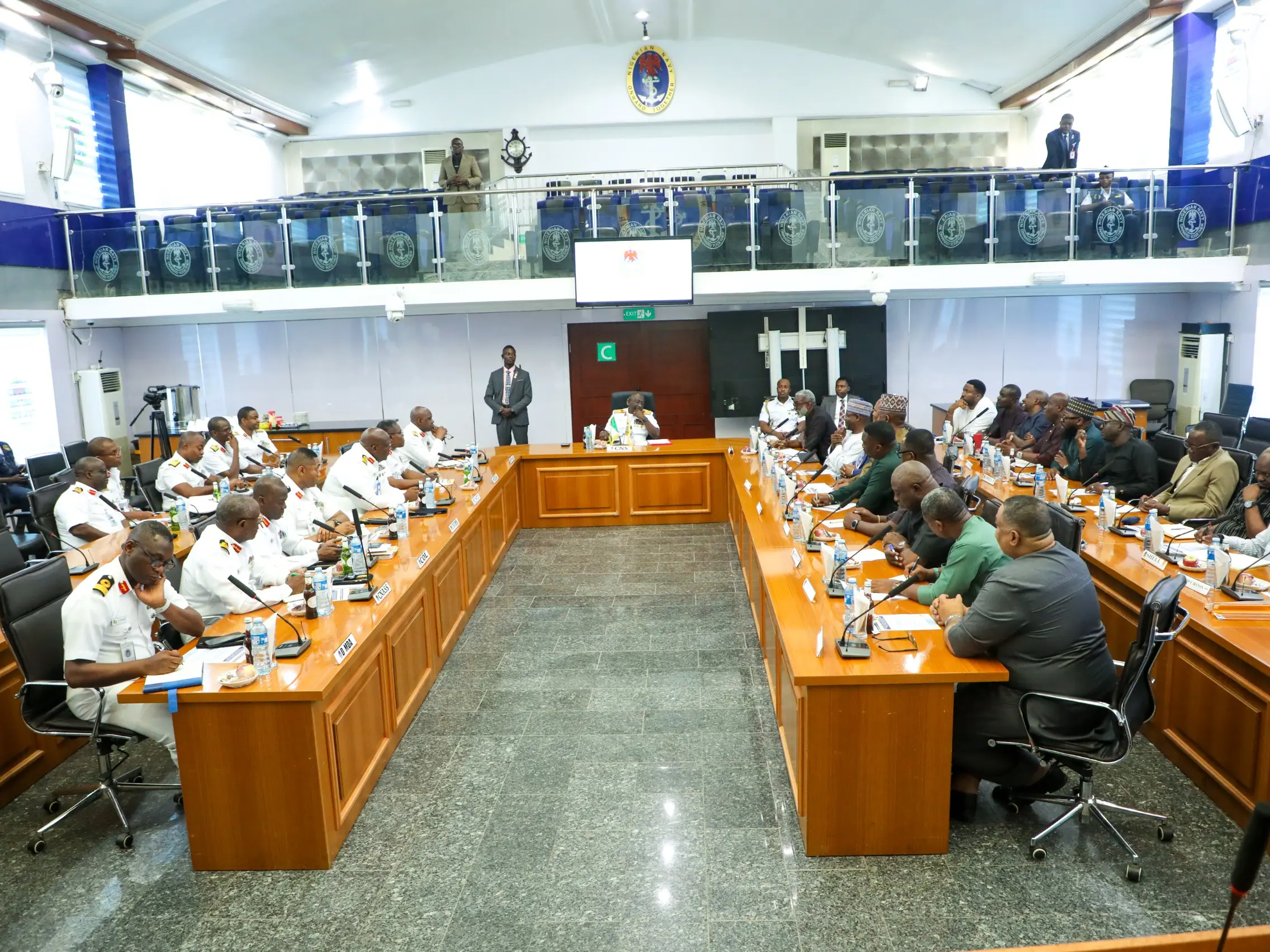)
Nigeria Navy moves to boost oil security, tackle crude theft and infrastructure threats
)
Scientists detect first radio signals directly from faraway planet
)
‘It is all possible’: Putin weighs next steps on Ukraine talks, rules out Europe conflict
)
Saudi Arabia, Turkey and Pakistan to hold urgent military talks amid intensifying Houthi attacks
)
Ex-Liverpool forward Mohamed Salah banned from driving in United Kingdom for six months
)
10,000 gather in support of 87-year-old forcefully evicted from home of 71 years
)
Meet Adrian Abraham: 9-year-old Indian-origin guitar prodigy aiming for a Guinness World Record
)
Red Sea crisis: Houthis promise not to target European ships; UNSC condemns Saudi attacks
)
'Blockbuster' nor'easter develops an eye similar to hurricanes as warnings are issued
)
Trump-Xi summit wrap: Big pageantry, Iran talks, few major developments and more meetings planned
)
'Making history': Xi Jinping praises Trump as US-China leaders dine at White House
)
'We do not wish to continue. It's America that must choose': Iran president Pezeshkian calls on US to end war
)
Exclusive | 'We always want to improve': Suruchi, Kamaljeet after winning Asian Games gold
)
Bollywood mourns Mushtaq Khan: Sunny Deol, Rajpal Yadav and others pay tribute
)
Myanmar training camp case: US national, 6 Ukrainians allowed to meet their families abroad
)
99.9% more powerful - Scientists find boy who can recall memories from just 3 months of age
)
'FIRST LOOK from inside Noah’s Ark': Researchers share video from inside mysterious mound in Turkey
)
WATCH | As Shehbaz Sharif claims Pakistan’s ‘victory’ during 2025 conflict, Indian diplomat R Srinivas laughs at UN
)
'Fund people, not bombs': Hundreds take to New York streets as Netanyahu delivers speech at UN; dozens arrested
)
Susan Sarandon and Hannah Einbinder detained by NYPD outside UN Headquarters
)
'A terrorist country is asking me that question?': Jaishankar hits back at Pakistani journalist at UN; flags attacks on commercial shipping
)
Army chief reviews operational preparedness along LoC, visits mega eye camp in Tangdhar
&im=FitAndFill=(700,400))
‘Absolutely savage, sickening’: Zelensky slams Russia as daytime strikes kill 5 in Kyiv
)
US court backs Pentagon's decision to exclude Anthropic over Claude AI restrictions
As quoted, Xu Donglian of Shanghai Jiao Tong University, the project's chief scientist and spokeswoman, said: "Using Earth as a shield, Trident will detect neutrinos penetrating from the opposite side of the planet."
"As Trident is near the equator, it can receive neutrinos coming from all directions with the rotation of the Earth, enabling all-sky observation without any blind spot," Xu further added while speaking at a news conference on Tuesday.
SCMP report mentioned that about 100 billion ghost particles, called neutrinos, pass through each square centimetre of your body every second.
But still, their nonexistent electrical charge and negligible mass mean they barely interact with other types of matter.
During the press conference, project chair Jing Yipeng said that the telescope will also help to test space-time symmetries. According to him, it will also search for quantum gravity and indirectly search for dark matter.
Xu and her colleagues from some of China’s top universities said in a paper published on Monday by the international journal Nature Astronomy that Trident is taking shape about 540km south of Hong Kong.
Researchers have written in the journal that "with its advanced photon-detection technology and large dimensions, TRIDENT expects to observe the IceCube steady source candidate NGC 1068 with 5σ significance within 1 year of operation."
"This level of sensitivity will open a new arena for diagnosing the origin of cosmic rays and probing fundamental physics over astronomical baselines," it added.
WATCH WION LIVE HERE
You can now write for wionews.com and be a part of the community. Share your stories and opinions with us here.