
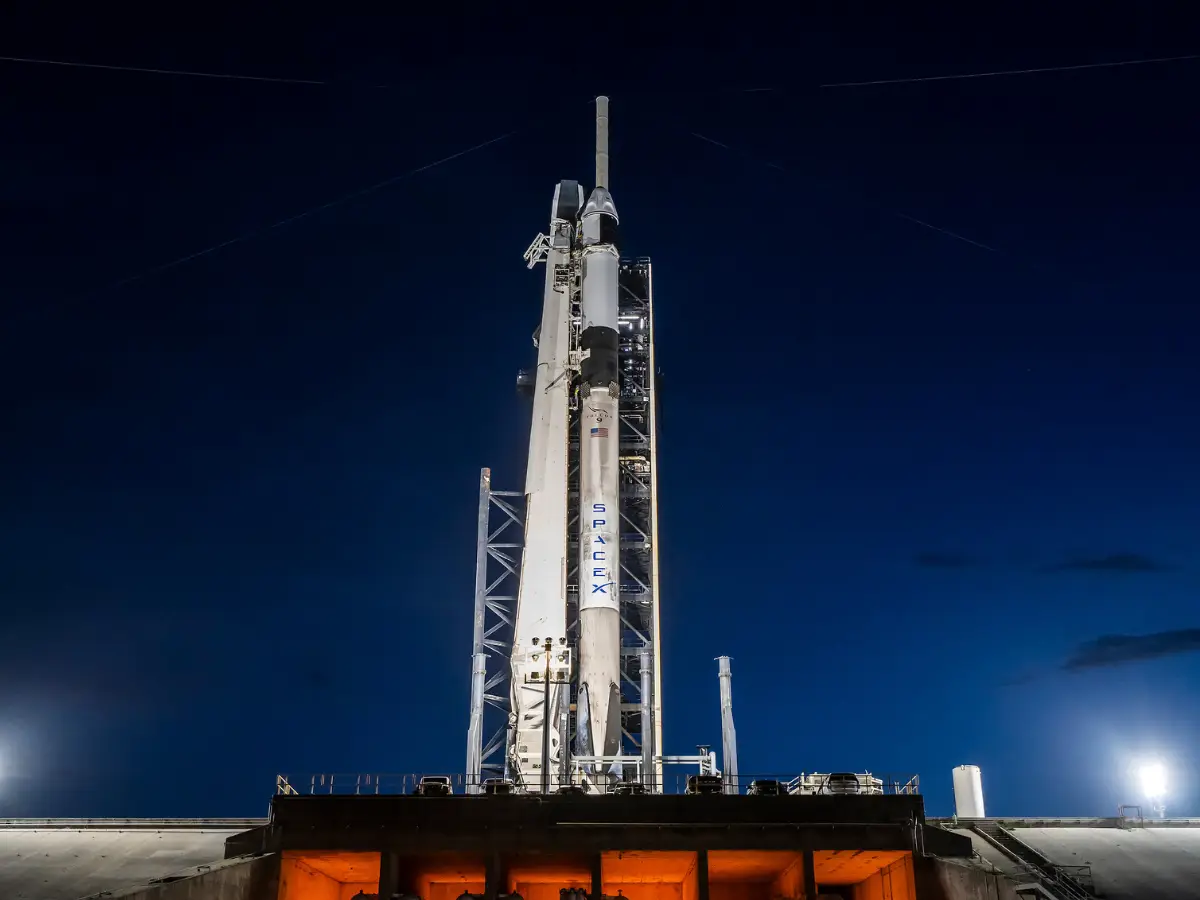
&imwidth=800&imheight=600&format=webp&quality=medium "Axiom-4 mission delayed again: Understanding LOX leak issue")
The Axiom-4 mission represents a historic milestone for India's space programme, marking the first time an Indian astronaut would visit the International Space Station (ISS). Group Captain Shubhanshu Shukla, a decorated Indian Air Force pilot, was set to become India's second astronaut in space after Wing Commander Rakesh Sharma's pioneering journey in 1984. This mission is a collaborative effort between the Indian Space Research Organisation (ISRO), NASA, and Axiom Space, showcasing India's growing partnership in international space exploration.
The mission is particularly significant as it marks the return to human spaceflight for India, Poland, and Hungary after more than 40 years. The crew of four includes Commander Peggy Whitson (a veteran NASA astronaut), Pilot Shubhanshu Shukla from India, and mission specialists Sławosz Uznański-Wiśniewski from Poland and Tibor Kapu from Hungary. During their planned two-week stay at the ISS, the crew was scheduled to conduct over 60 scientific experiments representing 31 countries, making it one of the most research-intensive missions to the space station.
Technical issue: Understanding what went wrong

The Axiom-4 mission, originally scheduled for launch on June 11, 2025, has been postponed due to a critical technical issue discovered during pre-launch testing. To understand why this postponement was necessary, let's break down the technical terms in simple language.
What is a static fire test?
Think of a static fire test as a "dress rehearsal" for the rocket's engines. Just like how a pilot tests an aircraft engine before takeoff, rocket engineers fire up the rocket's engines while it's still firmly bolted to the launch pad. The rocket doesn't move anywhere – it's held down by massive clamps and restraints.
Trending Stories
)
War is making Russia stronger? How Ukraine is shaping Moscow’s next generation of weapons
)
PM Modi and China's Xi offered to help resolve Russia-Ukraine war: Kremlin
)
Turkish Airlines plane flies through a storm three times, triggering severe turbulence
)
Humans may lose control of AI: Anthropic CEO calls for slowdown, Altman, Musk back him
)
Crude oil prices jump more than $107 per barrel following Houthi attacks on Saudi
)
‘India did extremely well’: South African President Cyril Ramaphosa praises BRICS leadership
)
Russian drone hits Warsaw-bound train near Polish border, Zelensky accuses Moscow of ‘deliberate’ targeting
)
NEET-UG to move to computer-based test soon, NTA DG says ‘CBT is the future’
&im=FitAndFill=(700,400))
Why Chinese PL-15 air-to-air missiles use dual-pulse motors compared to European interceptors
)
Iran, India agree to deepen humanitarian and political ties, President Pezeshkian says
)
Delhi’s balancing act: BRICS serves as a stage for West Asia diplomacy
)
First naval drone battle? Ukraine says Sargan 3000 sank Russian unmanned boat
)
Trump says Canada eager to reach a deal, it could come ‘fairly soon’ if Ottawa treats US farmers better
&im=FitAndFill=(700,400))
Why European Meteor missiles use ramjet engines compared to standard US solid rockets
)
Practical Magic 2 breaks Spidey spell over North American box office
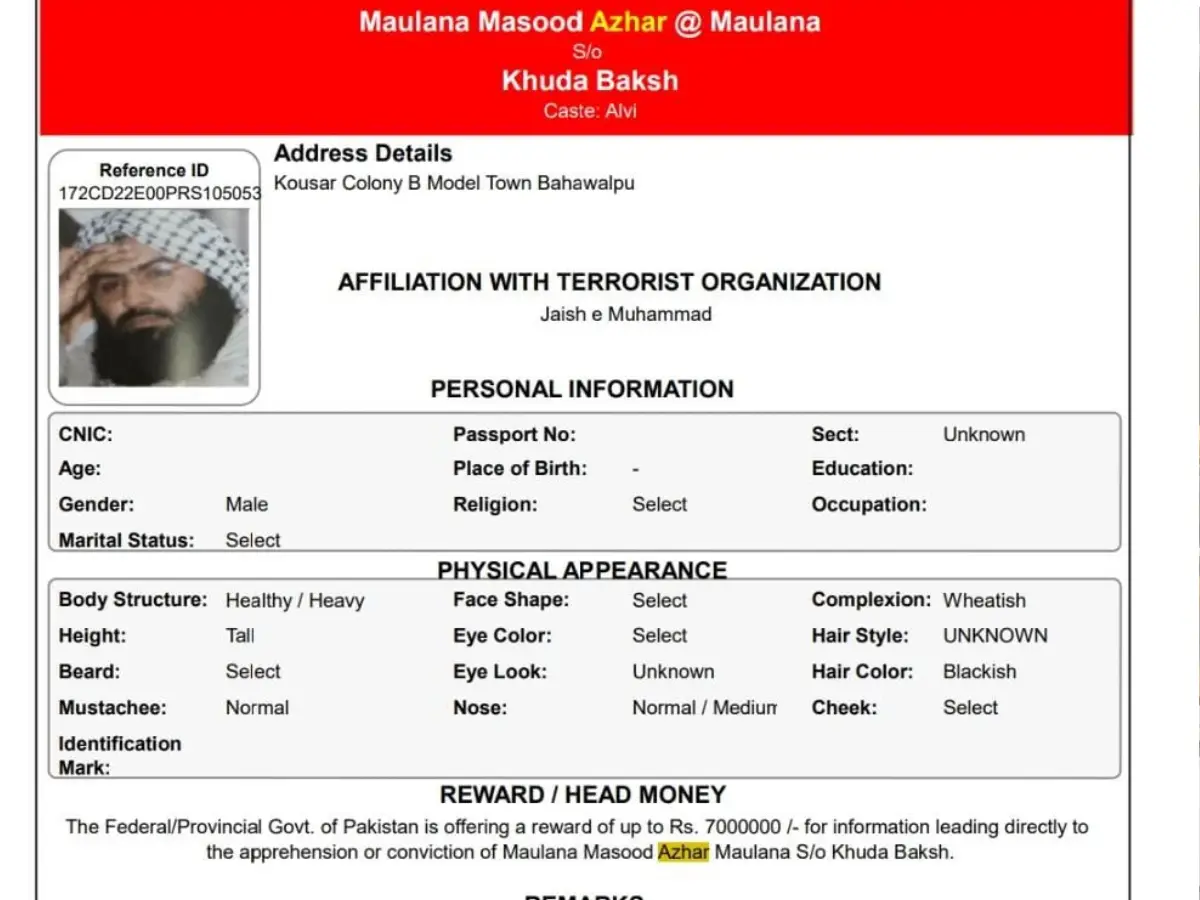)
Pakistan puts Pak Rs 70 lakh bounty on UN terrorist Masood Azhar; move draws skepticism in Delhi
)
800 million years old - Scientists discover 'fingerprints' of supercontinent Gondwana in ancient rocks
)
Indian importers urge Bangladesh to lift export ban on 'Hilsa' fish ahead of Durga Puja
&im=FitAndFill=(700,400))
New OTT releases this week (September 14-20, 2026): Lust Stories 3, Waiting Hai, Irumudi- 5 new titles coming on Netflix, Prime Video and more
)
Russia proposes to build 360 kmph Ivolga FG trains in India: What happened on sidelines of BRICS
)
Liam Neeson sparks romance rumours after holding hands with Stella Stocker at TIFF 2026
&im=FitAndFill=(700,400))
From Rinku Singh to Mayank Yadav, 5 players dropped from India’s squad for Afghanistan T20Is
)
'Huge destructive power': North Korea calls its latest missile launches 'live-fire drill' even as US dismisses 'immediate threat'
)
‘Let’s go’: Newly declassified videos show dramatic rescue of US Air Force officers downed in Iran
)
Did China give Iran intel before US base strike that killed 3 troops? Trump says, 'You’re right...'
&im=FitAndFill=(700,400))
Meet top 5 batters fastest to 3000 runs in T20Is
)
Women's Asia Cup 2026: India denied trophy once again despite winning the title
)
Woman removes all her clothes on American Airlines flight, performs 'indecent acts'; arrested
)
Israeli minister calls to strip Gaza film directors of citizenship
)
‘Want to reset ties with India, have engagement based on mutual interests,’ says Bangladesh minister
)
China thinned Himalayan troop presence in 2025, India defence report says; terms border situation 'stable'
)
China discovers vast gold and silver 'mine' in the Pacific with unheard-of deposits
)
Meghan Markle shares first glimpse of family life with Prince Harry and children in UK
)
Did India risk its US trade deal despite softer stance at BRICS?
During this test, the rocket's engines roar to life for a few seconds, allowing engineers to check if everything is working properly. They monitor fuel flow, engine performance, temperatures, pressures, and hundreds of other parameters. It's like taking your car to a mechanic who revs the engine while it's parked to check if it's running smoothly.
What does ‘seven-second hot test’ mean?
A "seven second hot test" simply means the rocket engines were fired for exactly seven seconds during the static fire test. Why seven seconds? This duration is long enough to check all the engine systems and parameters, but short enough to conserve fuel and minimise wear on the equipment.
Imagine lighting a gas stove burner for seven seconds – long enough to see if it ignites properly, burns steadily, and has the right flame colour, but not so long that you waste gas or overheat the stove. Similarly, seven seconds gives engineers enough data to verify that the rocket engines are performing as expected.
Understanding rocket anatomy: Booster stage and propulsion bay
To understand where the leak occurred, it's helpful to know how a rocket is structured. Think of the Falcon 9 rocket as a multi-story building:
Booster stage (first stage): This is the bottom section of the rocket – like the ground floor of a building. It contains nine powerful Merlin engines and does the heavy lifting during launch. Just as the ground floor supports the entire building, the booster stage supports the entire rocket and provides the main thrust to lift off from Earth and climb through the atmosphere. After about 2-3 minutes of flight, when the rocket reaches a certain altitude, this stage separates and either lands back on Earth (for reuse) or falls into the ocean.
Propulsion bay: Think of this as the "engine room" within the booster stage. Just like a ship has an engine room where all the machinery is housed, the propulsion bay contains all the equipment that feeds fuel and oxygen to the rocket engines. This includes pumps, valves, pipes, tanks, and control systems. It's like the kitchen of a restaurant – you don't see it from the dining area, but it's where all the important work happens to make everything function.
The propulsion bay is located at the bottom of the booster stage, surrounding and supporting the nine Merlin engines. When engineers say they found a leak "in the propulsion bay," they mean somewhere in this engine room area – possibly in the pipes carrying liquid oxygen, the valves controlling flow, or the connections between different components.
What is LOX and why is it critical?
LOX stands for Liquid Oxygen – basically, the oxygen we breathe, but super-cooled to -183°C (-297°F) until it becomes a liquid. Why use liquid instead of gas? Imagine trying to carry enough air for a long journey – you'd need enormous tanks. But if you could compress all that air into liquid form, you'd need much smaller containers. That's exactly why rockets use liquid oxygen.
In a rocket engine, fuel (like kerosene) cannot burn without oxygen – just like a candle cannot burn in a vacuum. Since space has no air, rockets must carry their own oxygen supply. LOX serves as this oxygen source, mixing with fuel to create the controlled explosions that propel the rocket forward.
The leaked LOX is like having a gas leak in your kitchen – potentially dangerous and definitely something that needs immediate attention before you can safely cook (or in this case, launch).
How was the leak discovered, and why is it dangerous?
During the seven-second hot test, sensors and cameras monitor every aspect of the rocket's performance. Engineers detected that LOX was escaping from somewhere in the propulsion bay – possibly from a valve, pipe joint, or seal that wasn't holding properly.
While this might sound minor, a LOX leak is extremely serious for several reasons:
Fire and explosion risk: LOX makes everything around it highly flammable. Even materials that normally don't burn easily can ignite violently in the presence of concentrated oxygen. It's like having a super-charged environment where any spark could cause a massive fire.
Extreme cold damage: At -183°C, escaping LOX can freeze and damage other components in the propulsion bay. Imagine pouring liquid nitrogen on electronic equipment – it can crack pipes, freeze valves shut, and make metal components brittle.
Engine performance issues: If LOX is leaking out, it means the engines aren't getting the right amount of oxygen for proper combustion. This could cause engines to perform poorly, shut down unexpectedly, or even explode during flight.
Crew safety: With four astronauts aboard, any system malfunction during launch could be catastrophic. The launch and initial ascent are the most dangerous parts of any space mission.
Why was this postponement was necessary?
Some people might wonder if such a delay is really necessary for what seems like a small leak. However, the space industry has learned from tragic accidents that seemingly minor problems can lead to disasters.
The postponement demonstrates several important principles:
Zero tolerance for known risks: In human spaceflight, there's a rule – if you know about a problem, you fix it before flying. No exceptions. This approach has made modern spaceflight much safer than it was in earlier decades.
International standards: The collaboration between ISRO, SpaceX, Axiom Space, and NASA means that the highest international safety standards must be met. Each organization has its own rigorous requirements, and all must be satisfied.
Learning from history: Space agencies remember accidents like the Challenger and Columbia disasters, where small problems led to tragic losses. Today's cautious approach prevents such tragedies.
Technical excellence: India's participation in this mission showcases the country's commitment to world-class space operations. Being willing to delay shows ISRO's dedication to doing things right, not just fast.
The Repair Process: What happens next
Fixing the LOX leak involves several steps:
Finding the Exact Problem: Engineers must locate exactly where the leak is occurring. This might involve detailed inspections, pressure tests, and examining every component in the propulsion bay.
Making Repairs: Depending on the source, repairs might involve replacing faulty seals, tightening connections, or swapping out damaged components entirely.
Testing the Fix: After repairs, engineers will run more tests to ensure the problem is solved and no new issues have been created.
Final Validation: Multiple safety reviews and possibly another static fire test will verify that everything is working perfectly.
Regulatory Approval: NASA and other authorities must approve all repairs before giving permission for launch.
This process might take days or weeks, depending on the complexity of the problem. But this time investment is essential for mission success and crew safety.
A Symbol of Responsible Space Exploration
While disappointing for those eagerly awaiting this historic mission, the postponement actually demonstrates the maturity of India's space programme. ISRO's willingness to delay the mission shows that the organization prioritizes safety over schedule pressure – a hallmark of world-class space agencies.
This careful approach ensures that when Group Captain Shukla finally makes his journey to space, it will be as safe as humanly possible. The delay also allows time for additional preparations and checks, potentially making the eventual mission even more successful.
Looking Forward
The Axiom-4 mission will eventually launch, carrying with it the hopes and dreams of millions of Indians. When it does, Group Captain Shukla will not only make history as the first Indian to visit the ISS but will also represent India's commitment to international cooperation and technical excellence in space exploration.
The postponement serves as a reminder that space travel, despite decades of advancement, remains one of humanity's most challenging endeavors. Every successful mission is built on countless hours of careful preparation, testing, and unwavering attention to safety. This methodical approach is what makes it possible for humans to safely journey to the stars.
In the words often used in the space industry: "Better to be on the ground wishing you were in space, than in space wishing you were on the ground." The current delay ensures that when the Axiom-4 crew finally reaches the ISS, they'll arrive safely and ready to conduct groundbreaking research that will benefit all of humanity.
