Black hole in the Milky Way might be sending mysterious radio signals

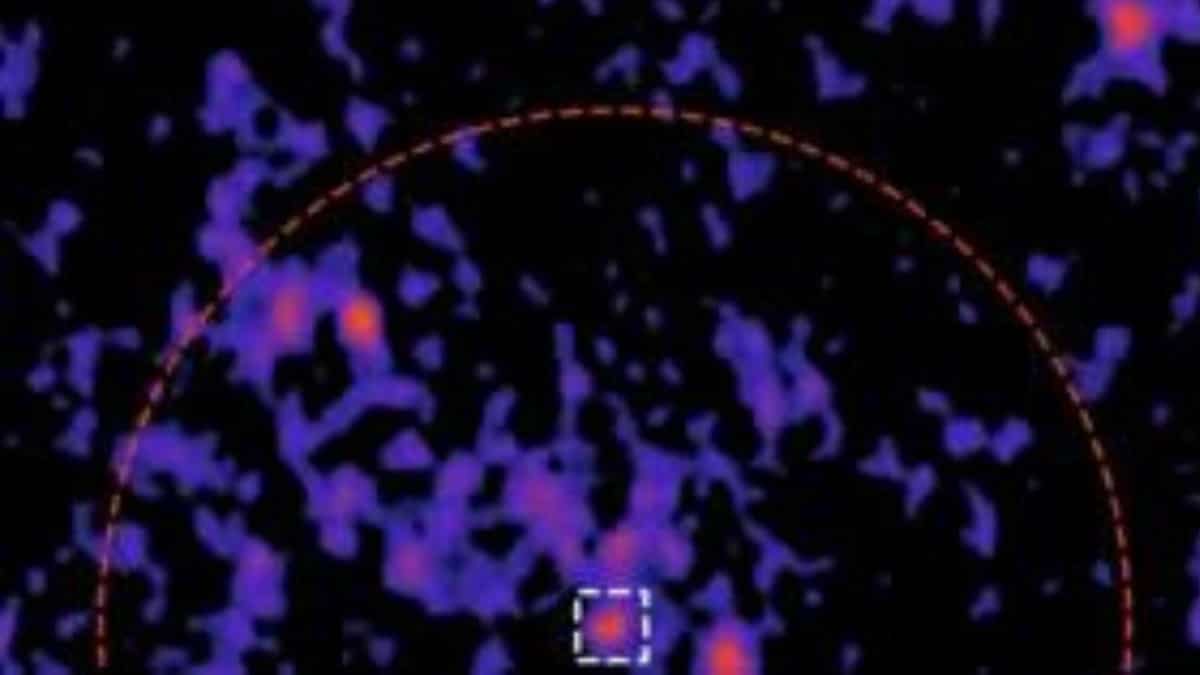
47 Tucanae
A middle-sized black hole in the middle of one of the brightest globular clusters in the Milky Way galaxy may be emitting mysterious radio signals.
According to a study published inThe Astrophysical Journal,a medium-sized black hole or a pulsar, a fast-spinning neutron star, might be emitting radio signals. If it is a black hole, it would be a first-of-its-kind discovery. Scientists found the radio signal while scanning the 47 Tucanae cluster with the Australia Telescope Compact Array (ATCA) in New South Wales,Space.com reported.

Ancient groupings of stars scattered around the Milky Way galaxy, or globular clusters, are densely packed with stars more than other regions of the galaxy. In the case of 27 Tucanae, there are over one million stars in a sphere with 120 lightyears diameter and can be observed with the naked eye.
Researchers from the International Centre for Radio Astronomy Research (ICRAR) created the most detailed image of 47 Tucanae with 450 hours of radio measurements with ATCA. They found an unusual radio wave source in the centre, around 14,500 lightyears from the Sun. They believe that a middle-sized black hole or a pulsar might be producing it.
ALSO READ |Asteroid crashes into Earth over Germany just hours after being discovered
)
Mushtaq Khan dies at 56: When Welcome actor opened up about his salary for iconic role Ballu
)
Hawaii braces for Hurricane Nolo: NOAA warns of flash flooding and mudslides
)
Bangkok declares flood disaster as heavy rain submerges roads and homes
)
US Supreme Court backs Trump administration's use of SAVE database to check voter citizenship
)
Outrage erupts after 3-year-old is married to 60-year-old man in Pakistan, link to her sister's murder being probed
)
Donald Trump shares image of Xi's arrival in Washington, carries signs of AI
)
Pakistan deploys over 20,000 security personnel as PTI vows march for Imran Khan's release
)
Anthropic says Claude found a new gene-editing enzyme but science isn't confirmed
)
Farhan, who went viral for AK47 celebration vs India in Asia Cup, hopes to lead Pakistan beyond Asian Games
)
Prince Harry offers rare glimpse into Archie and Lilibet’s life after UK move
)
OpenAI AI Agents hacked 4 websites before Hugging Face, researchers reveal
&im=FitAndFill=(700,400))
New Friday OTT releases (September 25, 2026): Don’t Be Shy, Hunkkaar: The Roar, Mango Pachcha- 6 movies and TV shows on Netflix, Prime Video and more
)
Asian Games 2026: India face Afghanistan in quarterfinal on Sep 28; Pakistan clash with Hong Kong
)
‘Attack on Mecca a red line for Pakistan’: Shehbaz Sharif warns Houthis at UN
)
Death toll rises to 64 in Indonesia's Java Sea ferry incident; 71 still missing
)
‘I rejected it’: Trump confirms turning down Iran’s proposal to reopen Hormuz, claims Tehran is losing ‘badly’
)
Nigeria Navy moves to boost oil security, tackle crude theft and infrastructure threats
)
Indian diplomat Petal Gahlot raises deteriorating situation in Pakistan-occupied Kashmir in right of reply at UN
)
'Countries far from conflict are penalised': Jaishankar calls for Gulf peace, seafarer safety at UN
)
Scientists detect first radio signals directly from faraway planet
)
‘It is all possible’: Putin weighs next steps on Ukraine talks, rules out Europe conflict
)
Global community 'absent' in Gulf crisis: Saudi at UN calls for freedom of navigation, pre war status for Hormuz
)
The Paradise: Nani reacts to mixed reviews from critics and audience; ‘I have also learnt from the flaws’
)
Trump rejects Iran's 7-day ceasefire proposal as US weighs renewed bombing after midterms: Report
)
Gaza's war turned environmental damage into second crisis
)
Trump-Xi summit wrap: Big pageantry, Iran talks, few major developments and more meetings planned
)
'What kind of confession is this?': Pakistan PM Shehbaz Sharif’s 'terrorists would be roaming New York' remark goes viral, raises alarm online. Watch
)
Manchester City found guilty: Premier League delivers its verdict on the FFP charges
)
Myanmar training camp case: US national, 6 Ukrainians allowed to meet their families abroad
)
'FIRST LOOK from inside Noah’s Ark': Researchers share video from inside mysterious mound in Turkey
)
Cindy Crawford’s son Presley Gerber cremated as death probe continues
)
WATCH | As Shehbaz Sharif claims Pakistan’s ‘victory’ during 2025 conflict, Indian diplomat R Srinivas laughs at UN
)
'A terrorist country is asking me that question?': Jaishankar hits back at Pakistani journalist at UN; flags attacks on commercial shipping
)
Russia will achieve Ukraine war aims; Europe doing everything to block peace talks: Lavrov at UN
)
‘Serial practitioner of terrorism’: Jaishankar calls out Pakistan’s ‘state-sponsored’ terror at UNGA
)
US court backs Pentagon's decision to exclude Anthropic over Claude AI restrictions
"If this signal turns out to be a black hole, it would be a highly significant discovery and the first-ever radio detection of one inside a cluster," said Alessandro Paduano, lead author of the study and a former PhD student at Curtin University in Perth, Australia. He added, "While intermediate-mass black holes are thought to exist in globular clusters, there hasn't been a clear detection of one yet."
Supermassive black holes at the centre of galaxies can be as gigantic as millions, or even billions, of suns. Medium-sized black holes are the missing connection between stellar black holes, left over from the deaths of giant stars and supermassive black holes.
Tim Galvin, a research scientist at CSIRO and co-author of a paper on the study, said, "This project has stretched our software to its limits in terms of both data management and processing, and it has been really exciting to see the wealth of science that these techniques have enabled."
Arash Bahramian, an astronomer at Curtin Institute of Radio Astronomy who oversaw the project, added, "It gives us a glimpse of the exciting capabilities the next generation of radio telescopes will achieve when they come online."
(With inputs from agencies)