Meteoric iron present in early Iron Age ornaments in Poland: Study

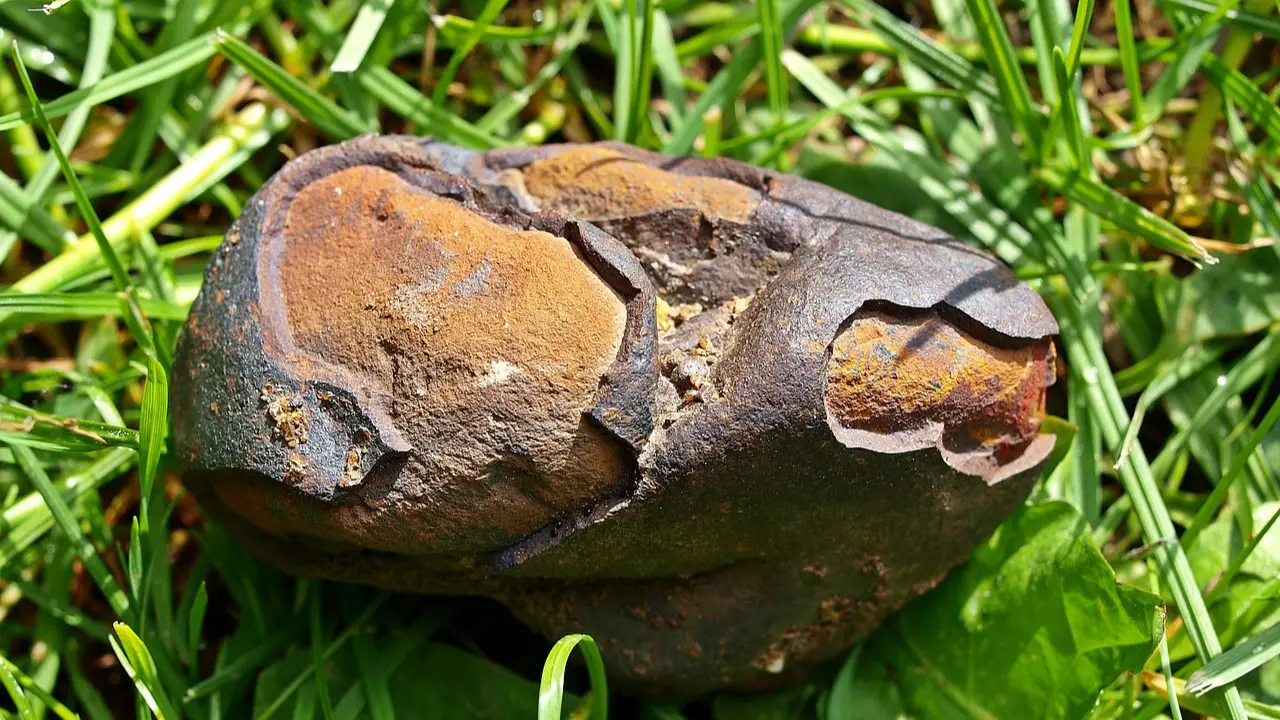
Science & Tech | Learn about the unique ataxite meteorite's role in early iron artefacts, featuring high nickel content, indicating rare celestial origins for these ancient relics.
A recent study, which was conducted to determine the origin of iron smelting, found that meteoric iron was present in Early Iron Age ornaments in Poland.
Meteoric iron, also known as meteorite iron, is a type of iron that originates from meteorites. They are fragments of asteroids or other celestial bodies that have fallen to Earth.
Meteoric iron is formed when a meteorite enters Earth's atmosphere and undergoes intense heat and pressure, causing the iron to melt and solidify into a unique crystalline structure.
The study, published in the Journal of Archaeological Science: Reports, has been carried out by Dr Albert Jambon and his colleagues.
"The point of my research is to find out who, when, and where the iron smelting was discovered. To that end, we need to analyze archaeological irons and check whether they are meteoritic or smelted," Dr Albert Jambon said as quoted by phys.org.
Trending Stories
)
)
)
)
)
)
)
)
)
)
)
)
)
)
)
)
)
)
&im=FitAndFill=(700,400))
)
)
)
&im=FitAndFill=(700,400))
)
&im=FitAndFill=(700,400))
&im=FitAndFill=(700,400))
)
To conduct the study, the researchers analysed two Early Iron Age cemeteries and their iron artefacts, Częstochowa-Raków and Częstochowa-Mirów.
The cemeteries, which belonged to the Lusatian Culture, are located in southern Poland, roughly 6 km apart. They were dated to the Hallstatt C to C/D period, ca. 750–600 BCE.
The researchers recovered 26 iron artefacts, including bracelets, ankle rings, knives, spearheads and necklaces, from the various graves. They used a variety of analytical methods, such as X-ray microtomography, Scanning Electron Microscopy (SEM) with Energy Dispersive Spectroscopy (EDS) and portable X-ray fluorescence (p-XRF) analysis, to ascertain the material composition and elemental distribution.
Also read: Can divorce be predicted? Study explores relationship between people's values and divorce
What did the expert say?
The researcher found that four of the artefacts were at least partially composed of meteoric iron. They studied nickel levels in the iron to determine that the iron artefacts had been made from an ataxite meteorite, which is an extremely rare iron meteorite with a high nickel content.
"We can conclude that there is a high likelihood that there was a witnessed fall rather than a lucky find. Iron meteorites may be large (hundreds of kg), but this may actually be a problem. Large pieces are not workable, and you need to separate small pieces (less than one kg), which is hardly possible with the tools of the Iron Age (see, e.g., the pieces of iron worked by the Inuits)," Dr Jambon explained.
(With inputs from agencies)