A video game tool can accurately identify autism in children with 80% success rate

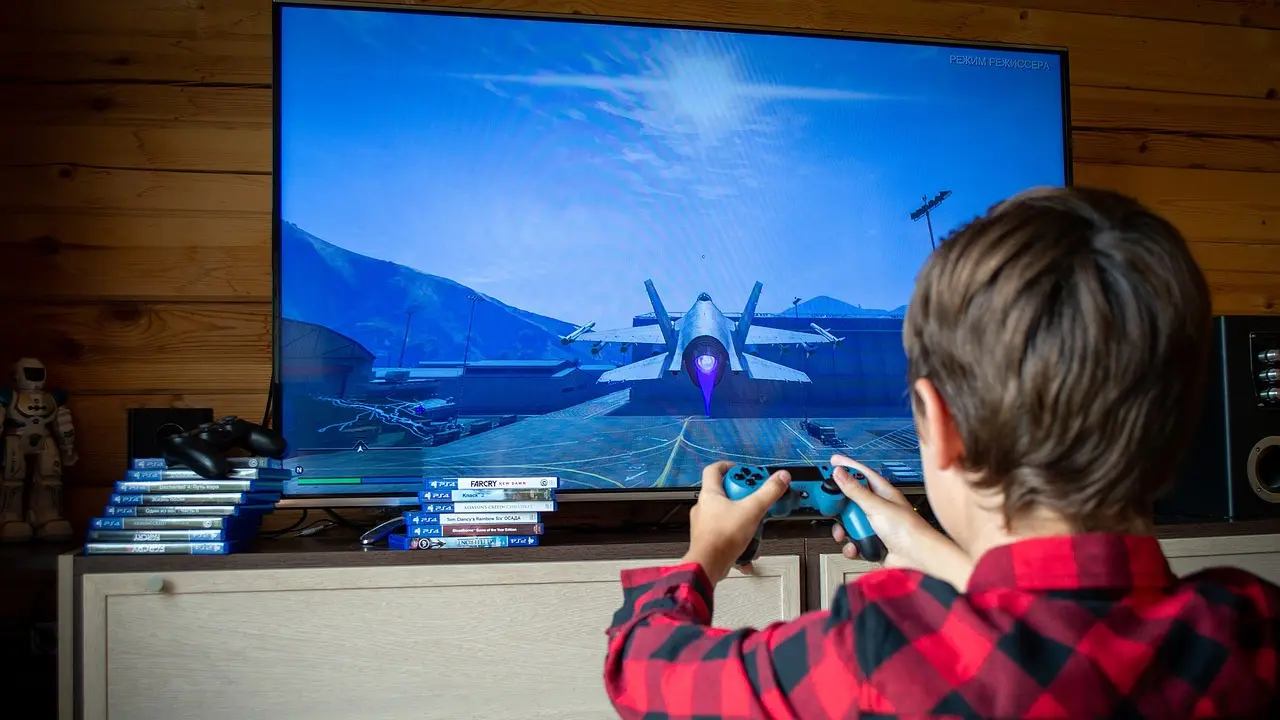
Science & tech | Learn about CAMI's use of motion-tracking technology to distinguish between autistic and non-autistic children, providing a quicker, low-cost diagnostic alternative.
A new movement-tracking video game tool might help doctors diagnose autistic children. Autism, also known as Autism Spectrum Disorder (ASD), is a neurological and developmental disorder that affects communication, social interaction, and behaviour.
The video game tool, named the Computerized Assessment of Motor Imitation, or CAMI, can distinguish autistic kids from their non-autistic peers with an 80 per cent success rate. CAMI uses motion-tracking technology to assess motor imitation skills.

A one-minute video game created by researchers at Nottingham Trent University and the Kennedy Krieger Institute can accurately distinguish between children with autism and those with ADHD or neurotypical development.
The research, published in the British Journal of Psychiatry, analysed 183 children aged 7 to 13. The participants had to imitate a video avatar's dancing motions for one minute. After that, CAMI examined how well they imitated.
Also read: Can divorce be predicted? Study explores relationship between people's values and divorce
)
The Early Spring is proof not everyone can talk about their real feelings, and it is perfectly OK
)
UN votes to ‘correct the map’ as India backs fairer world view
)
Nigerian Navy discovers 99,000 litres of suspected stolen, illegally refined products as it intensifies anti-crude oil theft operations
)
Who is Aditi Paudel? 17-year-old becomes Japan's first literacy ambassador
)
Bengaluru: Officials find 40 kg expired chilli at chairman's club
)
Jaishankar rejects trade link to ending Ukraine war
)
Israeli strikes on Lebanon kill three, injure 23 despite truce
)
Alpine glacier was covered with sheep wool sheets to prevent melting. It worked
)
South Korea mulls deploying military assets to Strait of Hormuz
)
World's fifth-largest economy, British army can't afford to train
)
Breaking | Vance takes the podium: First White House briefing since Leavitt's exit
)
Taiwan raises 'concerns' over China's missile test
)
BRICS 2026: $1 trillion sovereign capital set to converge in Delhi for first iBRICS Summit
)
What is Iran's Pickaxe Mountain that Trump has again threatened to bomb?
)
UN votes to correct world map that visually shrank Africa for 450 years
)
Former NewJeans member Danielle launches YouTube channel, hints at new solo journey
)
Bangladesh batter Towhid Hridoy creates history with 350 not out in South Africa
)
Brendan Fraser’s transformation fuels The Mummy 4 excitement as fans welcome back Rick O’Connell
&im=FitAndFill=(700,400))
Krishna Janmashtami 2026: From Dhaniya Panjiri to Makhana Kheer- 5 best sweet dishes perfect for celebrating Lord Krishna’s birth
)
Donald Trump plans to travel to Ireland on Qatari-donated jet amid security concerns
)
Nazi-looted art to return to Jewish heirs
)
Eight killed in Kerala’s Thrissur after car rams into lorry parked on highway
&im=FitAndFill=(700,400))
Why Russian fighter jets use bulky, low-pressure tyres compared to US jets
)
FBI-wanted fraud accused arrested in Jalandhar over $600,000 scam
&im=FitAndFill=(700,400))
Why US tanks weigh over 20 tons more than Russian tanks
&im=FitAndFill=(700,400))
New Friday OTT releases (September 4, 2026): GDN, Dhamaal 4, Jagamae Sangeetham- Watch 6 new movies and TV shows on Netflix, Prime Video and more
)
Killing the Himalayas slowly: Human urine is melting a glacier on Mount Everest
With 80% accuracy, the tool was able to differentiate between children with autism and children who are neurotypical.
Social communication issues are frequently the focus of traditional understandings of autism. Notably, several studies have also demonstrated that sensory-motor issues are important in the disease and may even be the cause of some communication difficulties.
As quoted by Science Alert, Nottingham Trent University psychology researcher Bahar Tunçgenç, said, "CAMI taps into these sensory-motor difficulties, showing that they are not shared with children with ADHD."
Out of 183 children, 21 had a sole diagnosis of autism spectrum disorder (ASD) and 35 had a sole diagnosis of ADHD (attention deficit hyperactivity disorder). A total of 63 showed signs of both ASD and ADHD. Meanwhile, 65 were neurotypical, which means they had neither diagnosis.
'Tool could transform autism diagnoses'
As quoted by SciTech Daily, Dr Stewart Mostofsky, a pediatric neurologist and director of the Center for Neurodevelopmental and Imaging Research at Kennedy Krieger Institute and co-author of the study, said that the tool is a step forward in how we diagnose autism.
"Diagnosing autism can be challenging, especially when children have overlapping traits with other conditions like ADHD. If the condition is misdiagnosed, it can impact support and resources for the child," said Dr Mostofsky.
Dr Mostofsky added, "This tool could transform autism diagnoses worldwide. By identifying autism as precisely as possible, we can connect children to interventions that improve their quality of life and long-term outcomes. We want to see CAMI used widely in clinics to support diagnosis as an alternative that is quick, low-cost, and requires minimal set-up."
(With inputs from agencies)