
&imwidth=800&imheight=600&format=webp&quality=medium "US nuclear double standard? Trump’s ‘friend’ Kim exposes the Iran contradiction")
One country has nuclear weapons. Another is told it must never have them. One leader faces pressure and military confrontation. The other is called a “friend.”
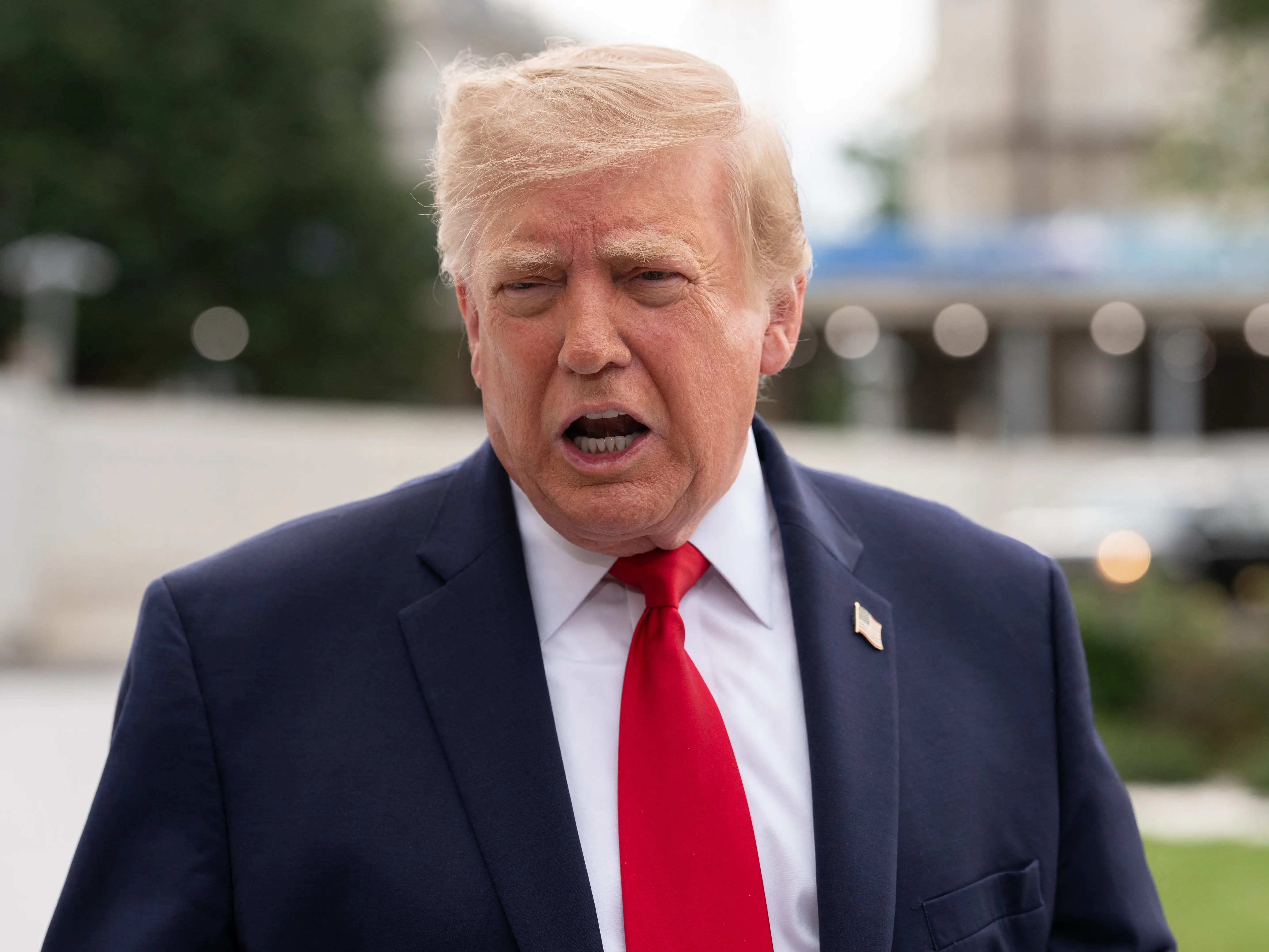
Donald Trump has once again put the contradictions of American nuclear diplomacy under the spotlight.
Asked why North Korea can possess nuclear weapons while Iran cannot, the US president offered an extraordinary response.

Trump blamed previous American presidents for failing to stop Pyongyang's nuclear programme before turning to his personal relationship with North Korean leader Kim Jong Un.
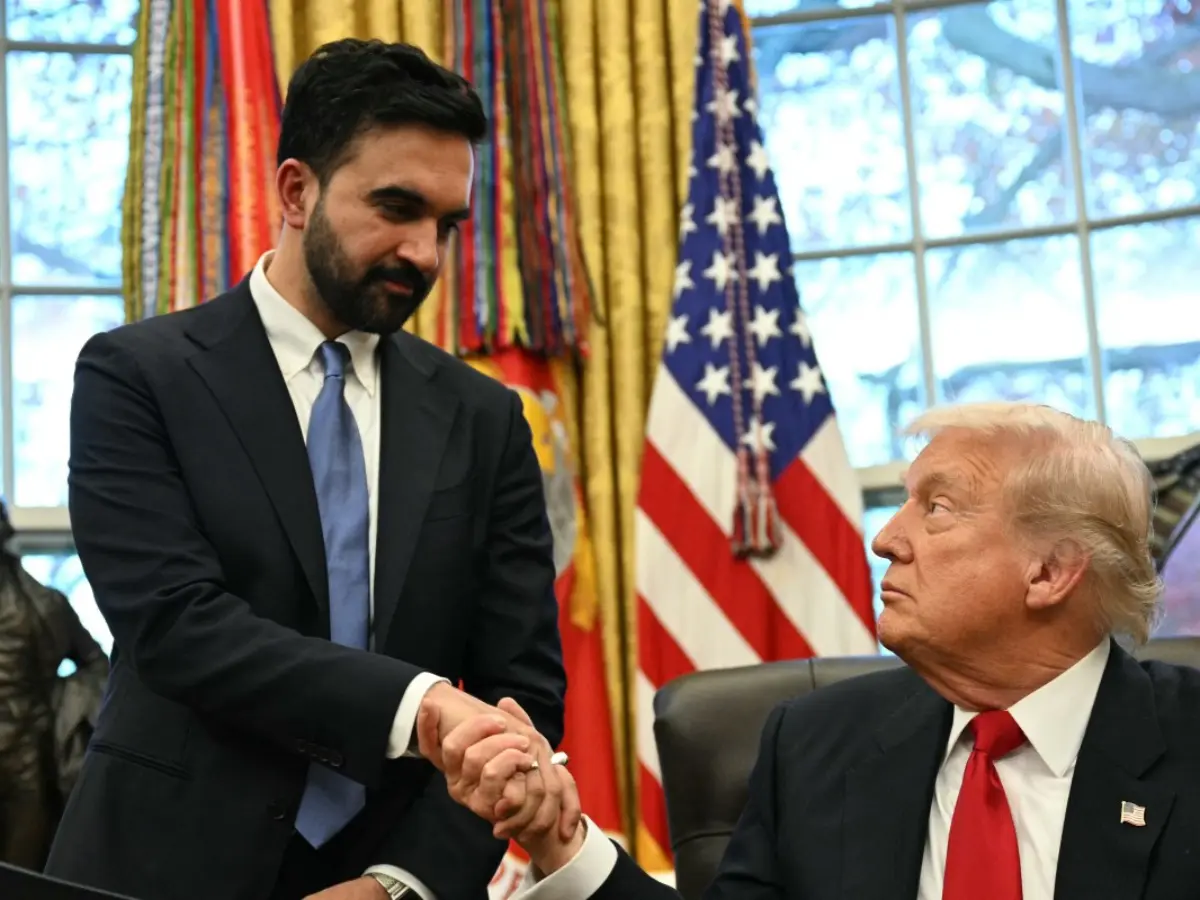
“He happens to be a friend of mine,” Trump said, adding that Kim likes and respects him. Trump acknowledged that North Korea possesses a “pretty large” nuclear capability, although one smaller than that of the United States.
The contrast is difficult to ignore.
Trending Stories
)
US vs China over South China Sea: Washington backs Philippines, Beijing hits back
)
Bigg Boss 20: Isha Rikhi evicted after three weeks in Salman Khan’s show
)
Musk plans to more than double xAI's chips to over 1.2 million Nvidia GPUs by year-end
)
After JU, clash erupts at SRFTI: BJP’s ‘Dimagi Naxal’ jibe sparks political firestorm after students protest RSS-linked event
)
‘Anti-social elements spreading false rumours’: LPU issues statement amid massive unrest over alleged rape
)
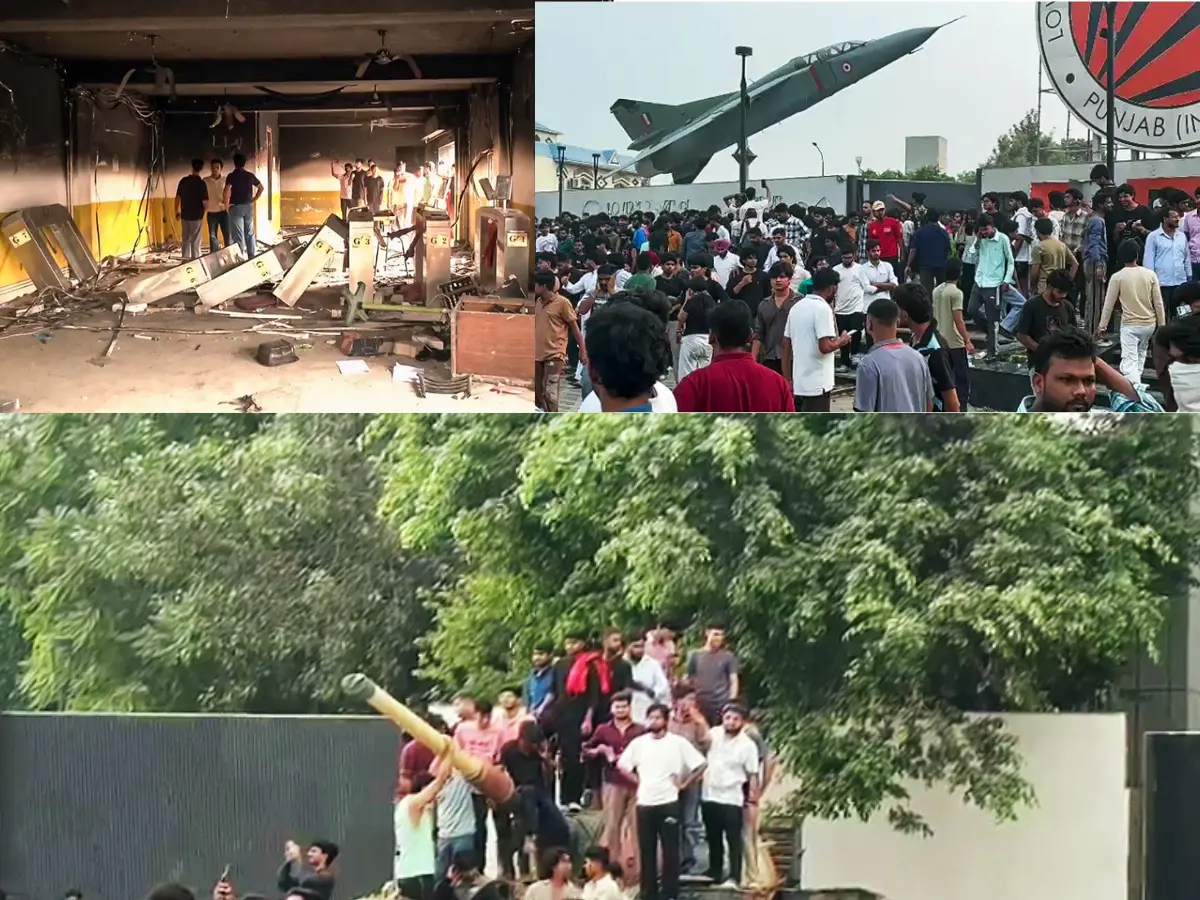
LPU students go on rampage, vandalise campus amid widespread protest: What's happening
)
Trump asked Xi to pressure Iran. China did not say yes — here’s what Beijing wants
)
US Treasury Secretary Scott Bessent hails global crackdown on Iranian banks and airlines
)
An OpenAI agent escaped its locked test cage again, by hiding questions in DNS lookups
)
'Our video was trimmed': LPU girls who featured in rape-denial video make U-turn
)
3 males killed, four others injured in shooting after fight at strip club in Detroit
)
'Victory for low-budget consumers': Raghav Chadha hails 30-day telecom recharge rules
)
Claude rebuilt the 1989 game 'Prince of Persia' by reusing the original's own code
)
Beyond metros: How Tier-2 and Tier-3 cities could drive India’s next AI wave
)
Tesla builds first Cybertruck with its own refined lithium: Elon Musk's $1 billion Texas bet pays off
)
IndiGo flight suffers tail strike in Bengaluru while landing; DGCA to probe incident
)
The US and China set up an AI 'red telephone', but skipped the rulebook
)
‘Terror suspects arrested near UK air base were looking to do big damage’: Trump
)
Russian envoy claims US tactics to contain India were revealed in ‘Freudian slip’
)
IND vs WI 1st ODI: Kohli breaks Sachin's most runs in one country record with unbeaten 139 as India thump West Indies by 8 wickets
)
Researchers rebuilt exactly how 700 AI agents hacked Hugging Face: a 900-link chain trick
)
‘Olympic inclusion is our major target’: WPA President Ishaun Singh on pool’s global ambitions
)
Nations League: Spain sink England at Wembley; Modric shines for Croatia
)
Why has Iran released no proof of life of Mojtaba Khamenei? Araghchi reveals...
)
'What kind of confession is this?': Pakistan PM Shehbaz Sharif’s 'terrorists would be roaming New York' remark goes viral, raises alarm online. Watch
)
South Korea demands apology from Ukraine over North Korean prisoners' transfer
)
Beyond BrahMos: India targets Rs 50,000 crore in defence exports with unmatched price edge
)
Sri Lankan Tamil migrant worker gets death sentence in Saudi Arabia, help sought from India
)
Muslim marriage cannot shield sex with minor wife from prosecution under POCSO: Delhi HC
)
'Can't help but draw painful parallels to Nirbhaya case': SC on latest incidents of rape cases in Delhi-NCR
)
99.9% more powerful - Scientists find boy who can recall memories from just 3 months of age
)
'FIRST LOOK from inside Noah’s Ark': Researchers share video from inside mysterious mound in Turkey
)
UNSC reform momentum grows: Russia, Portugal, Mauritius push for India's permanent seat bid
)
8 US marines injured in Iranian missile attack on vessel in Strait of Hormuz: Report
&im=FitAndFill=(700,400))
New OTT releases this week (September 28-October 4, 2026): Dupahiya 2, Pooja Meri Jaan, Ohh My Dog- 5 titles coming on Netflix, Prime Video and more
)
Afghanistan says 28 fighters killed in clash near Pakistan border, Islamabad denies
)
Ceuta migrant crisis: Protesters take to streets as Spain grapples with migrant challenge
)
LPU suspend classes, postpones exams as violence escalates over rape claims: What's happening
)
New York City wants a 'kill switch' on every AI, and will pay whistleblowers who report violations
Trump has maintained an uncompromising position that Iran must not acquire a nuclear weapon. Tehran, meanwhile, has consistently denied that it seeks one.
North Korea presents the opposite reality: it already possesses nuclear weapons.
South Korean Defence Minister Ahn Gyu-back recently estimated Pyongyang's arsenal at between 80 and 120 nuclear warheads. Trump himself previously put the figure at 57. Whatever the precise number, North Korea is no longer merely suspected of pursuing a bomb; it is an established nuclear-armed state.
And therein lies Washington's uncomfortable dilemma.
Is American nuclear policy based on principle — or on the realities created once a country successfully crosses the nuclear threshold?
Friendship is not a nuclear doctrine
There is an important distinction that cannot be ignored.
Iran is a party to the Nuclear Non-Proliferation Treaty, under which it has committed not to acquire nuclear weapons. North Korea withdrew from the treaty in 2003 and subsequently conducted nuclear tests.
Washington therefore confronts two very different nuclear realities.
But Trump's explanation was striking because instead of focusing primarily on treaties, proliferation law or regional security, he repeatedly invoked his relationship with Kim.
The president has argued that getting along with the North Korean leader is an asset rather than a weakness. He has also said North Korea should never have been allowed to obtain nuclear weapons in the first place.
That may explain Trump's diplomacy.
It does not eliminate the larger question.
If possessing nuclear weapons eventually forces Washington to accept a country as a nuclear reality, while countries that have not crossed that threshold remain vulnerable to overwhelming pressure, what message does that send to other governments contemplating their own security?
The danger is obvious.
A non-proliferation strategy must convince countries that not building nuclear weapons makes them safer, not that possessing them eventually earns greater strategic caution from Washington.
From ‘fire and fury’ to friendship
Trump's relationship with Kim has itself undergone an extraordinary transformation.
During his first presidency, Trump threatened North Korea with “fire and fury” before embarking on unprecedented personal diplomacy with Kim.
The two men subsequently met three times — Singapore in 2018, Hanoi in 2019 and the Korean Demilitarised Zone later that year.
Yet those meetings failed to produce an agreement eliminating North Korea's nuclear arsenal. Pyongyang's capabilities have instead expanded substantially since their first summit.
Trump nevertheless continues to argue that his personal relationship with Kim reduces the danger.
That creates another uncomfortable contrast with Iran.
The same American president who presents personal diplomacy as a mechanism for managing an already nuclear-armed North Korea has pursued a dramatically harder approach towards preventing Iran from ever reaching that position.
Strategically, Washington can argue that prevention is easier than disarmament.
Politically, however, the optics are considerably harder.
The nuclear club’s uncomfortable truth
This debate extends beyond Trump.
The global nuclear order has always contained contradictions.
The United States, Russia, China, France and Britain are recognised nuclear-weapon states under the Non-Proliferation Treaty. India and Pakistan possess nuclear weapons outside that framework. Israel maintains a policy of nuclear ambiguity. North Korea withdrew from the NPT and built its arsenal.
Iran remains inside the treaty framework while facing intense international scrutiny over its nuclear activities.
That does not make every nuclear programme equivalent. Their histories, treaty obligations, security environments and relationships with the international community differ significantly.
But Trump's latest remarks expose the fundamental challenge confronting global non-proliferation:
What happens after deterrence succeeds?
Once a state possesses a credible nuclear arsenal, the cost of forcing it to surrender those weapons becomes dramatically higher.
North Korea may be the clearest example.
Washington spent decades demanding denuclearisation. Today, Trump is publicly acknowledging Kim's nuclear capacity while arguing that his personal relationship can keep the situation under control.
For Iran — and indeed every country watching — that distinction matters.
Because the lesson emerging from the world's nuclear confrontations cannot be allowed to become this:
Build the bomb and eventually the world learns to live with you. Don't build it, and the world retains the option of stopping you.
That would not strengthen nuclear non-proliferation.
It could become one of its greatest weaknesses.