

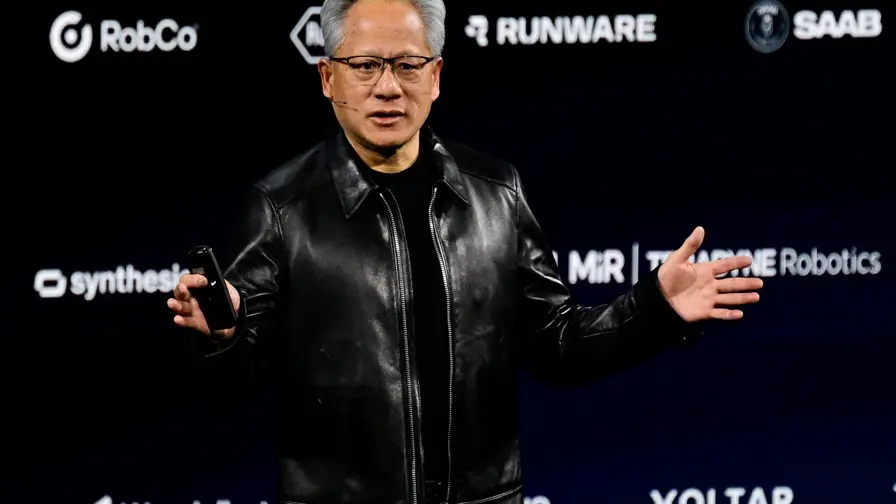
Nvidia CEO Jensen Huang is facing mounting scrutiny over an alleged Chinese intelligence operation, raising questions about national security and America's dominance in the global artificial intelligence race.
The controversy erupted after reports alleged that Huang had maintained an intimate relationship with Alice Huang, a former executive at Singapore-based Mega speed International, whom US intelligence officials reportedly identified as a Chinese intelligence asset.
Huang has acknowledged being unfaithful to his wife and apologised to his family and colleagues. Nvidia's board has launched an independent investigation into whether its chief executive was targeted by foreign intelligence.
The company insists it has no reason to believe its secrets or American national security were compromised.
Trump Defends Huang, Rubio Remains Tight-Lipped
US President Donald Trump has publicly defended the Nvidia chief, describing him as an honourable man who has made significant contributions to America.
Trending Stories

US midterms 2026: These Senate and House races are still too close to call. Here's where they stand

Why Taylor Swift and Karlie Kloss' surprise reunion at Travis Kelce's Chief's game created a buzz: The story behind their rumoured fallout

Ramayana team issues legal notice over theatre recordings, cites High Court orders

'Using US funds to violate int'l law': Michigan's first Muslim Senator-elect questions aid to Pakistan

Delhi AQI touches 384 on Diwali morning, 11 monitoring stations record severe air quality

New OTT releases this week (November 9-15, 2026): Jailer 2, The Lord of the Rings, Bandra- 6 latest titles coming on Netflix, Prime Video and more

First handshake? Radio signal with all hallmarks of alien technology detected in China

IND vs NZ: New Zealand make several changes to squad for remaining ODIs

Gold nears interim bottom despite recent correction, says World Gold Council

Railway Minister Ashwini Vaishnaw visits Anand Vihar station, interacts with passengers and reviews facilities

‘Welcome to form government with Netanyahu’: Yair Golan slams Liberman over judicial reform delay

Salman Khan reacts to Ramayana's Rs 4,000 crore budget: 'I just don’t think...'

'I was unfaithful to my wife': Nvidia opens investigation after CEO Jensen Huang admits affair with alleged Chinese spy

'Happy Diwali to you-know-who!': BJP shares old Operation Sindoor video on Diwali, takes veiled dig at Pakistan

Chinese streamers film in Bangladesh, allegedly tell viewers they are in India

Nvidia CEO Jensen Huang had a romantic relationship with alleged Chinese spy, Alice? US intelligence memo raises alarm

Pyre faces major theatre setback as Vinod Kapri claims 75% screenings removed: 'We deserve a fair chance'

PCB to extend Mike Hesson's stint as Pakistan interim Test coach until end of WTC cycle: Report

$4.8 billion chip puzzle: How Nvidia's Megaspeed connection unravelled an alleged honeytrap plot

IND vs NZ: Rohit Sharma becomes leading six-hitter against New Zealand in ODIs

Khamenei orders Iranian President Pezeshkian to end ‘no war, no peace’ status with US

Dhaka rejects Sheikh Hasina's request for a new passport

Paraguay's ex-President Santiago Pena's mansion raided amid Ueno Bank collapse investigation

Poland mass shooting: Shooter accused of killing six people dies in hospital

'Fiery, but mostly peaceful': Trump shares bizarre AI video of UFC fighters beating up journalists at White House

'She was 19, I was 17...': Nvidia CEO Jensen Huang's love story with wife Lori goes viral amid alleged Chinese spy affair

Who is Alice Huang, the woman Nvidia CEO Jensen Huang allegedly had an affair with?

Meet top 5 bowlers in latest ICC ODI rankings 2026

IND vs NZ: Virat Kohli sets new record for most ODI runs against New Zealand

Pakistani journalist Rabia Ahsan found shot dead at home, husband taken into custody

Over 200,000 take to Amsterdam streets in 'Red Line' protest, demand action against Israel

Global warming set to overshoot 1.5°C target

23-year-old Telangana student goes missing in US, state minister seeks MEA intervention

Daler Mehndi breaks silence on Uttarakhand row, thanks Mika Singh and music industry for support

IND vs NZ, 3rd ODI: When and where to watch live streaming in India?
"I think he's an honorable guy," Trump told reporters on Sunday, adding that Huang had "done an amazing job for our country."
Trump acknowledged he had not discussed the allegations with Huang and suggested the executive deserved an opportunity to explain himself.
But Secretary of State Marco Rubio offered a markedly different response.
Asked about the controversy before departing for a G7 meeting in Paris, Rubio said: "I just can't comment because of the nature of it."
He also declined to discuss Nvidia's internal corporate investigation.
The contrasting responses come amid reports that senior American officials had received intelligence warnings about the suspected operation months earlier.
China Rejects Allegations as AI Rivalry Intensifies
Beijing has dismissed the espionage allegations as groundless speculation and slander.
Meanwhile, Megaspeed has faced scrutiny over suspicions that it helped Chinese companies obtain advanced Nvidia chips restricted under American export controls.
Huang has previously advocated maintaining access to China's technology market, arguing that sweeping restrictions could accelerate Beijing's domestic semiconductor development.
The controversy comes as Washington and Beijing compete for technological supremacy, with Nvidia's advanced processors central to the development of artificial intelligence.
US lawmakers are demanding answers about the company's security safeguards, while investors are watching for potential consequences for Huang's leadership.
For Nvidia, the question now extends beyond its chief executive's personal conduct: could a suspected intelligence operation have threatened America's most strategically important AI technology?